It is easier to keep a project alive than it is to keep it honest. Back in the fall of 2022, I found out that a student organization I co-founded with my friend Sam turned 10. A reporter for the campus paper wanted to interview me for a feature about it. When I read the finished article, I felt like I was walking through the house I grew up in. In the photographs accompanying the piece, I recognized the banners that Sam and I made a decade ago.
We made mistakes along the way, but strangely, what we cared about more than the programming was whether it would last. We wrote bylaws and handbooks. We made decisions in larger groups than was efficient, because we wanted everyone to feel ownership, understand the values, and for multiple people to be able to keep it going. After the pandemic, many college student organizations weakened due to a lack of institutional knowledge. I speculate ours survived only because of what we wrote down. Whether or not that’s the reason, it survived with its values intact, which is more than we knew to ask for at 20 years old. Bylaws and handbooks keep a thing running, but they don’t guarantee that it’s worth it.
Why does anything last? When I arrived at IDA, my mandates were the educational programs and Getting Real, the flagship conference. The previous editor of Documentary left nine months after I was hired, and in his exit interview suggested that I take over. When I accepted, the biggest question was whether to continue printing the magazine, as that was its largest expense. I thought maybe print was a nostalgic novelty, much like how young people now collect LPs. During months of strategic revisioning, other film magazine editors, documentary filmmakers, colleagues, and board members made arguments to keep print within mostly fiduciary terms. Our subscription numbers were robust for a membership organization, and print advertising, sold as a prestige category by a magazine this established, could pay for itself. But none of these arguments for continuation explained what the expense would be for. I realized that the economic justifications for mere maintenance could be turned into something useful. The budget could also cover fees for rigorous writing on how things are and how things could be, on the specific companies and structures that dictate our work, and inquire into the artistry behind our craft.
A couple of years ago, I co-presented the fledgling Future Film Coalition’s mission as an advocacy and research hub for independent film at a documentary festival town hall. After our slides, we took 15 minutes of suspicious questions from the documentarians in attendance, who feared we would put their individual relationships with streaming commissioners in jeopardy. My fellow presenters were itching to debate, but I shushed them, because I knew that though we believed wholly in collective action, we couldn’t promise anything. In fact, the risk was what made us powerful together. If we only care about ourselves, we are easily picked apart. At the end, one filmmaker stood up to say it was worth it, and that kept me going. Because I co-founded FFC, this magazine hasn’t reported on the coalition, and I still don’t really know whether it will work.
I’ve learned that you don’t galvanize people by funding them, though money is useful. Instead, you do the slow, hard work of finding out what helps people, and build something that keeps moving whether or not any single person clocks in that week.
In this farewell letter, I’m drawing out the difference between reasons that keep this magazine alive and the reasons it deserves to be. If anything here is useful to you, I ask that you use it. And—harder—hold it to what it’s for.
I would consider it a true accomplishment if you take the numbers we report into your next negotiation. If you debate or incorporate an aesthetic judgment you read about, or start a better version of something we described, questioned, or promoted. And I hope that you, too, when you leave something, write down what you know and give it to whoever comes next—not only the how of it, but also the why.
Everything in this issue, “Documentary Tries to Own Itself,” expands on the friction between resourcing and owning. For the cover, we asked participatory documentary pioneer Spencer Nakasako, whose work includes the seminal video diary trilogy A.K.A. Don Bonus (1995), Kelly Loves Tony (1998), and Refugee (2003), to interview Mehrdad Oskouei and Soraya Akhlaghi, the co-directors of A Fox Under a Pink Moon. This conversation goes beyond discussions of remote direction into the mindset underpinning their shared credit as co-creators of their extraordinary film.
The three other pieces in the themed section are specifically drawn from our field’s increasing interest in cooperatives and a recognition of a reformed distribution landscape. Writer Öykü Sofuoğlu dives deep into the history and legal structure of La Clef, Paris’s “last associative cinema,” and how a volunteer collective squatted the location and formalized their community-led ethos into financial and operational strands in a bid to forever preserve their political and programmatic independence. Nicolas Pedrero-Setzer examines how distribution cooperatives formed decades ago are hanging on, or not. And Salvadorian American filmmaker Daniel Larios travels to Guatemala City for CentraDoc, a new festival showcase for Central American documentaries co-founded and run by a collective of seven female filmmakers from the region. While he covers the showcased films, a survey of festival favorites from the recent past, he also expands on the origins of CentraDoc—the how and why its founders dedicated their time to this trailblazing project.
Elsewhere in this issue, Natalia Keogan traces the power and popularity of documentary retellings in personal stories of trauma through one of its most recent expressions, Ashley Da-Lê Duong’s Ba’s Book. Hugo Emmerzael’s “Making a Production” feature hones in on the Amsterdam-based producer Jia Zhao’s Muyi Film banner through the distribution plans of its CPH:DOX winner, Whispers in May.
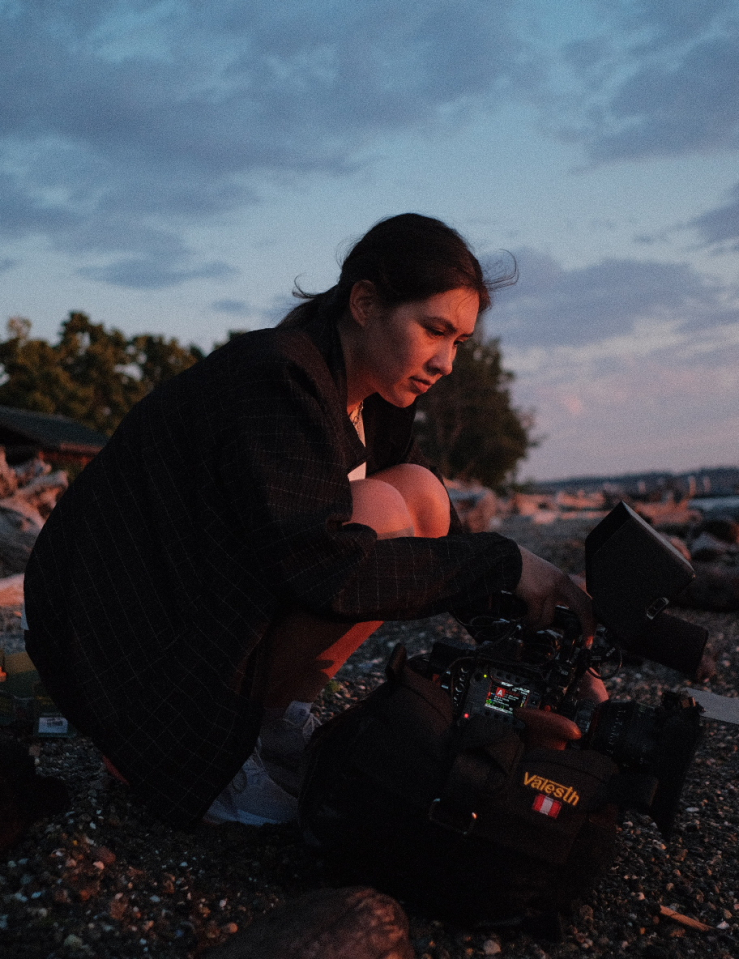
Anthony Kaufman and Jawni Han report from our recent Getting Real ’26, where many of these debates were featured. Karen Cirillo’s dispatch on the 25th DokuFest, the esteemed documentary, short film, and animation festival in Kosovo’s second largest city that predates the country’s political formation, describes the special alchemy in its “punk family reunion.” IDA Executive Director Dominic Willsdon connects hybrid documentary filmmaking and fine arts photography exhibitions in “Notes From the Real.” Director and cinematographer Shaandiin Tome (Powwow People, 2025) shares “What’s in My Bag,” and editor Yaël Bitton (Nocturnes, 2024) “What’s on My Desk.” “Screen Time” pulls focus on new and notable films released recently, especially some independent documentary hits in Japan and the Netherlands.
This is the first time in three decades that this magazine has been transitioned deliberately rather than in an emergency. Manuel Betancourt edited most of this issue, and he’ll be writing this column next. I hope you are generous with him, as you were with me while I was in the room with you, listening to your pitches, watching your rough cuts, commiserating at the bar after rejections, or celebrating after premieres. I didn’t know anything until somebody told me.
Abby Sun
Editor, Documentary
This piece was first published in Documentary’s Fall 2026 issue.