


Most documentary filmmakers develop a concept, pitch and budget for their films and begin the arduous task of searching for funding and distribution. Not so for Steve James and Peter Gilbert, co-directors of At the Death House Door, which premieres May 29 on IFC Channel.
James, award-winning director of Hoop Dreams and Stevie, and Gilbert, director of award-winning films Vietnam: Long Time Coming and With All Deliberate Speed, were approached by the Chicago Tribune to create a documentary based on Tribune reporters Steve Mills and Maurice Possley’s 2005 investigation into the 1989 execution of 27-year-old inmate Carlos De Luna, who was sent to his death on the basis of misleading “facts” and questionable evidence—while steadfastly proclaiming his innocence.
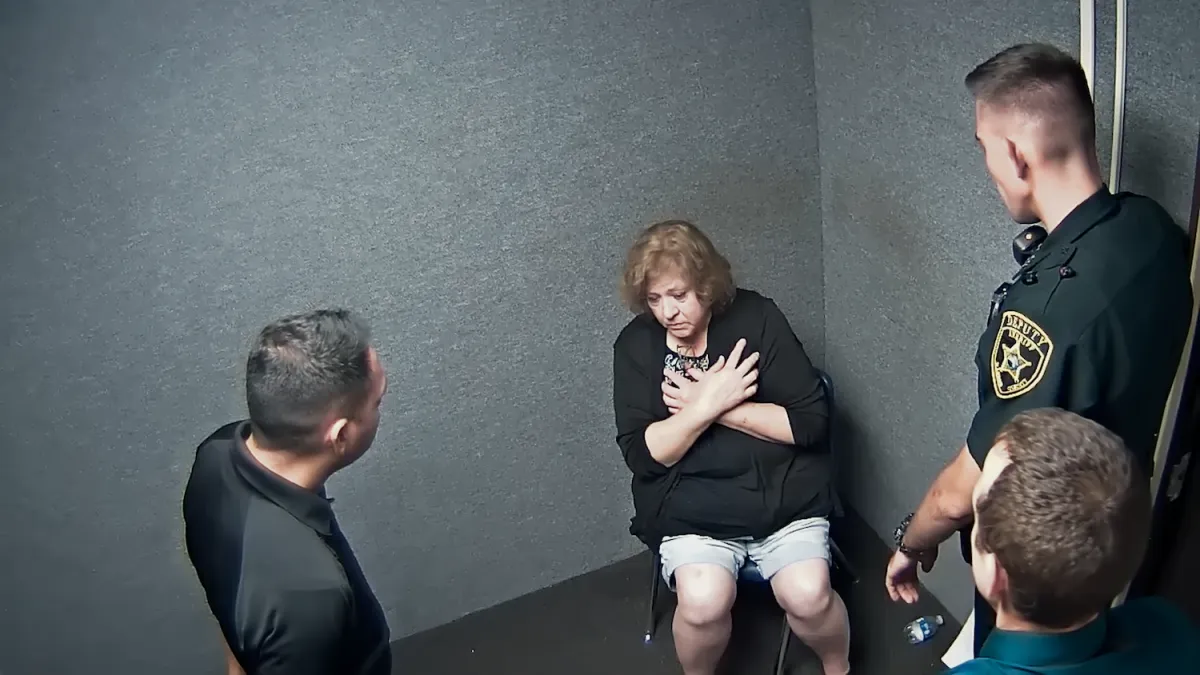
The result is At The Death House Door, a searing look at the death penalty system in Texas as seen through the eyes of death row chaplain Pastor Carroll Pickett, who ministered to 95 prisoners executed inside the notorious “Walls” prison unit in Huntsville, Texas. Unbeknownst to anyone, including his family, Pickett recorded audio tape accounts of each of his death row experiences.
While De Luna’s story was the original impetus for the film, James and Gilbert veered off to explore that story through the eyes of Pastor Pickett.
Kathleen Fairweather caught up with James and Gilbert for a look at the creation of At The Death House Door and an exploration of the relationship between the filmmakers and the Chicago Tribune.
IDA: The Chicago Tribune approached you to do a film on Steve Mills and Maurice Possley's investigation of the Carlos De Luna death penalty case. Did the Tribune come to you with a production and funding offer? When did IFC become involved and to what extent?
Steve James: The film was made possible by the Tribune, primarily because they told us about Carlos De Luna and Pastor Pickett when they brought the idea initially to us. And perhaps more importantly, Steve Mills made introductions to Pickett and endorsed us, which meant a lot to Pickett. The Tribune also provided very modest initial funding ($6,000) to cover the first shoot, but given our great interest in pursuing the film, we could have figured that out ourselves. IFC came on board right after the first shoot. Even without seeing any footage, they knew they wanted to be a part of this project, so they provided full funding for the film.
Peter Gilbert: The Tribune came to us because they had a relationship already with Kartemquin Films, our filmmaking home in Chicago. There were no strings attached, only that they thought the De Luna investigation was a fascinating idea for a film. When they told us about Reverend Pickett, we were intrigued by the connection he had to De Luna, as well as the job that he had ministering to inmates in the last 12 hours of their lives. On top of that, the deal was sealed when we heard that Pickett would go home and record audio tapes after each execution.
The Trib did not come to us with funding, but they did help cover our costs on the first trip we made with the reporters to Texas. We needed to capture them investigating the story because they were wrapping up their piece. The film was made possible by the Tribune because they helped introduce us to our main subjects and the basic spine of the story. We piggybacked them at the beginning of the process in many ways.
IDA: Do you think you influenced Mill's and Possley's story, and vice versa?
SJ: Their eight-month-long investigation clearly influenced our story. In the film, Steve and Maury really do the heavy lifting when it comes to establishing Carlos’s innocence. They allowed us to, in essence, stand on their shoulders and use their credibility and hard work so that we would not have to get into all the details of Carlos’ case. We were conscious of not wanting that part of the story to turn into a Dateline or 20/20 crime report.
I think the making of our film gave them a different perspective, perhaps, on how one can tell this story. They are classic investigative journalists—who did what, where, when and how. We were able to tag along with them and focus more on the human fallout from what happened: how their investigation into Carlos brought him back into the lives of Pickett, Carlos’s sister Rose, and even another reporter, Karen Boudrie. And bringing Carlos back into their lives was both vindicating and painful.
PG: I do not think we influenced their work at all. If anything, I learned an incredible amount from them. We are not journalists; we are filmmakers. Watching how they piece information together and keep themselves in check and balance was a pure pleasure to experience and film. It showed me how important their work is in a free society—what a balance it provides—and what a service they have done throughout the years committing themselves to investigating wrongful convictions and the justice system as a whole. If we influenced anything for them, it was that they were kind enough to open up to us about why they do the work they do. They were very important in our understanding the Texas legal system, and they gave us great insight into Rev. Pickett and the job that he performed for the State and the inmates. As filmmakers, we are allowed to have a much freer approach to subject matter and storytelling then Steve and Maury. They have journalistic rules that they abide by for all the right reasons. But their honesty and insights were very important to the film. How De Luna affected them is essential to our belief that every execution of an inmate causes a ripple that affects so many people.
IDA: Doc subjects are created from a filmmaker's interest piqued by news and media articles, but do you find it atypical that a news conglomerate would approach you to make a documentary based on their own news story? Is the Tribune getting into the doc business? Have you been approached by a newspaper or media outlet in the past?
SJ: I think it is unusual and one has to be careful about how to proceed in these situations. The history here is that Kartemquin is doing another film inspired by a series that appeared in the paper and that relationship led to this project. Like many newspapers these days, I think the Tribune is interested in where news and journalism is headed in the Internet age. Helping their stories find other audiences or means of expression is part of that. But it was clear to everyone that this would be our film and we’d have complete creative control. It’s one of the reasons we did not want to have the Tribune play a major role as funder for the film. In fact, both Mills and Possley early on were pushing for less of them and the Tribune story in the film. I think it is an interesting question as to how we would have handled—and how the Tribune would have reacted—if the film had taken a critical view of their investigation. Fortunately, Steve and Maury’s work was above reproach.
PG: Media outlets such as CNN, NBC, CBS, etc. have been doing a certain type of documentary for years. I worked on CBS Reports many years ago. The difference was that the media outlet or conglomerate had editorial control. In this case, Steve and I had control of the film. I think as newspapers go through the difficult time of surviving the next generation of Internet technology and bloggers, they are looking for ways to expand their brand and keep it relevant. So I believe that this was an experiment that they embarked on with us.
IDA: Do you see media partnerships becoming a trend among your peers?
SJ: I frankly don’t know. But I think that documentary filmmakers always have to be savvy about where to find funding and partners who can help them get their films made. It’s really an age-old process of figuring out how to hook potential funders by tailoring proposals for your film to what the funder wants to hear, then going off and making the film you feel compelled to make.
PG: In some way media partnerships have always been there, but in a different form. Documentary filmmakers have been getting their ideas from newspaper articles for years. It was just the old model was that we would go to them, and now they are approaching us. I doubt it will be a trend, but it will be a model that some filmmakers may look to as one way to proceed.
IDA: Do you think this will blur the lines between news shows and documentaries? How do you keep journalism separate from the art form of the documentary?
SJ: I don’t have any worries about blurring lines with At the Death House Door because the film is so clearly not a journalistic treatment of Pastor Pickett, Carlos De Luna or anyone else in the film. But really, I don’t worry much about the differences between a journalistic treatment of a subject and the more artistic approach of documentaries. I mostly care about whether a film has intelligent things to say about the world around us, gives me access to worlds I’m not privy to in my daily life, and emotionally engages me. Good journalism can do that too, and bad documentaries can fail to. The standard difference people like to fall back on between journalism and documentaries is that the latter has a point of view while the former attempts some ideal of objectivity. But I find that mostly an oversimplification. Maybe we need to start talking about documentaries in genre terms: the essay (Michael Moore films), the journalistic (No End in Sight), the vérité (Love and Diane), the biography (Devil and Daniel Johnston), the personal (My Architect), the comedy (American Movie), and on and on...
PG: This has been an ongoing issue since Murrow. Good journalism by its nature is separate from the art form of documentary; we work under different rules and expectations. We have different reasons for why we do the work we do. For Steve and I, we are looking for interesting stories and subjects who through their lives can allow us to look at the bigger picture of a story. We use Rev. Pickett's journey from death penalty advocate to his anti-death penalty stance of today to show how complicated an issue like the death penalty is. The toll it takes on this one man and the people around him and Carlos is a way to look at the issue—no experts, no pundits.
Former International Documentary editor Kathleen Fairweather is now residing in Austin, Texas. Her goal is to visit all 150 music venues and survive the triple digit summers. She may be reached at kfairweather@verizon.net
Can Rev. Carroll Pickett be trusted "At the Death House Door"? Dudley Sharp, Justice Matters, contact info below Rev. Pickett is on a promotional tour for the anti death penalty film "At the Death House Door". It is partially about the Reverend's experience ministering to 95 death row inmates executed in Texas. Rev. Pickett's inaccuracies are many and important. Does Rev. Pickett just make facts up as he goes along, hoping that no one fact checks, or is he just confused or ignorant? Some of his miscues are common anti death penalty deceptions. The reverend is an anti death penalty activist. Below are comments or paraphrases of Rev. Pickett, taken from interviews, followed by my Reply:. 1) Pickett: I knew (executed inmate) Carlos (De Luna) didn't do it. It was his big brown eyes, the way he talked, he was the same age as my son (transference). I felt so sympathetic towards him. I was so 100% certain that he couldn't have committed this crime. (Carlos) was a super person to minister to. I knew Carlos was not guilty. Fred Allen a guard, said "by the way he talks and acts I don't believe he is guilty, either. (1) REPLY: Experienced prison personnel are fooled all the time by prisoners, just as parole boards are. This is simply Rev. Pickett's and Fred Allen's blind speculation and nothing more. More than that, it appears that Rev. Pickett is, now, either lying about his own opinions or he is very confused. Read on. 2) Pickett: believes that, no way, could someone, so afraid of lightning and thunder, such as Carlos De Luna, use a knife (in a crime). (1) Reply: Rev. Pickett talks about how important his background is in understanding people and behavior and he says something like this, destroying his own credibility on the issue. If the lightning and thunder event occurred, we already know what De Luna was capable of. In 1980, "De Luna was charged with attempted aggravated rape and driving a stolen vehicle, he pleaded no contest and was sentenced to 2 to 3 years. Paroled in May 1982, De Luna returned to Corpus Christi. Not long after, he attended a party for a former cellmate and was accused of attacking the cellmate's 53-year-old mother. She told police that De Luna broke three of her ribs with one punch, removed her underwear, pulled down his pants, then suddenly left. He was never prosecuted for the attack, but authorities sent him back to prison on a parole violation. Released again in December of that year, he came back to Corpus Christi and got a job as a concrete worker. Almost immediately, he was arrested for public intoxication. During the arrest, De Luna allegedly laughed about the wounding of a police officer months earlier and said the officer should have been killed. Two weeks after that arrest, Lopez was murdered." (Chicago Tribune) Being a long time criminal, we can presume that there were numerous additional crimes committed by De Luna and which remained unsolved. Was De Luna capable of committing a robbery murder, even though he had big brown eyes and was scared of lightning? Of course. This goes to Rev. Pickett's poor judgement or something else. There is this major problem. In 1999, 4 years after Rev. Pickett had left his death row ministry, and he had become an anti death penalty activist, and 10 years after De Luna's execution, the reverend was asked, in a PBS Frontline interview, "Do you think there have been some you have watched die who were strictly innocent?" His reply: "I never felt that." (3) For many years, and since the 1989 execution of Carlos De Luna, the reverend never felt that any of the 95 executed were actually innocent. This directly conflicts with his current statements on Carlos De Luna. Rev. Pickett is, now, saying that he was 100% sure of De Luna's innocence in 1989! If he was 100% sure of DeLuna's execution in 1989, what's up with the PBS interview?. How is it that an anti death penalty activist can forget the only "innocent" person executed - he was 100% sure of his innocence - on their watch? Anti death penalty or pro death penalty, wouldn't that be 100% impossible to forget, particularly when you are asked, specifically, about it during a formal interview? When is the first confirmable date that Rev. Pickett stated he believed in DeLunas' actual innocence? It appears the reverend has either revised history to support his new anti death penalty activism - he's lying - or he is, again, very confused. Reverend? 3) Introduction: In 1974, prison librarian Judy Standley and teacher Von Beseda were murdered during an 11 day prison siege and escape attempt. Ignacio Cuevas was sentenced to death, as one of three prisoners who were involved. The other two died in the shootout. Ms. Standley and Ms. Beseda were part of Rev. Pickett's congregation, outside of prison. Pickett: After Cuevas was executed, Rev. Pickett alleges that he met with Judy Standley's family and they told the reverend that "This (the execution) didn't bring closure." "This didn't help us." According to Rev. Pickett, "They didn't want him (Ignacio Cuevas) executed." (1) Reply; There might be a big problem. Judy Standley's five children wrote a statement, before the execution, which stated: "We are relieved the ordeal may almost be over, but we are also aware that to some, this case represents only one of many in which, arguably, `justice delayed is justice denied," "We are hopeful the sentence will finally be carried out and that justice will at last be served," said the statement, signed by Ty, Dru, Mark, Pam and Stuart Standley. (4) Sure seemed like the kids wanted Cuevas to be executed. Doesn't it? Reverend? 4) Pickett: "A great majority of them (the 95 executed inmates he ministered to) were black or Hispanic." (1) Reply: The reverend's point, here, appears to emphasize the alleged racist nature of the death penalty. There is a problem for the reverend- the facts - the "great majority" were 47 white (49%) with 32 black (34%), and 16 Hispanic (17%). 5) Pickett: "Out of the 95 we executed only one that had a college degree. All the rest of them their education was 9th grade and under." (1) Reply: Not even close. Rev. Pickett's point, here, seems to be that capital murderers are, almost all, idiots who can't be held responsible for their actions. But, there are more fact problems for the reverend. In a review of only 31 of the 95 cases, 5 had some college or post graduate classes and 16 were high school graduates or completed their GED. Partial review (Incomplete Count) , below. Would Rev. Pickett tell us about the educational achievements of all the true innocent murder victims and those that weren't old enough for school? 6) Pickett: spoke of the Soldier of Fortune murder for hire case, stating the husband got the death penalty, while the hired murderer got 6 years. (1) Reply: Rev. Pickett's point, here, appears to be the unfairness of the sentence disparity. More fact problems. John Wayne Hearn, the hitman, was sentenced to life imprisonment for the murder of Sandra Black. 7) Pickett: speaks of how sincere hostage taker, murderer Ignacio Cuevas was. Rev. Pickett states that "between 11 and midnight (I) believe almost everything" the inmates say, because they are about to be executed. (1) Reply: Bad judgement. Minutes later, Cuevas lied when on the gurney, stating that he was innocent. This goes to show how Rev. Pickett and many others are easily fooled by these murderers. Pickett concedes the point. 8) Pickett: "In my opinion and in the opinion of the convicts, life in prison, with no hope of parole, is a much worse punishment (than the death penalty)." "Most of these people (death row inmates) fear life in prison more than they do the possibility of execution." (2) REPLY: More fact problems. We know that isn't the opinion of those facing a possible death sentence of those residing on death row. This gives more support to my suspicion that Rev. Pickett is putting words into the inmates' mouths. Facts: What percentage of capital murderers seek a plea bargain to a death sentence, rather than seeking a life sentence? Zero or close to it. They prefer long term imprisonment. What percentage of convicted capital murderers argue for execution in the penalty phase of their capital trial? Zero or close to it. They prefer long term imprisonment. What percentage of death row inmates waive their appeals and speed up the execution process? Nearly zero (less than 2%). They prefer long term imprisonment. This is not, even remotely, in dispute. How could Rev. Pickett not be aware of this? How long was he ministering to Texas' death row? 13 years? So, what? Did he just make this up? 9) Pickett: stated that "doctors can't (check the veins of inmates pending execution), it's against the law." (1) Reply: Ridiculous. Obviously untrue. 10) Pickett: Pavulon (a paralytic) has been banned by vets but we use it on people. (1) REPLY: This is untrue and is a common anti death penalty deception. The American Veterinary Medical Association (AVMA) stetes, "When used alone, these drugs (paralytics) all cause respiratory arrest before loss of consciousness, so the animal may perceive pain and distress after it is immobilized." Obviously, paralytics are never used alone in the human lethal injection process or animal euthanasia. The AVMA does not mention the specific paralytic - Pavulon - used in lethal injection for humans. These absurd claims, falsely attributed to veterinary literature, have been a bald faced lie by anti death penalty activists. In Belgium and the Netherlands, their euthanasia protocol is as follows: A coma is first induced by intravenous administration of 20 mg/kg sodium thiopental (Nesdonal) (NOTE-the first drug in human lethal injection) in a small volume (10 ml physiological saline). Then a triple intravenous dose of a non-depolarizing neuromuscular muscle relaxant is given, such as 20 mg pancuronium bromide (Pavulon) (NOTE-the second drug, the paralytic, in human lethal injection) or 20 mg vecuronium bromide (Norcuron). The muscle relaxant should preferably be given intravenously, in order to ensure optimal availability (NOTE: as in human lethal injection). Only for pancuronium bromide (Pavulon) are there substantial indications that the agent may also be given intramuscularly in a dosage of 40 mg. (NOTE: That is how effective the second drug in human lethal injection is, that it can be given intramuscularly and still hasten death). Just like execution/lethal injection in the US, although we give a third drug which speeds up death, even more. 11) Pickett: "Most of the inmates would ask the question, "How can Texas kill people who kill people and tell people that killing people is wrong?" That came out of inmates’ mouths regularly and I think it’s a pretty good question to ask." (2) REPLY: Most? Would that be more than 47 out of 95? I simply don't believe it. 10 out of 95? Doubtful. I suspect it is no coincidence that "Why do we kill people to show that killing is wrong" has been a common anti death penalty slogan for a very long time. I suspect that Rev. Pickett has just picked it up, used it and placed it in inmate's mouths. Furthermore, we don't execute murderers to show that murder is wrong. Most folks know that murder is wrong even without a sanction. 12) Pickett: said an inmate said "its burning" "its burning", during an execution. (1) REPLY: This may have occurred for a variety of reasons and does not appear to be an issue. It is the third drug which is noted for a burning sensation, if one were conscious during its injection. However, none of the inmates that Rev. Pickett handled were conscious after the first drug was administered. That would not be the case, here, as the burning complaints came at the very beginning of the injection process, which would involve a reaction where the burning would be quite minor. Has Rev. Pickett reviewed the pain and suffering of the real victims - the innocent murdered ones? Bottom line. Reverend Pickett's credibility is as high as a snakes belly. Time to edit the movie?! ------------ Incomplete count this is a review of 31 out of the 95 death row inmates ministered by Rev. Pickett 21 of the 31 below had some college or post graduate classes (5) or were high school graduates or completed their GED (16) ----------- 1) Brooks 12 3) O'Bryan post graduate degree - dentist 41 james russel 10th 42 G Green sophomore college 45 David Clark 10th and GED 46 Edward Ellis 10th 47 Billy White 10th 48 Justin May 11th 49 Jesus Romero 11th and GED 50 Robert Black, Jr. a pilot (probably beyond 12th) 55. Carlos Santana 11th 57 Darryl Stewart 12th 58 Leonel Herrera 11th and GED 60) Markum Duff Smith Post graduate College 33) Carlos De Luna 9th 95 Ronald Keith Allridge 10th and GED 93 Noble Mays Junior in College 92 Samuel Hawkins 12th 91 Billy Conn Gardner 12th 90 Jeffery Dean Motley 9th 89 Willie Ray Williams 11th 86 Jesse Jacobs 12th 85 Raymond Carl Kinnamon 11th and GED 84 Herman Clark sophomore college 83 Warren Eugene Bridge 11th 82 Walter Key Williams 12th 72 Harold Barnard 12th 73 Freddie Webb 11th and GED 75 Larry Anderson 12th 77 Stephen Nethery 12th 79 Robert Drew 10th 1) "Chaplain Discusses 'Death House' Ministry", Interview, Legal Affairs, FRESH AIR, NPR, May 19, 2007. 2) THE FAILURE INTERVIEW: REVEREND CARROLL PICKETT—AUTHOR OF "WITHIN THESE WALLS: MEMOIRS OF A DEATH HOUSE CHAPLAIN" Interview, by Kathleen A. Ervin www(DOT)failuremag.com/arch_history_carroll_pickett_interview.html 3) "The Execution: Interview with Reverend Carroll Pickett", PBS, FRONTLINE, 1999 www(DOT)pbs.org/wgbh/pages/frontline/shows/execution/readings/pickett.html 4) "Appellate court refuses to stay killer's execution", Kathy Fair, HOUSTON CHRONICLE, Section A, Page 1, 2 Star edition, 05/23/199 Dudley Sharp, Justice Matters e-mail sharpjfa@aol.com, 713-622-5491, Houston, Texas Mr. Sharp has appeared on ABC, BBC, CBS, CNN, C-SPAN, FOX, NBC, NPR, PBS , VOA and many other TV and radio networks, on such programs as Nightline, The News Hour with Jim Lehrer, The O'Reilly Factor, etc., has been quoted in newspapers throughout the world and is a published author. A former opponent of capital punishment, he has written and granted interviews about, testified on and debated the subject of the death penalty, extensively and internationally