Amid the past few decades of Holocaust-focused works, queer artist Kinga Michalska has found a unique approach to “the Holocaust memory documentary” in their native Poland. Their feature-length debut, Bedrock, is a psychological journey through the contemporary sites of former concentration camps and mass graves. It also poses the rhetorical question: What does “never again” really mean? Bedrock premiered in the Panorama section at the Berlinale, where Documentary spoke with Kinga Michalska.
Latest Posts

This year, the Pare Lorentz Documentary Fund theme will be: Migration in and to the Americas. While based in the United States, IDA has long championed documentary filmmaking across borders and worldwide. IDA has members in over eighty countries, and nearly half of our staff and board come from outside the US. Cross-cultural, transnational dialogue is at the heart of who we are and what we do. Supporting documentaries means defending both freedom of expression and freedom of movement. Increasingly, those in power seek to close borders, narrowly define who belongs, and exclude others, often
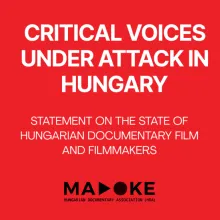
We received yet another threat to free speech and expression by documentary filmmakers, this time, the call comes from Hungary. Our friends at the Hungarian Documentary Association have published the statement below on May 15.
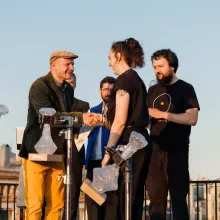
Founded in 2008, Doc Alliance is a collaborative network of seven key European documentary festivals—CPH:DOX, Doclisboa, FIDMarseille, Ji.hlava, Vision du Réel, Dok Leipzig, Millennium Docs Against Gravity—dedicated to promoting arthouse non-fiction cinema and supporting emerging filmmakers. For over 15 years, the initiative has played a pivotal role in strengthening the continent’s documentary scene by fostering inter-festival collaboration and increasing exposure for independent work. Spearheading many of its recent efforts is Galya Stepanova, the network’s coordinator and one of the driving forces behind its growing industry profile. Ahead of this year’s Cannes Film Festival and its Marché du Film (May 13–24), Documentary magazine sat down with her to discuss the Doc Alliance Award, long-term strategic goals, and how the network is adapting to better serve new voices and cross-border exchange.

“C” is for Censorship: PBS Cuts ‘Art Spiegelman’ Doc and Other Dubious Acts at Embattled Broadcaster
Twelve days before Art Spiegelman: Disaster Is My Muse (2024) was set to broadcast on April 15 across PBS stations nationwide as part of its strand American Masters, the filmmakers were told that a 90-second sequence—which shows the famous artist discussing an anti-Trump cartoon he created for the 2017 Women’s March newspaper—would be cut from the documentary.
With over three decades of learned experience from Disney, Oscars, Fox Sports, GSN, and the NFL in the areas of programming and production, Erik’s skillset is rich and vast. The depth of his industry experience, accompanied with an extensive education from CSU Fullerton, UC Santa Barbara, UCLA, Emory University, and Berklee College of Music, makes him a powerful force of creativity.
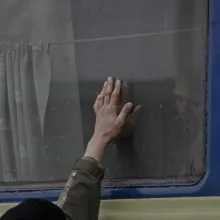
Alina Gorlova, Yelizaveta Smith, and Simon Mozgovyi’s riveting Militantropos , its title a mashup of “milit" (soldier in Latin) and “antropos” (human in Greek), is a striking verité look at how people don’t just fight wars but become “absorbed into war.” Indeed, through a series of meticulously framed images, along with a visceral sound design, we’re taken on a swift-moving trip through the surreality of today’s Ukraine—from the training of everyday citizens in lethal weaponry, to wandering cows on a decimated farm. But also children picnicking in a field, and farmers meticulously tending to
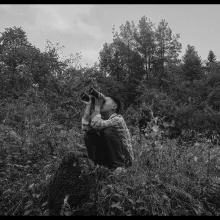
When does childhood end? This slippery question becomes the crux of Chinese filmmaker Deming Chen’s second feature documentary, Always. The film, which won the top prizes at CPH:DOX and Jeonju over the past two months, centers on an 8-year-old boy, Gong Youbin, and his family in a small village in southern China’s Hunan province. Before the film’s North American premiere at Hot Docs, Chen and Producer Hansen Lin shared with Documentary the feedback they received at different labs and forums, the selection of poems for their film, and the approach of prioritizing emotions, rather than logic, in crafting the story.
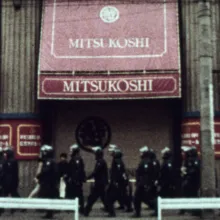
On October 8, 1968, a .22 caliber Rohm RG-10 handgun––colloquially known as a “Roscoe”––was stolen from a U.S. Naval Base in Yokosuka. Over the course of the next month, four shootings took place in Tokyo, Kyoto, Hokkaido, and Nagoya. The perpetrator, Norio Nagayama, was arrested and imprisoned the following April, two months shy of his 20th birthday. The cold, hard facts of this teenage murderer’s case served as the basis for Masao Adachi’s pioneering, hauntological landscape documentary A.K.A. Serial Killer, completed in 1969 but not shown publicly until 1975.
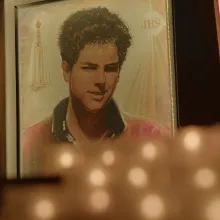
On April 27th, Pope Francis was scheduled to officially canonize the first saint from the Millennial generation. Before his untimely death from leukemia at age 15, Carlo Acutis (born 1991), had combined his enthusiasm for computers and his fervent Catholic faith by creating websites to document miracles. The film was produced by Castletown Media, which has in recent years found box office success in partnering with Fathom Events to release films touching on Catholic themes. Jesus Thirsts, for instance, was one of last year’s biggest nonfiction hits. We spoke with Castletown executive director Tim Moriarty, who co-directed and produced Roadmap to Reality, about the film, its funding, its release strategy, and how the Pope’s death has impacted the company’s plans.