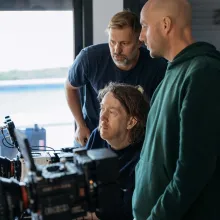
For three decades, Chris Smith has profiled oddballs, eccentrics, and mavericks. Smith’s first documentary, American Movie— a darkly funny but profoundly human portrait of an aspiring filmmaker struggling to complete his low-budget horror film in small-town Wisconsin—won the Grand Jury Prize at Sundance in 1999. Ten years later, in a four-out-of-four stars review, Roger Ebert called Collapse, Smith’s portrait of Michael Ruppert—a former LAPD officer turned controversial thinker warning of global societal collapse—the most frightening thriller he had ever seen. Fuelled by several hit streaming
Latest Posts
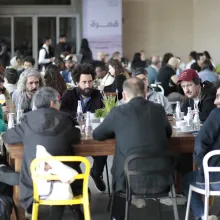
Qumra, the Doha-based industry event, named after the Arabic word believedto be the origin of “camera” and taking place from April 3–9, aims “to provide mentorship, nurture talent, and foster hands-on development for filmmakers from Qatar, the region, and beyond.” Out of the 49 selected projects, 12 feature-length documentary projects were presented in Doha: four in development, two in production, two Works-in-Progress, and four picture-locked. The line-up was rounded off by four short documentaries, all with Qatari involvement. Qumra is rooted in a fairly freewheeling format: at times, press and industry attendees mingle over lunches, mocktails, and networking events; at others, they follow separate paths. Nonetheless, the gathering unfolds across a limited number of venues, including the iconic Museum of Islamic Art and two luxury hotels in the brand-new district of Msheireb.
In a recent joint submission to a call for contributions on AI and Creativity at the United Nations Human Rights Council Advisory Committee, WITNESS, the Co-Creation Studio at MIT, and the Archival Producers Alliance (APA) outlined these pressing dangers. Drawing from years of frontline research, workshops, and advocacy with creative communities and human rights defenders around the world, we identified seven core threats AI poses to human creativity.
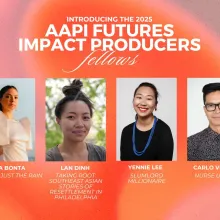
The Asian American Documentary Network, colloquially known as A-Doc, announces four AAPI Futures Impact Producer Fellows in advance of a cohort retreat at this weekend’s CAAMfest. This is the second year of the fellowship, after an inaugural cohort in 2024. A joint initiative between A-Doc and Asian American Futures, the fellowship supports impact producers of new documentaries with a $17,000 grant toward their film’s impact campaign and a holistic training program from April–December 2025. The application theme was “AAPI Legacy.” Projects were selected for their potential to “center AAPI
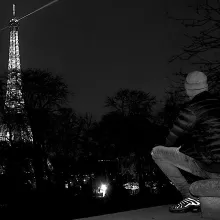
Encountering Sylvain George’s Obscure Night - Goodbye Here, Anywhere (2023) at the Locarno Film Festival two years ago was a revelation. The three-hour-long black-and-white documentary screened at the end of one of the festival’s final days. Given the exhaustion I felt going in, the question on my mind was whether I would make it through without drifting off. Three hours later, I left the cinema markedly more alert than when I had entered it. Goodbye Here, the second installment of the Obscure Night trilogy, follows a group of Moroccan teenagers in Melilla, an autonomous Spanish city in North
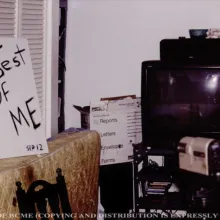
On January 14th,1996—his 21st birthday—Ricardo López started videotaping himself laying out his plot to attack the Icelandic popstar Björk. In this initial tape, López said Björk was a symbol of purity and innocence to him, an image which he said she destroyed by having relationships with two different black musicians, previously with Massive Attack’s Tricky and, at the time of his recordings, English music producer Goldie. Filmmaker Heather Landsman seriously considers López’s footage in her new film The Best of Me, which condenses the 20-some hours of tapes López produced into a hauntingly candid look into a deeply unwell and alienated individual. The Best of Me is being independently distributed by Landsman through the Film-Makers’ Cooperative, touring microcinemas.
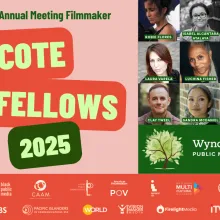
American Documentary, the nonprofit organization behind POV, POV Shorts, and America ReFramed, announces the 12 Wyncote Fellows who will attend the PBS Annual Meeting (May 19–21, Atlanta, Georgia). A curated program introduces independent filmmakers to the PBS Annual Meeting, the eight annual Wyncote Fellowship is coordinated by AmDoc in collaboration between PBS indie partners. This year, nominations were from POV, Firelight Media, ITVS, Reel South, WORLD, and the five organizational members of the National Multicultural Alliance: Black Public Media, Center for Asian American Media, Latino Public Broadcasting, Pacific Islanders in Communications, and Vision Maker Media.
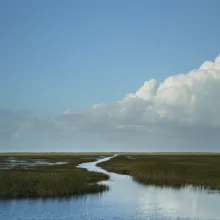
Documentary is happy to debut an exclusive clip from Sasha Wortzel’s debut feature River of Grass, which has been on a tear since its premiere at True/False in March. The film continues its festival run this week at Hot Docs and Margaret Mead. The genre-bending documentary chronicles Wortzel’s engagement with Marjorie Stoneman Douglas’s influential conservation screed The Everglades: River of Grass in the present day. On the clip, Wortzel explains, “This moment takes place around 10 minutes into the film where we are transported to the Florida Everglades, a vast region of interconnected
This article will be updated regularly as the situation unfolds with news and calls to action. July 30, 2025 The recent vote to eliminate federal funding for public media was a significant setback and disheartening for all US residents, and especially our documentary community. Despite the outcome, a record number of Americans voiced their opposition to these cuts, and lawmakers have taken notice – offering an opportunity to begin the process of restoring vital Corporation for Public Broadcasting (CPB) funding through the Fiscal Year (FY) 2026 appropriations process. On Thursday, July 31, the

We Live Here delves into the present-day reality of the Semipalatinsk nuclear test site—known during the Soviet era as the Polygon—and the enduring devastation it has wrought on those who still live there. Director Zhanana Kurmasheva centers the story on Bolatbek, an elderly man who has spent his entire life in a village just 30 kilometers from the Polygon. While the tragedy of the Polygon has been chronicled before, often in government-backed, TV-style documentaries, Kurmasheva’s work approaches the subject differently, elevating it to a kind of myth—a legacy that strangely defines who Kazakhs are. We Live Here is steeped in a sense of foreboding. We Live Here premiered at CPH:DOX. Ahead of the film’s North American Premiere at Hot Docs, Documentary spoke to Kurmasheva about what makes residents stay in such a contaminated area, the genius loci of the steppe, and the interplay of beauty and violence embedded within it.