
The word attendees kept coming back to when describing their SFFILM Doc Stories experience to me was, perhaps, an obvious one: intimate. The four-day doc gathering (Nov 5-8, 2026) up in San Francisco, which I attended for the first time this year, has the vibe of a close-knit homegrown event. As Director of Programming for SFFILM, Jessie Fairbanks put it at one point: Doc Stories feels like a high school reunion, with old friends, collaborators, and colleagues mingling and reminiscing in between screenings all the while strengthening the connections they’ve made here and elsewhere.
With only 10 features and 11 shorts programmed—all screening in the same venue, the historic Vogue Theatre in Presidio Heights—Doc Stories revels in its intentionally contained agenda. This fall nonfiction showcase may well be designed to spotlight works with rising profiles in the fall festival circuit (its opener was Ava DuVernay’s NYFF opener 14th; its closer Sam Pollard’s Berlinale title, Tutu), but the vibe throughout the weekend was one of community and camaraderie, as if Doc Stories allowed those showing and watching films to connect in ways they may not be able to in larger spaces and gatherings (like, say, SFFILM’s banner spring fest).
“Since its inception and its launch, the idea was to be able to embrace the fact that so much of the documentary film industry lives and works here,” Executive Director at SFFILM Anne Lai tells me, explaining what guides the work that goes into building out Doc Stories, now in its 12th edition, each fall. “There’s a really rich audience base here, too.”
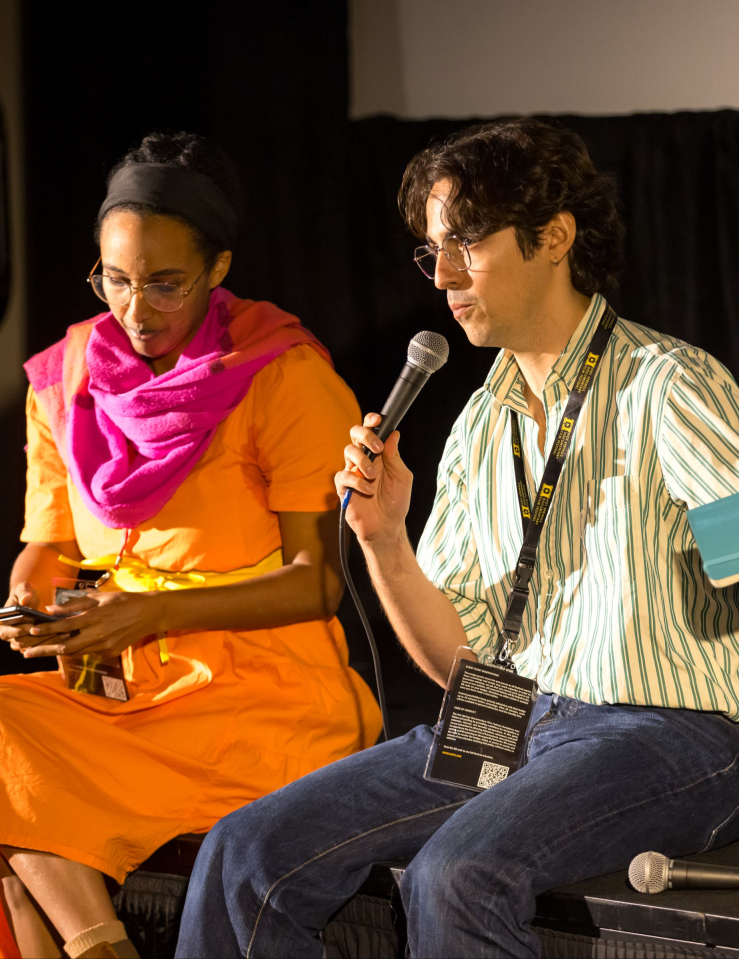
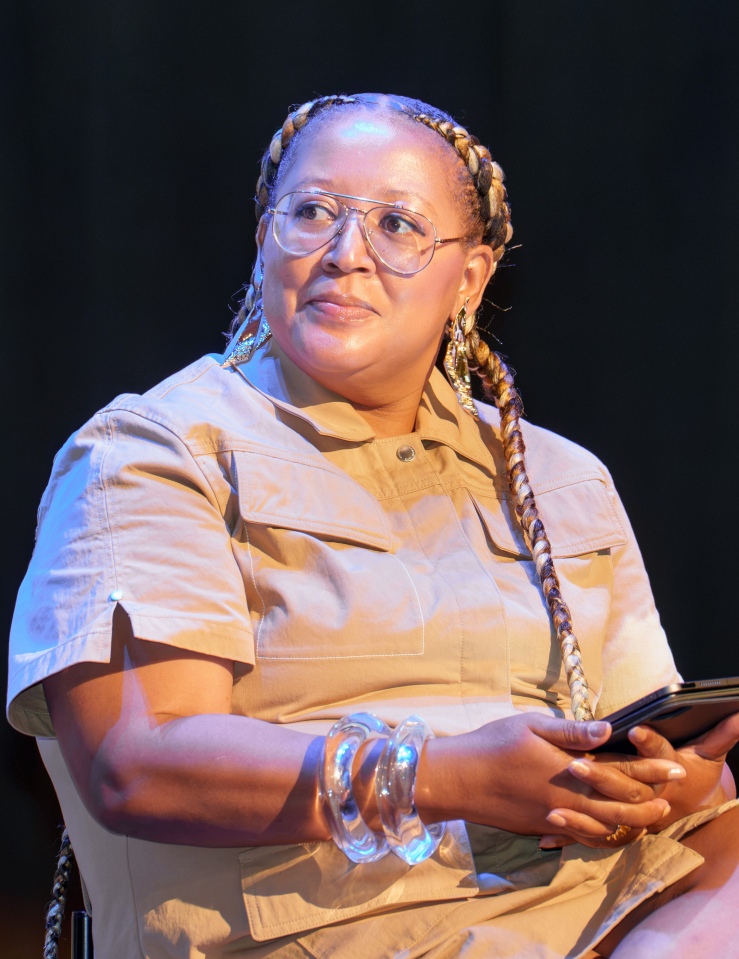
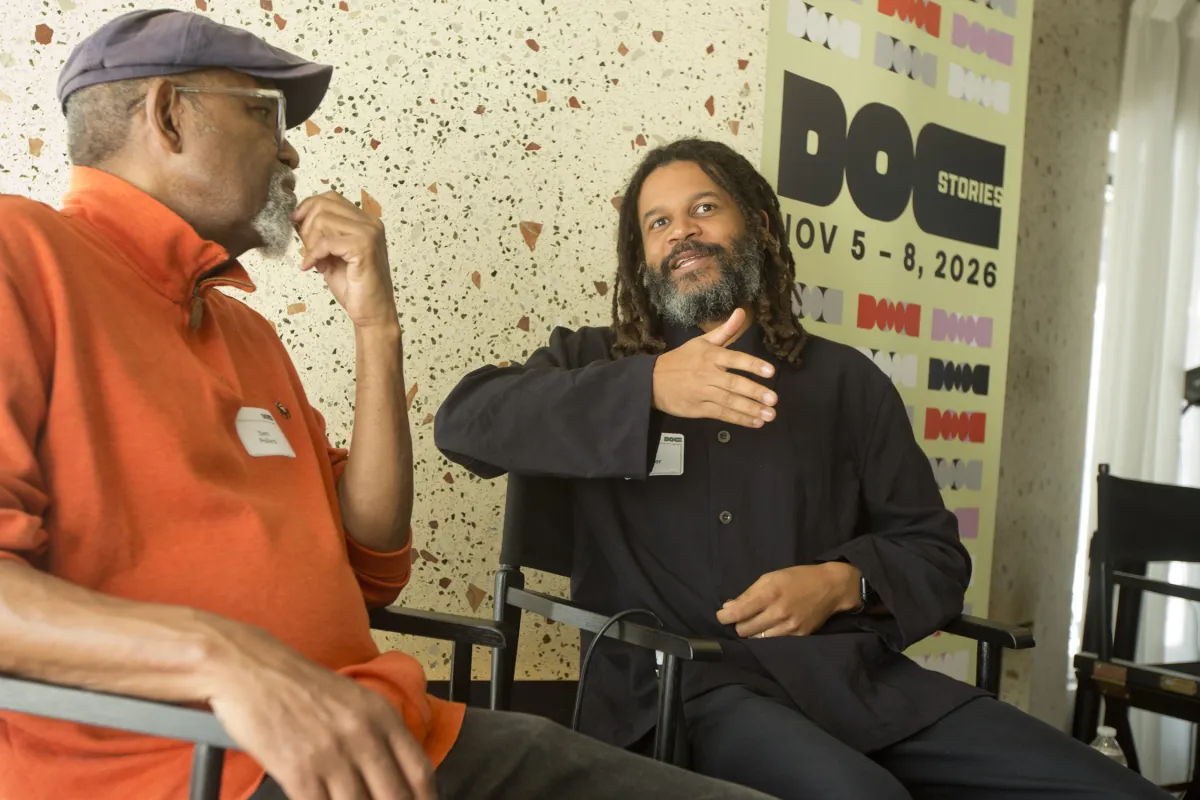
That audience packed the screenings I caught at the Vogue Theatre as well as the lively chats Doc Stories hosted a block away at Laureate Bar & Lounge, which served as the main base for the four-day event. Indeed, those talks—which included chats with They’re Here co-directors Laura Poitras and Rachel Lauren Mueller, a talk on cinematography with a trio of filmmakers who lensed their own docs, as well as a playful dialogue with Pollard and Soul Patrol’s J.M. Harper—were most illustrative of what Doc Stories aims to be.
“What I really wanted to do with this was to have a fireside-type vibe, where it is a different type of conversation than you can have in a Q&A that is really very much about craft as well as approach,” Fairbanks tells me. Part of that entails curating the audience: while these talks were listed publicly, SFFILM extended invitations to members of its filmmaking community, resulting in the kind of attentive, process-focused audience questions that the visiting filmmakers clearly enjoyed. Watching Pollard and Harper, for instance, volley back and forth about working with archival work for their respective films, or hearing Erik Shirai discuss how his choice of lenses and cameras aimed to make the world of Sumo: Spirit Weighs Nothing feel as timeless as its subject matter was a true joy—and a mark of how invaluable these peer-to-peer conversations can be amid a fall season that’s so often dominated by sound-bite-ready FYC-driven talks.
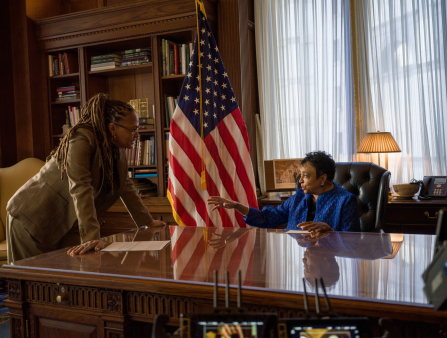
14th.
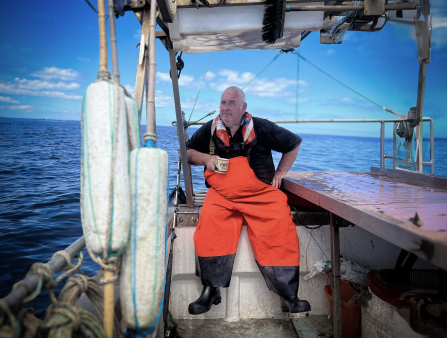
All Rivers Spill Their Stories to the Sea.
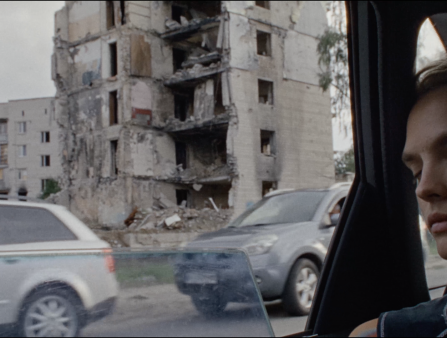
Black Sunflowers.
The film program itself was a welcome mix of prestige titles still making the festival rounds (some with distributors already attached) and independent projects getting their own spotlight amid foggy days in SF. DuVernay’s 14th, coming soon to Netflix, was undoubtedly the highest profile film of the bunch. A follow-up to the filmmaker’s Oscar-nominated 13th, DuVernay’s latest doc is a similarly timely and scholarly look at the amendment in question.
Featuring the likes of Sherrilyn Ifill, Stacey Abrams, Congresswoman Alexandria Ocasio-Cortez, and Ambassador Jeff Flake as talking heads, the film is a civics and history lesson not only on what the Fourteenth Amendment protects but also on how it’s being systematically dismantled. That framework, which requires it to offer a legal history as well as a contemporary commentary, means there’s an intentionally repetitive structure designed to drill down its main argument in viewers who are asked to contextualize recent Supreme Court rulings and Republican talking points with the very language of the five sections of the amendment (the film’s central image is that of a five-point star). Exhaustive and yet a tad overstuffed, urgent and yet not quite as muscular as its predecessor (with a number of clunky archival photos brought to life with AI), the film remains, as designed, a didactic tool in search of a willing audience.
Elsewhere, SFFILM’s Doc Stories offered some fresh finds. The title for Jeanie Finlay’s All Rivers Spill Their Stories to the Sea has a mundane poetry that is fitting for a story that is decidedly local yet feels like a fable of our modern-day foibles. Finlay follows Stan Rennie, a fisherman in North East England who finds himself being an unwitting if fierce activist when one day he and his community awake to find an entire beach covered in dead crabs and lobsters. The mass death event presages an irrevocable change to his decades-long livelihood. Soon after, it’s clear the waters he’s long depended on will no longer provide for him or his fishing mates. Stan, like many others in his small town, wants answers, but all he gets—from the mayor, government officials, even leading experts—is not just insufficient. It is insulting.
Part portrait of a man, a town, and a way of life, and part ecological procedural with many frustrating dead ends, Finlay’s film is sly in its simplicity, bearing witness to what Stan is fighting for, futile as it increasingly seems. Yet that simplicity belies a care and attention to how All Rivers is designed. There’s a rugged beauty to the way Finlay (serving as her own cinematographer) approaches this story, neither as a sensationalized crusade nor as a mere example of modern-day community disenfranchisement (at the hands of indifferent government agents and greedy corporations). Finlay never loses sight of the fact that, no matter the ecological scope of her story—about a one-in-a-generation event—this is ultimately a human-scale story of men just trying to get by.
The most surprising appearance at the weekend’s festivities was Sean Penn, on hand to support and introduce James Marcus Haney’s Black Sunflowers. An executive producer on the film, Penn was unexpectedly effusive about this doc about Ukrainian youth: this is the film he’s long been wanting to make about the conflict, proof of the resilience of a people who have had to deal with unimaginable circumstances. “You could say that there is a poverty of dreams in much of the culture of Russia,” he told the audience, “but this is a generation that refuses the poverty of dreams in Ukraine.” Haney’s film is very much about that generation. Following a motley crew of Ukrainians—from a pair of twins who find solace in art and on dancefloors and a couple who struggle to close the chasm between their lives as civilian and soldier to a group of drifters who insist on recapturing the adrenaline rush of the front in their racing cars—Black Sunflowers has a raw, kinetic sensibility. No surprise considering one of its co-editors, Olaf Woldan, worked on Beyoncé in Renaissance: A Film by Beyoncé (dirs. Beyoncé, Ed Burke, 2023) and on music videos for the likes of Raveena and Karol G.
And while its thunderous, electronic-music-driven opener is a thumping editing feat that immediately immerses you in the world of these ambling youth, the film is most affecting in the moments when it captures the incongruence of the world it’s capturing: a gun on a bedroom’s mantelpiece, a prosthetic leg amid a sea of raving kids on the dance floor, and, yes, a charred field that gives it its title.
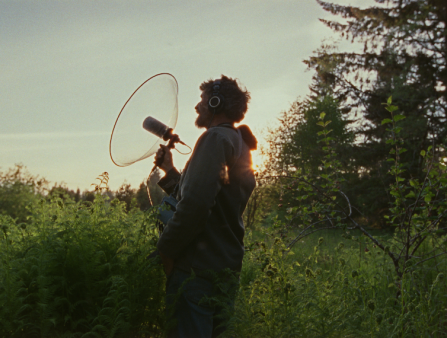
Listen.
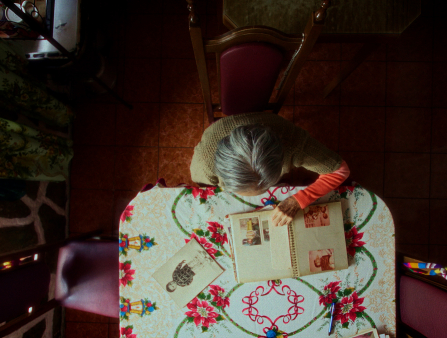
Pelo lindo.
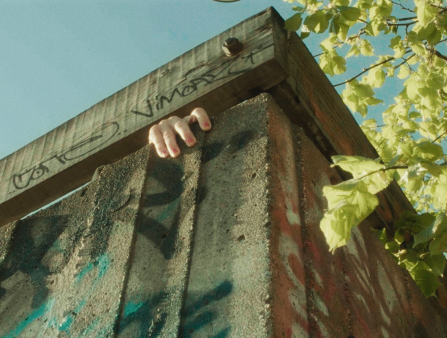
Son.
Given the parity the fest offered to short films, I’d be remiss not to single out a few that stood out amid Doc Stories’s two shorts blocks: “Sensory Experience” and “New York Times Op Docs.” The former, as its title suggests, made room for a number of projects focused squarely on, as the program notes put it, filmmakers who “turn attention into revelation.” Listen, by Taliesin Black-Brown (about a sound recordist capturing the soundscapes of the Alaskan wilderness in the wake of his mother living with dementia) and Pelo lindo by Josue Garcia Prado (following a mother in Guatemala keeping the memory of her disappeared son alive) made for twinned illustrations of how remembrance—nostalgia even, both having the well-worn look of grainy, textured film—is wrapped up in tangible encounters, all the better captured and embalmed in the films that house them. And in the Op Docs section, A Wolf in the Suburbs by Amélie Hardy (a playful portrait of a former Canadian Olympian fighting over a rewilding project in suburbia) and Son by Leona Cauklija (a similarly winking piece about a Swedish mother turning to graffiti in order to reconnect with her estranged son) were a solid reminder that great portraiture requires not just great subjects but a formally adventurous way to meet their sensibilities.
Such breadth of filmmaking—especially in blocks where the likes of Poitras (They’re Here) and Joshua Oppenheimer (The Revolution Against Death) were represented—speaks to the goal at the heart of SFFILM’s Doc Stories: to ably balance the needs of its doc-literate audience, the demands of an award-season-in-progress, and the desire to celebrate the varied forms creative documentary can take in 2026.
But the success of this annual gathering, as Lai and Fairbanks told me, is just as much about the experience they build for those showcasing their work. As Fairbanks put it, “If a filmmaker feels—especially filmmakers without support—seen and like they’ve made connections, have enjoyed their time here, and even got to watch someone else’s work, then that is a success for us.”