

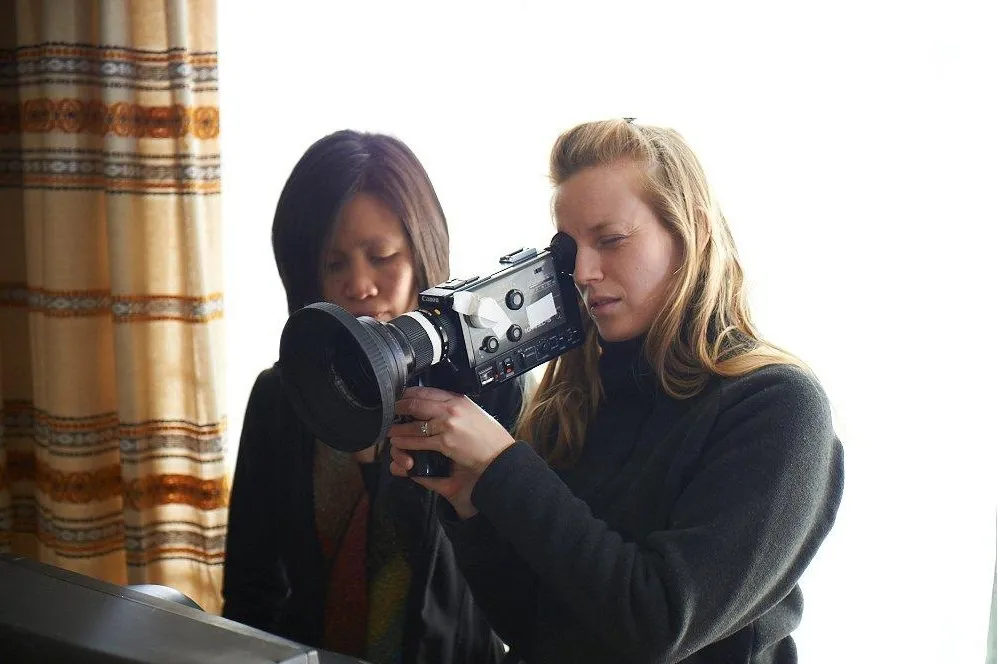

In this interview, the trio behind the Tribeca doc The Haunting of Pennhurst discuss the challenges of braiding together the story of an infamous
Tribeca

Khoroldorj Choijoovanchig on why he prioritized the personal over the political in his Mongolian mining doc, Colors of White Rock

Congratulations to the numerous IDA members who have premieres and presentations at Tribeca and DC/DOX 2026.

Amid the U.S. festival’s commercial wrappings, three docs from rising filmmakers plumb the depths of American inequity

It’s only us; there’s no them. That’s the provocation at Tribeca’s 2025 Immersive exhibition, titled In Search of Us, mounted in partnership with Onassis ONX and Agog. The exhibit seeks to challenge the act of othering that is so entrenched in media landscapes with “us vs. them” ideologies. About half of the show is comprised of documentary or documentary-adjacent work. This dispatch includes review of four exemplary nonfiction works.
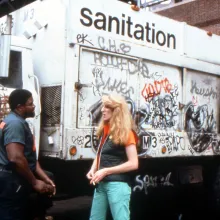
Maintenance Artist, directed by Toby Perl Freilich, is a fascinating look at Mierle Ukeles—an undeterred feminist and advocate for the working class who constantly defied labels. Just prior to the film’s documentary competition debut, Documentary caught up with Freilich to learn how she ended up collaborating with this unconventional and unusually empathetic character.
Suzannah Herbert’s Natchez is a multilayered, character-driven look at the titular town in Mississippi (U.S.), which is wholly dependent on a declining industry. In this case, the manufacturing is of whitewashed tales that have turned into hardened history. For generations, Natchez has been financially dependent on its antebellum tourism industry, in which hoop-skirted docents in grand mansions regale visitors with, as one knowing character puts it, a “Southern construct” that’s “used to sell tickets.” Just prior to the film’s Tribeca Documentary Competition premiere, Documentary caught up with Herbert (Wrestle) to learn all about her stellar sophomore feature. Last week, Tribeca announced that Natchez won not only the best documentary feature prize but also special jury awards for cinematography (to Noah Collier) and editing (Pablo Proenza).
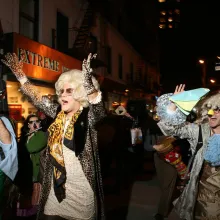
It’s been 23 years since Sandi DuBowski’s groundbreaking Trembling Before G-d, which uncloaked the lives of Hasidic and Orthodox gays and lesbians, made its Sundance debut. Since that time DuBowski has built a career at the intersection of religion and queerness, social activism and filmmaking, always avoiding the binary choice in favor of the “and.” This insistence is a bond shared by the director-producer and the riveting Israeli-American star of his latest feature Sabbath Queen—a doc over 21 years in the making focused squarely on Rabbi Amichai Lau-Lavie, a descendant of 38 generations of Orthodox rabbis.

If you don’t already know what the Swahili word amani means, we won’t spoil it here, as Nicole Gormley and Debra Aroko’s Searching for Amani treats it
“No one enters trucking from charm school,” notes Desiree Wood, star of Nesa Azimi’s long-haul road trip film Driver , which follows the founder of