

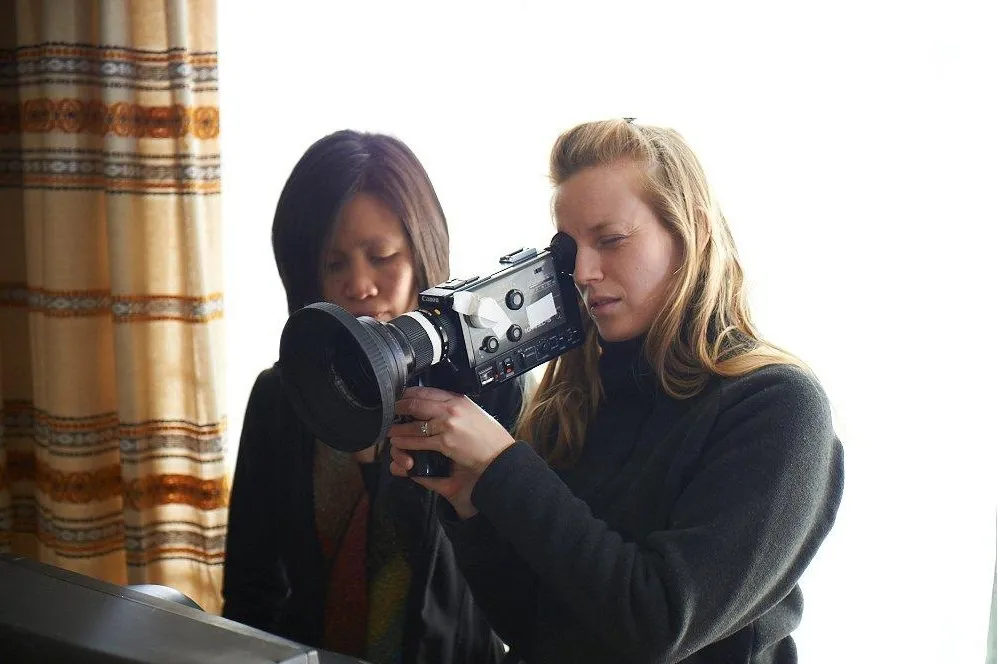

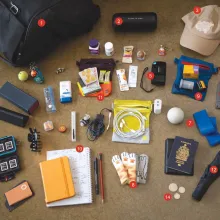
Cinematographer Iris Ng seeks meaningfulness in her experiences on set, on and off-camera.
Column
When making Deepfaking Sam Altman (2025), documentary director Adam Bhala Lough (Telemarketers) found himself in deep doo doo. Despite months of trying, he still hadn’t gotten access to an interview with Sam Altman (CEO of OpenAI) for a film Lough had promised about AI. So he took a page from Altman’s own MO. The resulting film follows Lough setting about on his journey, working with deepfakers in India, meeting with lawyers, and ultimately spending a lot of time chatting and bonding with the resulting AI chatbot, called SamBot. For this edition of The Synthesis, we spoke with Lough about the film, his use of AI, and its implications for documentary.

In a recent joint submission to a call for contributions on AI and Creativity at the United Nations Human Rights Council Advisory Committee, WITNESS, the Co-Creation Studio at MIT, and the Archival Producers Alliance (APA) outlined these pressing dangers. Drawing from years of frontline research, workshops, and advocacy with creative communities and human rights defenders around the world, we identified seven core threats AI poses to human creativity.
Sora, a new generative AI video tool from Open AI, is named after the Japanese word for sky. Is the sky the limit? Last year, the company gave early access to 300 artists, some of whom later denounced the company’s product release as artwashing. OpenAI responded with a series of exclusive promotional screenings of artist-made films for industry executives in New York, Los Angeles, and Tokyo. What might this all mean for the documentary field? We decided to run our own experiment. To test the limits of Sora, we prompted it with the taglines from the six most recent Oscar-winning documentaries. We showed the resulting 15-second silent clips to a panel of seven documentary luminaries over Zoom.
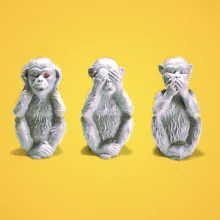
When it comes to AI and documentary, all bets are off in 2025. So, we scrapped our column line-up for The Synthesis and hit reset. To recap, it’s been a dizzying year so far: in Europe, the February Paris AI Policy Action summit failed to usher in much meaningful regulation, and in the U.S., under the new Presidential administration, a March directive from the National Institute of Standards and Technology eliminates the mention of “AI safety” and “AI fairness.” To reboot in this context, we checked in with a few documentarians, artists, and human rights advocates. We asked them this question: In this unregulated and dysregulated landscape, what are the immediate and new concerns of AI shaping the future of documentary filmmaking in 2025?
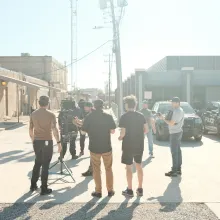
I have been producing projects with director Dylan Sires since 2017. Our latest project, 'ChiefsAholic: A Wolf in Chiefs Clothing' (2024), is an Amazon Original documentary about Kansas City Chiefs superfan Xaviar Babudar, aka “ChiefsAholic,” who rose to fame with his social media antics. But a secret life came to light when he was arrested, unraveling a series of unsolved bank robberies committed across the Midwest. ChiefsAholic was the first time we were given money to develop something—US$60,000, in fact. That only covered two weeks to capture enough of the story that we could use to sell. It was naive of us to think that having a budget made things any easier. At the time of writing, 'ChiefsAholic' carried a U.S. number one position on Amazon Prime for four days and generated a wild response from true crime fanatics and Chiefs Kingdom.
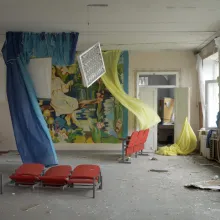
Documentary brings you capsule reviews of some highly anticipated films: Intercepted, The Last Republican, Night Is Not Eternal, and Nocturnes.
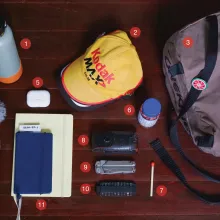
Cinematographer and director Zac Manuel captures reality without the barriers of bulky equipment.

Dear Readers, I am back at IDA from a semester dedicated to research as a Documentary Film Fellow at Harvard’s Shorenstein Center on Media, Politics
I ended my last Notes , back in August of last year, by writing that these are treacherous times for documentary film and all truth-seeking art. It is