Feature

On October 8, 1968, a .22 caliber Rohm RG-10 handgun––colloquially known as a “Roscoe”––was stolen from a U.S. Naval Base in Yokosuka. Over the course of the next month, four shootings took place in Tokyo, Kyoto, Hokkaido, and Nagoya. The perpetrator, Norio Nagayama, was arrested and imprisoned the following April, two months shy of his 20th birthday. The cold, hard facts of this teenage murderer’s case served as the basis for Masao Adachi’s pioneering, hauntological landscape documentary A.K.A. Serial Killer, completed in 1969 but not shown publicly until 1975.
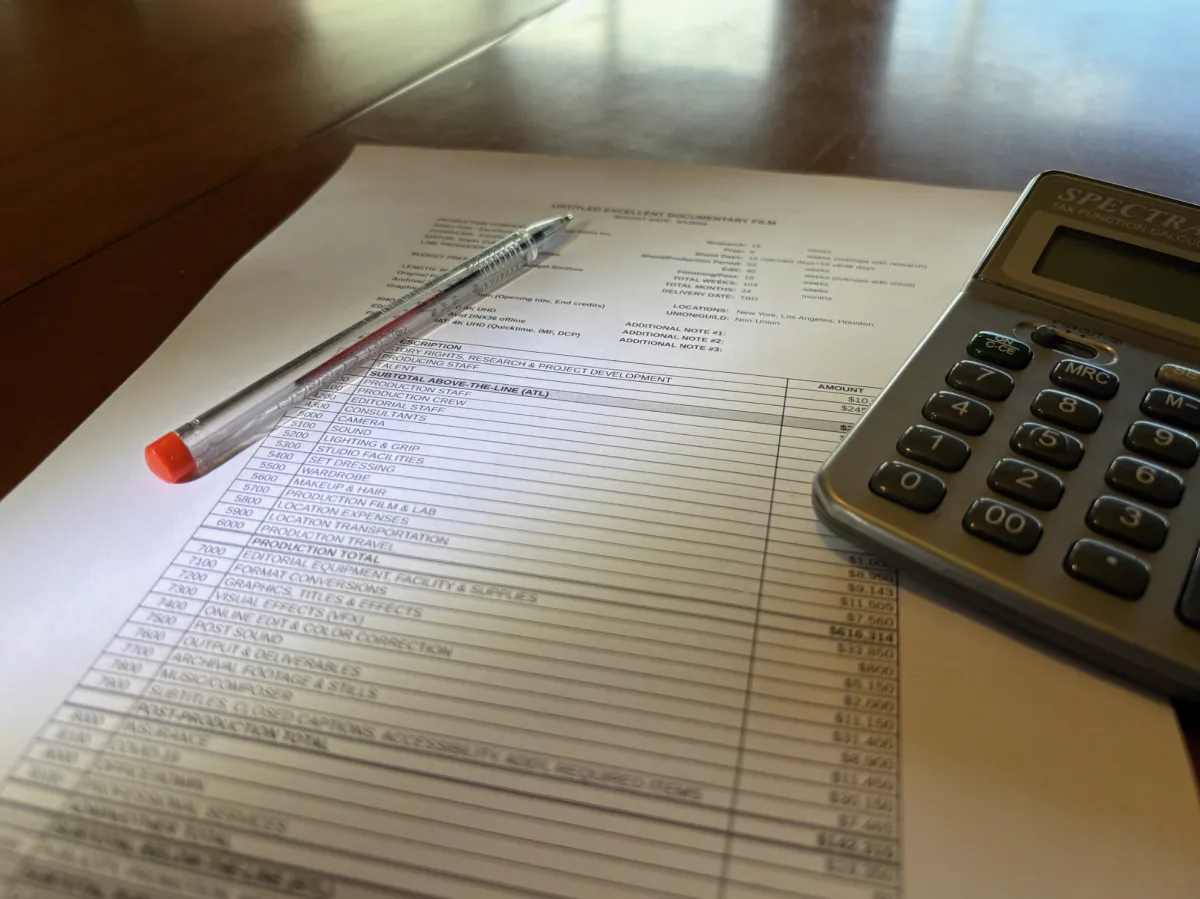
Over the past several years, when discussing the audience exodus to large platform streamers, I’ve encountered exhaustion from filmmakers, arts workers, funders, broadcasters, distributors, and exhibitors. Everyone wants to help fix the problem, but no one knows where to start. That’s because there are real issues that stack the deck against documentary filmmakers and our audiences. They can be classified into three main categories: funding, discoverability, and unequal market power.
Access to archival media is often the result of the invisible work of teams of archivists and technicians who preserve content on fragile media and provide it to the public. Accessing archival media can be a financial challenge for documentary filmmakers because preservation of media is as time consuming and expensive (sometimes more) as shooting new footage. Logistically, making this material available is time consuming, expensive, and requires skilled team members to coordinate. Our upcoming research study, Mapping the Magnetic Media Landscape, a project of BAVC Media, examines U.S. collection holders’ needs and how we might support them. Because of our decades of work with and for filmmakers, we can put it bluntly: All of these costs are ultimately passed on to the filmmaker.
The narrative content division of independent music rights company Concord develops unique fare in a sea of music documentaries: Although any project about Stax Records or featuring their music would legally and logistically require Concord to be involved, 'Stax: Soulsville U.S.A.' is unique in that it actually originated from the company itself. Officially launched in 2021, Concord Originals produces and develops projects based upon the million copyrights the company owns and represents, such as the music of Creedence Clearwater Revival, Rodgers & Hammerstein, and Cyndi Lauper.
No summary could ever do justice to what Belgian filmmaker Johan Grimonprez has created through his audiovisual-textual collage Soundtrack to a Coup d’État (2024). The year 1960, famously called the “Year of Africa,” serves as the political, social, and cultural matrix on which Grimonprez builds his manifold narrative—moving back and forth in time and space, layering sound, image, and text with texture and depth. Now an Oscar nominee, the documentarian comes well-prepared, armed with the quintessential skills of an avid researcher and a seasoned orator, opening new tabs in our minds with each question while anticipating potential criticisms with humility and curiosity. Documentary magazine sat down with Grimonprez to discuss Soundtrack to a Coup d’État in his format of choice: a dialogue.
Although few people outside China have heard of it, the West Lake International Documentary Festival—locally known as IDF, which stands for “I Documentary Fact”—has quickly become the country’s leading documentary festival since its inception in 2017. The 2024 edition of IDF was held on the last weekend of October at the Xiangshan campus of CAA on the outskirts of Hangzhou, the city whose iconic lake inspired the festival’s name. Over the past few years, IDF has made a name for showcasing formally innovative and thematically diverse works from around the world. This dispatch covers: Anĝelo in 1948, Flames, White Snow, Yellow Roses, Blanket Wearer, and The Dream of Super Bridge.
In its work with superstar athletes, Gotham Chopra’s full-service documentary studio maneuvers through tricky questions of access and creative control: Seven projects in production. Dozens more in development. And in the summer of 2024, three high-profile series about game-changing athletes: In the Arena: Serena Williams on ESPN+, Simone Biles Rising on Netflix, and Welcome to the J-Rod Show on FS1. Religion of Sports (RoS) is on a roll, having achieved a scale and consistency quite remarkable for a documentary production company.
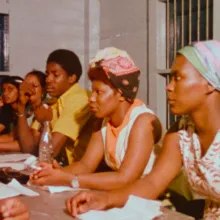
The outcome of the Platform Films meeting was the formation of the Miners’ Campaign Tapes Project, with 13 groups (including Platform; Trade Films in Gateshead and Newcastle; Chapter Community Video Workshop in Cardiff; Amber Films in Newcastle; Birmingham Film and Video Workshop; Open Eye Film and Video Workshop in Liverpool; Active Image in Rothertham and Sheffield; Films at Work in London; and the London Media Research Group) committed to producing footage interviewing miners and their supporters and documenting strike and fundraising activities. The material was then sent for editing down, mainly by Chris Reeves of Platform and Chris Ruston of London Video Arts, into what was originally planned to be 10 shorts and one feature-length work. The final project would consist of six short tapes.
Year after year, TIFF Docs tends to be populated by glossy, formally conventional, commercial fare—occasionally punctuated by works from prolific documentarians and festival award winners. Nonfiction works marked by innovation and ambition are pushed to the periphery, a consistent gesture that betrays what the festival regards as “best” in the arena of nonfiction cinema. Here and elsewhere, I couldn’t help but feel the subtle repositioning of the festival in anticipation of the impending launch of TIFF’s official market in 2026. Invitations to seek hidden, artistically driven gems, to interrogate the collapsing of boundaries between fiction and nonfiction remained open across other programs such as Wavelengths and Centrepiece.
The New York Film Festival (NYFF), now in its 62nd edition, is one of the biggest film festivals in the United States and, along with TIFF, the most important second-run festival in North America. This year’s edition found itself in the intersection of a number of conflicts surrounding the ongoing Israeli bombing of Gaza. These events serve as a reminder, despite the protestation of some donors, that no one can truly shut politics out of the festival. As it happens, protest was itself the subject of many of films in the festival.