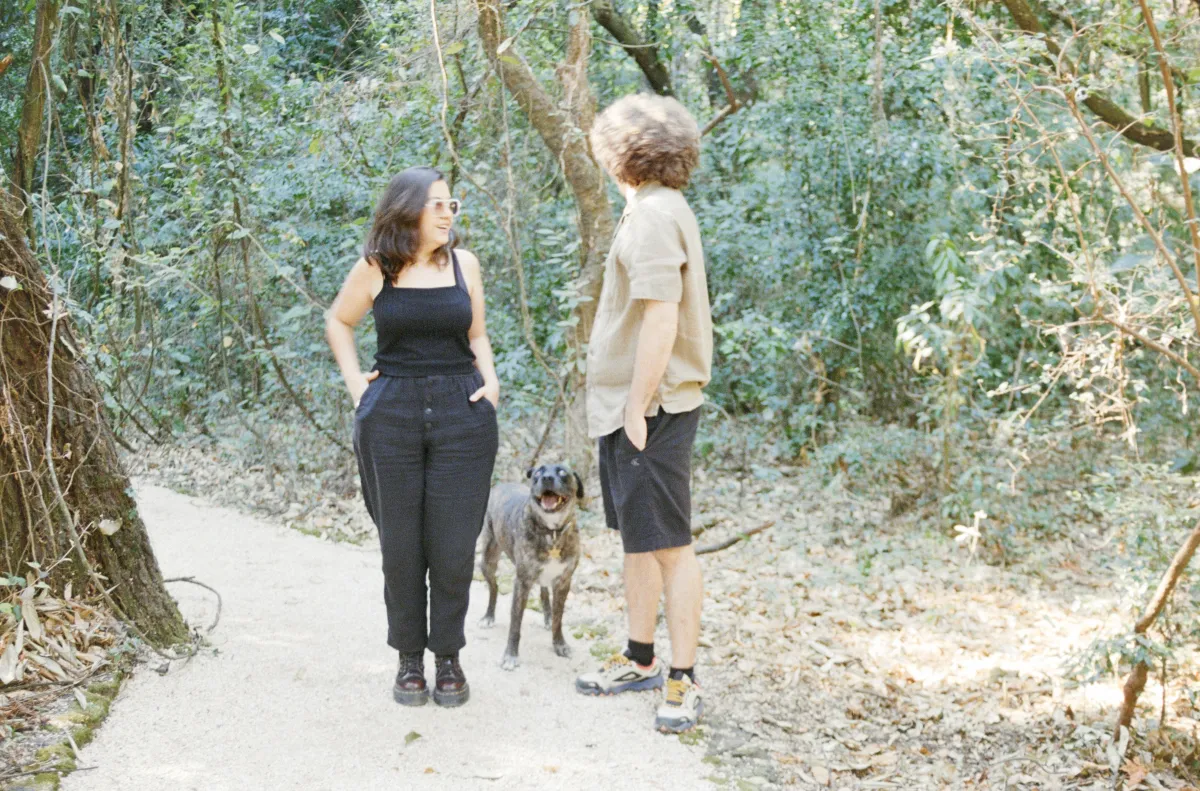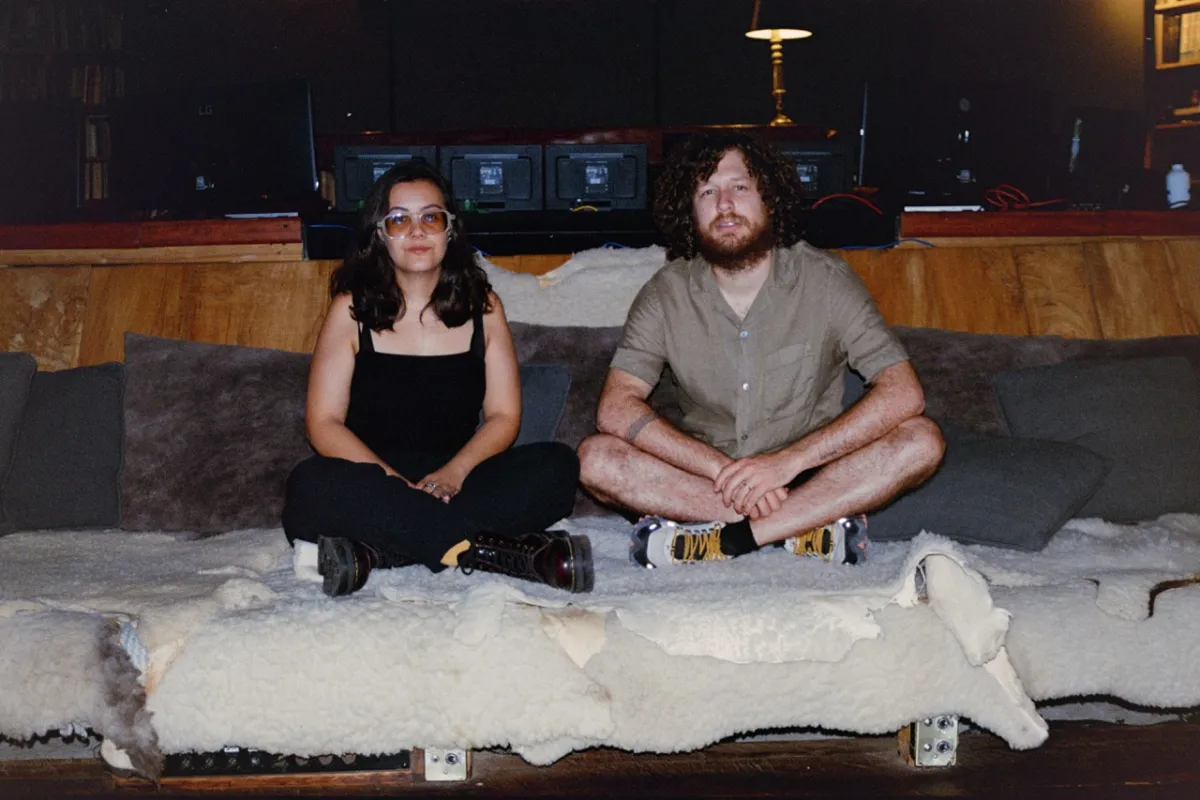

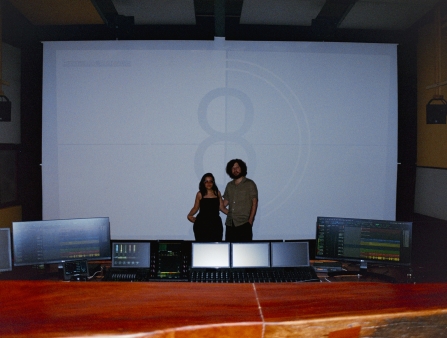
When radio DJ and crate digger Arturo Salazar shifted from his much-beloved Ibero 90.9 radio show to film over a decade ago, he never thought that he’d become one of the most sought-after rerecording engineers in our industry. Today, Arturo (or Frosty as he’d prefer you call him) has carved out a place for himself alongside acclaimed Colombian sound designer María (Maja) Alejandra Rojas.
I’ve worked with them three times. The approaches and budgets were different each time, but Maja and Frosty’s characteristic calm and commitment to developing a bespoke sonic vocab for each assignment were consistent. Because of the difference they’ve made on the projects, I’ve started to see sound design as equal parts a technical, creative, and pastoral-care necessity. Sound design has long been overlooked outside the industry, outside of the popularity of Foley videos that make the process look cool. Arturo told me, “Some directors don’t understand what sound design is until they’re in person with us. Then it all makes sense. Witnessing that growth can be magic.”
As in the U.S., the impact of the streaming platforms on independent Mexican filmmakers is keenly felt, with titles that would have previously been a no-brainer for theatrical release redirected to the small screen. But the projects that truly make Maja and Frosty light up? Indie films from visual artists that nudge audiences toward an emotional experience. The choices these two make can set or upset the sensory pH balance of a scene with the push of a button. They inevitably lean toward films that are more sound-centric. If it does not work for Maja and Frosty creatively, it likely won’t be a fit sonically. You’ll know some of their titles: Carla Gutierrez’s Frida (2024), Alison O’Daniel’s The Tuba Thieves (2023), Christine Haroutounian’s debut scripted feature After Dreaming, and Silver Bear–winner O Último Azul from director Gabriel Mascaro. The latter two premiered at this year’s Berlinale.
The pair often works at the post-production facilities of Disruptiva Films or Splendor Omnia. Paulina Villavicencio, owner of Disruptiva, writes: “María and Frosty are alchemists, guardians, and creators of sound. The spaces become their lab to unleash their talent.”
***
Film is everything to Maja and Frosty and it is in all they do. They met through work, co–sound designing a project that unfolded into another, and then another. Frosty proposed at the Berlinale; their honeymoon was at Morelia. Telling themselves they’d take a “real” honeymoon next, they ended up on a second honeymoon at Cinema Eye Honors.
These 14 years together have brought endless personal and professional change. María’s path to sound design started in religion: “I don’t have a faith now, but my first steps to sound took place in the church. I realized later that I wanted to be close to the audio equipment—the mics and consoles—more than I actually wanted to strengthen my faith in God.”
Now she’s using time-saving AI tools, which she says she never could have predicted back then. “My career has been exhilarating thanks to this moment in time. I’m always excited to use a new tool. Dialogue cleaning tools in particular are changing our nonfiction projects.”
Is “sound designer” even an accurate term for what they do? Frosty tells me that “we’ve been having that conversation since we met. In the USA, ‘sound supervisor’ carries more weight. In reality, it changes. I could be a rerecording mixer one minute, an editor or supervisor the next. It’s all working collaboratively to translate ideas from the directors’ heads.”
Director Rajee Samarasinghe had been inspired by his friend the director Alison O’Daniel’s experience with the pair, so he traveled to Mexico City and mixed Your Touch Makes Others Invisible (2025) at Disruptiva. We were sent tantalizing WhatsApp updates of Foley involving machetes and coconuts. He echoes the collaborative ethos expressed by Frosty. “Sound in the context of nonfiction can be tricky. It’s tricky to shape how reality breathes, blurs, and resonates, but with Maja, Arturo, and co–sound designer Nayuribe Montero, it all felt so fluid. Like conjuring a shared dream.”
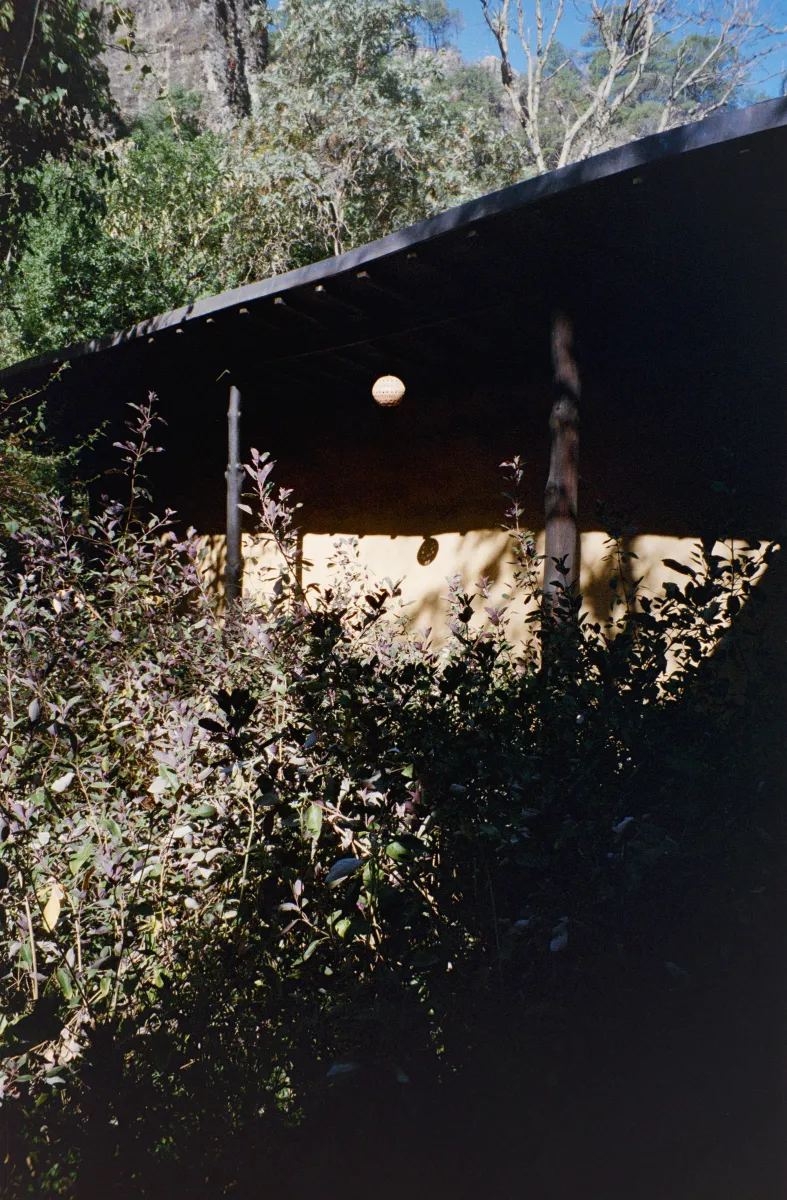
When working long postproduction hours indoors, it’s easy to become detached from nature’s restorative powers. Arturo and Maja’s sound design is also influenced by their regular work at post studio Splendor Omnia, which lies in a valley in the Tepoztlán mountains and was established by renowned filmmaking couple Carlos Reygadas and Natalia López Gallardo. Enveloped in calming natural surroundings, the location itself sort of defies words. Sparse mobile phone reception contributes to the filmmakers’ hyper focus both on the work and on their collaborators. The environment is deliberate, as designing requires a lack of interruption from the outside world. Rerecording mixers Jaime Baksht, Carlos Cortés, and Michelle Couttolenc did the principal mix for Sound of Metal at Splendor Omnia, leading to its win for Best Sound at the 2021 Academy Awards.
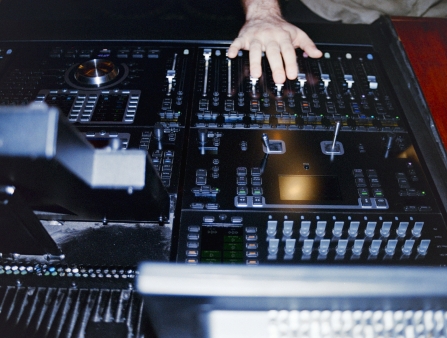
What is sound design? Put simply, direct sound from the set is combined with ambient sound put together by the sound designers. Additionals like Foley are done in-studio and once a solid foundation is completed, all the auditory components get merged. Movement, textures, levels, and many other tweaks give nuance and ultimately deliver what audiences hear.
***
Splendor Omnia.
Creating a shared dialect around each project, with its own specificities and idiosyncrasies, provides a necessary shorthand, forming a creative bubble around each filmmaking team. Inside, directors feel safe to describe what they’re envisioning, however tricky-to-articulate it might be. “Sound is so abstract you can lose yourself trying to describe it, so we build our own code for each movie,” Frosty tells me.
For The Tuba Thieves, Alison O’Daniel stayed at Splendor Omnia for four consecutive weeks for what Maja jokingly calls the “Sound Design Winter Camp.” The Tuba Thieves is a multi-experiential documentary told through the stories of d/Deaf people, and which took 11 years to make. Alison worked with Maja, Frosty and two additional sound designers, Chema Ramos Roa and Sofía Hernández Ortega. “It was an out-of-this-world challenge that may never repeat itself and which we feel lucky to be a part of,” Frosty says.
The intensity of that month paid off: The audience cheered when the sound design credit appeared on-screen during the film’s premiere at the 2023 Sundance Film Festival. The team’s shared lingo was not just verbal. Frosty says, “It was more complex on Alison’s film. We were stretching sounds with our hands, punching the air, making gestures. Sometimes you can convey what you mean with a look.”
Alison described her experience collaborating with the duo as having “a deep reverence and respect for listening.” In a conversation published online by MoMA’s magazine for its Doc Fortnight screening, Alison said, “You trusted my relationship to my ears. You were never posturing that you knew more than me. It’s hard to overstate how profound that is for me, to feel listened to.” They never soundsplained. They were collaborative: “We had so little time. We had to just dive in and really get to know one another.”
One of Maja and Frosty’s best-known projects is Frida, a documentary about Frida Kahlo that braids Frida’s diaries, letters, archival footage, and animation. A working mom who isn’t always able to take extended time away from home for her films, it was important to the U.S.–based director Carla Gutiérrez that the Frida team be Latine and collaborate in person. So she also sound mixed her film in Tepoztlán. “When you work with Maja and Frosty, you’re working with artists. It’s a more well-rounded creative experience than you typically get in the U.S.”
Maja speaks to the experience on Frida: “I remember Carla wanted what she was calling the death wind. She wanted us to use it with Frida’s animation to show the hollowness Frida had felt even before she died. It was a sensation, not a sound.” It’s this shared language that’s meant that remote workflows, although often necessary, have both expanded and limited how Maja and Frosty collaborate.
Christine Haroutounian also worked at Splendor Omnia on After Dreaming, a scripted film about her journey across an Armenia haunted by the ongoing conflict with Azerbaijan. On her experience, Christine writes, “This is a bit personal but I will never forget the last evening when we finished my film. After our small wrap party, I walked to my bungalow surrounded by foliage and could deeply see far through the forest. It was a new way of seeing by night and made me very present. This surreal change in perception suddenly brought an acceptance for everything that had led me to that exact moment.”
Working with directors at such a pivotal part of the process has led Maja and Frosty to refer to themselves as “film therapists.”’ Nobody really prepared them for the amount of emotional support they were going to have to bring to the role. Frosty says, “It’s not just about knowing how to use Pro Tools. For us, it might be a couple of months [working on a project], but for many directors, it has been years.”
Maja adds, “The final stages of postproduction can create a high-pressure environment, with significant creative decisions that can make or break the film.”
***
Maja and Frosty’s soft landing is crucial during the pressure cooker of postproduction. Postproduction previews are often the biggest screen filmmakers have experienced their film on, which can be confronting as opposed to comforting. Post schedules are famously deadline heavy with little wriggle room. As filmmakers rush to perfect color, audio, and more within compressed turnarounds, mental exhaustion can creep in.
The U.S. and Mexico don’t yet have official mental health courses, like the BECTU (Broadcasting, Entertainment, Cinematograph and Theatre Union)–run programs in the UK. Instead, Maja and Frosty have developed a way of working that keeps filmmakers realistic about their own capacity.
They tell me about one director who arrived having not slept for three days but who was keen to continue into the mix. They had to seriously advise him to take rest before they would work with him. He did, and the process continued. Being two people helps: To prevent the endless tinkering we’re all guilty of, which can sabotage a tight schedule, one person can take a break while the other drills down, and vice versa. It’s a well-honed skill to retain attention to detail while not nitpicking, all the while listening intently to what is important to the filmmaker and their film.
Keeping a sense of humour is crucial, an art both Maja and Frosty have mastered. According to Disruptiva’s Paulina, “Amidst the dialogue, ambience, Foley, and sound effects, they make sound playful for themselves and for the director.”
On After Dreaming, the team spent a full day working on a 15-minute sequence of a live band playing traditional Armenian folk music in a mass wedding. Christine says, “We had to balance the sharp notes of the zurna (a double-reed wind instrument) because it can be heavy on the ear. As the camera moved from each musician, we also wanted to bring out their instrument slightly. You can’t simply present information; attending a wedding is not the same as feeling the ecstasy of the celebration. We could not rush it, everything had to unfold at the right place.”
The Splendor Omnia founders wanted to create a place “where you walk into the middle of nature and produce without distractions.” Dogs bark, and mountain lions have been known to pay a visit. Alison said, after The Tuba Thieves’ MoMA screening, “There were all these sensory stimuli that supported the process: running down a path and stumbling across a lonely horse, and later putting two and two together on smelling the other horse decomposing near the sound studio [...] having Dica, the Chihuahua, sitting in my lap during a sound session, or sharing the most amazing meal.”
When it’s time for a break, tacos, cooling hibiscus tea, or a beer can be found at the end of the winding road out of the studio. These informal lunches also provide a change of scene in which to debrief. Pressure points like unrealistic schedules, lack of communication, or technical frustrations can be shared alongside the wins. Maja and Frosty, and their other colleagues Mariano Rentería (colorist) and Javier Uriel González (coordinator), have you covered.
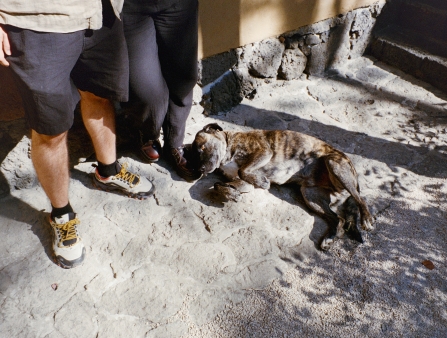
Of course, working directly in nature brings its challenges, too. Occasionally the power or water goes out. Sometimes weather conditions, mostly flooding after rains, prevent anyone from reaching the studio. There’s usually a dog or two around, either Dica or Canelo, Frosty and Maja’s well-behaved watch dog. Once, the door to the sound stage was left open during a lightning storm, which led to many bitten fingernails and a long sleepless night, but thankfully no damage was done.
Arturo and Maja say indie filmmakers and especially documentary filmmakers, who are accustomed to withstanding harsh conditions, can be relied on to be calm in a crisis. To date, no film team has complained when the inevitable happens.
As with any work environment, things don’t always go as planned, like the time one throwaway comment made in passing from an older visiting director about a newer filmmaker’s project led to panic and an emergency all-night editing session. However, Maja and Frosty helped to smooth things over and the cut was returned to its original state by the time the sun rose.