Revolutionary! Magical! Game-changing! These are some of the words being used to describe the results of AI-generated upscaling tools for archival and low-resolution footage. Some documentarians have turned to Video AI from Topaz Labs, a software featuring a suite of 30-plus AI models for video enhancement. To learn more about Video AI and the future of AI-assisted video upscaling, Documentary interviewed the Topaz CEO and Co-founder Eric Yang.
Online Feature

“Always balance, everything in balance,” intones Raul Niño Zambrano, all smiles and relaxed on the last morning of his fourth year as creative director of Sheffield DocFest. It’s an aspirational mantra for a festival that seeks to elevate the documentary art of drawing meaning from chaos; in a capsizing world that needs independent media more than ever but would rather attack it, a confident and constructive place to rally is vital. Brexit cut off Creative Europe and Creative Media funding and visa-free visits from Europe, the pandemic hammered revenue and audience habits, and the UK remains in a deep industry recession with more than half its freelance workforce out of work and its once-mighty broadcasters on the back foot. And yet the festival has steadied.
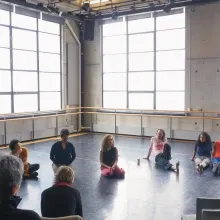
In Tatyana Tenenbaum's Everything You Have Is Yours, we see dancer Hadar Ahuvia as she develops her performance by the same name, the culmination of years spent celebrating her own Jewish identity while also challenging Israeli tradition. After its theatrical run in NY, Documentary spoke to Tenenbaum about adapting her work in dance documentation to documentary, dance film tropes, and political activism in a nonverbal art form.
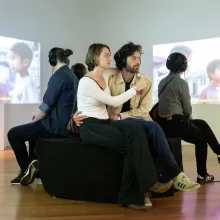
For her immersive artwork Burn From Absence, artist Emeline Courcier creates an archive where there was none. Using artificial intelligence, she recreates a family album, visualizing and verifying a history that has been hidden, documenting it from her perspective. In the four-channel installation, digitally created images illustrate an audio track layering her family members’ memories of life in Laos, the ‘Vietnam’ war, and new beginnings in France. After its premiere at IDFA last November, where it won the DocLab Special Mention for Digital Storytelling, Documentary spoke to Courcier about truth, archives, and working with deeply personal material.
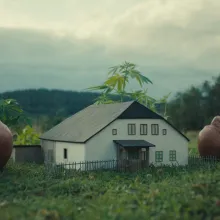
While Karlovy Vary may be best known for its star wattage and warm midsummer embrace of fiction auteurs, this year’s 59th edition (July 4–12) once again made a powerful case for documentary’s enduring vitality. Across the official selection, sidebars, and special screenings, nonfiction titles proved indispensable in reflecting Europe and the region’s evolving identities, eccentricities, and contradictions. This festival dispatch includes reviews of Grand Prix-winner Better Go Mad in the Wild, TrepaNation, Action Item, and Divia.
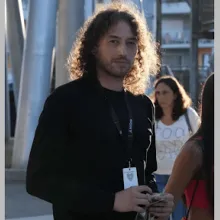
Since its founding in 1971 in the small town of Giffoni Valle Piana in southern Italy, the Giffoni Film Festival has grown into a global reference point for cinema made for—and with—young people. In this interview for Documentary, Minervini shares insights about his journey as a programmer of GEX:DOX, the distinctive qualities of Giffoni, the challenges and opportunities of curating documentary films for young audiences, and the spirit that animates this dynamic festival section. This interview has been edited.
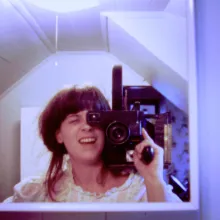
Joel DeMott, renowned cinema vérité filmmaker, died on June 13, 2025. DeMott is best known for her films Seventeen (1983), which she co-directed with Jeff Kreines, and Demon Lover Diary (1980). Alongside Kreines, DeMott created a model of intimate cinema vérité filmmaking that has inspired countless filmmakers.

Red Light to Limelight strikes a fine balance between the tragic stories of individual sex workers in Kolkata’s Kalighat red light neighborhood and the joyous community activity of filmmaking. Bipuljit Basu’s documentary follows CAM ON, a film production collective set up by these women and their children, as they conceptualize and shoot the (fictional) short film Nupur, blurring the lines between their reality and the artifice they’re engaging in. Basu told Documentary about the importance of community co-creation, gaining his subjects’ trust, and arriving at the film’s look. This interview has been edited for length and clarity.
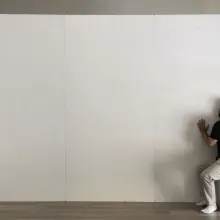
Alaa Minawi’s The Liminal gives an alternative definition of “immersive” from the typical technological, digital one. In his practice, the Palestinian-Lebanese-Dutch interdisciplinary artist explores the possibilities of merging installation and performance art. The Liminal—the first part of his speculative series about Arabfuturism—is a 3.5-meter wall with 24 speakers placed inside, programmed to take the audience on a listening journey.
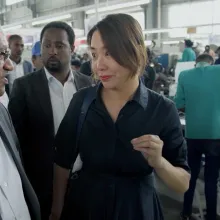
In Made in Ethiopia, filmmakers Xinyan Yu and Max Duncan tackle a topical behemoth through the intimate lens of three women on the precipice of change. Made in Ethiopia explores the complexities of the characters’ search for prosperity, while also reflecting the filmmakers’ own quest for balance in telling a nuanced story. In a conversation with Documentary, directors Yu and Duncan discuss how they navigated these challenges.