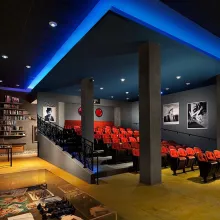
Yesterday, Miami Beach Mayor Steven Meiner officially rescinded his recent proposal to defund and evict the government-housed and funded O Cinema for showing No Other Land. At a Miami Beach City Commission meeting on Wednesday, March 19, Meiner presented an alternate proposal, which would require the independent theater to “showcase films that highlight a fair and balanced viewpoint of the current war between Israel and the groups Hamas and Hezbollah.” “We were so very glad to see the vast majority of the commissioners speak up for the importance of free speech without government interference,” O Cinema co-founder and board member Kareem Tabsch tells Documentary, after the meeting concluded. “And grateful that Mayor Meiner listened to his community and his colleagues and withdrew the resolution.”
Latest Posts
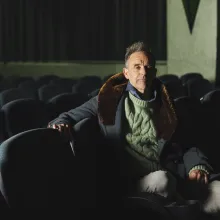
No summary could ever do justice to what Belgian filmmaker Johan Grimonprez has created through his audiovisual-textual collage Soundtrack to a Coup d’État (2024). The year 1960, famously called the “Year of Africa,” serves as the political, social, and cultural matrix on which Grimonprez builds his manifold narrative—moving back and forth in time and space, layering sound, image, and text with texture and depth. Now an Oscar nominee, the documentarian comes well-prepared, armed with the quintessential skills of an avid researcher and a seasoned orator, opening new tabs in our minds with each question while anticipating potential criticisms with humility and curiosity. Documentary magazine sat down with Grimonprez to discuss Soundtrack to a Coup d’État in his format of choice: a dialogue.

Although few people outside China have heard of it, the West Lake International Documentary Festival—locally known as IDF, which stands for “I Documentary Fact”—has quickly become the country’s leading documentary festival since its inception in 2017. The 2024 edition of IDF was held on the last weekend of October at the Xiangshan campus of CAA on the outskirts of Hangzhou, the city whose iconic lake inspired the festival’s name. Over the past few years, IDF has made a name for showcasing formally innovative and thematically diverse works from around the world. This dispatch covers: Anĝelo in 1948, Flames, White Snow, Yellow Roses, Blanket Wearer, and The Dream of Super Bridge.

Makarenko, a public school in the Parisian suburb of Ivry-sur-Seine, is the subject of Elementary , the latest vérité study from renowned French documentarian Claire Simon . While the film is replete with tender and surprising observations on today’s young people, it also treads similar ground for Simon. Récréations , her breakthrough documentary feature from 1992, captured the schoolyard antics of kindergarteners. With 2018’s Young Solitude , she set her sights on a public high school—also located in Ivry—and filmed intimate interviews with 16- to 18-year-old teenagers. While those previous
The revision process for Core Application 3.0 was informed by feedback gathered from filmmakers and industry professionals. Building on the success of Core Application 2.0, which was generally well-received as a tool for simplifying the application process, we identified areas for improvement.

By programming the Academy Award-winning documentary No Other Land , the Miami Beach-based O Cinema attracted the ire of Mayor Steven Meiner, who last week put forth a proposal to defund and evict the independent theater. O Cinema currently operates in property owned by the city of Miami Beach. This sequence of events started on March 5, when Meiner penned a letter to O Cinema CEO Vivian Marthell, urging her to withdraw No Other Land from its programming on the basis that it is “a one-sided propaganda attack on the Jewish people that is not consistent with the values of our City and residents
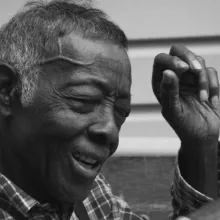
Sundance is a unique crossroads of industry and independence, where you are able to be surprised by films that you didn’t see coming—films that often end up disrupting the film industry’s ideas of marketability, contending for awards and being placed on all sorts of year-end lists, if they’re able to find the right support. As Sundance Film Festival looks to a future away from Park City, looking into questions of location, land, capital, culture, and evolution, I find myself attracted to the films in the 2025 lineup that seek context and answers to these same questions: Move Ya Body: The Birth of House, BLKNWS: Terms & Conditions, Seeds, Free Leonard Peltier, and Khartoum.
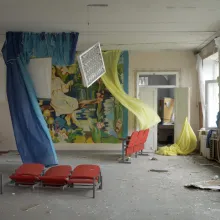
Documentary brings you capsule reviews of some highly anticipated films: Intercepted, The Last Republican, Night Is Not Eternal, and Nocturnes.
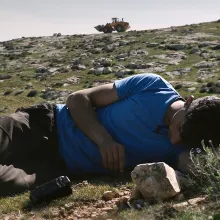
As representatives of the Art House Convergence and International Documentary Association (IDA), we find the threat made by the mayor of Miami Beach to pull the funding and lease of O Cinema gravely concerning.

Biljana Tutorov is a writer, director, and producer of feature and documentary films, video works, and performances focused on women-driven stories that examine contemporary political reality, the state of democracy, and environmental protection. After graduating with a degree in Art History, Biljana studied Film Anthropology and Acting. She is the founder of Wake Up Films , an independent production company, as well as the founder and Program Director of CIRCLE , a training initiative that has been supporting women and gender-expansive filmmakers since 2018. Biljana is an IDA, Chicken & Egg