
What is the responsibility of programmers when it comes to discerning whether a film deserves the platform and profile of a major festival? In a recent opinion piece in The New York Times, Roxane Gay inadvertently spoke to this issue: “There’s a difference between censorship and curation,” she wrote. “When we are not free to express ourselves, when we can be thrown in jail or even lose our lives for speaking freely, that is censorship. When we say, as a society, that bigotry and misinformation are unacceptable, and that people who espouse those ideas don’t deserve access to significant
Latest Posts
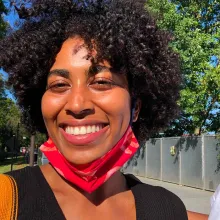
Cydney Tucker is a journalist and documentary director/producer currently based in New Orleans, Louisiana. She has written, produced and directed films for a variety of legacy and digital media organizations including CBS News, NBC News, Al Jazeera International (AJ+), and RYOT. Her latest projects include two films for The New York Times Presents’ Hulu/FX documentary series, and a short film, Rebyrth. Her work has been featured in several festivals including SXSW, New Orleans Film Festival, Indie Memphis Film Festival and Idlewild Film Festival. She was recently awarded a grant from the
Essential Doc Reads is our curated selection of recent features and important news items about the documentary form and its processes, from around the internet, as well as from the Documentary magazine archive. We hope you enjoy! Politico’s Phelim Kine did a deep dive into the dark underbelly of a transcription service that is the go-to for several filmmakers and journalists, and raises some very pertinent privacy concerns. We make privacy versus utility tradeoffs all the time with our tech. We know Facebook sells our data, but we still post baby pictures. We allow Google maps access to our
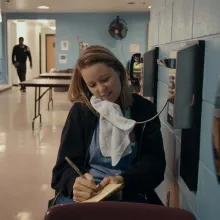
There’s an age-old question that every filmmaker wrestles with: How to start a film? In the case of Apart, it took until the end of editing to find the beginning. Apart, by Oscar-nominated Jennifer Redfearn and Tim Metzger, takes an intimate look at three incarcerated women trying to maintain relationships with their children. The film follows them on their journey through an innovative reentry program and after release, as they try to repair the damage from years of separation. Partners in life and in film, co-producers Redfearn and Metzger talked to over two-dozen women in Cleveland’s

I always imagine Jean Tsien in constant motion, even though her work as an editor and producer usually means hours of sitting at a computer. Her films propel you through histories and lives with emotional force and intellect, and she crafts documentaries that are, at once, intimate personal stories and far-reaching interrogations into questions of race, politics and culture that have defined our times. In her path-breaking 38-year career, Tsien represents the documentary field as a Governor of the Academy of Motion Pictures Arts & Sciences. She has edited for a master class-worth of

By Bedatri D. Choudhury and Tom White The COVID-inspired online edition of the 2021 Sundance Film Festival earned universal kudos, and a staggering global audience of 600,000. But with the pandemic seemingly ebbing in the final quarter of last year, the Delta variant notwithstanding, Festival Director Tabitha Jackson and her team announced that it would take a flyer on a hybrid in-person/virtual format. Then came the Omicron variant. Up until two weeks before the festival, all eyes were cast on Park City. But, with daily case counts reaching staggering numbers around the world, the festival

Roger Ross Williams' list of accolades is mind-blowing. In 2010, he became the first Black director to win an Academy Award, for Best Documentary Short Subject. The film, Music by Prudence—which followed a troupe of musicians with disabilities in Zimbabwe—was his first documentary as a director. Williams followed that success with God Loves Uganda; the Academy Award-nominated, and Emmy and Sundance Film Festival award-winning Life, Animated; the Emmy Award-nominated Traveling While Black; and The Apollo, which won the 2020 Emmy for Outstanding Directing. This past year he produced and directed

BY Bedatri D. Choudhury & Tom White
IDA's four-decade history has seen the beginning and end of many programs, but few have withstood the test of time like our Fiscal Sponsorship program. IDA began offering fiscal sponsorships to support independent documentary filmmakers in 1986, and since then we have supported hundreds of films from all over the world. These IDA-supported documentaries have won prestigious awards, from Sundance Film Festival to Peabody Awards; been nominated for Academy Awards; and, most importantly, changed countless lives. To celebrate IDA's 40th anniversary and our second longest-running program, here is a
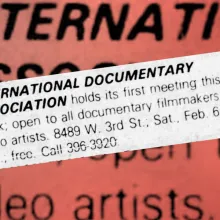
Forty years ago, on February 6, David L. Wolper and 74 other filmmakers answered a classified ad announcing the first meeting of the International Documentary Association (IDA). They met in Los Angeles, seeking to elevate documentaries in the film industry and beyond. While both IDA and the larger nonfiction community have continued to transform in size and form, we are revisiting some key moments and boxed-up memories on this day of celebration. 1980s Within two years, IDA was hosting numerous educational seminars and had already organized the first annual DocuDay—an all-day, back-to-back