
Screen Time is your curated weekly guide to excellent documentaries and nonfiction programs that you can watch at home. The documentary world lost Michael Apted last Friday, and the one work that most distinguished his career was The UP Series, which began in 1964 as an exploration into the British class system through the lens of a cross-section of seven-year-old children, then deepened over the subsequent decades into an affirmation—and perhaps refutation—of the Jesuit maxim that drove the entire series: “Show me the child at seven, and I’ll show you the person.” Most of the original 14
Latest Posts
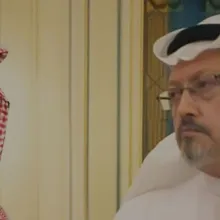
At 1:14 pm on October 2, 2018, Jamal Khashoggi entered the Saudi Consulate in Istanbul. He was never seen again. While his fiancée, Hatice Cengiz, stood anxiously waiting outside, he was brutally suffocated, murdered and dismembered. Despite initial denials, it was soon evident that the Kingdom of Saudi Arabia had orchestrated a state-sponsored assassination in a foreign country, ordered by the inscrutable, flinty-eyed, Crown Prince Mohammed Bin Salman. The Dissident, the new documentary from Academy Award-winner Bryan Fogel ( Icarus), delves into the complex story surrounding Khashoggi’s
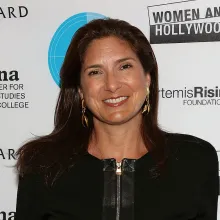
Driven by “fierce compassion—the kind where you will burst if you don’t do something about it,” this year’s IDA Amicus Award honoree, Regina K. Scully, has produced over 200 films focused on social justice issues, including Knock Down the House, The Invisible War, Athlete A and Fed Up. She also recently produced a short documentary, What Would Sophia Loren Do? that just premiered on Netflix. As the founder and CEO of Artemis Rising Foundation, when Scully chooses to take on a project, “It’s about who and how this film can help. How many people will be in less pain because of it? How much
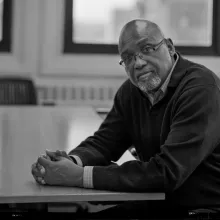
Sam Pollard has spent the last four decades crafting stories primarily detailing the African American experience—stories that reveal complex protagonists ( Sammy Davis, Jr.: I’ve Gotta be Me), examine a system of exploitation and racial oppression ( Slavery by Another Name), and bring to the forefront conversations on racial injustice on children of color by law enforcement ( The Talk: Race in America). The Harlem native’s impressive oeuvre boasts a cross-pollination of nonfiction and fiction, historical events and contemporary issues, and portraits of entertainers and politicians. The multi
Even before Working Films had a name, its founders, Robert West and Judith Helfand, knew what the organization would stand for and do. “Filmworks [as it was temporarily called] will transition social-issue documentaries beyond traditional distribution, broadcast and initial releases to further push their impact and potential. This initiative will extend the relevance and long-term usefulness of documentaries, capitalize on the momentum and recognition from festivals and broadcasts, and develop coordinated, integrated and timely grassroots outreach and classroom projects,” the duo wrote
The David L. Wolper Student Documentary Award, introduced to the IDA Documentary Awards in 1987, recognizes exceptional achievement in nonfiction film and video production at the university level. Bringing greater industry and public awareness to the work of students in the documentary field is an integral part of the IDA Documentary Awards, and we are thrilled to engage with these emerging storytellers in the field. Each of the 2020 IDA Documentary Awards nominees for the Student Documentary Award are transitioning between their educational institutions into the "real world" of documentary
Essential Doc Reads is our curated selection of recent features and important news items about the documentary form and its processes, from around the internet, as well as from the Documentary magazine archive. We hope you enjoy! Mark Binelli of The New York Times Magazine talks to the great American documentarian Frederick Wiseman, who’s been hunkering down in Paris since the beginning of the pandemic, on the eve of the December 22nd PBS broadcast of his latest opus, City Hall. They also represent the work of an artist of extraordinary vision. The films are long, strange and uncompromising
Screen Time is your curated weekly guide to excellent documentaries and nonfiction programs that you can watch at home. Premiering December 22 on PBS is City Hall, the 45th film from the remarkable Frederick Wiseman, immerses audiences in the municipality of his hometown of Boston to illustrate a government taking care of its diverse citizens. Through his filmmaking, audiences come to realize how city government touches upon almost every aspect of their lives, acknowledging how necessary services like sanitation, veterans affairs, elder support, parks, licensing bureaus, recordkeeping, as well
Can there be upsides in a global pandemic? COVID-19 has decimated huge swaths of the entertainment industry and led to massive unemployment, food insecurity and debt, but some documentary filmmakers have, surprisingly, seen opportunities. With studio moviemaking lurching forward in fits and starts, and indie fiction films struggling to cope with the extra challenges of pandemic-related costs and cast scheduling, a number of nonfiction projects and producers have remained surprisingly busy, or even benefited over the last several months. “It’s been very active,” says Julie Goldman, the Oscar
Three days after the 2020 US presidential election, the tide began to turn in Georgia. The potential for a historic blue flip from a solidly red Deep South stalwart revealed itself as vote tallies stacked up, steadily narrowing the gap. Pundits and pollsters failed to predict the possibility for Georgia’s starring role in the most anxiously anticipated election in a generation, but filmmakers Grace Lee and Marjan Safinia were not surprised. Along with their crew—all women of color—they spent 2018 and 2019 in Georgia and around the country, documenting the painstaking, hopeful grassroots