
In this Master Class on Producing, Paula will share her insights into what it takes to establish and maintain strategically vital relationships, successfully manage and maximize budgets, and squeeze the full creative potential out of each of her films.
Here's What Really Happened
No tweeting. No press. No industry. Filmmakers-only conversations revealing personal insights into the art and business of documentary filmmaking.
“Here’s What Really Happened” are signature sessions from IDA's biennial Getting Real Conference that began as a filmmaker-led solution to combat the lack of transparency that continues to plague the community. These intimate conversations allow filmmakers to speak openly about what actually happened in the production, sales and distribution life of a film. The rules are, everything said in the room, stays in the room. Our goal is to create a safe space for discussion that allows filmmakers to have frank, meaningful discussions without the influence of industry in the room. We believe that one of the greatest resources for a filmmaker is another filmmaker.
In building a more knowledgeable and transparent community together, IDA tours “Here’s What Really Happened” sessions to various festivals and conferences around the world. These private conversations have focused on security/surveillance, sales agents, festival strategies, fact-finding, ethics, work/family life balance, truth-seeking in production, and other themes.
Learn what really happened behind-the-scenes in an upcoming session. It’s personal, it’s intimate, let’s get into it.
Image
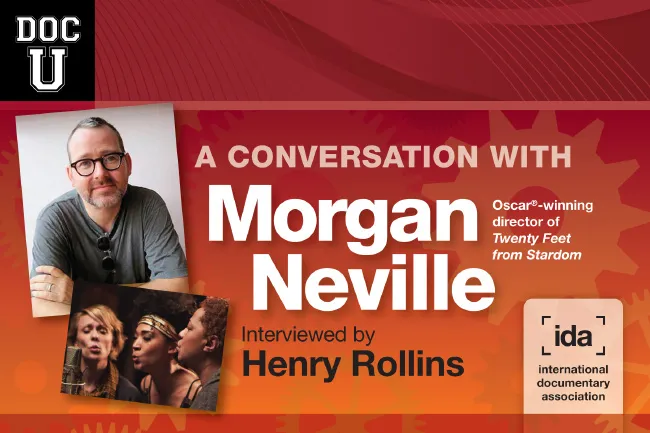
Join us for a special evening as we go in-depth and behind-the-scenes with LA’s own Morgan Neville, director and producer of the Oscar®-winning, box office-smashing Twenty Feet from Stardom.
Image
Doc U: Selling Your Doc Sales Agents’ Tips and Tales Tuesday, February 25, 2014 Discussion & Audience Q&A: 7:00pm - 8:30pm The Cinefamily611 N. Fairfax Avenue, Los Angeles, CA 90036 Admit it. You want to sell your documentary. You worked on it for years, went into debt over it, agonized over every
Image
IDA's all-day, back-to-back screenings of this year'sOscar® nominated documentary films.See the films! Meet the filmmakers! Saturday, March 1, 2014 Writers Guild of America Theater135 S. Doheny Dr, Beverly Hills, CA 90211 IDA Members: General Admission: All Day Pass: $48.75Single Screening Ticket:
Image
Your cinematographer will make or break your film. No other relationship is more central to the success of your project than this one, and, yet, the skills, tools, and insights of cinematographers are somewhat mysterious to the rest of us. No more. Whether you are a shooter yourself or a documentary filmmaker who has never picked up a camera, your work will benefit immensely from this Doc U spotlighting the art and craft of cinematography from the point of view of some of the top shooters in documentary today.
Image
Great documentaries are made, not born, and the place where that happens is in the editing room. A good editor can save a documentary director's neck; a great one can make a director look like a genius. So, who are these saviors and alchemists and what special storytelling skills do they have that filmmakers can benefit from?
The IDA Documentary Awards is the foremost event dedicated to the art of documentary film. Winners of the 29th Annual IDA Documentary Awards will be announced on December 6, 2013 in Los Angeles at the Directors Guild of America. This Event is SOLD OUT.
Image
Sound and music are critically important ingredients in any documentary's success, but are all-too-often overlooked or neglected. This intensive workshop will discuss best practices and creative possibilities in audio from the beginning of your filmmaking process to the end: starting with location audio and sound design, through original music and licensing, and culminating in the final mix and mastering. Filmmakers and industry experts will give practical advice and share their knowledge to give you the tools for creating the best soundscape for your film.
Image
Securing funding for your documentary is a challenge for filmmakers at all stages in their career. Documentary filmmakers must embrace various and evolving strategies for securing revenue. But funding institutions can also be valued partners in the filmmaking process.