
Erika Dilday, a producer, journalist and media executive, is the executive director of American Documentary Inc. and executive producer of its award-winning documentary series POV on PBS and America ReFramed on WORLD Channel.
Getting Real
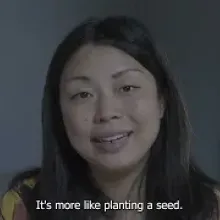
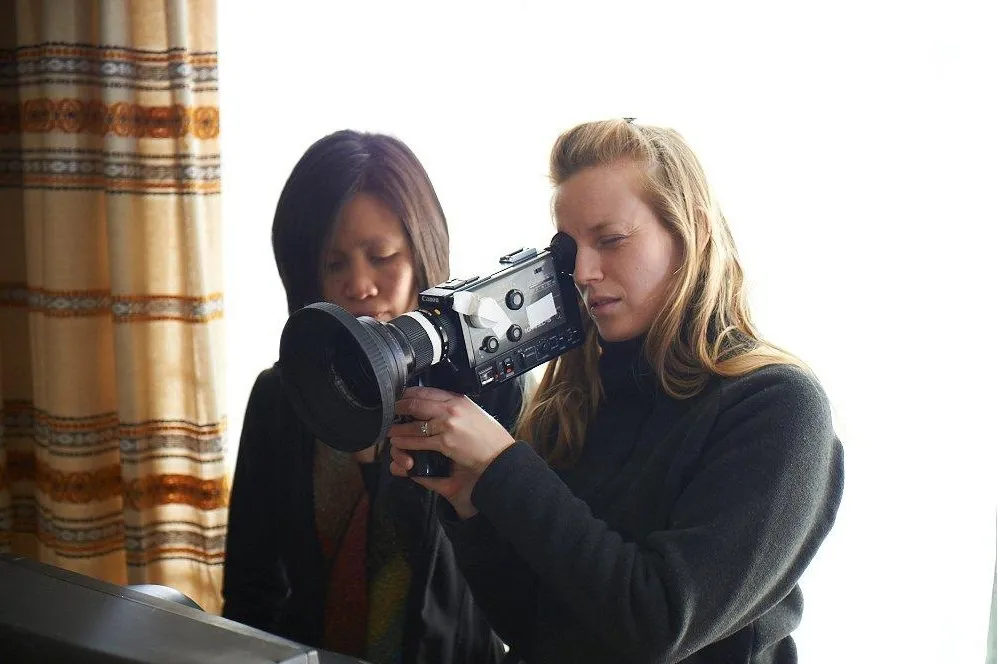
Nanfu Wang is an award-winning Chinese filmmaker based in the U.S. Wang directed and produced the feature documentaries 'Hooligan Sparrow' (Sundance 2016), 'I Am Another You' (SXSW 2017, Special Jury Prize winner), 'One Child Nation' (Sundance 2019, Grand Jury Prize Winner, Amazon), and 'In the Same Breath' (Sundance 2021, HBO).
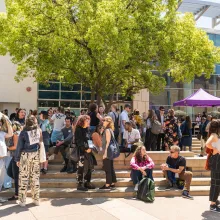
Amid industry disruption, filmmakers search for marketing and data solutions in community.
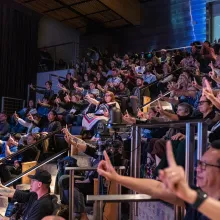
In a world rent asunder, conference speakers thrust documentary ethics into reality.
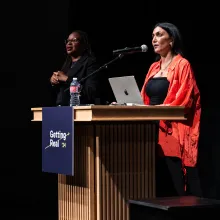
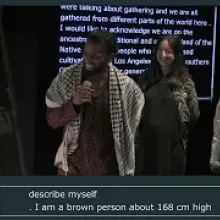
Jemma Desai’s keynote address at Getting Real 2024 delves deeply into the ethical and existential challenges faced by cultural workers, particularly in the realm of documentary filmmaking, against the backdrop of global conflicts, notably the ongoing crisis in Palestine: “I have chosen to speak about integrity and so I cannot speak about anything but Palestine.” Her reflections resonate beyond the specific context of film, challenging all cultural workers to consider their role in shaping narratives that affirm human dignity and confront systemic injustices.
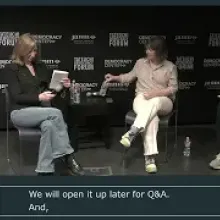
In this Fireside Chat, Keri Putnam (a Walter Shorenstein Fellow and former CEO of the Sundance Institute) and Barbara Twist (ED of Film Festival Alliance) will discuss their collaboration on and preliminary results from the first-ever large-scale survey of the scale, demographics, and interests of the U.S. audience of independent scripted and documentary film.
ndependent documentary producers face never-ending challenges to make a living from their work. This is in large part because the documentary industry has no real rules regarding sustainable working conditions and compensation for producers.
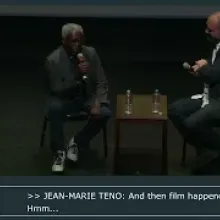
In this keynote session, IDFA's artistic director Orwa Nyrabia interviews Jean-Marie Teno about his craft and the issues of representation within societies that are still struggling to decolonize themselves.
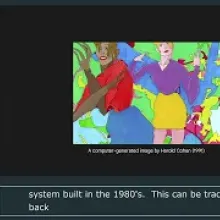
Led by Eva Kozanecka, filmmaker and head of Google’s Artists + Machine Intelligence program, and Will Tyner, Firelight Media Doc Lab Fellow and researcher at Google, this session will share insights, strategies and a starting framework to empower filmmakers to critically engage with media generation tools in ways that align with their values and shape future applications of AI technologies in film.
When we gather together to consider the big issues facing our field, we usually try to think our way out of certain problems. We try to treat the symptom, such as addressing exclusion by focusing on access, but what might we be overlooking with this type of understanding?