At the start of Violet Du Feng’s Sundance-debuting The Dating Game we learn that, due to the former one-child policy, China now has 30 million more men than women, an eye-catching number that presents dire implications for the country. But behind the cold facts are flesh and blood human beings—and potential clients for a dating coach named Hao. While the doc is specific to China, it’s also universal in its critique of how capitalism, consumerism, and social media collide to create a generation that assumes everyone is faking who they are and therefore concludes that they too must “fake it to make it.” A week before the film’s World Cinema Documentary Competition premiere today, Documentary reached out to Feng, whose Peabody and Emmy-nominated Hidden Letters (2022) tackled gender stereotypes from the female side. This interview has been edited.
Latest Posts
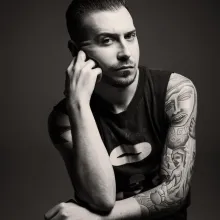
Aaron Bear is an award-winning filmmaker whose work is defined by a rare combination of deeply empathetic storytelling and a relentless commitment to amplifying marginalized voices. His most recent documentary, Yes I Am: The Ric Weiland Story (2021), won the prestigious 2024 GLAAD Media Award, cementing his place as one of today’s most impactful and visionary documentarians. Known for his ability to capture the raw, unfiltered essence of his subjects, Aaron’s films go beyond surface-level narratives, delving into the humanity and complexity that often go unseen. Aaron’s career is marked by influential partnerships and creative leadership with having directed the 2016 groundbreaking Trans documentary Finding Kim and producing the upcoming 2025 short documentary Shelly's Leg - about the legacy of legendary and Seattle's very first gay bar.

Another year, another Sundance. This second edition under festival director Eugene Hernandez doesn’t portend many changes from last year’s. The big news is that the day before the festival’s opening night, Participant Media pulled Khalil Joseph’s BLCKNWS: Terms & Conditions from the lineup due to Joseph’s alleged additional edits after the film was delivered to its financier in fall 2024. In Variety , sources say the changes were “a minute” long, and a “Sundance spokesperson said the festival was ‘deeply disappointed to have been informed this evening by Participant that they are pulling
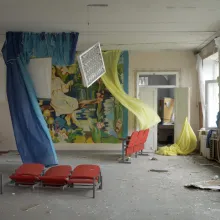
In Ukrainian, the film is called Myrni lyudy, which literally translates as Peaceful People. It is a clever, polysemic title that simultaneously addresses Ukrainian civilians embedded in their native wounded landscapes and Russian civilians calling their loved ones who are taking part in the invasion of Ukraine. Those people on the other end of the phone are fascinated by the soldiers’ detailed stories of war crimes and trophy theft and get very upset when their interlocutors become disillusioned with Russian propaganda. First screened at Berlinale, Intercepted has travelled to numerous festivals and political venues over the past year, including at IDFA in the Best of Fests section. Documentary spoke to Oksana Karpovych before the festival.
With Film Independent, IDA hosted a work-in-progress DocuClub screening of New Wave in Los Angeles in December of 2022. While the feedback Ai and her team received from the screening was generally favorable, she nevertheless decided to overhaul the doc’s narrative in order to include intimate details from her family’s relationship with music—and each other—opening old wounds in the process, with particular emphasis on the filmmaker’s estrangement from her mother. The final version of the film premiered at last year’s Tribeca Festival, and is still seeking distribution. Documentary spoke with Ai via Zoom to discuss the shift in story subject over the course of seven years of development. This interview has been edited.
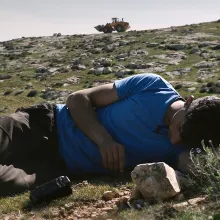
“It’s South Africa, it’s Vietnam, it’s Jim Crow—it’s like all of these defining moments,” says filmmaker Razi Jafri by phone from East Jerusalem, referring to the ongoing war across Palestine and the Middle East. “And when the films and books start coming out, there will be a moment that’s going to break out what has been happening.” Because of its central place in our current geopolitics, you’d think that stories about the Palestinian-Israeli conflict, and its many complex facets, would rise to the level of must-see viewing across film festivals, art-house theaters, and television screens (as
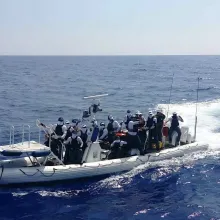
In 2018, Singaporean filmmaker Jason Soo boarded the Al Awda ( The Return in Arabic) with the intention of making a documentary about the surgeon, activist. and political exile, Dr. Ang Swee Chai. For six years, Soo reworked the footage he retained after the Israeli navy raided the Al Awda with videos captured by activists onboard, which filled in the gaps left by the footage that was confiscated by the Israeli navy. The resulting film Al Awda (2024), is less a portrait of Dr. Ang than a documentary about activism itself. Al Awda documents one of many attempts by the Freedom Flotilla Coalition
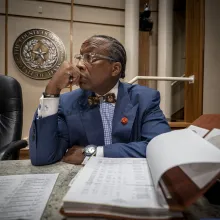
Darius Clark Monroe has been on my radar for a decade, ever since his feature debut Evolution of a Criminal , a revisitation of the robbery the filmmaker committed when he was a teenager and its impact on both loved ones and victims, which world premiered at SXSW back in 2014. (Later that year it took top honors at the Hot Springs Documentary Film Festival, where I programmed the film.) Since then Monroe has been on an artistic evolution as well, continuing with such unconventional projects as the 2018 Tribeca-debuting short Black 14 , once again EP’d by Evolution executive producer Spike Lee
Dear Readers, No Other Land is both narratively explosive and achingly personal. In terms of craft, it’s one of the most impressive examples of verité scene-making in recent years—though its directors, a collective of four Israeli and Palestinian journalists, aren’t format purists in their story of how Israeli state legal machinations and individual soldiers force expulsions of Palestinian villagers in the West Bank. Mackenzie Lukenbill examines how the quartet of Basel Adra, Yuval Abraham, Hamdan Billal, and Rachel Szor made the film their story in every mutual way possible. After No Other
Dear IDA Community, At the time of writing, there has been a recent spate of momentous elections in the U.S., Taiwan, India, Mexico, France, Georgia, and many other corners of the world. Political change always brings uncertainty, but IDA will be here, as always, to support and defend the interests and voices of documentary makers. As the IDA Board Co-Chairs, we are stepping in to give you updates while Dominic Willsdon is on brief medical leave. We expect Dominic to make a quick recovery and be back soon. In this column last time, Dominic described the strategic planning that IDA staff and