This Wednesday, the IDA will be participating in a special Los Angeles hearing conducted by the United States Copyright Office in the next step of our advocacy for an exemption to the Digital Millennium Copyright Act. Last November, this February, and earlier this month, we submitted comments seeking a rule that would allow filmmakers to bypass the encryption on DVDs, Blu-ray, and digitally transmitted video in order to make fair use in their films. Currently, the DMCA prevents filmmakers from accessing such material, even if we have the right to make fair use of it! To learn more about the
Latest Posts
The Art of the Real series was launched in 2014, under the auspices of the Film Society of Lincoln Center, with the objective of focusing more attention on formally adventurous documentaries. In its second edition, presented in April, co-curators Dennis Lim and Rachael Rakes curated an intriguing slate of North American premieres and added two sidebars—"Repeat as Necessary: The Art of Reenactment" and "The Actualities of Agnès Varda." Lim and Rakes believe there is a need to feature this kind of work, given an environment, particularly in the US, where social issue documentary tends to
Just four days after the theatrical premiere of perhaps the most Gen X biodoc to ever grace the screens of your local multiplex, filmmaker Brett Morgen was still riding the high from Cobain: Montage of Heck's opening weekend success. So when Morgen told us he had the time to sit down with Sundance Film Festival's Trevor Groth to have a conversation about his career in front of members of the IDA community, we couldn't have been more thrilled. The filmmaker and Groth wove their way through Morgen's career, starting with his feature debut On the Ropes and moving through The Kid Stays in the
While the 22nd annual edition of Hot Docs, North America's largest documentary festival, screened over 200 films from April 23 to May 3 in Toronto, the Hot Docs Conference hosted 12 sessions and over 20 workshops for filmmakers. The theme of the conference was "bioDOCversity," which focused on "speakers who experiment with story and image, utilize enterprising approaches to distribution, bring together and build communities and more." Sessions weren't restricted to film or video documentaries; one focused on radio documentaries and another on using the videogame format to tell nonfiction
Approaching the completion of its first half-century, the Internationale Filrnfestspiele Berlin is bigger, better than ever, despite its imperiled financial base and the trauma of uprooting itself in just two years from its familiar digs in the Kurfurstendamm area, the sprawling entertainment/culture center of West Berlin. At the millennium, the Berlin festival will take up new facilities within Potsdamer Platz, now undergoing what is proclaimed as the greatest construction project in world history, on land obliterated by both wartime bombing and that long encircling empty ribbon where once
The Tribeca Film Festival continues to be a highly sought-after showcase for new longform documentary work, and an unofficial but key marketplace. Indiewire just ranked it third in prominence for docs, after Sundance and Toronto. Tribeca also continues its eclectic approach. You could find international work mixed in with US films, and styles ranged from observational to public affairs to just downright quirky. "Too many people think documentary is a genre," says programmer Cara Cusumano. "But documentary can have every genre a narrative film can be, and we are open to that range of
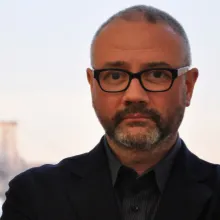
The International Documentary Association (IDA) is proud to announce the appointment of Simon Kilmurry to the position of Executive Director. Kilmurry will relocate from New York to Los Angeles to begin work on July 6, 2015. Kilmurry joins IDA following an illustrious 16-year tenure at POV, the long-running PBS showcase of independent documentaries, where he has served as Executive Producer since 2006. He also serves as Executive Director of American Documentary, POV’s non-profit parent organization. “It’s hard to imagine anyone better qualified to take the reins at IDA,” said Marjan Safinia
The 18th annual Full Frame Documentary Film Festival, which ran April 9 through 12 in Durham, NC, was a four-day fest crammed with documentaries, nonfiction filmmakers, producers and interested locals. In addition to film screenings, the panel discussions, sponsored by A&E IndieFilms, also attracted large crowds. Held in the Durham Convention Center's Speakeasy, the venue played host to a number of panel conversations about controversial issues facing the documentary community. All panels, which were free and open to the public, allowed small audiences to listen to industry leaders like Motto
Independent Lens and POV to stay on Mondays at 10pm On the tail of a several-month, multi-city listening tour during which leaders from PBS, ITVS, POV and WNET held town hall-style meetings with members of the independent film community, PBS today announced their new strategy to increase visibility of independent film on PBS and its affiliates. The listening tour began in the Bay Area at the San Francisco Public Library thanks in part to the efforts of the IDA and partner organizations including Indie Caucus and Kartemquin Films. We are proud to have helped ignite the process of discussing how
Before viewing Brett Morgen's new documentary, Kurt Cobain: Montage of Heck, I had to jump through a few online security hurdles in order to watch the film. Fear of piracy is so rampant that I got to see my own watermarked name in the corner of the screen the entire time, making it a uniquely personal experience. As a guy who played in a band around that time, saw Nirvana play their first New York show to about a dozen people, and cried in a van while on tour when I heard about Kurt Cobain's death, I was a bit nervous to see Montage of Heck. I know Morgen's work, so I didn't think it would be