
Grants can be a sizable source of revenue, whether you are applying for film funding or on behalf of an organization. They often lend credibility in addition to monetary support, so they can be instrumental in the success of the project. The name recognition from receiving grants can help expand your network and build up your reputation. Grant writing is quite different from other types of writing, but the skill is directly transferable to other realms of a filmmaker’s life. If you are approaching an application for the first time or would like specific advice on crafting a proposal, see these
Latest Posts
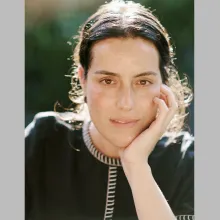
The Center for Asian American Media (CAAM) announced today that documentary filmmaker and journalist Leila Abu-saada has been tapped to manage the Building Bridges Documentary Fund. Applications for the first year of the fund, which is supported by the Doris Duke Foundation ’s Building Bridges program and funds Muslim documentary stories in the U.S., were open earlier this year. Selected projects will be announced later this fall. Abu-saada started her career as a news producer and deputy news editor for Al Jazeera English in Doha, Qatar. Since then, she’s spent over a decade traversing the
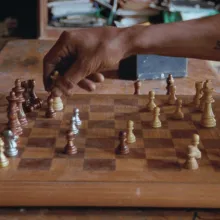
In 2022, experimental documentarian Ben Russell approached the filmmaker and visual artist Guillaume Cailleau about making a documentary, set in ZAD de Notre-Dame-des-Landes, about an anarchist collective that won their struggle against the construction of a regional airport by the French state in 2018. Their resulting collaboration, Direct Action , observes the day-to-day of the 150-some residents of the ZAD ( zone à défendre ). They continue to organize their day-to-day lives against the machinations of capital, living as proof that different worlds are possible amidst hegemonic capitalism

While the Venice film festival is widely treated as an awards platform for starry auteur-driven dramas, its little-known secret is a modest but strong nonfiction selection. Even without counting the Wang Bing film in competition, which screened too late for many critics (including this one) to cover, this year’s crop was remarkable for the breadth and variety of the nonfiction approaches.
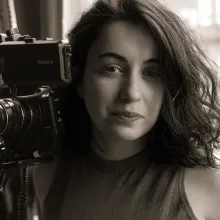
Bircan is a documentary filmmaker working between Scotland and Turkey. After a period in journalism, she found her true passion in creative documentaries. In 2019, she directed her first short creative documentary, My Name is Anik, as part of the Bridging the Gap programme at the Scottish Documentary Institute. After premiering at the Edinburgh International Film Festival, the film was screened at international festivals and independent cinemas. Since 2019, Bircan has been working on her debut feature documentary, Your Honour, in collaboration with Bombito Productions, while continuing to make
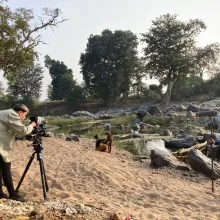
That NoCut has no physical office, that it is registered in Romania and India (unofficially floating into Belgium), and that its members frequently navigate three different time zones to set up meetings, are all appropriate given its origin story. Rothe, Rinaldi, and Hanes met ten years ago as classmates in DocNomads, the Erasmus Mundus master’s program in documentary filmmaking. Run by a consortium of three universities in Portugal, Hungary, and Belgium, DocNomads is a fully funded course for students from all over the globe, with an emphasis on teamwork and coproduction, which explains why many of its graduates often end up working with each other later. Helping each other with student projects, the three women developed a working rapport even as they fell into a thick friendship.
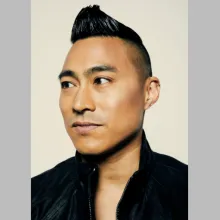
Today, American Documentary (AmDoc) announced that award-winning independent filmmaker PJ Raval, known for directing stories of queer and Filipino communities, will receive the organization’s second Creative Visionary Award. AmDoc produces the independent PBS strands POV and America ReFramed , their robust educational and community screenings, and a suite of artist development activities. Last year, AmDoc’s inaugural awardee was producer Darcy McKinnon . Raval is a POV and America ReFramed alum with the GLAAD Media Award–nominated Before You Know It (2013) and Call Her Ganda (2018). The latter

What happens when three’s a crowd in a marriage? One possible answer, as Elizabeth Lo finds, is to sneak in a special fourth person. In her sophomore feature documentary Mistress Dispeller , Lo peers into a new “love industry” in China by following four individuals: a middle-aged married couple, a mistress, and Teacher Wang, a professional “dispeller” hired to discreetly end the affair. The film lives up to its promise of “ strikingly intimate access ,” which almost feels like an understatement—particularly in the participants’ Chinese sociocultural context, as a matter of saving not just a
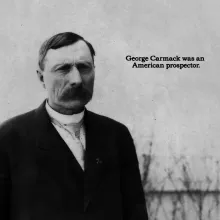
Few filmmakers have as recognizable a style as Bill Morrison. Those with even a passing familiarity with his work will think of degraded film stock, an aesthetic of cinematic ruination. And in film after film, reviewers invariably use the same words: spectral, haunted, fragmented, poetic. This reputation may give the impression that his work, for all its beauty and mystery, is fundamentally repetitive, a mere cycling of similar ideas and feelings. It is almost as if Morrison foretold this reputation during his first feature, Decasia (2002), the film responsible both for his renown and the
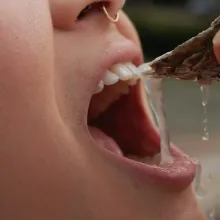
In Holding Back the Tide , Emily Packer’s “docu-poetic meditation on New York’s oysters,” the humble bivalve becomes much more than the sum of its pearls. Indeed, the experimental filmmaker has inventively chosen to reimagine the once ubiquitous mollusk as a queer icon, and cast the gender-fluid creature alongside a host of other thought-provoking characters, both real and fictional. We’re introduced to folks like Moody “The Mothershucker” Harney (real), who’s bringing oysters back to the average diner through his cart, taking inspiration from Thomas Downing, the 19th-century Black Oyster King