-
Charles Konowal, Director
-
Liz Jarvis, Producer
About the Project
Cinematic Treatment
A freight train cuts through the forests of northern Manitoba, its steel wheels echoing across miles of frozen wilderness. Inside one of the passenger cars sits a tall, weathered man with a harmonica in his hand. His guitar rests beside him like an old companion.
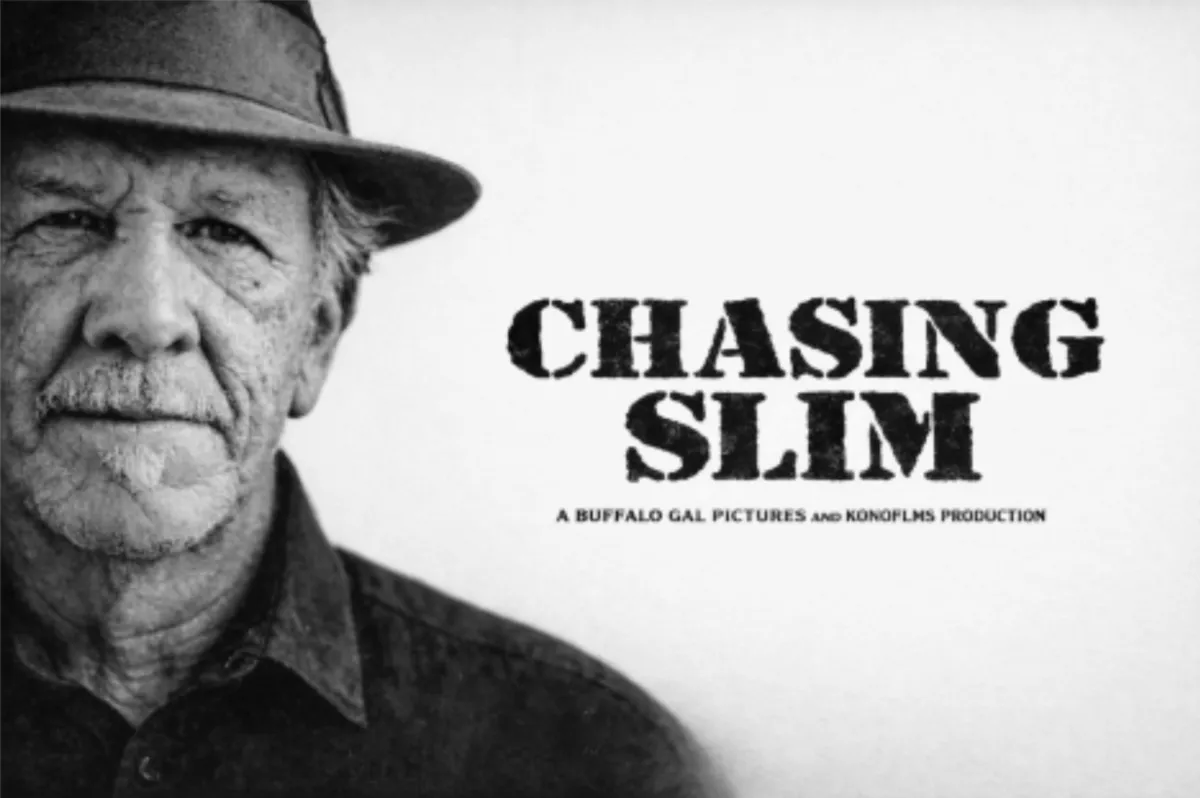
The man is Watermelon Slim.
Born William P. Homans III, Slim is one of the last great wandering bluesmen—an artist whose life has moved through wars, highways, farms, and music halls. Now in the later years of his life, he is traveling farther north than he has ever been before, riding the rails toward Churchill, Manitoba at the edge of Hudson Bay.
The journey is long enough to stir old memories.
And Slim has lived many lives.
Lovers and Soldiers
Before the road, before the blues career, there was a young man from North Carolina trying to understand himself in a world that offered few places to do so.
That search followed him to Vietnam.
As a soldier in the war, Slim witnessed the machinery of conflict up close— violence, confusion, and the strange intimacy that develops among men living in constant danger. It was there, in the charged emotional landscape of war, that Slim experienced his first sexual encounter with another man, a moment that would remain buried in memory for decades.
In the years that followed, Slim would love women and men, build relationships, and live outwardly within the expectations of his time. But that experience in Viet Nam left a quiet mark on him, part of an inner life he rarely spoke about but that shaped the emotional depth of his music.
The blues has always been a language of emotion.
The Watermelon Farmer
After returning from the war, Slim drifted through a series of working-class lives: truck driver, forklift operator, watermelon farmer.
For a time in Oklahoma he grew watermelons under the punishing southern sun. The lanky farmer stood in a field with harmonica in one hand and a slice of watermelon in the other, when his blues name hit him it was like a bolt of lightning, he was now — Watermelon Slim.
What began as wordplay became a name that would eventually travel the world.
The rhythms of rural labor, the stubborn dignity of working people, and the precarious balance between survival and collapse became the foundation of Slim’s songwriting. His blues would never be polished or nostalgic. It would be rooted in the working man.
The Delta
Eventually the road carried Slim to the Mississippi Delta, where the music that had haunted him since childhood found its home.
In the juke joints and bars of Clarksdale, Slim forged his voice as a performer: slide guitar howling like a freight train, harmonica slicing through smoke-filled rooms, and lyrics that mixed humour with biting political observation.
Unlike many revivalist blues artists, Slim never tried to recreate the past. He carried the experiences of a Vietnam veteran, a farmer, and a working man into the music.
The blues, for Slim, was not museum culture.
It was survival.
The Poet
As the train rolls north through endless forests, Slim begins talking with fellow musician Scott Nolan about the project that now consumes much of his life.
Since the war in Ukraine began he has been writing an astonishing literary work— now over 80,000-lines, an epic poem titled The Kozyrev Option: Miscalculations.
The poem is Slim’s response to the forces shaping the modern world: Vladimir Putin’s invasion of Ukraine, the resurgence of authoritarian politics in the United States, and the fragile state of democracy itself. Written in sprawling verse that moves between history, philosophy, and personal reflection, the poem represents Slim’s attempt to grapple with a world he feels sliding toward darkness.
For Slim, the project is not about literary ambition.
It is about responsibility.
The blues taught him that artists must speak plainly about the times they live in. Music alone no longer feels like enough.
So he writes.
The North
The train eventually reaches Churchill, a remote northern town where polar bears roam the tundra and the wind off Hudson Bay carries the smell of salt and ice.
Here, at the literal edge of the continent, Slim performs for small crowds and curious locals who may never have seen a Delta bluesman before. Against the vast Arctic sky, the music sounds both ancient and strangely new.
Standing on the frozen shoreline, Slim reflects on the unlikely road that brought him here—from North Carolina to Vietnam, to the fields of Oklahoma, from Delta juke joints to international stages, and now to the northern frontier of Canada.
The journey feels like a circle closing.
Final Reckoning
As the trip comes to an end, Slim confronts the question that has followed him across decades:
What is the role of an artist in dangerous times?
Through music, conversation, and fragments of poetry, Slim begins to articulate his answer. The blues, he insists, was never meant to be comfortable. It was born from injustice, poverty, war, and survival.
In that sense, nothing has changed.
Slim understands that he may not have many journeys left. But the need to speak —to sing, to write, to bear witness—has never felt more urgent.
Closing
Chasing Slim is a road movie, a blues story, and a portrait of a man who has lived at the crossroads of history and music. Farmer, soldier, lover, truck driver, bluesman, and now poet, Watermelon Slim continues to chase the meaning of his own life across landscapes both physical and emotional.
As the train begins the long ride south again, disappearing into the vast northern wilderness, Slim sits quietly peering out the window with his harmonica in hand. Searching for the next line in his epic poem.