
It was a sign of the times that this summer’s edition of Sheffield DocFest saw mental health support made available after a screening of one of the competition entries. That title, which was rightly awarded the Best Film prize by the jury, was Bàrbara Mestanza and Marc Pujolar’s Filthy (Sucia – Per què no vas fer res?). The Spain-set documentary follows and complements Shiori Itō’s Black Box Diaries (2024) in spotlighting our cultural failings around sexual assault, using the diary form to express the long-suppressed voice of rape victims, across the drawn-out timeline that starts with the crime itself and continues through the agonizingly prolonged and intertwined processes of seeking legal redress, social understanding, and emotional restoration.
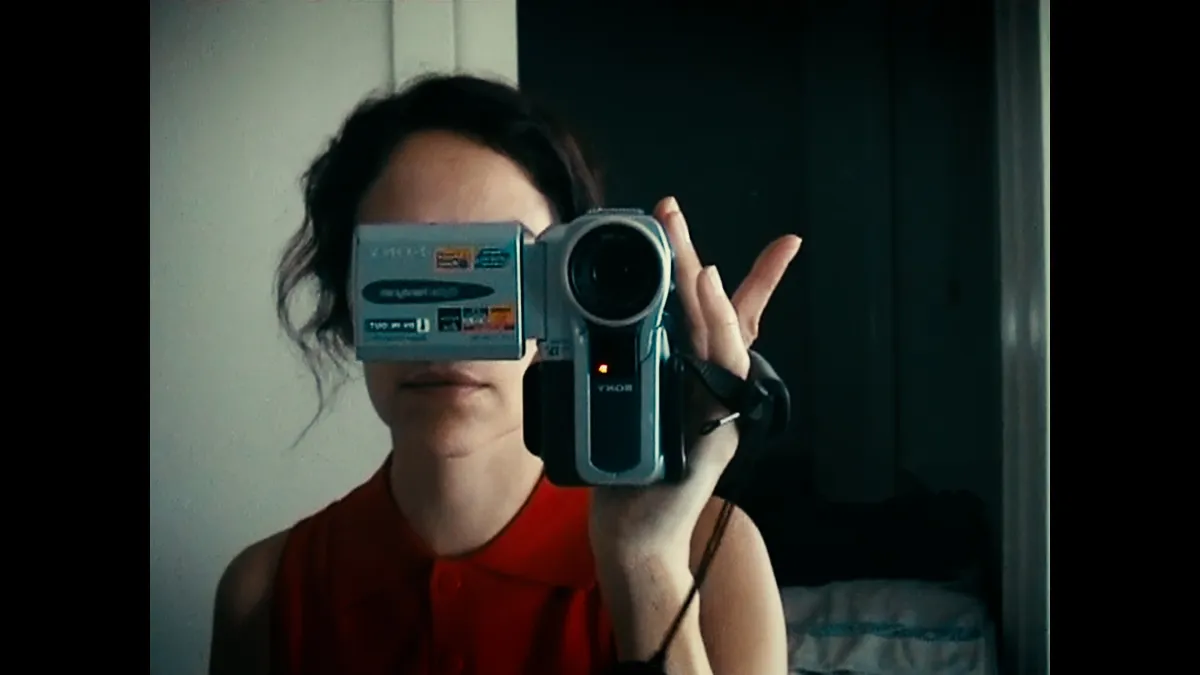
Both subject and codirector, Mestanza goes a step beyond in presenting herself as a run-of-the-mill “imperfect” victim, agonized by voices external and internal accusing her of complicity, by failing to resist her abuser to the fullest: Why didn’t you do anything? as the film’s original title asks. Mestanza recounts her story in a recording booth early in the film: a masseur in a Madrid health shop prevailed on her to strip naked, then ignored her initial complaints about his roving hands and penetrated her with his fingers. She froze and even paid him. Only years later did she find the conviction to speak out and pursue the case. A playwright, she staged the experience—from rape to self-reclamation—as a hit play, Filthy, striking a chord with many in her audience. She later wrote a book of the same name about her self-alienation. And while she pursued her assailant through a nearly cold trail and the indignities of the legal system to a hard-won trial, she continued to document the experience on video, through a mix of verité encounters, first-person diary reflections, and occasional footage of her theatre show, working with a longtime friend and filmmaker, Marc Pujolar.
After their Sheffield win, I spoke to the pair back in Spain via Zoom about how they persisted with the project while fighting a court case, what it takes to overturn prejudice around sexual assault, and how Mestanza found strength in art. The following interview has been edited for length and clarity.
DOCUMENTARY: Your rape happened in 2015. The film starts in 2019, with you disinterring your memories, and shows the premiere of your play and launch of your book. Did the filmmaking start where the film starts? And how did you go about incorporating or separating the material for the different art forms?
BÀBARA MESTANZA: That moment [that starts] the movie is like an illustration of the moment I started writing the play, but it’s not the first scene we recorded because we started recording without knowing we wanted to do a movie. We started recording because I needed answers to that question [Why didn’t you do anything?]. And then I needed a lot of images to put in the play. After that, we realized we had recorded a lot of information that was important.
MARC PUJOLAR: The documentary started with Bàrbara telling me about her abuse in a Zoom meeting. It was during the pandemic, and we were recording some meetings for another project, and she told me about it for the first time. But it was after the premiere of the play that she came to me and told me: “This is a documentary; this can’t end here now. We have to keep on going.” So we didn’t stop for six years.
BM: The play shows what happened to me in that moment in 2015, and then what happened to me when I started speaking out. The book talks about the self-destructive path I went on [between those moments]. In the documentary, you see the process of creating the play and then all the legal paths I took.
None of it was what I wanted to do, but I realized I needed to. We don’t know how to respond to someone who has suffered these kinds of things. We don’t know how to treat these issues. If I was feeling lonely and misunderstood, maybe a lot of people are feeling the same, and we can help them. And while you reach a few people with a play, and more with a book, with a documentary, you can reach more still, and make this more useful.
D: There’s an interesting comparison with Black Box Diaries, which uses journalism as a means to seek justice, and for Shiori Itō to reclaim her voice and challenge a culture of shame and silencing. You pursue those goals through art. How hard was it to keep filming yourself and performing for the film? Could you hold on to that feeling that you were reclaiming your voice, or were there things you had to spare yourself from filming?
BM: What happens for me all the time with this subject, I don’t think, I just do. When you have a lot of fear, the only thing you can do is be brave, turn “No, no” to “Yes,” and run forward so you can survive. When I started doing theatre or writing [about this subject], I was trying to find a way to make my wound useful, because then maybe I could feel better and could sleep at night.
So I got used to [constantly filming herself] because I was focused on being useful, so no one else would feel what I’m feeling. Facing my trauma was the only way of not having the trauma. A lot of people around me started judging me for making this art or focusing on the pain all the time and not on healing, but that was my way of healing. It has been a dark road.
D: Marc, what was your experience of collaborating with Bàrbara across such a long timeframe? Could you always see the film coming together in the end?
MP: Bàrbara and I have been friends since primary school, since we were six. We’ve always done projects together. She’s a force of nature. We’ve been doing this with little to no money, and I just trusted her instincts and followed her as much as I could because I knew it was important. I was very emotional at her theater premiere. And every time she staged it, so many people came forward. I was very moved. It also helped me understand the depth of the problem we have as a society.
D: Could you edit as you filmed, or did you have to work out the story structure after you had finished filming?
BM: Life was changing all the time, and so too were the legal issues. We’d edit a little bit, then rethink—all the time.
MP: There was a point where we thought there was never going to be a trial. Maybe we do have to go see this guy and record it, and we were preparing the legal way to do that, but we discussed that with some experts who recommended against it. So we kept shooting and editing and waiting to see what would happen with the trial. And even that felt like an endless struggle. But [then we realized] maybe that’s it: how hard and unfair it was to get there became the story.
BM: There are two endings: of the movie, and of my life trauma. And all the time we were thinking, Which was which? and, Are they the same or not? Finally, I realized the trial was the best way of facing him. But the ending was always an issue.
D: Has anything changed legally since your end note, which says he has not spent a day in prison?
BM: I’m still waiting. I don’t know if that guy will go to jail. But the truth is, I was not expecting any change inside myself, in my body, after the trial, but something did happen within me. The lawyer told me the trial would be important and I should think about how it would feel to be there speaking [my truth] out loud. And I was all the time thinking it wouldn’t be enough, that I needed something more physical: to make him see me there, strong enough to be there. After the trial, I was really sad for two weeks, but then I suddenly felt there was a space in my stomach that hadn’t been there before. I feel really different now than a year ago. I’m a new person, and it’s because the creation path led to the legal path. I found the healing without looking for it.
I didn’t realize I had to feel that much. I was in a black moment, a dark place, but I was not aware of that. It was just my normality. When you are in a depression, you think that’s life, and when you are not anymore, you realize, Wow, that was not normal. I thought my relationship with my body was that way, but I realize that now I feel my body. Now I have a different relationship with it, with my desire, my dreams, my health.
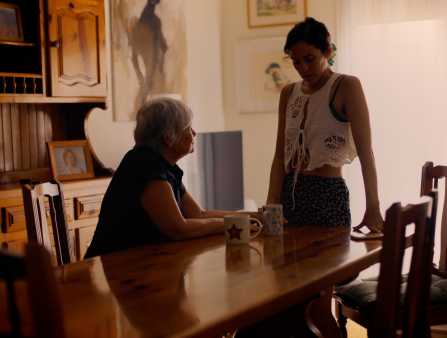
D: One of the most beautiful aspects of the film is the encounters with other people, from your friends to theatre audiences, lawyers, and advocates, that build up layers of connection, solidarity, and community. It’s not just one lonely personal story. But the scene in which your mother confides her experiences with your father is especially powerful in terms of extending the story generationally. How did the scene work for her, and how surprising was it for you?
BM: People are always saying art cannot change lives. That we are not doctors. That we don’t save people. But it’s true that art saved me once and keeps saving me. In this case, with my mum. It was because we were recording that she decided to speak out. She told me afterward she felt she needed to do something bigger, to try to help more people, using our trauma. I felt she was doing something heroic. I watched her getting bigger and bigger while she was speaking with the camera recording. She is really proud of this now. She has always been proud of what I do, but now she feels she is in my group, my band; us against the world.
To me, it was important to move from the subjective story of my mind, my body, my biography, my traumatic moment, to reach a universal feeling. That’s why we have the QR code [in the end credits, linking to a resources page], to help audiences feel they are not alone.
D: It sounds like you’re encountering a range of reactions as you travel with the film.
BM: Every time we join the audience after a screening, everyone is very emotional. It just proves the point: it was worth it. But there was a reason why it was important to be there at Sheffield DocFest, because that [proved the point] that we’d been thinking all this time: This subject is important to everyone. You might be from another culture or country, but this is still happening to all of us right now, and the right wing is trying to erase all we’ve achieved, so it’s still important to talk and think about this, to show a different way of talking about violence and sexual violence.
The way people used to talk about this in the movies would just be to show the moment when [an assault] happened to a girl, and whether that guy was in prison or not. To me, it was important to show what happens in between those moments, because sexual abuse happens here [she gestures to the beginning of a long timeline], but that’s just the beginning, and maybe you will have 10, 20, 30 years afterward trying to survive. And [it was important] not to show just the “typical” rape. For some people, that still [conjures] thoughts of a young girl, maybe drunk, raped while walking down the street. But the most common thing is that you will be raped by your husband or boyfriend, or by a photographer. We romanticize the perfect victim. To me, it was important to show that you are a victim not because of your face, your body, your language, but because he decides to make you a victim. That’s the only reason you are a victim.
But it’s easier for them to make you feel guilty. It’s harder to recognize that everyone can be raped by their partner, because now you have to think about this and make some changes. So yes, it has always been easier to blame women for the things they decide to make us feel.