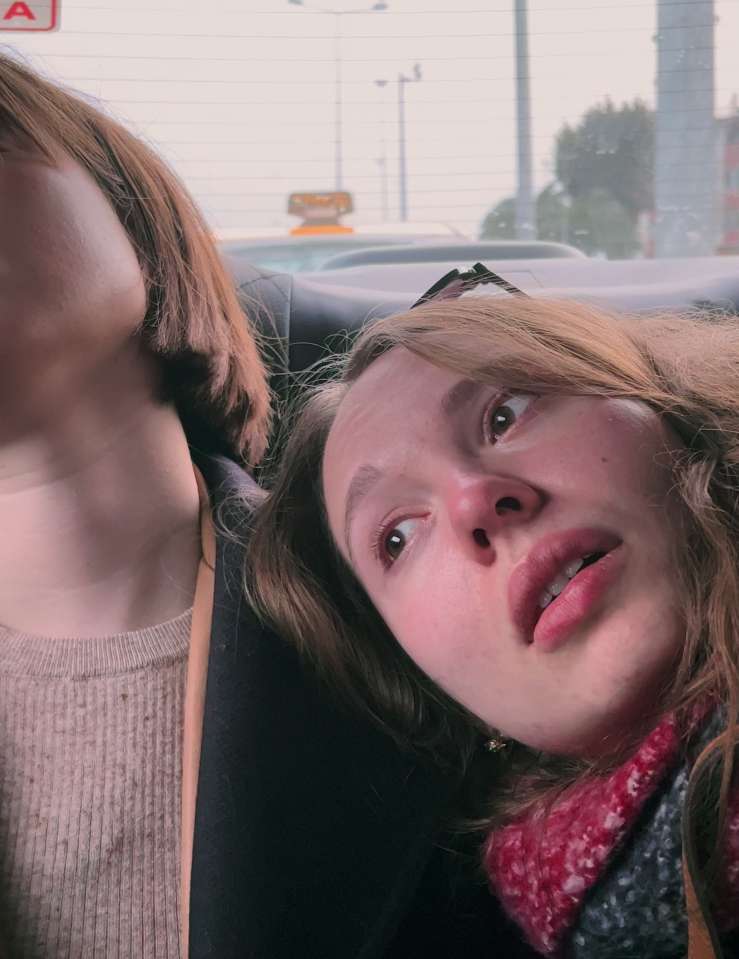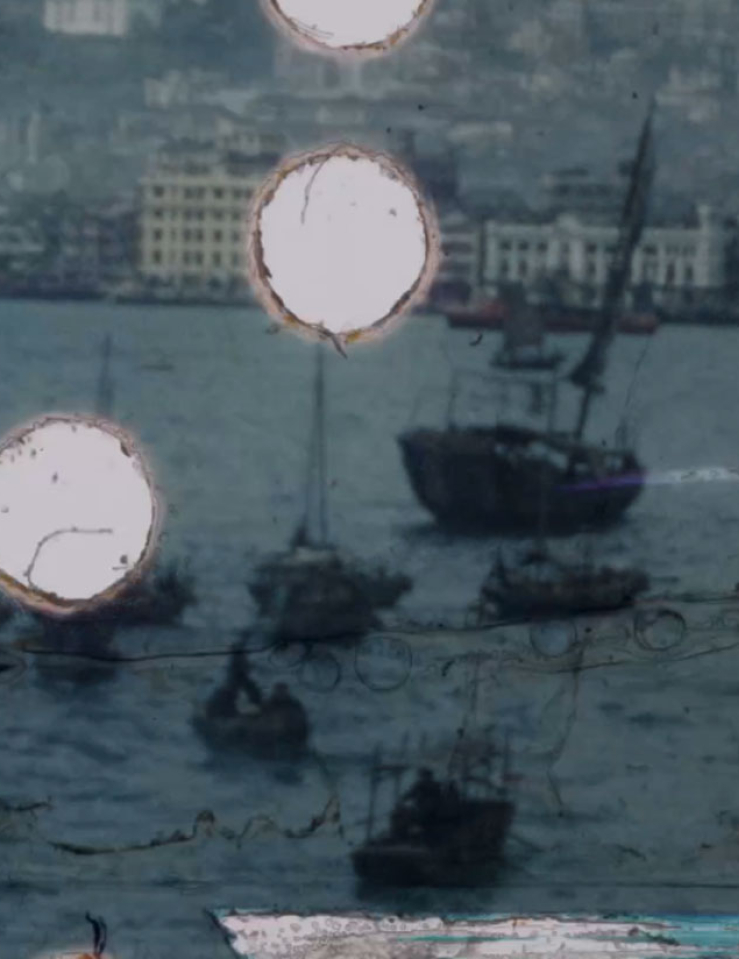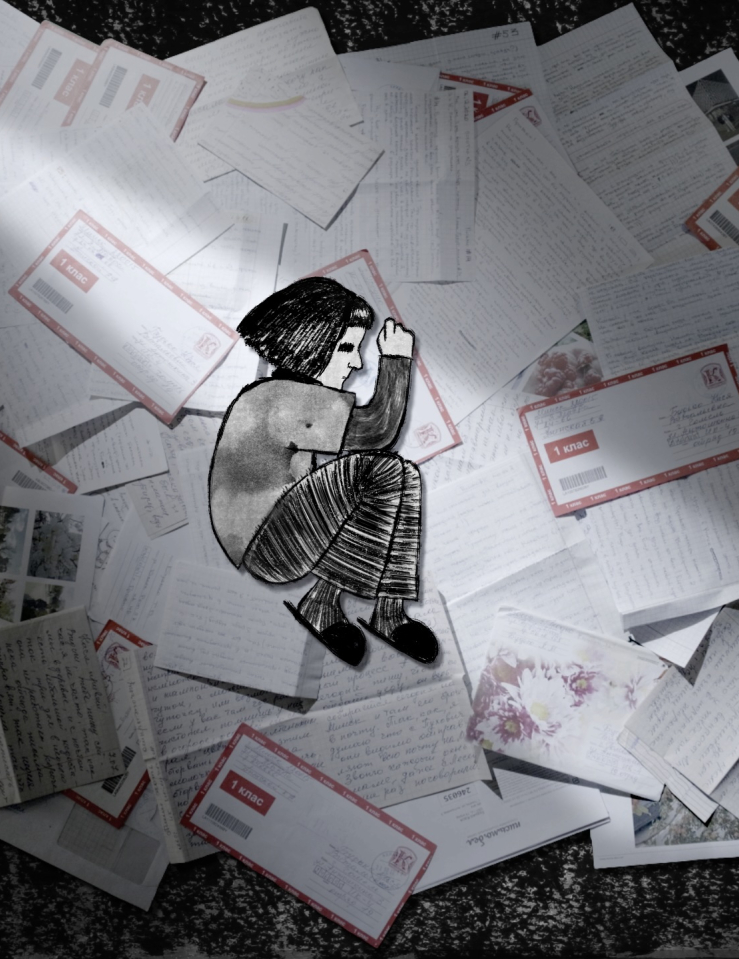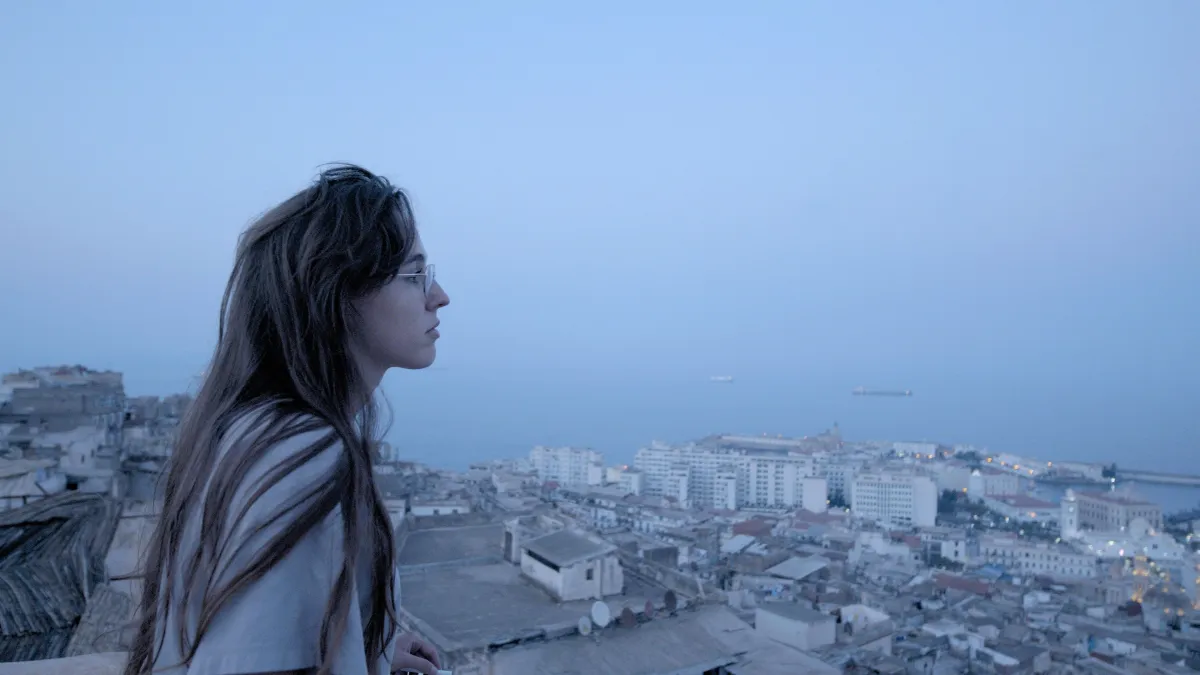


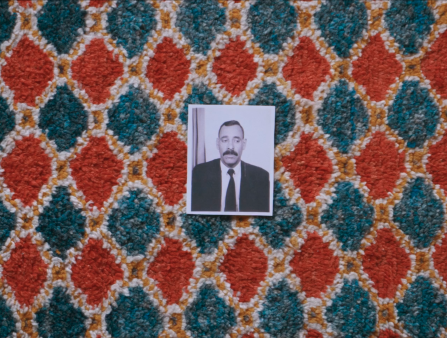
In Magma, French-Algerian filmmaker Mia Bendrimia uncovers the truth about her great-grandfather, who was believed to be a Harki—an Algerian who fought alongside the French during the Algerian War of Independence. But was he really? Through a determined voiceover, Bendrimia presents multiple, often conflicting versions of her family history as she gradually pieces it together. Bright red on-screen text introduces competing accounts of her ancestor’s death, lending a playful and youthful touch to the film’s visual language.
Following the Algerian National Liberation Front’s victory and the end of French colonial rule, Harkis came to be viewed by Algerians as traitors. Thousands were killed after the war, while the French government under President Charles de Gaulle refused to offer them sanctuary in France. “A useless magma that we should get rid of as soon as possible,” he declared. Having spent three years in an Algerian prison, Bendrimia’s grandfather—the son of the alleged Harki—managed to escape to France, where he was interned in transit and redeployment camps—sites that, a mere decade earlier, had served as concentration camps for Jews during World War II.
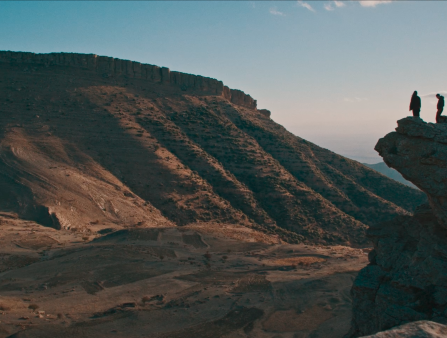
In pursuit of the truth, Bendrimia travels to Algeria during the 60th anniversary of independence. After returning from Algeria, she experienced sexual violence during the making of the film. Refusing to let this violation define either herself or the film, Bendrimia instead draws a painful parallel between colonial and sexual violence. Working with a familiar documentary toolbox—travelogue, interviews, and archival images—the director investigates the vestiges of memory, both cultural and personal. Through its intimate engagement with a complex and sensitive history, Magma feels strikingly relevant in light of the ongoing tensions between France and Algeria.
Documentary spoke with Bendrimia and producer Kira Simon-Kennedy following the film’s premiere at Sheffield, where it won the Grand Jury Award for the International First Feature Competition. The following interview has been edited for length and clarity.
DOCUMENTARY: When did you conceive the idea for this project, and how did it start taking shape?
MIA BENDRIMIA: I first had the idea in 2013, but I was only 16. At first, I thought I would just take my handheld camera and try to do it on my own. I started treating it as a more serious project in 2019. That’s when I began writing funding applications, and it’s also when I met Kira and told her about the project for the first time. The process was very gradual because it took many years for me to make my family feel safe enough to talk about these things. At first, they weren’t keen to talk about it. Eventually, my grandmother and my father began talking to me, but getting them to agree to be filmed was a completely different challenge. That took a couple more years. I bought a small DSLR camera and started filming them myself because it would never have worked to arrive with a full crew.
KIRA SIMON-KENNEDY: Originally, before Mia’s family was willing to tell her anything, we had discussed a sort of Plan B. We thought that even if her family didn’t want to talk, perhaps she could find other people who were speaking publicly about what had happened, and maybe their stories would be similar.
MB: Researching the history of the Harkis, I learned that many were placed in camps when they arrived in France. Shocked by this, I asked my grandmother about it, and that’s when she said, “Well, yes, of course. We were there too.” After that, I visited the camp where they had been interned. Since the site had been completely razed and remains closed to the public, I obtained special permission to enter and went with former residents, some of whom are involved in memory associations. They guided me through the site, helping me understand what had once been there and what life in the camp was like. This isn’t something we learn in school. It showed me the extent of the silence surrounding this history. Even when it happens to our own family, people don’t want to talk about it.
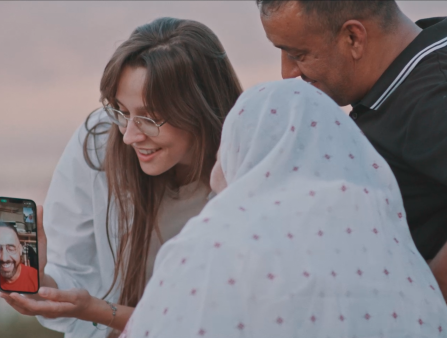
Magma.
D: In the film, you show that you initially developed the story using animation and puppets. Was that vision different from what the film eventually became?
MB: During COVID, it was impossible to even imagine traveling to Algeria, and my relatives in France didn’t really want me to go there. I thought that if I couldn’t travel to Algeria, I would need another way to tell the story. I love animation, painting, and making things by hand, so I felt that using puppets could be a good way to visualize the stories my grandmother was telling me. Then, eventually, it became possible to go to Algeria, so I changed direction. In a way, the film is also about the process of searching—trying different ways to find answers. When one approach doesn’t work, you try another, and then another.
KSK: As Mia worked on the puppets, she realized how little visual information she had. It became increasingly difficult to animate something based mostly on hearsay. The project was always intended as a documentary, and it’s difficult to recreate or visualize events when you have so few elements to work with.
D: I think this is a good moment to talk about the film’s form. I love how you visually cross out one version of “the truth” in the text on-screen and insert a new one. From abandoning puppetry and stop motion to arriving at the form we see in the finished film—how did that process unfold?
MB: As we tried to tell the story, we realized there were so many different versions that even we struggled to keep track of them. Do you remember, Kira, when you asked me to create a huge Excel spreadsheet with all the different versions of the story, including versions that don’t even appear in the film? You told me it was inspired by something Forensic Architecture does.
KSK: One of the methods Forensic Architecture uses when investigating complex events is to map out what every witness knows. Then they reconstruct a timeline to determine what each person could realistically have seen. We applied a similar method to the different versions of Mia’s family story. We built a large spreadsheet to assess the plausibility of each version and understand how stories had been transmitted across generations. This also informed the scene where Mia interviews her relatives, one by one. She deliberately separates them to see whether they shared the same understanding of events. If they didn’t, we wanted to understand where those divergences began.
MB: We were trying to be very methodical. When I started, my ambition was to find the truth. I genuinely believed I would eventually arrive at a definitive version of what had happened. The goal shifted during the making of the film. I realized that every version contains a part of the truth. It can express a feeling, a belief, or an emotional reality. Each version makes sense to the person telling it.
A parallel between colonial violence and sexual violence: both are forms of violence that societies often struggle to acknowledge, despite how many people have lived through them.
—Mia Bendrimia
D: Kira, were you involved in the project from the very beginning?
KSK: Mia and I met in 2019 in China, when she was developing the project on her own. As soon as she described the project, I was immediately interested. So we began working together sporadically. Later, Mia received a fellowship to study Arabic in the United States, and we reconnected there. After that, Mia moved to Egypt, and that was when she went through a very painful experience. She reached out to me as soon as she could. At that point, my involvement became much more intense, almost a rescue mission.
D: Since we’ve touched on that moment—and it’s also part of the film—I wanted to ask about the decision to weave it so directly into the story. Was there ever hesitation about including it?
MB: When I returned to Algeria with my brother, we spoke with my grandmother’s cousin, the elderly man you see lying down in the film. What he told me was deeply shocking. I came to realize that sexual violence was central to the family history I was investigating. At the same time, I experienced it myself during the filmmaking process. I was initially reluctant to include this in the film because it felt so intimate, and I didn’t want it to become the film’s defining subject. But [my co-producer in Algeria] Yanis [Koussim] and Kira helped me see that it was part of the story. I was making a film about confronting painful histories and breaking silences. Eventually, I felt I had to apply that principle to myself as well. I also saw a parallel between colonial violence and sexual violence: both are forms of violence that societies often struggle to acknowledge, despite how many people have lived through them.
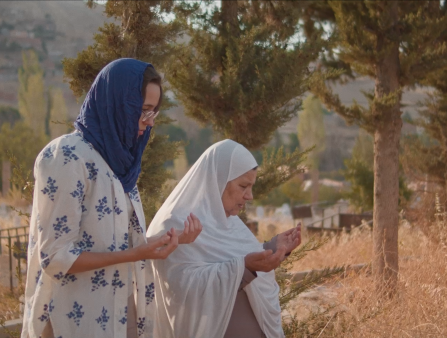
Magma.
D: What was it like working with your extended family in Algeria? I’m thinking particularly about the linguistic and cultural barriers involved with your Algerian relatives.
MB: I wasn’t fully aware of how many relatives I had in Algeria because our families had lost contact over the years. My grandmother’s sister struck me at first. She has the same voice, the same expressions. It was uncanny. It felt like I had gained another grandmother. What moved me most was the love. From the moment I arrived, I was welcomed as family, but I had no idea how they would react when I said, “By the way, I’m making a film. Would you like to be part of it?” But they immediately said yes. When I later showed the footage to my family in France, they were shocked. They couldn’t believe how comfortable everyone was in front of the camera. In a way, seeing that footage helped them relax and become more open to participating themselves.
KSK: We were trying to find a way that went beyond simple consent. We wanted consent to be informed and revocable. For that reason, we didn’t ask people to sign anything beforehand, which is unusual for documentaries. We wanted them to watch the whole thing and then decide if they were okay with it. It’s obviously not the easiest way to do things, but it really was the only way we could have done the film. We didn’t want anyone to feel trapped or pressured into something they didn’t fully understand. Relations between France and Algeria have been extremely tense in recent years. There’s a lot of very founded fear.
MB: We also had to navigate the language barrier. I studied Arabic in Egypt, but Algerian Arabic is very different. In Algeria, people would joke that I sounded like an actor from an old Egyptian television series. Fortunately, I had cousins who helped translate. One speaks English, another speaks French. Together, we managed to communicate everything.
D: You mentioned the tensions between France and Algeria. Could you talk a little more about that? Does the current political climate make these kinds of stories feel even more urgent and resonant?
MB: To understand the current situation, it’s important to realize that most French people know very little about colonization in Algeria or the Algerian War of Independence. It’s not because people aren’t interested. It’s because we spend very little time on it in school, and what we do learn is often fragmented and limited. In 2025, there were repeated diplomatic crises between France and Algeria. Ambassadors were recalled, diplomats were expelled from both sides, and there was constant media coverage portraying Algeria as somehow humiliating France. The whole atmosphere has overall become increasingly heated.
KSK: Today, those tensions ebb and flow but have remained high. No matter what, we’re excited for the film to be part of a broader movement confronting buried histories head-on. There has been an inspiring wave of journalists, filmmakers, and organizers working to challenge and correct dominant narratives: Histoires Crépues, the Decolonial Film Festival, Tonnerre, and La Clef. These initiatives are helping to push important conversations forward.