

Karlovy Vary’s 60th edition made nonfiction prominent without confining it to a dedicated section. Since abolishing its documentary competition in 2020, the festival has integrated feature documentaries into its general competitions and non-competitive strands. That approach was especially visible this year: a documentary, Juan Cabral and Santiago Franco’s The Match, opened the festival; much of the Czech and regional nonfiction appeared in Special Screenings; and hybrid work competed in Proxima. Within a program of more than 130 fiction and documentary features, nonfiction functioned less as a sidebar than as a mode circulating throughout the festival.
Within this dispersed selection, the most interesting nonfiction shared a problem rather than a style: Who controls an image once it has been made? The films addressed addiction, war, celebrity, pornography, and racist violence by exposing bodies, replacing faces, reenacting memories, and testing public personas against private experience.
The most revealing comparisons were not between documentary and fiction, but among films working at radically different scales of time and emotional proximity: five years spent inside a family, 12 years of war, half a century of a singer’s life, or a production fractured when consent was withdrawn after filming. Away from the screen, the anniversary edition felt less like a radical departure than a particularly busy iteration of Karlovy Vary’s familiar model. Screenings and queues were consistently crowded, while the industry presence remained conspicuous throughout the week. Official figures reflected that activity: KVIFF recorded 11,014 accredited visitors, including 1,249 film professionals, while 132,553 tickets were sold across 472 screenings.
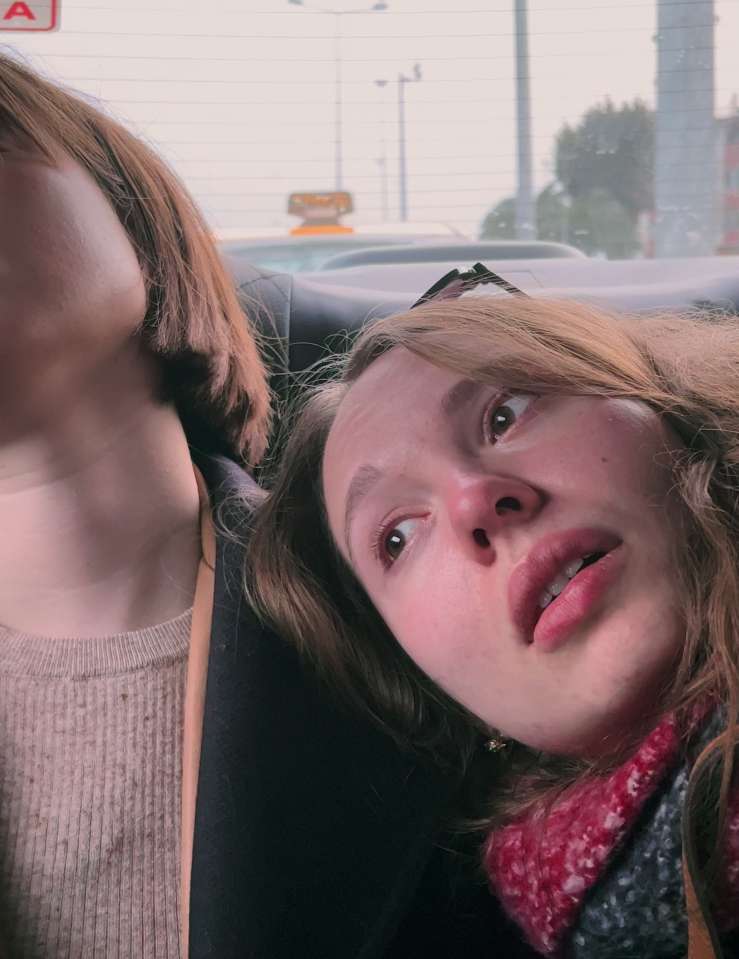
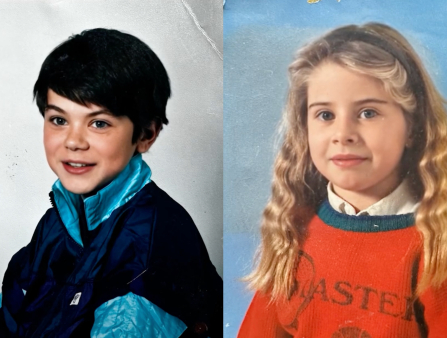
The most compelling exploration of these high-stakes dynamics came from Pepa Lubojacki’s If Pigeons Turned to Gold, which arrived in Karlovy Vary’s Special Screenings after scooping the Berlinale Documentary Award. Shot largely on an iPhone over five years, the Czech-Slovak film follows Lubojacki’s older brother, David, and their two cousins as they live unhoused and struggle with severe addiction. Yet describing it as a family portrait understates its disquieting reflexivity. Its real subject is the unstable position of the relative holding the camera: loving, exhausted, ashamed, furious, and repeatedly tempted to turn documentation into rescue.
Lubojacki does not smooth this experience into an inspirational recovery narrative. Instead, the film recognizes a parallel compulsion. David cannot stop drinking; the filmmaker cannot stop trying to save, discipline, understand, or film him. Care becomes entangled with control, and the camera becomes both a means of staying close and a device for managing the unmanageable. The recurring question of how one grieves somebody still alive gives the apparent disorder a painful logic.
The form is deliberately volatile: phone footage, old photographs, electronic music, graphic text, self-questioning narration, and childhood images animated with artificial intelligence. A talking pigeon adds a note of absurdity that might sound intolerably whimsical in a film about homelessness and addiction. Instead, the visual incongruities often register as defensive mechanisms, ways of approaching memories too intimate to confront head-on. The AI-generated children are especially uncanny. They do not restore the past; they advertise its irretrievability, making family photographs look simultaneously overanimated and emotionally unreachable.
At times, the density threatens to turn distress into an aesthetic system. But Lubojacki’s willingness to implicate the filmmaking prevents self-congratulation. The family members are not social “cases,” and the director claims no moral safety as a concerned observer. Exposure can be an act of love and a breach of trust at once. Thus, the achievement lies in refusing to pretend that sincerity resolves the contradiction.
If Pigeons Turned to Gold.
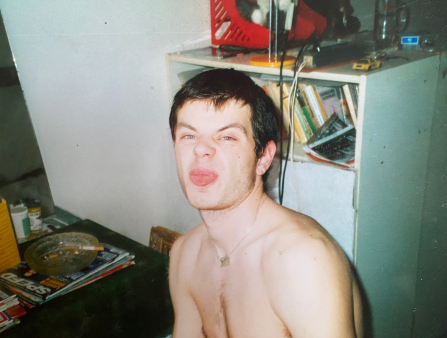
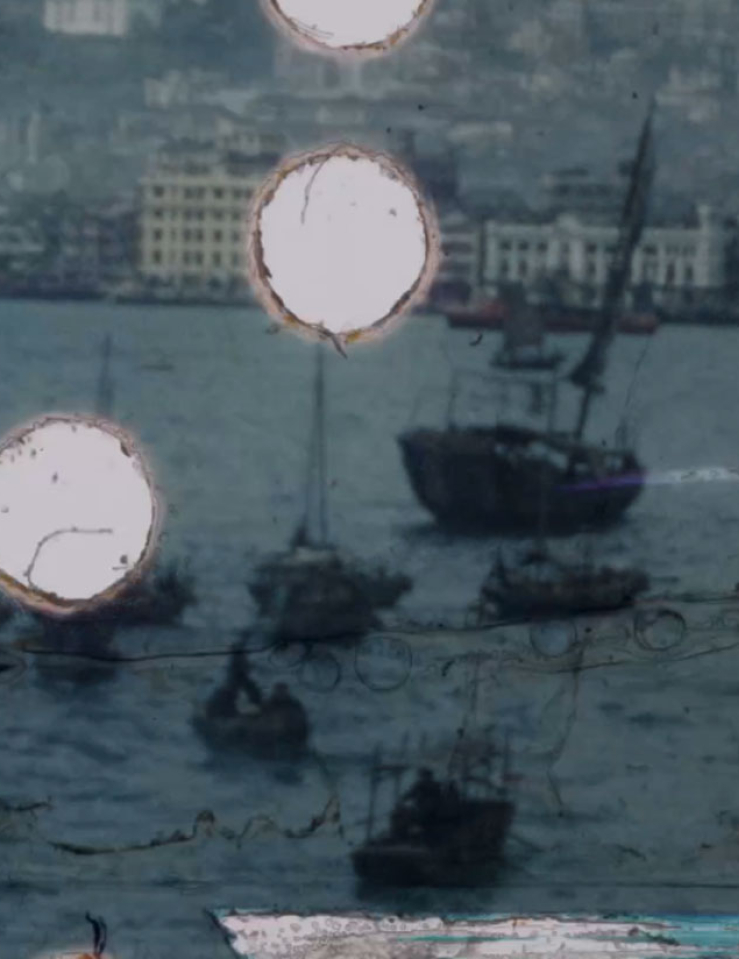
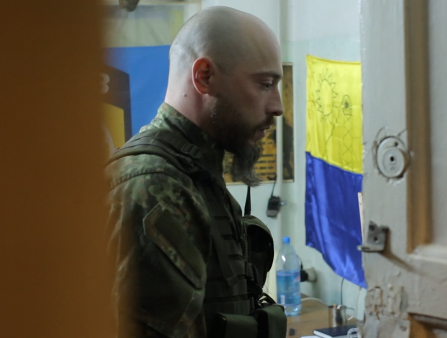
Yuliia Hontaruk’s To Die to Live, a Ukrainian-Latvian-Slovak coproduction showcased in Special Screenings, also derives its force from duration, though its visual language is much more direct. Filmed across 12 years, it follows three Ukrainian men—known as Shakhta, Dancer, and Potter—who volunteered to fight in 2014, attempted to resume civilian life, and were drawn back into war after Russia’s full-scale invasion in 2022.
Combat footage gives the film immediacy, but its most consequential images are made away from the front. Hontaruk watches the men return to families, jobs, classrooms, and damaged versions of ordinary routine. War persists in posture, speech, domestic silence, billboards, and the fear that the next generation will inherit the conflict. The film records how militarized time colonizes civilian time, making “after” increasingly meaningless.
The protagonists remain sharply distinct. Shakhta is the most openly reflective, articulating the dread that Ukraine’s children will be required to continue what their parents began. Dancer attempts to find a counterweight in movement and discipline, while Potter’s eccentric humor and entrepreneurial ambitions provide brief relief from the surrounding pressure. Hontaruk allows these differences to override the collective narrative. The men are neither reduced to emblems of national resilience nor framed solely through trauma, even as post-traumatic stress, grief, and exhaustion become impossible to ignore.
The film’s politics are unambiguous, and its moral division between invasion and resistance is simple. But simplicity is not necessarily simplification. Hontaruk is recording lives shaped by the need to resist subjugation, not constructing a neutral geopolitical essay. Despite material gathered by several cinematographers (Denys Strashnyi, Yurii Gruzinov, and Hontaruk herself) and shaped by multiple editors (Hontaruk, Roman Liubyi, Uģis Olte, Mykola Bazarkin, Iryna Stetsenko, Pavlo Zelenov, and Petro Tsymbal), the film maintains unusual coherence, with chronology providing its deepest structure. Survival is not a return to life as it was, but the harder task of inventing a life after one’s sense of mortality has been destroyed.
To Die to Live.

Bára – Diary of a Rockstar.
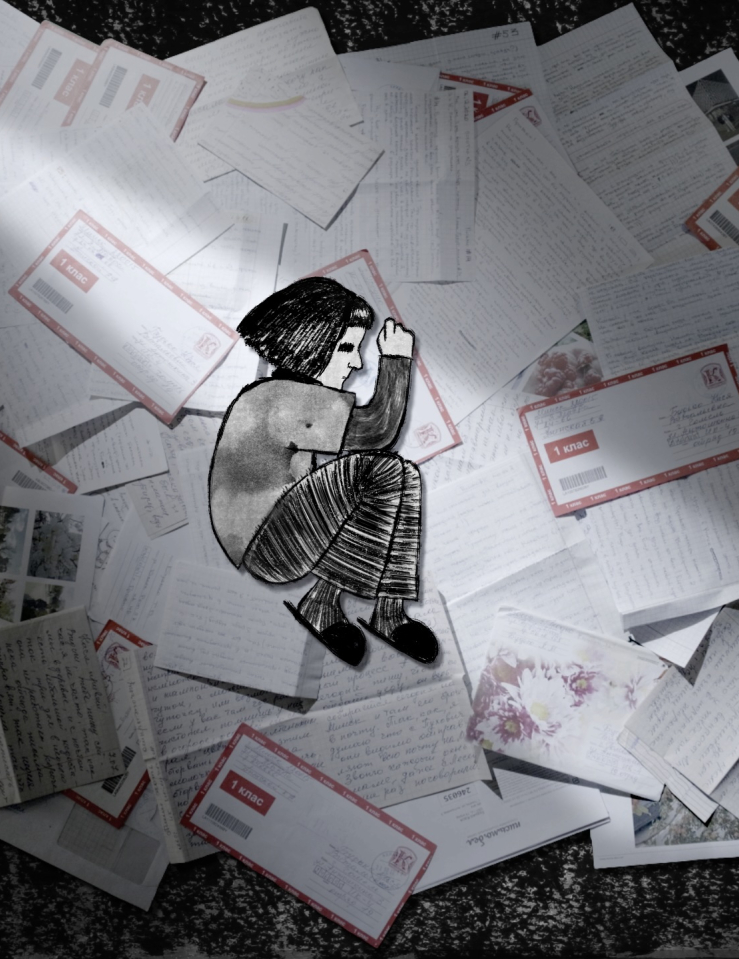
If Hontaruk turns 12 years into evidence, Helena Třeštíková makes half a century the organizing principle of Bára – Diary of a Rockstar. The film, which won Karlovy Vary’s Právo Audience Award, follows Czech singer Bára Basiková (born 1963)—who rose to prominence in the 1980s rock scene before dominating 1990s pop and musical theater—tracing her trajectory from youth through financial instability, motherhood, and a series of marriages.
The title suggests a familiar celebrity biography, but Třeštíková’s long-term method works against the standard rise-fall-redemption template. For viewers unfamiliar with Basiková, career milestones matter less than the collision between professional endurance and private disappointment. Her success unsettles conventional gender arrangements: She is frequently the primary earner, while partners struggle with unemployment, alcohol, bruised pride, or the expectation that her ambition requires unlimited emotional accommodation.
Třeštíková neither supplies a thesis nor stages confrontations. Having actively filmed Basiková across 30 years—starting in the mid-1990s when the singer was in her early 30s—the director weaves this longitudinal time-lapse footage with archival material to let the story unfold through Basiková’s own reflections, recorded close to the events she is trying to understand. Former partners rarely receive equal screen time or emotional space, and the decisive arguments often remain offscreen. In a conventional piece of reporting, this imbalance would be a serious limitation. Here it becomes part of the portrait. Basiková’s narration is revealing not because it offers a definitive account, but because decades of repetition expose the gaps in her self-knowledge. Hopeful declarations about new love are followed, sometimes only minutes later in screen time, by another collapse. The pattern turns the film into a rueful tragicomedy without inviting viewers to feel superior to its subject.
This is nonfiction built not on disclosure but recurrence. Třeštíková trusts duration to reveal that people’s stories about themselves change while their emotional structures remain familiar. Basiková’s candor, humor, and capacity for reinvention keep the film from hardening into a diagnosis. In a selection crowded with conspicuous devices, this documentary demonstrates that sustained, longitudinal attention can still be a radical, illuminating technique.
33 Steps.
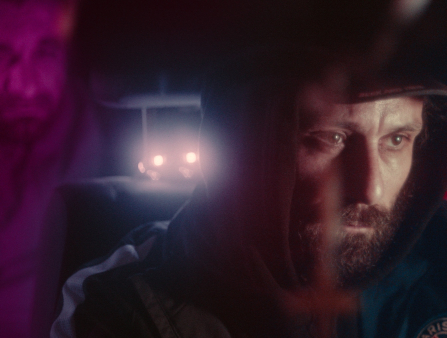
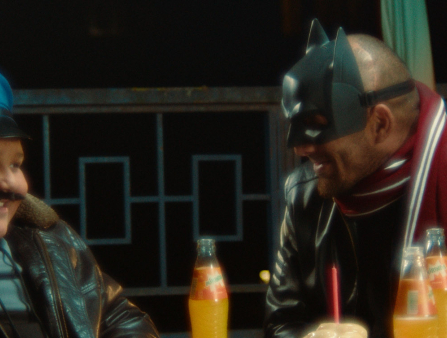
Anna and Šimon Domček’s 33 Steps, which received a Proxima Special Mention, crosses more explicitly into fiction. Roma nonprofessional actor Milan Daniel plays a version of himself 13 years after a racially motivated assault left him with a serious head injury. Learning that one of his attackers is due to be released from prison reactivates his trauma, which begins to spill into his work, his marriage, and his relationship with his young sons.
Rather than reconstructing the assault through literal reenactments, the directors build a compressed subjective world from everyday observational fragments, dreams, voiceover, and staged situations rooted in Milan’s present experience. Heavy grain, darkness, and suffocating close-ups deny the viewer a stable geography. Faces crowd the frame; rooms become difficult to read; Milan’s imposing appearance is gradually revealed as the exterior of a frightened man. The form makes trauma spatial: the past is not behind him but pressed against every present-tense image.
This sensory strategy is more persuasive than the dramaturgy. Scripted narrative beats—such as scenes where Milan projects his paranoia onto his young sons—feel like calculated directorial devices to illustrate intergenerational trauma rather than organic moments arising from the family’s life, while his wife and children remain underdeveloped. Wider structures of anti-Roma violence also stay outside the frame...
Yet its incompleteness is connected to a legitimate refusal of easy moral positions. 33 Steps is not interested in arranging perpetrator, victim, and redemption into a clean line. It asks what survival means when the victim is still organized around the anticipated return of his attacker, and when fear begins to reproduce itself inside the home. Its hybrid method does not solve that question, but it gives the psychic afterlife of violence a rough, appropriately unstable form.
My Friend the Porn Star.
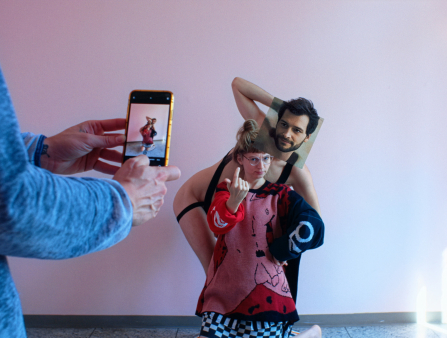
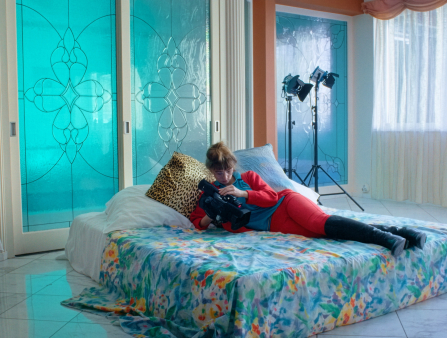
Rosa Friedrich’s Austrian feature My Friend the Porn Star, another Proxima world premiere, begins with an unusually productive collapse. Friedrich agrees to document her friend Timo’s attempt to make a personal erotic film. Late into production, she grows uncomfortable and asks to withdraw from the project. Friedrich continues regardless, using AI to superimpose another actor’s face onto Timo’s body and broadening the film’s scope to include a dominatrix, trans performers, a sex coach, a food-porn creator, and other participants discussing bodies, labor, intimacy, and self-exposure.
The substitution creates the film’s richest paradox. A face has been removed to respect a boundary, yet the body remains available as material. Consent, the film inadvertently demonstrates, is not a title card or a one-time production agreement; it is a relationship that can change after an image exists. AI does not erase Timo’s presence so much as make his absence grotesquely visible. The smiling replacement face turns every salvaged shot into evidence of a broken collaboration.
Unfortunately, Friedrich rarely pushes this contradiction far enough. The film is sex-positive and gives space to people whose work and desires are commonly reduced to a stereotype. Its artificial sets and playful imagery resist the drab seriousness of documentaries determined to prove their open-mindedness. But the inquiry remains shallow and repetitive. Questions about separating sex from intimacy or feeling comfortable before a camera produce limited insight, while jokes involving suggestive food reinforce the impression of a filmmaker hovering nervously outside this world.
The result is meandering overall and more revealing about Friedrich’s discomfort than about pornography. Awkwardness can be useful nonfiction material, but the film treats cringe as a tone rather than examining the power behind it. Its contributors bring warmth and specificity, yet the central ethical rupture remains a clever premise in search of a rigorous argument. Ultimately, the unresolved discomfort surrounding the collaboration proves more revealing than the film’s broader inquiry into sex, intimacy, and self-exposure.