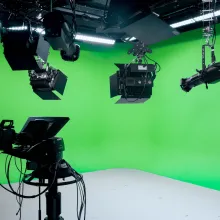
International Documentary Association (IDA) and Manhattan Neighborhood Network (MNN) announced a new partnership that will connect the organizations' access to each other's events, facilities, and communities. For over 30 years, MNN has provided access to local video production, distribution, and educational services that inform, entertain, and enrich the lives of all New Yorkers. MNN is the largest cablecaster of original video programs in the country, and its national program partners carry MNN programming to more than 20 million households nationwide and globally via livestream. MNN is
Latest Posts
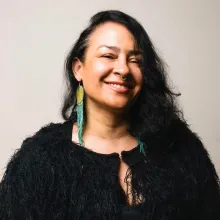
Tracy Rector is a mixed heritage filmmaker rooted in the lands of Turtle Island, where her heart is in rhythm with the stories of Indigenous, Black, Communities of Color, and Queer peoples whose voices have long been overlooked.

Revolutionary! Magical! Game-changing! These are some of the words being used to describe the results of AI-generated upscaling tools for archival and low-resolution footage. Some documentarians have turned to Video AI from Topaz Labs, a software featuring a suite of 30-plus AI models for video enhancement. To learn more about Video AI and the future of AI-assisted video upscaling, Documentary interviewed the Topaz CEO and Co-founder Eric Yang.
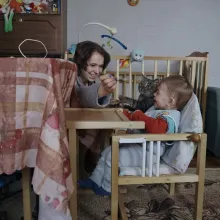
“Always balance, everything in balance,” intones Raul Niño Zambrano, all smiles and relaxed on the last morning of his fourth year as creative director of Sheffield DocFest. It’s an aspirational mantra for a festival that seeks to elevate the documentary art of drawing meaning from chaos; in a capsizing world that needs independent media more than ever but would rather attack it, a confident and constructive place to rally is vital. Brexit cut off Creative Europe and Creative Media funding and visa-free visits from Europe, the pandemic hammered revenue and audience habits, and the UK remains in a deep industry recession with more than half its freelance workforce out of work and its once-mighty broadcasters on the back foot. And yet the festival has steadied.
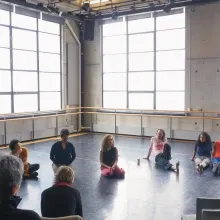
In Tatyana Tenenbaum's Everything You Have Is Yours, we see dancer Hadar Ahuvia as she develops her performance by the same name, the culmination of years spent celebrating her own Jewish identity while also challenging Israeli tradition. After its theatrical run in NY, Documentary spoke to Tenenbaum about adapting her work in dance documentation to documentary, dance film tropes, and political activism in a nonverbal art form.
Slowness has been an established mode of cinema for many decades, but the commercial demands of television meant it took longer for that medium to adopt such a form, thanks to the medium’s mass-market nature and heavy ties to advertising interests. PBS's Ambient Film arrives amid a glut in such works. But vectors like Instagram, YouTube, and TikTok long ago outpaced what traditional networks and streaming platforms can offer, in terms of both quantity and length.
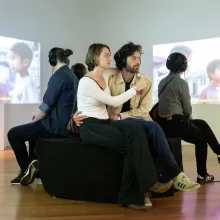
For her immersive artwork Burn From Absence, artist Emeline Courcier creates an archive where there was none. Using artificial intelligence, she recreates a family album, visualizing and verifying a history that has been hidden, documenting it from her perspective. In the four-channel installation, digitally created images illustrate an audio track layering her family members’ memories of life in Laos, the ‘Vietnam’ war, and new beginnings in France. After its premiere at IDFA last November, where it won the DocLab Special Mention for Digital Storytelling, Documentary spoke to Courcier about truth, archives, and working with deeply personal material.
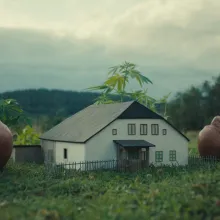
While Karlovy Vary may be best known for its star wattage and warm midsummer embrace of fiction auteurs, this year’s 59th edition (July 4–12) once again made a powerful case for documentary’s enduring vitality. Across the official selection, sidebars, and special screenings, nonfiction titles proved indispensable in reflecting Europe and the region’s evolving identities, eccentricities, and contradictions. This festival dispatch includes reviews of Grand Prix-winner Better Go Mad in the Wild, TrepaNation, Action Item, and Divia.
Documentary is pleased to announce that the Disability Media Alliance, or DMA, has launched today. Incubated through IDA’s own Nonfiction Access Initiative (NAI), DMA came about after research to address enduring inequities in the documentary community.
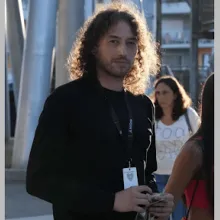
Since its founding in 1971 in the small town of Giffoni Valle Piana in southern Italy, the Giffoni Film Festival has grown into a global reference point for cinema made for—and with—young people. In this interview for Documentary, Minervini shares insights about his journey as a programmer of GEX:DOX, the distinctive qualities of Giffoni, the challenges and opportunities of curating documentary films for young audiences, and the spirit that animates this dynamic festival section. This interview has been edited.