

Usually relegated to a festival sidebar, experimental film sat center stage at the 16th edition of Open City Documentary Festival, which took place in London for five days in April, 2026. In recent years, the festival has moved away from traditional forms of documentary to champion nonfiction works in the lyrical vein, often exhibited in gallery contexts alongside the festival circuit. Straddling the canonical and the lesser known, this year’s edition showcased a retrospective of avant-garde filmmakers Ken and Flo Jacobs, which ran parallel to screenings of amateur films from Cuba and Poland.
The shift towards the experimental coincides with a turn away from fanfare and exclusivity. Since 2022, competitions and juries have been dispensed with, and there is little emphasis on premiere status—quite the inverse. During her opening night speech, artistic director María Palacios Cruz joked that the retrospective of Armenian director Artavazd Pelechian’s films was the last opportunity to see them in their deteriorated condition before their forthcoming restoration (unveiled at Cannes). Yet the festival’s substantial programming of archival films never feels nostalgic. Prescient resonances with the urgencies of today abounded in these works, many of which foregrounded transnational and transhistorical solidarity as praxis.
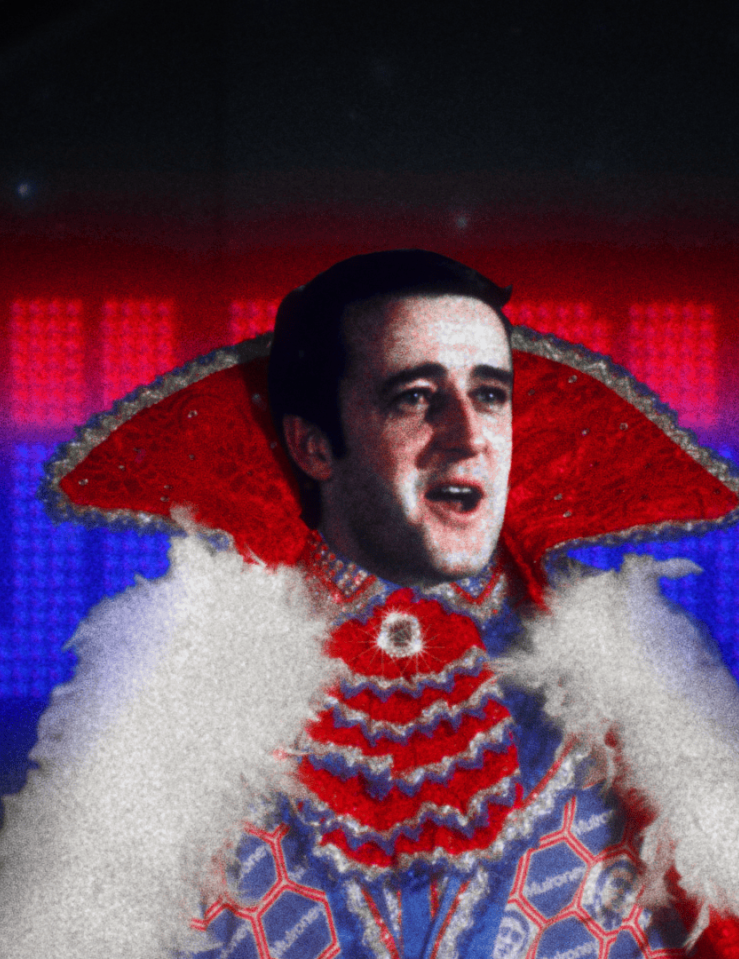
One such film was Pop Out Balsam Seeds! – My Chikuhō, My Korea (1984), a portrait of the Japanese artist Tomiyama Taeko by Tsuchimoto Noriaki, a titan of postwar Japanese documentary who enjoyed a retrospective at the festival’s 2022 edition. Tsuchimoto films Taeko, then in her 60s, at work in her studio, with close-ups of her hands carefully painting individual vertebrae of a human spine onto a gigantic canvas. The camera pans upwards to reveal dismembered skeletal parts scattered across the painting, a macabre memorial to the Korean forced laborers who died working in the coal mines of Chikuhō during the 1930s and 40s. “I grew up in colonial Manchuria, where I learned to hate the Japanese,” Taeko tells Tsuchimoto.
Throughout her life, Taeko made socially engaged art in solidarity with oppressed peoples, particularly those affected by Japanese imperialism and its legacies. The film animates her paintings and lithographs through a series of zooms and pans across their surfaces, as Taeko narrates stories from the perspective of the Korean miners, set to a disquieting staccato score by composer Yuji Takahashi. The faces of the laborers evoke traditional Korean masks, with deep-set eyes stricken by fear and grief. In a particularly affecting scene, Taeko voices a gaggle of Japanese overseers thundering at a cowed worker, which cuts to her sketching them using her own face as a reference. “Do the villains look too kind?” she jokes with a knowing complicity. Her art strikes a remarkable balance between grotesque and playful, condemning the horrors of colonialism while infusing it with levity that undermines its enduring doctrines. It’s no wonder that Tsuchimoto, who made several documentaries in support of the victims of mercury poisoning in Minamata, chose to observe a fellow socially committed artist at work. Pop Out Balsam Seeds! unfurls as a lively conversation between two comrades, where camera and paint brush alike are wielded as agents of critique and remembrance.
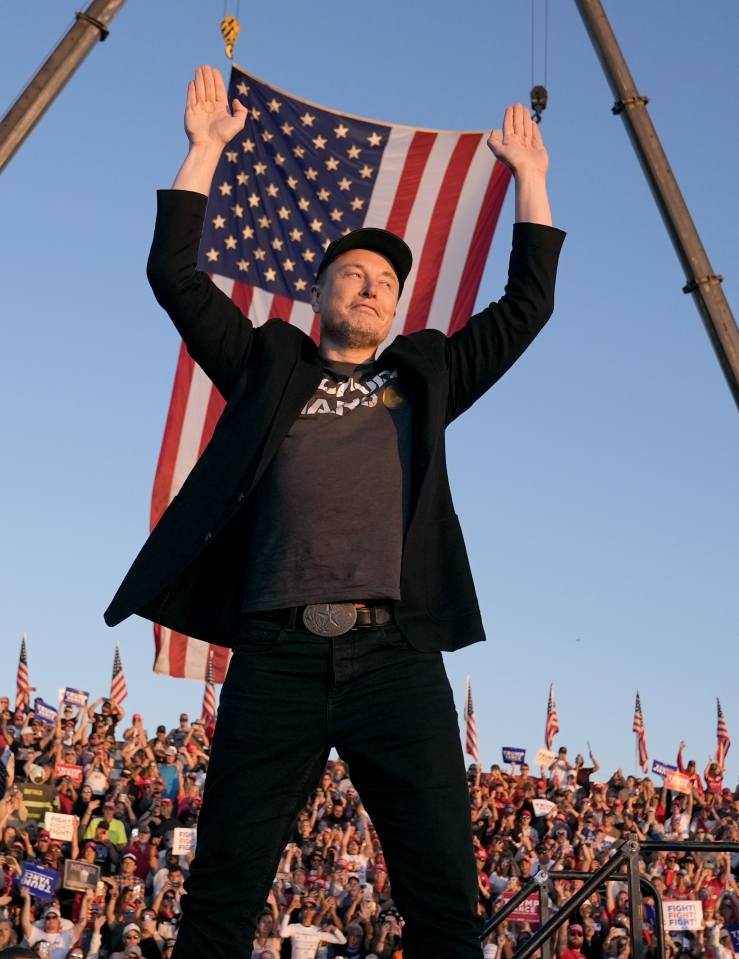
A contemporary film that also spotlighted solidarity with historical struggles, Graeme Arnfield’s sophomore feature, The Case Against Space, is a docu-fictive account of the first extraterrestrial labor strike, held aboard NASA’s Skylab space station for a single day in 1973. Arnfield translates thousands of pages of tape recording transcripts from the mission into a speculative re-enactment of the events leading up to and including the strike. Actors playing the three disgruntled astronauts detail the onslaught of tedious tasks assigned to them by ground control, slipping between embodiment and third-person commentary that offers incisive yet poetic musings on the pitfalls of productivity culture. Reproducing the conditions of surveillance, Arnfield captures them on a black-and-white 1970s CCTV camera, confining each actor to a stifling 4:3 frame that amplifies their alienation from Earth and from one another. If this talking-head framing, which structures most of the film, can feel sluggishly static, it is occasionally bolstered by a funky cosmic score by Arnfield himself, and by inventive low-budget approximations of zero gravity.
When their workload becomes untenable, the trio cuts off communication with terra firma, spending a rare day of leisure assembling a makeshift Christmas tree from tin cans. This fragile symbol of short-lived resistance seems to mirror the contested nature of the strike, which NASA never formally acknowledged, even as it led to minor improvements in working conditions. Through fabulation, Arnfield magnifies the precarious potentiality of the moment, simultaneously zooming out to examine the human cost of space travel—a pertinent question in light of NASA’s recent Artemis II crewed mission to the moon.
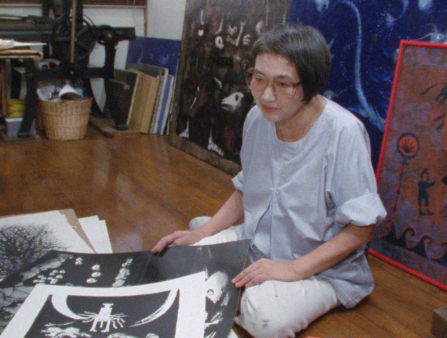
Pop Out Balsam Seeds! – My Chikuhō, My Korea.
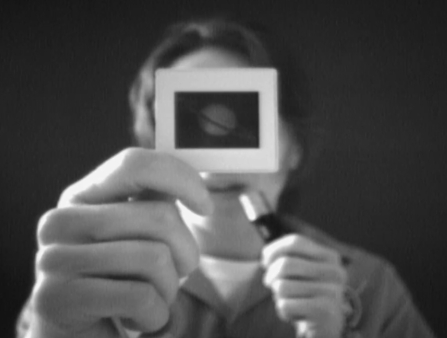
The Case Against Space.
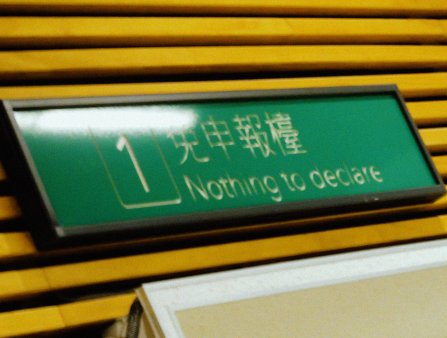
Nothing to Declare.
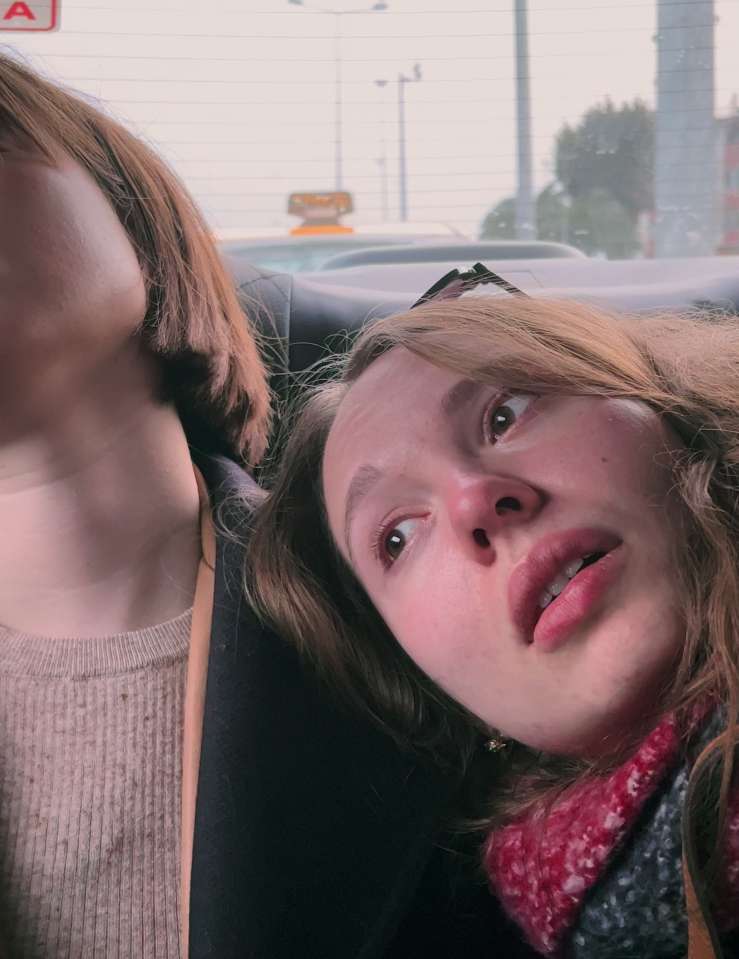
If borders are mostly invisible from space, they are ubiquitous in the works of Filipino filmmaker Miko Revereza. Informed by 26 years of living undocumented in the US, his films trace the hazy contours of fugitivity. Having presented features No Data Plan (2019) and Nowhere Near (2023) at previous editions of the festival, he returned with a live performance of his work-in-progress film Nothing to Declare, narrating fragmented stories alongside footage from his personal archive, layered over an ambient soundscape improvised by artist Carolina Fusilier. Filmed from buses and planes, the images document various journeys, including his trip to Open City from the Courtisane Festival in Ghent. Blurred highways and landing strips evoke the films of landscape theory, exemplified by Masao Adachi’s AKA Serial Killer (1969), which eschew contemplation of the scenery to examine how state power can be made visible through representations of infrastructure. Yet instead of Adachi’s long, unbroken shots of the environment, Revereza opts for furtive glimpses shot through with unease, his handheld camera embodying the paranoia of navigating sites of heightened security and surveillance.
In a tense scene at the UK-France border, the infamous white cliffs of Dover (the first thing asylum seekers see as they approach Britain) loom pixelated through the bus window. Revereza chokes up recounting how one of the passengers was detained and did not return to the bus. That he witnessed this on his way to Open City is not only a sobering reminder of the xenophobic policies at work across Europe, but also calls into question who can travel to film festivals, considering that visa applications are a protracted and difficult process that offer no guarantee of entry. Revereza acerbically labels his Filipino passport “a blockport: it doesn’t get you anywhere.” Where No Data Plan asked, How does an undocumented migrant document themself?, in Nothing to Declare, he searches for ways to undocument himself. Evading capture becomes a formal and practical necessity, as he likens the process of editing to packing a Balikbayan box—a cardboard container used by diasporic Filipinos to send goods home—squeezing images and sounds into a film, which becomes a fraught permit for temporary mobility.
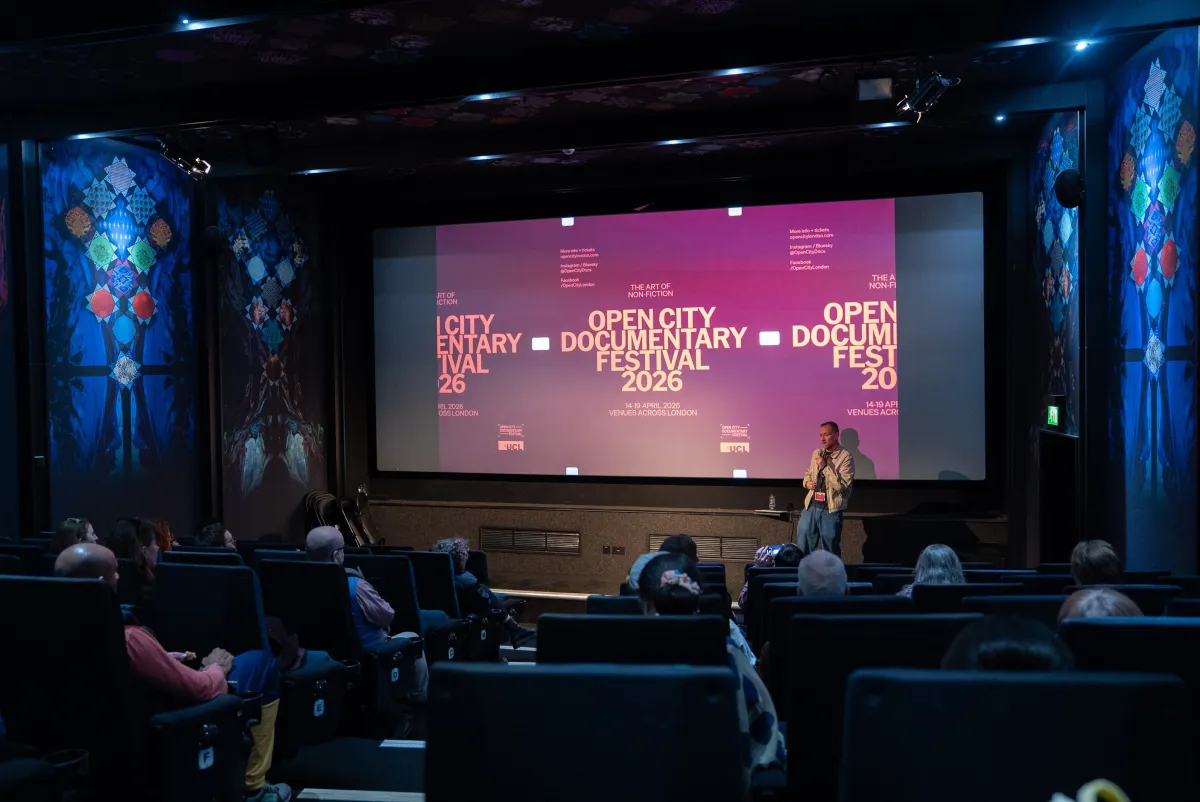
The charged experiences of migrants were also the driving force of Morning Circle, the latest short film by Palestinian artist-filmmaker Basma Alsharif. Set in Berlin, the film places the viewer into the perspective of an immigration officer interrogating an Armenian father, intruding into his flat as a disembodied voiceover. “Why did you come to Germany?” it demands, the camera circling him like a drone as he carries out his chores and helps his son get ready for kindergarten. The title describes the kindergarten’s daily ritual of gathering in a circle, a seemingly benign activity that nonetheless enforces the assimilation of the immigrant child into the dominant culture.
The film marks Alsharif’s move towards a more narrative mode of image-making, yet it still bears her trademark visceral elements that scramble the senses, as in her earlier experimental films, such as the disorienting ambient violence of Home Movies Gaza (2013). As father and son leave the flat and arrive at the kindergarten, the morning circle swallows up the frame, mutating into a hypnotic merry-go-round of lurid color and superimpositions of Palestinians returning to North Gaza in early 2025. She locates the same threads of dehumanization across Germany’s treatment of migrants and the genocide of Palestinians in Gaza, exploding space and time into a joyous, raging kaleidoscope.
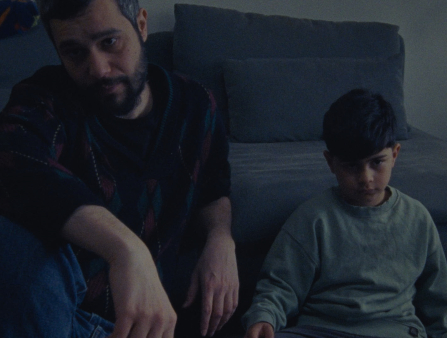
Morning Circle.
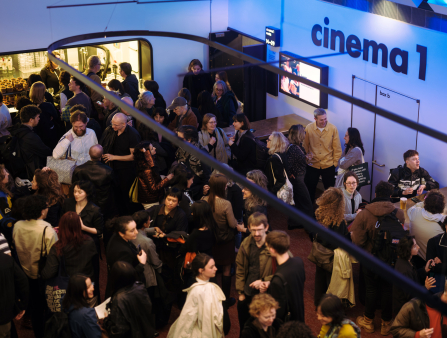
A crowd gathered at one of Open City’s screenings. Photo credit: Adam Pietraszewski.
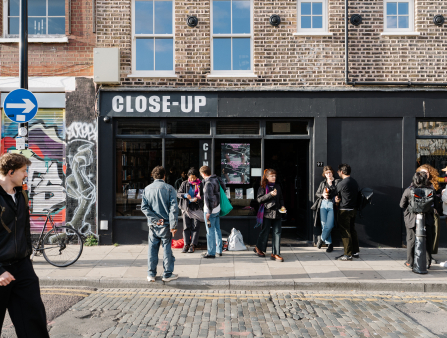
Open City screens its programming all over London, including at the Close-Up cinema. Photo credit: Jarvis Laurence.
Alsharif later spoke at a discussion aptly titled “Political Films/Making Films Politically,” echoing Jean-Luc Godard’s famous distinction between films with political content and those produced and exhibited in an explicitly political way. Thorny questions of whether or not to boycott institutions complicit in genocide rose to the surface, yet no simple answers prevailed. In an industry with increasingly scarce funding and mounting backlash against solidarity with Palestine, should filmmakers withdraw entirely or use these platforms to speak out? The intimate size of the talk made it feel more like a forum, and many audience members chimed in to agree with or challenge the speakers. Exchanges were tense but respectful, and the multiple diverging points of view crystallized the contradictions that politically engaged filmmakers must wrestle with today.
Towards the end of the festival, I attended a workshop for writing letters to political prisoners. Attempting to pen a message of solidarity to a young man on hunger strike against the UK’s manufacturing of weapons used by the IDF, I became acutely aware of how insignificant my words seemed compared to his sacrifice. Sensing the room’s hesitation, the workshop facilitator showed us the memes they had printed and sent to their imprisoned friend, who recalled how much they had laughed with their cellmate. The simple gesture of letter-writing made me feel deeply implicated in a complex web of interdependence, a feeling I carried with me throughout Open City.
Such overtly political events are largely possible thanks to the festival’s relatively decentralized mode of programming, which gives independent curators and grassroots organizations like Radical Film School and London Community Video Archive carte blanche to organize gatherings with and around the films. If documentary cinema has a privileged bond to reality, Open City yokes audiences to the sociopolitical realities it presents, demanding their active participation in contemplating not just the filmic text but the world it exists in. In the spirit of Ken Jacobs’ practice of creating the conditions for the “talented viewer” to attend critically to his images, the festival cultivates a collective space not to watch experimental films, but to watch films experimentally.