

I never planned to be my own theatrical booker. I produced and edited the feature archival documentary WTO/99 (2025), and those two jobs were more than enough for me. We had a robust film festival life throughout 2025, but securing traditional distribution for our politically incendiary film, which features no main characters and challenges the levers of power and capital across a broad cross-class coalition, proved difficult given the current climate in the United States.
Booking my own film hadn’t even crossed my mind until November of last year. With no distribution deal in place and nothing but a long-planned one-week run at DCTV in New York City on the horizon, I took the reins on self-booking WTO/99 out of sheer necessity. I wanted to give our film a theatrical life beyond a single city and to keep it in the public consciousness for as long as I could.
Since WTO/99 was not under the aegis of any other company, I was in the rare position of having total freedom to approach our theatrical rollout however I liked, leaning into what seemed both sensible and fun. Even in my most ambitious thoughts, I figured by the end of our run I’d at best secure maybe five or six theaters and a few community screenings, which I would have genuinely found to be a rousing success. Instead, I am writing this during our sixth month of release, with each successive month featuring more screenings than the last.
This whole experience has provided me with an unexpected insight into our current distribution landscape, solidifying the continued importance and viability of theatrical exhibition for feature documentaries without a proper distributor. What follows is advice I’ve distilled from serving as my own theatrical booker. I’ve broken it down into bite-sized sections that can hopefully guide you as you decide whether hiring a booker (or becoming your own!) is the right direction for you and your project.
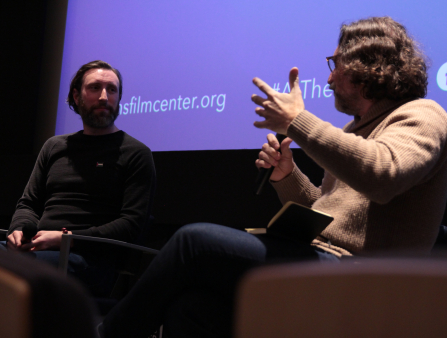
Alex Megaro (L) and Eric Hynes (R) at a postscreening Q&A of WTO/99 at the Jacob Burns Film Center, February 2026. Photo credit: JBFC AV. Courtesy of the Jacob Burns Film Center
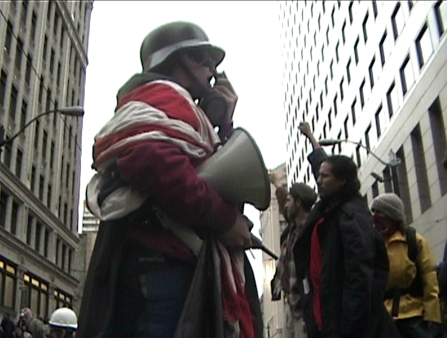
WTO/99. Photo credit: Rustin Thompson. Courtesy of the filmmaker
What Is a Theatrical Booker?
Theatrical bookers do what the title suggests: They book screenings of your film with theaters.
A professional booker already has relationships with numerous exhibitors around the country, and those preexisting relationships provide much of their value to you and your film. Bookers can be seen as a shortcut to the source, providing a direct line to the person who must be contacted to get your film into a specific theater. They understand regional nuances and have deep insight into which theaters in any given city would make the most sense to screen your film. They normally handle all the necessary yet tedious liaising and asset delivery with each theater. They do the job so you don’t have to, and it can be a full-time job, so hiring one might be a massive help if you have the budget and/or are willing to give some revenue to an intermediary between you and the theaters. Documentaries, especially, can be difficult to get seen widely in American theaters, so a booker with this built-in institutional knowledge on your side can be the difference between countless eyes on your project in this very special setting and a rush to streaming.
I, however, took on this role myself, with virtually no clear idea of what I was doing when I started. As a total novice, I had to forge relationships with theaters and programmers from scratch and conduct extensive research to determine where WTO/99 would be the right fit. I decided to focus on independently owned theaters, be they 35-seat microcinemas or giant old-timey movie palaces, so long as their programming veered outside typical first-run Hollywood fare. I learned that you can just cold email or call these venues, and sometimes they actually respond! One of my hopes in choosing these indie cinemas was that there would be fewer barriers to connecting directly with their programmers, and that theory proved correct.
This was the first of numerous lessons I learned as my own booker. Through the rest of this piece, I’d like to break down and illuminate both how a booker works on your behalf and how to do the best job of positioning your own project with theaters if you’re handling the booking yourself.
Short Is Sweet
Learning how to communicate succinctly with exhibitors pays dividends. A good booker is brief and clear about terms, timing, and any variables outside the packaged pitch. When I began my outreach, I would definitely overexplain in some of my initial emails, but swiftly learned to simply state directly, for example, “the terms are 50% box office” (meaning our take is 50% of the gross) or “the terms are $250 MG vs 35%” (meaning we get a $250 minimum guarantee or 35% of the box office, whichever is greater). Nothing ancillary, just the facts. Theaters are dealing with many requests and films aside from yours, so standing out quickly through clarity and a brief packaging pitch has proven fruitful.
In the case of WTO/99, that pitch was fairly streamlined and consisted of the following:
- A brief synopsis
- A link to our theatrical trailer
- A healthy collection of pull quotes and press links from a variety of notable reviewers/outlets/programmers to cover the gamut from mainstream to hyper-indie
- An explanation of our theatrical window and our specific terms
- An additional offer of a double feature package (more on that later)
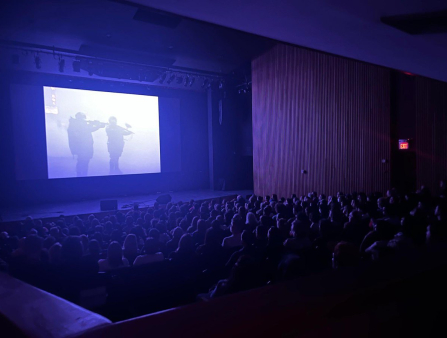
World premiere screening of WTO/99 at True/False Film Festival, February 2025. Photo credit: Ian Bell. Courtesy of the filmmaker

Alex Megaro accepts the IDA Award for Best Editing at the 2026 IDA Awards. Photo credit: Urbanite LA
Windows and Flexibility
Because they book their venues months in advance, many theaters will often ask, “What is your theatrical window?”
Theatrical window is the period during which your film can be screened theatrically, typically before a VOD or streaming premiere. Depending on your situation, this may be a targeted window or an extended window.
- Targeted window. For some films, the theatrical window may be severely limited, perhaps for only a few weeks to a month. There can be a variety of reasons for this. Maybe you want to nail down many screenings in a short span of time for brief maximum exposure. Maybe you have a broadcast/streaming/VOD premiere set in stone. Or maybe you have a specific road show tour in the works. Just know this targeted window may not allow for as much flexibility, and you (and/or your theatrical booker) should consider that in advance.
- Extended window. If you don’t have a set window, you can be more flexible. Maybe it’s three months, maybe six months, maybe a full year and beyond. An elastic time frame can greatly increase your chances of booking your film, especially with in-demand venues.
Once you know what kind of theatrical window you’re working with, you can begin mapping out a specific strategy for booking your film and communicating with theater owners. Every time you approach a theater, be clear about the kind of arrangement you’re seeking. Here are some options:
- Four-walling. This is when you pay a theater to rent their space to screen your film. This gives you far more freedom to choose when you want to screen your film. You’ll incur an upfront cost and face other variables, such as potentially running ticket sales yourself, but if you have the capacity to do so and the ability to bring in a big enough audience, it could be a worthwhile and rather lucrative avenue for certain films.
- Box office split. This refers to the scenario in which you split box office returns with the theater. And the “split” refers to the percentage split of ticket sales between you and the theater. For example, 50% means you each take a 50% share of the total, but you can also negotiate it differently (60/40, 70/30, etc.). Unlike four-walling, there is no up-front cost for the filmmakers, and since you split ticket sales, it may push a theater to do additional marketing on its own. When negotiating splits, you can also ask for a guaranteed minimum payment—the amount the theater will pay you regardless of attendance at the screening (and the attendant box office they make).
- Flat screening fee. When dealing with universities or small community groups and organizations, you may choose a flat screening fee, which means you get a set fee for the screening regardless of the box office gross or attendance. This is preferable when dealing with nonprofits or educational settings that may not have the budget to cover what you would normally charge, or so you can still net a small fee for a screening that an organization may want to offer to their members or the public for free.
In the case of WTO/99, my idea was to initially ask for one-off or limited-run screenings. By not demanding a full weekwilong run, the theater’s risk is diminished, and it’s much easier for venues to say yes to a film like WTO/99, which was often unknown to them before I reached out. I chose not to four-wall the film and have been negotiating a split of the box office gross, sometimes asking for a guaranteed minimum payment, usually ranging between $150 and $300, depending on the situation and seating capacity. This way, we have no upfront costs, and the only risk is on the theater’s end if the screening does not sell well. This strategy has been effective for us, especially as word of mouth has prompted theaters to request additional screening dates, even when an initial screening drew only moderate attendance, because they are inundated with requests to see the film from those who missed it the first time.
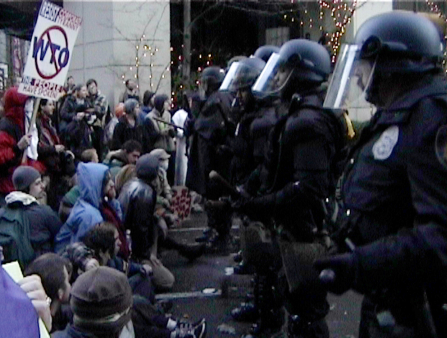
WTO/99. Photo credit: Rustin Thompson. Courtesy of the filmmaker
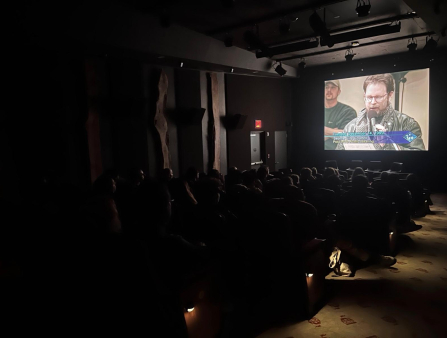
Screening at DCTV in New York City, December 2025. Photo credit: Ian Bell. Courtesy of the filmmaker
The Calendar
As you plan your screening schedule, it’s crucial to understand the calendar and stay up-to-date on what may be coming down the pipeline. You should know that the Oscar-nominated documentary shorts package will be widely booked mid-January through February, often taking the slot of an indie doc and/or adding competition. You should research whether any documentaries covering similar topics are set to come out, so you don’t risk a simultaneous release with an analogous film on the circuit. Perhaps you are targeting a festival run for the first half of the year and a fall theatrical release to boost an awards run. Well, so is everyone else, and you should be aware of how competitive it becomes to get films on screens during the fall awards season.
For independent documentaries, a wide release in which your film plays simultaneously in numerous cities and theaters is possible, though increasingly rare, and can have a blitz effect in penetrating the public consciousness. More common at this point is a platform release, which often begins in major cities like New York City and Los Angeles and expands to smaller markets over the course of weeks or months that follow.
Here are some tips as to what I have found works when booking your film, and which can further incentivize theaters to book your film:
- Look for one-off and limited run screenings. Rather than trying to book an entire week’s worth of screening, offer a single screening. Theaters are more easily able to slip you in for a single screening, even at the height of busy seasons like the fall.
- Find ways of eventizing your screenings. This can mean everything from an in-person Q&A with someone from the team, to special guests like subjects in the documentary or participants in an event featured in your film, to celebrity hosts or moderators.
- Team up with local organizations and activist groups to whom the film resonates, offering them a chance to speak, join a Q&A, or participate in a postscreening panel, either with one of the film’s core team or in their place when that’s not possible. This is a way to connect with local communities that have a built-in base and whose interests already align with your film.
WTO/99 screenings with a community and/or institutional focus have attracted many viewers who may not normally seek out a feature-length archival documentary in the theater, and their passion has exponentially boosted our word-of-mouth campaign for the film. I ask these audiences and groups to contact their local theaters and let them know they want WTO/99 screened, which has led to screenings at new theaters and being asked back to others at which we’ve already played.
Giving [theatres] more reasons why your film is making waves can boost your stock and lend an exhibitor added confidence in taking on a film
Professional Nudgers
Remember: Yours is one of many potential films for these theaters and may well get lost in the shuffle.
Someone once told me bookers are really just professional nudgers, and I can confirm this hard truth. You will constantly find yourself just following up, circling back, or checking in, and many screenings can result from these gentle reminders that your film exists. During the initial outreach period, you can use this necessary nudging to organically update a theater or programmer on new press or accolades.
Here is a list of reasons you may (and should) reach back out to those theaters you’ve contacted (curated by some of the things I myself used to gently follow up with folks regarding WTO/99):
- You have a (new) trailer. Yes, always pitch with a finished trailer, but if, like me, you foolishly did not do it at the start, this is a good excuse to check back in.
- You got a key award nomination or a win. When WTO/99 received a Critics’ Choice Award nomination and later an IDA Award win, I used them to repitch theaters that may not have gotten back to me in my initial outreach. The phrase award-winning film can be very helpful.
- You got a nice write-up. Be discerning (i.e., name recognition matters), but good press is good press. That’s how I leveraged our New York Times review and Newsweek interview as great excuses to nudge theaters and programmers.
- A celebrity producer signs on. Continuing the idea of using name recognition to your advantage, if your film secures a notable executive producer, that’s a great reason to follow up with a theater.
- Box office gold. If you are independently releasing your film and selling out big theaters, it may be worth nudging some venues to let them know.
Theaters are still businesses, and they want to know they’ll get something out of booking your film. Giving them more reasons why your film is making waves can boost your stock and lend an exhibitor added confidence in taking on a film, plus you may not always have these materials or accolades on hand when you need to begin your outreach.
Try to think outside the box when considering where else you can and should book your project. Professional theatrical bookers may have strong connections, but you know your documentary best
Alternate Avenues
Your theatrical screenings can also boost awareness and effectiveness of your film for alternative in-person screening avenues. Theaters shouldn’t be the only places you’re reaching out to. Universities and special-interest groups related to your film’s themes or content are always viable. Try to think outside the box when considering where else you can and should book your project. Professional theatrical bookers may have strong connections, but you know your documentary best. Which populations do you want to reach? Where might you find them? What groups would make sense to try to connect with? You already have a strong theatrical pitch, so now you can tailor it more specifically for each alternative group, highlighting social issues and ideas that may be more attractive to them than a standard movie theater.
WTO/99 has done very well on college campuses. We’ve also flourished with community/activist group screenings, offering the film to any group that wants it for an event, no matter how large or small. This began by first partnering with Democratic Socialists of America chapters around the country for their events and expanding outward since, and we’re open to screening with these groups anywhere, from legit theaters, to community centers, to the tiny office of a city council candidate.
As mentioned earlier, my pitch offered a double-feature package to every theater I contacted. My thinking was that this would mostly appeal to niche microcinemas who may not normally jump at the chance to screen a feature-length, fully archival political documentary. Dubbed “The End of America Tour,” I paired WTO/99 with the mixtape feature film Hello Dankness (dirs.
Soda Jerk, 2022), as the two films share numerous themes and together tell a two-decade history of the United States through technically similar yet vastly divergent archival techniques. This package had appeal far beyond what I anticipated, thriving not only as a fun late-night double feature at smaller cinemas but also as a frequent selection at larger venues that happen to be adventurous. This kind of pairing is obviously not appropriate for most documentaries, but it’s worth finding new and creative ways to program your film.
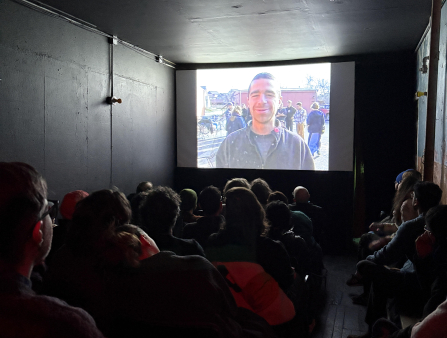
WTO/99 double feature screening at Spectacle Theater, Brooklyn, NY, January 2026. Photo credit: Alex Megaro. Courtesy of the filmmaker
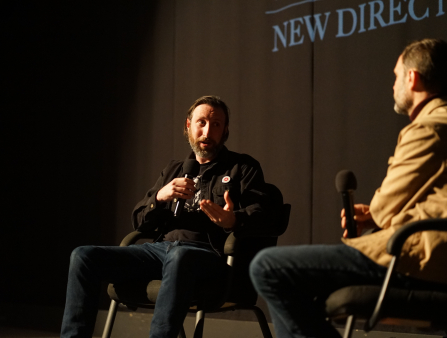
Alex Megaro (L) in conversation with George W. Myers, Amherst Cinema programmer and Bellwether series co-programmer on April 23, 2026. Courtesy of Amherst Cinema
Let’s Talk Money
Theatrical bookers normally make their money in one of two ways: they work on retainer, or they take a percentage of the box office gross from their bookings (with a range of around 15% being a common average). The booker is a middleman of sorts. You will see your portion of whatever ticket sale percentage you negotiated after they are paid, but that 15% chunk can be considerable depending on the situation. You need to weigh that revenue loss taken by a hired booker against the sheer workload it takes to successfully book your film in theaters on your own.
But maybe you also want to expand where you screen your film and think beyond just movie theaters (which is normally where bookers are most helpful). For nontheatrical engagements, this means a different kind of financial model. Aside from theatrical ticket sales, you can charge flat screening fees for university events and tier your pricing to be flexible, taking into account the budgets of a small community college versus an Ivy League behemoth. For WTO/99, I have often gone with flat screening fees for activist groups and community screenings to encourage advertising and turnout within those circles, while remaining very flexible on the fee depending on each group’s specific circumstances. I’ve also chosen to waive screening fees many times when WTO/99 is used as part of a community fundraiser. It’s so rare we make films that can facilitate a material difference in some small way that it’s important to lean into that when possible.
Taking in a decent amount of money through all of this is very possible, and it obviously helps keep your costs low. You can add yet another job title to your ever-growing multihyphenate by doing your own PR via social media and endless emails. You can also send your DCP digitally, saving on hard drives and shipping. Through this tactic, I have not yet spent one cent sending my WTO/99 DCP to an exhibitor. Every little bit of savings helps in the long run.
Bottom Line
A good booker is one who genuinely likes and believes in your film to the point where they can successfully advocate for it. I’ve made clear the extensive workload involved in booking your film into theaters, and I highly recommend hiring a theatrical booker if free time is a luxury you can’t access. However, my experience with WTO/99 is proof that this is a job you can successfully take on yourself. Many bookers take on multiple films and, understandably, must spread the love, but more than likely, no one cares as much about your film as you do. Nothing is stopping you from being your own best advocate.
This piece was first published in Documentary’s Summer 2026 issue.