
Editor’s Note: The following is excerpted from Documenting Iran: Filmmakers and Social Change, a new book by Persheng Vaziri, which traces the period between 2000 and 2022, when large numbers of independent documentary filmmakers were actively making social documentaries in Iran. This section is from a chapter titled “Institutions of Documentary Filmmaking.”
This text has been edited for publication in Documentary and is being published with permission from the University of Texas Press.
The Islamic state has, in many cases, acted as a modernizing state despite its ideological stance and oppressive policies. This has been mainly due to the demands of an educated population and the intelligentsia in Iran. Institutional modernity began even before Reza Shah’s reign (1925–1941), but it was expanded and stabilized under Reza Shah and his son, Mohammad Reza Shah.
The modern state maintained some of its characteristics and was further expanded after the 1979 Revolution, with the addition of new institutions fully loyal to the Islamic regime. The cooperation and participation of the educated classes and artists were channeled through multiple state institutions. Policies were enacted that expanded educational opportunities, civic participation, and support for the arts, music, and cinema.
Like other artists and intellectuals, documentary filmmakers demanded state support as their right, and benefited from it. They used the rivalry among the different institutions to strengthen their position and profession. They have also pushed back against restrictions that the same institutions imposed by organizing in their guild and association, and informally. While the filmmakers have made their films according to their own aesthetic choices and goals, the institutions that provided funding or issued them permits for producing and exhibiting their films have also influenced and shaped the work. These have been constitutive in expanding and shaping film production.
***
The Islamic Republic of Iran’s National Radio and Television Broadcasting, for example, is a vast governmental institution, decreed by the Iranian constitution to be the only broadcaster to serve the country. Islamic Republic of Iran Broadcasting (IRIB) reaches most of the Iranian population in the capital and provinces. It has been known as an “orthodox” institution, linked to the Supreme Leader, and has acted independently of the elected government.
The head of IRIB is appointed by the Supreme Leader and is not beholden to the Office of the President or to the Majlis. IRIB has issued its own production permits and strictly follows the morality codes. It has become an unwieldy, very large, and conservative conglomerate in recent years, with more than fifty thousand employees— the largest in the Middle East and, possibly, the world.
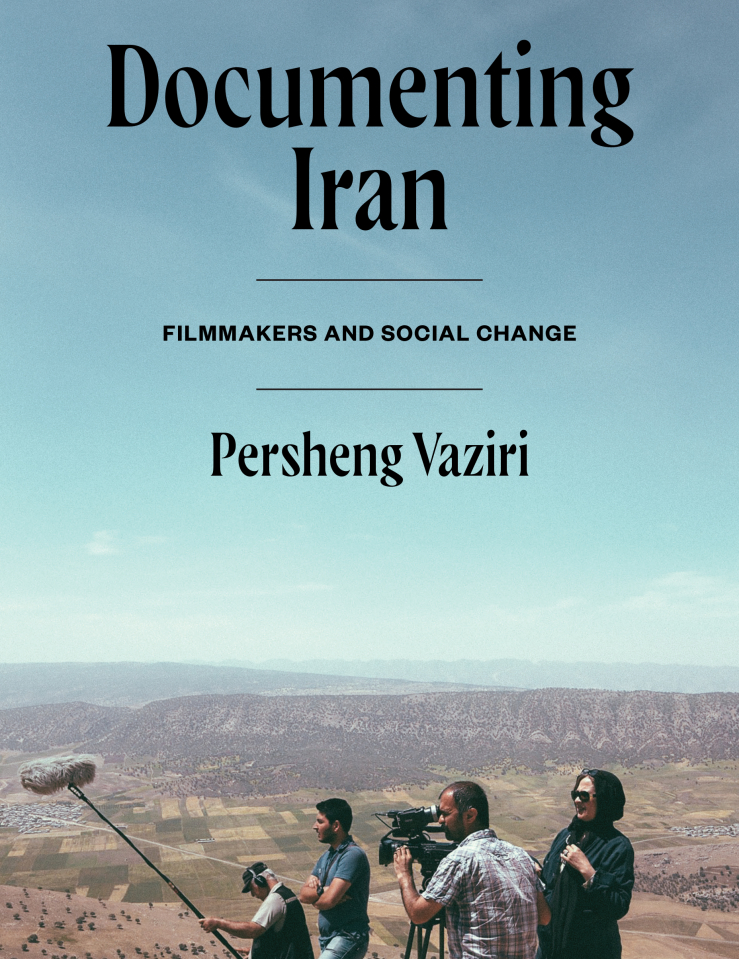
Courtesy of University of Texas Press
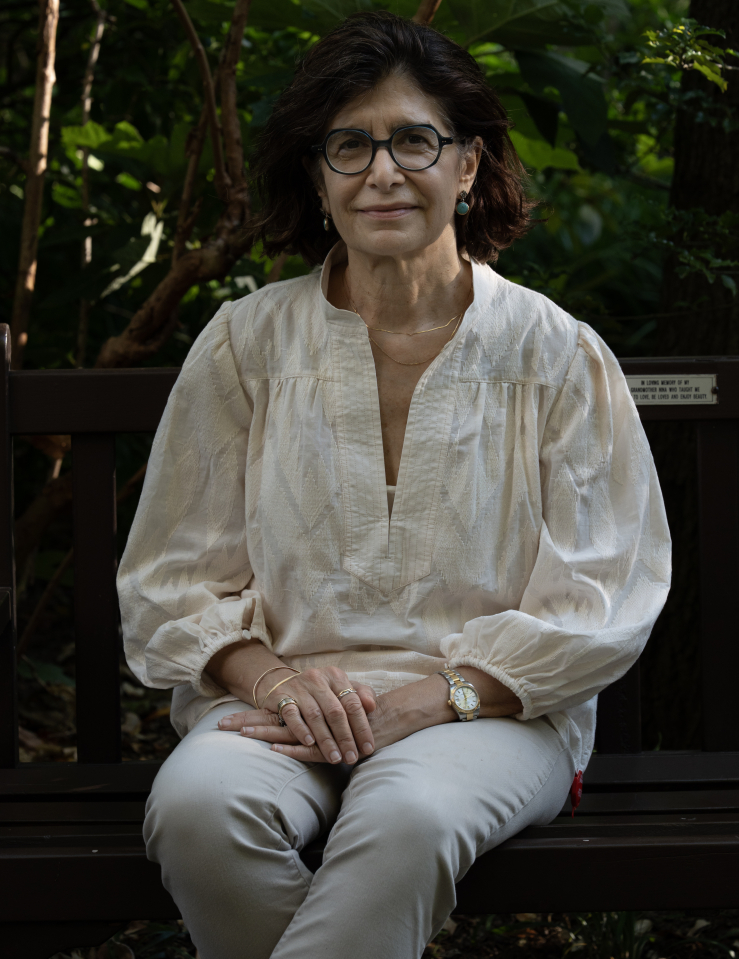
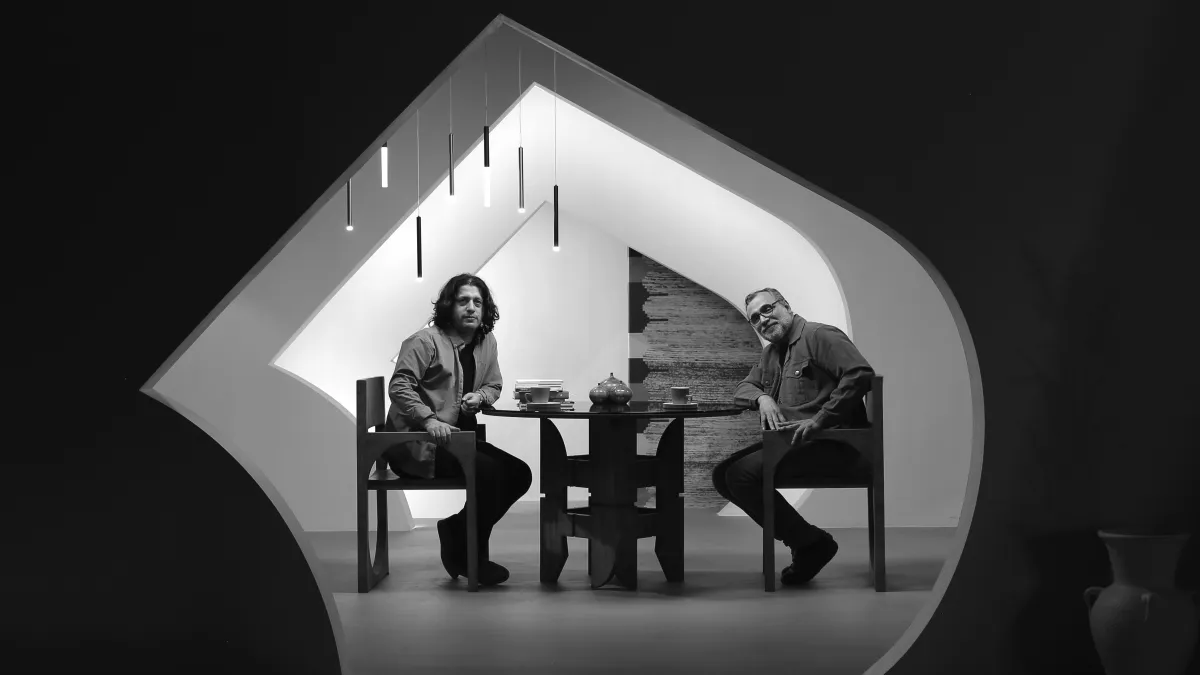
Persheng Vaziri. Photo credit: Maryam Sepehri. Courtesy of University of Texas Press
Because of its conservatism, particularly after 2012, many independent filmmakers have kept their distance from this institution. However, many veteran documentary filmmakers who began their careers there were intimately connected to its operations or have friends and allies in the large complex. Despite the conglomerate’s conservative policies, not all of the filmmakers who have worked there have shared its ideological perspective and have produced films on the history, traditions, or natural resources of the country.The national broadcaster was formed in 1967 as NIRT, under Mohammad Reza Pahlavi’s rule. Today, the huge conglomerate operates more than fifteen main channels, thirty provincial channels, and nine international channels. Most of the television programs were produced within the IRIB complex, though some are also produced by other institutions connected to the state, such as Sepah, the judiciary, and Shahed Television Group (charged with programs on war martyrs). When IRIB transitioned to a digital system in 2012, they increased the number of channels. They have acquired television shows and documentaries from international distribution outlets as well. The budget of the broadcaster has increased exponentially each year and is generated mainly through direct government subsidies and licensing fees that are part of household electricity bills. Only about thirteen percent of the budget has come from advertising. In 2021, IRIB asked the Majlis for more than US$1.2 billion, making it one of the largest spenders of state funds, with a bloated workforce and an income that has been a fraction of its expenditures.
The mission of IRIB, as the main media arm of the ruling clergy, is the propagation and defense of the values and ideals of Islam and the territorial integrity of the country. The ideological goals are evident in some of their main principles and policies, such as:
ARTICLE 1: The majesty and supremacy of Islam over all of the programs so that the programs which are against Islamic criterion would be avoided
ARTICLE 2: The majesty of spirit of the Islamic Revolution as well as that of constitution over all of the programs
ARTICLE 3: The fulfillment of the Supreme Leader’s point of view as the Islamic Jurisprudent
Some television programs are openly ideological, especially on the main channels (1 and 2), as well as on the news channels. They have featured demoralizing show trials of prisoners, including intellectuals and writers, who are convicted of conspiring against the Islamic Republic. These programs are intended to instill fear, though they have also increased public resentment against the regime. Additionally, Sepah, which controls production companies such as Owj Arts and Media, has produced many programs that have found their way to the channels. The Documentary Channel and Channel 4 have presented documentaries and programs on social issues, allowing independent filmmakers to feature some of their work.
IRIB has a centralized structure with many production divisions that have vied for a few available programming slots. As a result, they have seldom solicited documentary series from independent producers. However, independent producers with connections to IRIB, like Saeed Rashtian, Orod Attarpour, and Morteza Razzagh Karimi, have made documentary series on different topics for IRIB channels and other institutions—especially before 2013. Many of the films in these series were broadcast after the television administration had imposed changes, and some films were rejected. For example, Farahnaz Sharifi made Iran in Ads (Iran dar E’lan, 2006) for a multipart documentary series about the city of Tehran, produced by Jafar Sanei-Moghadam and under the supervision of filmmaker Mehrdad Oskouei. The film was sponsored by IRIB’s Channel 4 and the Municipality of Tehran. When the film was completed, the channel demanded about fifty changes before it could be aired. The filmmaker did not agree, and it was not broadcast. The film has been shown at other venues and at the Cinema Vérité Festival, where I saw it.
According to producer Saeed Rashtian, Iranian television’s programming has been shaped by political concerns, rather than by audience tastes.
Other filmmakers reported different difficult experiences. Hadi Afarideh formally objected to the actions of Channel 2, which broadcast his film, Forgotten Tree (2011), with thirteen minutes cut from it, and Hossein Lamei claimed that his film Ghedis (2019), about the poet Ahmad Shamlou, was unexpectedly shown on Channel 3 in 2019, with many changes that he had not authorized. He objected to the “dismembering” of his film, which was seventy-three minutes long but was chopped down to fifty. Shamlou, a leftist poet who had struggled against the Shah’s regime and the Islamic Republic, was a sensitive subject. The film included interviews with people who would normally never be featured on IRIB, due to their political beliefs.
According to producer Saeed Rashtian, Iranian television’s programming has been shaped by political concerns, rather than by audience tastes. At the same time, filmmaker Manouchehr Moshiri believes that Iranian social documentaries were developed after the 1979 Revolution at IRIB, when several important films were made for television. Some were about the Revolution and the war, such as the Revayat-e Fath (Chronicle of Victory, 1985–1992) series on the Iran-Iraq War by Morteza Avini. Others focused on social problems of the working classes, such as Koorehpaz Khaneh (Brick Factory, 1980), by Mohammad Reza Moghadassian; Ejareh Neshini (Renters), by Ebrahim Mokhtari and Kaivan Kiani; To Whom Do You Show These Films? (In Filmha Ra Be Ki Neshoon Midini, 1992), made with the collaboration of the Municipality of Tehran by Rakhshan Banietemad; and Tapesh-e Tarikh (The Pulse of History, 1980), by Asghar Fardoost, Davoud Kanaani, Mahmood Bahadori, and Manouchehr Moshiri.
In the mid-1990s, several documentary series and films were made by independent filmmakers outside the IRIB system, some of whom had started their careers at IRIB. Koodakan-e Sarzamin-e Iran (The Children of the Land of Iran, 1995–1997) was one of the first and best-known series produced by an independent producer, Mohammad Reza Sarhangi. The series was made for Channel 2, starting in 1995. It set itself apart from the Islamic Republic’s discourse of war, sacrifice, and transcendence, and from religious rhetoric, focusing instead on rural life in diverse and remote regions of Iran. All the films in the series were shot on 16mm film by the notable cinematographer Morteza Poursamadi and directed by well-known filmmakers. Such films included Ebrahim Mokhtari’s Mollah Khadijeh and Children (1996), about a lively elder Quran teacher in the city of Yazd, or Kamas Dolls (1995), Bahram Azimpour’s picturesque representation of life in a Kurdish village, or Mohammad Reza Aslani’s Chigh (1996), on making decorative wicker partitions in a Kurdish tribe.
Some filmmakers used the observational style, including Farshad Fadaian in Seyyed Ghelich Ishan’s School (1996). The film follows young, religious students who traveled long distances on foot in the rural terrains of Turkeman Sahra, to reach their religious school that was erected two hundred years earlier. A few films looked at current realities with an observational style. Kambouzia Partovi’s Koja Youssef (1995) documented the life and play of Baloch children near Iran’s border with Afghanistan and Pakistan.
Subsequently, this semi-independent model of documentary filmmaking became prevalent among many producers, who would propose documentary series to IRIB channels and hire independent filmmakers to make the films. Producers like Saeed Rashtian made several of these series between 2009 and 2010 with the help of experienced filmmakers Pirooz Kalantari, Mehrdad Oskouei, and Manouchehr Moshiri. They enlisted young filmmakers (as well as veterans) to make more than sixty segments. These producers helped their younger colleagues in formulating ideas with close mentorship in the research, writing, and directing stages of their films. Topics included the 1979 Revolution, the Iran-Iraq War, and Ayneh-y Farhang 1 & 2 (Mirror of Culture)—a series on cultural figures like the poets Saadi, Hafez, Molavi (Rumi), and the twentieth century’s Aref Ghazvini. Most of the films made in this series used personal perspectives that set them apart from documentaries that normally aired on IRIB.
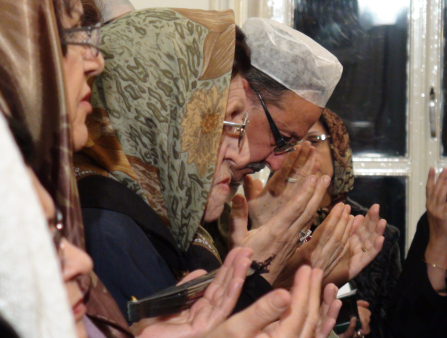
Forgotten Tree. Photo credit: Nooshin Jafari. Courtesy of Hadi Afarideh
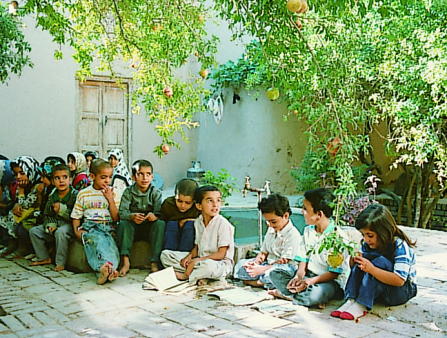
Mollah Khadijeh and Children. Photo credit: Vafa Hamzehpoor. Courtesy of Ebrahim Mokhtari
The series titled Tassvirgaran-e Enghelab (The Filmmakers of The Revolution, 2008–2009) engaged directors to make films about the 1979 Revolution, thirty years later. Robert Safarian made 14th of Aban, The Day of Fire (2008), in which he is in conversation with the events that took place during the Revolution, questioning who was responsible for the fires that were set on that day. The film includes interviews with a filmmaker and a sociologist who were present in those days, and someone from the post-Revolution generation. With archival footage of burning buildings juxtaposed with calm shots of the same location in 2008, the filmmaker asks what the images tell us outside the dominant discourse. The Islamic Republic claimed that the Shah’s agents were responsible for the fires, but there were other opinions, insinuating it was Islamic extremists.
Another film by Safarian, Goftegoo ba Enghelab (Conversation with the Revolution, 2010), again questions the memories of the 1979 Revolution. In the same series, Gom va Goor (Lost, 2008) by Mohammadreza Farzad—who was too young to have participated in the Revolution—used an experimental approach to contemplate the experience of someone who can be seen in an archival film from that time, fleeing the scene of protests. During the massacre of September 1978, this person was running away from the Shah’s forces. Because films in the series raised questions and had personal approaches, it was surprising that some of them were broadcast on IRIB.
With the popularity of transnational television after the year 2000, IRIB was compelled to diversify its telecasts to include entertainment programs and to dedicate significant budgets to channels that operated outside Iran. However, they could not successfully compete with the news and entertainment programming of transnational channels like the BBC, Iran International, and, particularly, melodramas on Turkish channels like GEM TV. IRIB channels even broadcast critical documentaries by well-known American and European filmmakers, as long as they fit the leadership’s anti-American rhetoric. Films like Michael Moore’s Roger and Me (1997) and Sicko (2007), Alex Gibney’s Taxi to the Dark Side (2008), Oliver Stone’s The Untold History of the United States (2012), and Laura Poitras’s Citizenfour (2014) were all shown on IRIB channels.
After 2009, IRIB increased its offerings with digital technology and established many new channels on different categories of topics. There were channels that offered news reports and sports, and movie channels that were popular. Other channels included the Learning Channel, the Quran Channel, the Movie Channel, the Children’s Channel, and the Documentary Channel. Several transnational channels also began operating—among them Press TV and Al Alam, English- and Arabic-language news channels, and Jam-e-Jam, which offers a diverse selection of programs. At that time, IRIB also expanded its transmission to Iranian provinces.
With the popularity of transnational television after the year 2000, IRIB was compelled to diversify its telecasts to include entertainment programs and to dedicate significant budgets to channels that operated outside Iran.
The Documentary Channel began its operation in 2010 and has focused strictly on documentary films and programs, although other channels have also occasionally produced and broadcast documentaries. Its goal is to present films on wildlife and tourism, as well as some social documentaries. The Documentary Channel has featured programs like series on the West’s military-industrial complex, nature documentaries, sightseeing and tourism programs about Iran, and other documentary series, like Nardeban, Hamsafar (Fellow Traveler), Ganjineh, which features selected documentaries from the 1970s, 1980s, and 1990s, and Positive Negative, a documentary series that attempts to unpack the negative interpretations of the Iran-Iraq War in foreign media.
Nardeban has been an important series for documentaries on the channel, headed since 2020 by television director and producer Asghar Ahmadpour. Nardeban has covered many important independent filmmakers of different backgrounds, including Pirooz Kalantari, Ebrahim Mokhtari, Farzad Tohidi, Reza Majlesi, Mahdi Bagheri, and Farhad Varahram, cinematographer Morteza Poursamadi, as well as ideological filmmakers like Mohammad Hossein Mahdavian. They have featured international filmmakers and writers, like Werner Herzog, Ross McElwee, Heddy Honigmann, Bill Nichols, Patricia Aufderheide, and Stella Bruzzi. Since one of their goals has been to provide education on documentary cinema, they have reviewed early documentary films from the history of cinema by filmmakers like Boris Ivens, Walter Ruttman, and Dziga Vertov. They have also reviewed books, like Eric Barnow’s writings on documentaries. The program has been like an intensive course on documentaries.
***
In recent decades, state-supported institutions like IRIB have educated on, facilitated, and supported documentary film production, but they also have a history of disciplining documentary filmmaking in Iran. Filmmakers have also worked with various institutions that are connected to the state, other than the Documentary and Experimental Film Center (DEFC) and IRIB, such as Soureh and Khaneh Mostanad. However, the relationships of documentary filmmakers—who consider themselves independent—have been more extensive and enduring with DEFC, IRIB, Iranian Youth Cinema Society (IYCS), and the filmmaking guilds. The filmmakers have made memorable documentary series, produced by independent producers and filmmakers in collaboration with the institutions that supported documentaries. They depended on the institutions, while maintaining some form of independence. These relationships have gone through different periods of cooperation, disappointment, and alienation. Over the years, the upheavals in the country’s economy, as well as the government’s widespread corruption, conservative direction, and oppressive actions, have pushed many filmmakers away from institutional support. Increasingly, filmmakers have sought the support of individual funders, independent foundations and businesses, and, sometimes, international funding, to retain independence and make films they believe in.