
Discovering Errol Morris’ Vernon, Florida, inside a dark alcove in NYU’s media library as an undergrad studying film was what inspired me to pursue documentary seriously. In Vernon, Florida, I saw how nonfiction could be a place for as much innovation, artistry, and mystery as fiction filmmaking.
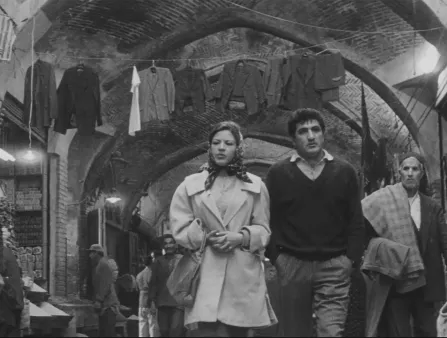
Released in 1981, Vernon, Florida was Morris’ second feature, a 55-minute documentary set among the residents of a small town in Florida. On the surface, nothing much appears to happen in the film. We listen to and watch the meandering ramblings of a few town residents: a turkey hunter obsessed with his elusive prey, a policeman without crimes to catch, and a wildlife hoarder whose quarry struggles to get away from him. During these patient, to-camera monologues, our minds wander as much as Morris’ subjects are allowed to digress on camera. In the cinematic space that Morris creates within this swamp, we’re invited to make sense of these individuals expounding on their philosophy around turkeys and turtles. Somewhere along the way, we approach something that breathes life and its inscrutability.
The muted narrative that emerges out of Vernon, Florida—forged in the gaps between the subjects, their words, the filmmaker and viewer—feels profound and unexpected. The first time I watched Vernon, Florida, I was convinced it was an oblique treatise on our desire to control nature and impose our will on the lives of others. But the film’s meaning has never been fixed.
I’m drawn to filmmakers who evoke authenticity, meaning, and emotion without relying on extraordinary subject matter or plot. I’m thinking of Mike Leigh, Frederick Wiseman, Kelly Reichardt and Morris—particularly his early works. Their films all work in thematically profound and narratively elusive ways. It’s difficult to articulate why and how they tick. While often inaccessible to broader audiences, at first, their films possess staying power because they retain an undiluted sense of mystery even after decades of critical probing. The strings being pulled (or not pulled) remain invisible. The power of Vernon, Florida isn’t derived from the weighty subject matter, story, or even character. Its momentum and structure spring from something less tangible, even mystical. In the seams of how Morris wove seemingly disparate subjects together is where I find myself experiencing something that feels close to revelation.
Vernon, Florida’s style was born out of a rebellion against the documentary trends of the ‘60s and ‘70s, which championed a fly-on-the-wall, observational approach with lightweight cameras and available light. Instead, Vernon, Florida is characterized by heavily orchestrated, composed, fixed frames of people looking directly towards the camera. In doing so, Morris presented a vision of nonfiction that was a dramatic departure from the dominant documentary traditions of his time. He revolutionized the “talking head” by approaching the interview and spoken word as scenes unto themselves.
When I watch Vernon, Florida, I feel the bravery and integrity of someone redefining his medium. That sensibility is what made me excited about becoming a documentary filmmaker.
Elizabeth Lo’s debut feature, Stray, won the Top Jury Prize at Hot Docs and nominations from the Independent Spirit Award, Critics’ Choice Award, and Cinema Eye Honors after premiering at the Tribeca Film Festival in 2020.
Vernon, Florida is available on DVD from the Criterion Collection and for streaming on The Criterion Channel.

Dear Documentary Community,
Just over a year ago, I began my tenure as IDA’s first Latinx executive director. I accepted the position hoping to address the systemic inequities and biases that undermine the documentary industry. But this endeavor was interrupted by numerous staff resignations, causing turmoil and confusion in the larger community.
I humbly admit that during this period, the board and I struggled to effectively communicate to the community what was happening. This was due to the legal constraints involving confidential personnel matters. I also regret that I did not effectively manage declining staff morale while working to rebuild the senior leadership team, deliver programmatic commitments, and address the concerns of our members and the community. Today, however, IDA is on the path to addressing staff concerns and uniting our constituents.
Some of the actions IDA has taken include hiring a human resources consultant to develop and implement best employment practices. We are now well on our way to ensuring our organization adopts policies appropriate for a nonprofit of our size.
When 11 IDA staff members voted to form a union last March, the board and I voluntarily recognized their efforts. We embrace the unionizing process and have hired labor attorney and workers’ rights advocate Kathy Krieger to represent IDA in the bargaining process. We look forward to negotiating in good faith so that IDA can continue meeting its mission with a staff that feels supported to do so.
Our new leadership team is the most diverse and inclusive in the organization’s history. Abby Sun, Director of Artist Programs, a former programmer at True/False Film Festival, is leading the programming for Getting Real ‘22. Keisha Knight, Director of IDA Funds, co-founded Sentient.Art.Film, an organization dedicated to expanding distribution opportunities for filmmakers. Director of Development Brian J. Davis honed his fundraising skills at nonprofits that serve LGBTQ youth. Zaferhan Yumru, Director of Marketing, Communications, and Design, joins us from the New Orleans Film Society, where he helped significantly grow their audience. Louise Rosen, IDA’s Interim Managing Director has been working in independent media and the arts for over 30 years, starting her career in international film and television as Director of Sales and Co-productions at Boston PBS station WGBH, later launching her own distribution company and sales agency.

IDA also elected new board officers and three new board members deeply committed to supporting the vital work of documentary storytellers. Led by Chris Pérez, Grace Lee, Amir Shahkhalili and Marcia Smith, the board is enacting a set of best practices under the guidance of nonprofit board consultant Tim Kittleson, whose clients have included the Academy of Motion Picture Arts Sciences and currently serves on the Outfest board as co-chair of the Governance Committee.
Throughout this period of transition, we delivered on our programmatic commitments. We concluded the open call for the Enterprise Fund, and launched The Sarowitz Project Completion Fund. We renewed our grant with the New York Community Trust, which supports the IDA Pare Lorentz Documentary Fund, and pivoted to a virtual edition of the IDA Documentary Awards when the Omicron variant prevented an in-person event. We celebrated a special set of honorees at an intimate luncheon at this year’s Tribeca Film Festival; and opened submissions for the 38th IDA Documentary Awards.
In September the community will come together for Getting Real 2022. Our highly anticipated conference is a chance to address issues related to the present and future of the documentary field. This year’s theme, Flipping the Frame: Community, Imagination, Reverberation, encompasses the work that lies ahead of us.
We live in tumultuous times: war, mass shootings, an evolving global pandemic, a surge of hate crimes against multiple communities, and the dismantling of abortion rights in the US. We must not be seduced by misinformation, or impulses to sustain divisions. My goal for IDA and my leadership is to strive for reconciliation and restorative engagement.
In solidarity,

Rick Pérez
IDA Executive Director
'E-Team' Directors on Filming in Dangerous Places
By Tom White
Human Rights Watch was founded during the Cold War as Helsinki Watch, as a means to monitor Soviet compliance with the 1975 Helsinki Accords. Over the next few decades, Human Rights Watch expanded its influence and mission to defend the rights of individuals worldwide, and its work to monitor human rights violations has taken its boldest representatives to some of the most dangerous places on the planet. One such group, the Emergencies Team, or E-Team, is the subject of Ross Kauffman and Katy Chevigny's E-Team, which is currently screening in selected theaters across the country and streaming on Netflix.
Documentary talked to Kauffman and Chevigny about casting their four main characters, working with two cinematographers, collaborating as directors and negotiating the difficult balance between parenthood and filmmaking.
Documentary: You two managed to find four very compelling and intrepid characters to further your story. How did you find them? How did you present your project to them that convinced them that they wanted to be on board?
Ross Kauffman and Katy Chevigny: Several years ago, we were looking for a long-form documentary to work on together. We had done short-form work together—at times Ross would shoot for Katy while she was directing; other times Ross would direct and Katy would produce. So we already knew that we worked well together and were excited to find the right movie to collaborate on.
We knew a little bit about Human Rights Watch through their film festival—Ross had shown Born Into Brothels in 2004 and Katy had shown Deadline—but we didn't know a lot about the organization. Through some contacts with friends, we were told about the E-Team, or Emergencies Team, a small group of investigators who are some of the first people on the ground when human rights violations occur.
So we arranged a meeting with the E-Team and went out to dinner in Manhattan. It was sort of like a blind date.As soon as we met Anna [Neistat], Ole [Solvang], Peter [Bouckaert] and Fred [Abrahams], we knew we had four great characters—all of whom were passionate, intelligent, not the least bit self-righteous, and they all had great senses of humor. They were each fascinating in their own right and were from varied backgrounds. We felt that you couldn't write better characters for a movie.
Our pitch to them was simple: we wanted to make a great "movie." We were very clear with the E-Team that we didn't want to make a film that was just about the issues. Instead we were interesting in making an entertaining film that would not only highlight their work, but would also concentrate on them as characters. Their curiosity was aroused by the fact that we didn't want to make a film that just preached to the choir. We wanted to reach audiences that weren't aware of their work and who might learn something about human rights and the struggles of people around the world. In an effort to achieve this, not only did we travel with them into conflict zones, but we also went home with them—sleeping on their couches, spending time with them and their families. We were after intimacy and wanted our audience to get to know them not just as human rights investigators, but as real people that they could relate to.
There had been other filmmakers over the years who had tried to gain access to Human Rights Watch. We explained to the organization the kind of film we wanted to try to make. We were very clear that we were independent filmmakers, and that we would have to have creative control over the project and would take a "warts and all" approach, meaning that if we filmed material that didn't shine a very good light on the organization, we could use it as we saw fit. We knew that, in granting us access, the organization was taking a chance, and in the end, we were grateful that they took the plunge to let us film. It was brave of them to let independent filmmakers in!
As human rights activists, your characters are, perhaps more so, journalists—and as Peter Boukaert puts it in the film, "criminal investigators." One can argue that you as documentary filmmakers embrace these roles as well. Talk about how the experience of making this film transformed how you would define what a documentary filmmaker is and does.
RK: I think I embrace whatever role each and every movie calls on us to be. I try to let the story not only dictate the style and tone of the film, but to a certain extent, my role in it. In the case of E-Team, you might say that Katy and I took on the roles of criminal investigators alongside the E-Team, documenting crimes against humanity and gathering evidence. At any moment in a film, I look at all the tools that I have and try to choose the right one for that moment in order to tell the best story.
KC: We are storytellers first and foremost. In some films that are more personal and delve deeply into the human psyche, we spend time exploring character. For other stories, maybe we take a more journalistic approach. Whatever role or hat we have to put on to tell the story, that's the hat we use. In this film, we were deeply collaborative, and flexible, in order to leave space for the E-Team to do their work and to get the footage we needed to tell this multi-faceted story.
Ross is one of three cinematographers on the film, along with Rachel Beth Anderson and the late James Foley. How did the three of you work together and with Katy in communicating the vision for the film? What did you learn from the other cinematographers about documentary cinematography that you didn't know before?
RK & KC: Finding other shooters to film in Syria and Libya was a huge challenge. We knew that our approach was radically different than that of most conflict-zone journalists and videographers. Luckily, we found two people who understood what we were after. From the moment of the film's inception, we knew this was a movie about our four main characters. The work they do, while integral to the story, is revealed through our characters.
As director of photography, Ross put together a style sheet and some excerpts of raw footage that he'd shot in Syria and Libya. These acted as a guide for Jim and Rachel. In communicating our vision of the film, we told them that this is a behind-the-scenes look at the work. While the usual approach might be to focus solely the investigations in the field, we were clear that what happens before and after the work is what we were really after. Our characters express themselves not only through the work, but also during those down times when most would normally turn off the camera. Intimate moments like eating breakfast at a safe house in Syria, Peter making fun of Fred in the Geneva airport, or Anya and Ole having dinner with their son Danya talking about the airstrikes in Aleppo were the moments we were looking for.
Anna is both bold and philosophical about the obvious danger that her work entails, particularly when you ask her about how her son feels about her work. Both of you became parents in the process of making this film—as did all four of your characters—and Ross in particular has worked in some very dangerous places. How has parenthood altered how you choose your projects?
RK: Parenthood and documentary filmmaking: It's a conundrum. I've never been an adventure-seeker. Anyone who knows me will tell you that. If there is a chance for me to be home with my 4-year-old son and wife, I'll take it. But as I've grown into being a father, I also realize that what I do matters more than ever. Whether it's a documentary or a narrative film, the work hopefully resonates with audiences with the goal always being to move people emotionally. I'm taking this more seriously than ever and I think parenthood has a lot to do with it. Not only do I want my son to look back at his father's work and be proud and do what I have to in order to make a living to support my family, but there's also a nagging feeling that in doing this work, I'm contributing something of value in a positive way for the future not only of my son, but for society as a whole. As for choosing projects, I am more selective about going to the far-off, very difficult places.
KC: It's true that Ross and I took on this project before we each had our kids—which is a good thing! Thank goodness we took the plunge to do it when we did. Once I had my daughter, it just reinforced how important teamwork is in making this film, both in front of and behind the camera. Of course, teamwork matters on any film, but now that we have kids, it's a dire necessity to have a solid team. Being a mom makes me think that for any and all future projects, I have be mindful to continue to work with people who are willing to share the burden of the filmmaking tasks. It was helpful that we all had kids, because we understood where each other were coming from and could take turns, in a sense, to get the film done.
You and Katy were directors on the film. Given that you both became parents during production, how did the two of you share the artistic responsibilities?
RK & KC: Two days after our first shoot in January 2011, Ross's son was born. Katy's daughter was born a little more than a year later, right in the middle of production.
Becoming parents definitely changed the dynamic of our filmmaking, not so much between ourselves, but how we engaged with our filmmaking team. We became much more dependent on our incredible producer, Marilyn Ness, to lead the way when Ross was off earning a living in Kenya on other jobs and when Katy was filming for Kartemquin in Washington, DC, while at the same time caring for her daughter. Time becomes a rare commodity when you start a family, and the ability to call on Marilyn and David Teague, our editor, to take up the slack when the two of us had absolutely no time to focus solely on the film, was integral to the success of E-Team.
The world that the E-Team is covering—particularly the world of ISIS—is an even more dangerous one than that depicted in the film. How are they able to continue their work, given the undeniable savagery of ISIS and other extremist groups in the region?
RK & KC: The emergence of ISIS in northern Syria and the increased kidnapping threat—-brought home to everybody by Jim Foley's tragic case—has made it too dangerous for the E-Team to conduct on-the-ground investigation in many areas. (That said, Fred Abrahams, one of the E-Team members, did investigate abuses in northern Iraq in September of 2014.) This is a situation that is not unique to northern Syria. Iran, North Korea and parts of Somalia are other places where it is too dangerous to work on the ground. Human Rights Watch deals with these situations by obtaining information in other ways. Members of the E-Team have been working in the refugee camps in Turkey and Iraqi Kurdistan, interviewing people who have been fleeing ISIS-controlled areas. They have also done groundbreaking work analyzing satellite imagery, videos and photos, documenting in detail a number of ISIS mass executions and mass graves. Nothing can fully substitute conducting investigations on the ground, but there are other means of getting to the truth.
Thomas White is editor of Documentary magazine.
With the Cal Humanities' California Documentary Project grant deadline fast approaching on October 15, we asked Program Officer John Lightfoot to answer questions from the community to help you better prepare your proposal for submission. As always, he provides clear and helpful answers so you can navigate the application process with greater ease. If you have additional questions, post them in the comments section or send them to Lisa Hasko at lisa.h@documentary.org. Good luck!
The California Documentary Project grant requires that we have humanities advisors. Who can be an advisor and how do we work with them?
Yes, a major requirement of the California Documentary Project is that humanities advisors be enlisted to provide context, depth, and perspective and help inform your approach to the story you’re telling. It’s up to you to choose who you think will most benefit your project and then make a case for why they’re the right group of people. Advisors can be humanities scholars affiliated with colleges and universities; independent advisors who have researched, written, or curated exhibits about your subject; or community advisors who have knowledge and perspective based on lived experience. How you work with them is also really up to you but we like to see that they are genuinely engaged with the project, so any concrete details you can provide on how and when you will communicate with them and what you expect their roles will be is good. I should also add that there’s no requirement that these advisors be in the film—they can be if it fits the type of project you’re producing, but that’s up to you.
How much do you recommend budgeting for Humanities Advisors in both the Development Phase, and in the Production Phase?
Great question. We do like to see humanities advisors compensated for their participation in your projects. Not only does this reward them to a small degree for their time and expertise, but it also makes the relationship official. That said, there’s really not a standard rate that we recommend since each situation may involve a different set of factors. What we typically see however is anywhere between $500 and $1500 budgeted per advisor in either category, with the range depending mostly on what you’re asking of them. In some instances advisors may waive a fee and this is fine. It would be good however to explain if this is the case so it doesn’t look like you’ve neglected to include them in the budget as a cash expense.
Regarding Development Matching Funds:
Do the Matching Funds need to be line item per line item? For example: if I have a private family foundation willing to make a $10k donation for development with no specifications on how it is used, may I call that my matching fund?
Yes, a private family foundation’s donation can definitely be used as a match for Cal Humanities’ grant funds and this would be a great situation to be in. These funds do not have to be allocated to match a specific line item expense, i.e., $2,000 from Cal Humanities budgeted for research can be matched by $2,000 from the family foundation spent on travel, however in total they should add up to at least what you have received from Cal Humanities through the California Documentary Project.
And, can funds that have been donated prior to March 15, 2015 be considered as the Matching Funds?
Donated funds, yes. Spent funds, no. Meaning if these donated funds are still in the bank and you don’t plan to spend them prior to March 15, 2015, then all is good. Otherwise matching funds cannot be made retroactively.
For In-Kind Matches during Development:
If I have a reasonable/industry standard amount budgeted for Project Personnel, say an Associate Producer or an Editor, for 1 week and they agree to work an additional week as an in-kind donation of their time, may I count that toward an In-Kind Match? Likewise, with my own time as Project Director?
Yes. Donated services or time by any project personnel can count as an in-kind match—provided they occur after the start of the grant period, March 15, 2015. You can also count the difference in rates if an editor, videographer, or any other crew member charges you a reduced fee from what they’d normally charge say on a commercial job. Other forms of in-kind includes any contribution of labor, materials, or goods donated to the project; office space; use of equipment for administrative or programmatic purposes; materials donated for publicity, promotion, or evaluation; public program items, including refreshments; and travel, lodging, and meals for project staff or participants.
How "Californian" does my project have to be in order to be eligible for the California Documentary Project?
With the California Documentary Project we look for projects that tell stories about California subjects and issues that are of national relevance. This doesn’t mean that the entire story has to take place in California but there should be a direct connection to a California subject or issue. At the same time, we want to support projects that make a convincing case for being relevant and suitable for national audiences. Obviously there are quite a few ways to approach this, and while applicants are certainly allowed to make a case for how their projects relate to California, we don’t encourage anyone to twist themselves into a pretzel just trying to meet our guidelines. So maybe the best way to understand what we’re looking for and get a good sense of the range of possibility here is to look at what’s been funded in prior years. California Documentary Project films like The Case Against 8, The Return, Everyday Sunshine: The Story of Fishbone, Wonder Woman: The Untold Story of American Superheroes, Hollywood Chinese, We Were Here: The AIDS Years in San Francisco are all really good examples of what we mean by California subjects of national relevance. If in doubt, read up on these films and then contact me if you’re still unsure. I’m always happy to advise.
About the California Documentary Project
The California Documentary Project is a competitive grants program that supports documentary film, radio, and new media productions that enhance our understanding of California and its cultures, peoples, and histories. Media projects that use the humanities to provide context, depth, and perspective and that are suitable for California and national audiences through broadcast and/or distribution are invited to apply. Eligible applicants can apply for research and development or production funding. Award amounts range from $10,000 up to $50,000.
Since 2003, Cal Humanities has awarded over $4 million to film, radio, and interactive documentaries about California subjects and issues of national relevance. Previously supported projects include The Case Against 8, Seeking Asian Female, We Were Here: The AIDS Years in San Francisco, Everyday Sunshine: The Story of Fishbone, Dorothea Lange: Grab a Hunk of Lightning, Wonder Woman: The Untold Story of American Superheroes, and many more.
Earlier this week, Stanford University released the following obituary and remembrance for Henry S. Breitrose, the founder of the institution's documentary program.
What follows is the entry in its entirety as written by Kathleen J. Sullivan. You can find the original post on Stanford's website.
Henry S. Breitrose, the founder and "lodestar" of Stanford's world-renowned graduate program in documentary filmmaking, died Oct. 2 at his campus home. He was 78.
Henry Breitrose is remembered as a superb teacher who was "absolutely in love" with film. Breitrose taught courses on the history of film and film aesthetics. His most recent research focused on the intellectual history of the documentary idea.
The department has established a web page to share memories of Breitrose, who became a professor emeritus of communication in 2005 and remained active on campus after his retirement.
Born and raised in Brooklyn, New York, Breitrose graduated from Stuyvesant High School.
He was introduced to the world of filmmaking during his undergraduate years at the University of Wisconsin, where he earned a bachelor's degree in English and history in 1958. To help support his studies, Breitrose took a job as a grip, carrying the lights, cameras and tripods for the university's audio-visual unit from one location to another.
Breitrose earned a master's degree in film in 1959 at Northwestern University. Soon after, he accepted an appointment to teach Film for Television at Stanford, where he served as an instructor in the Department of Communication from 1959 to 1965. He simultaneously earned a doctorate in communication research at Stanford and joined the faculty in 1966.
Alan Rosenthal, an award-winning documentary filmmaker and a 1962 graduate of Stanford's program, described Breitrose as a "superb teacher" and as "the brightest spark" in the department.
"Henry was funny, learned, witty and inspiring," Rosenthal said. "He pointed me toward the path of documentary, with the idea it could change the world. He became a source of wisdom and support for me for the rest of my life. He found me my first job at San Francisco State University. He was always there with letters of support. And he was always a fountain of good sense for me when I faced serious life choices."
Donald F. Roberts, professor emeritus of communication who knew Breitrose for more than four decades, said his longtime friend was "absolutely in love" with film.
"Henry just reveled in talking about film," said Roberts, a former chair of the department. "He also reveled in having students who were engaged in making films. He never stopped talking about his students. He just loved what he did."
Currently, more than 500 graduates of Stanford's documentary film program are working as filmmakers around the world, said Kristine Samuelson, professor emerita of art and art history at Stanford who taught in the documentary film program for more than 30 years. (Originally known as the Documentary Film and Television Program, the program is now known as the Documentary Film and Video Program and is situated in the Department of Art & Art History.
Samuelson described Breitrose as the "lodestar" of the program.
"Henry was the driving force that developed the program from its infancy into a vibrant laboratory of filmmaking," she said.
Asked if Breitrose had favorite documentaries, Samuelson said he greatly admired the early classics of the documentary genre, including Nanook of the North, Song of Ceylon and works of the British GPO/Crown Film Unit, such as A Diary for Timothy.
"At the same time he was always curious about the latest development in the field, particularly work from Europe, Africa and Asia," Samuelson said.
"He was deeply active in the International Association of Film and Television Schools, where he served on the executive council from 1995 to 2008 as vice president of research and publications. He also served on its developing countries board. As a leader in the organization, he helped foster the development of film pedagogy and became part of a much wider documentary community. He was incredibly generous in sharing these connections, making it possible for junior colleges and students to participate in international conference and exchanges."
As chair of the Communication Department from 1977 to 1983, Breitrose played a critical role in establishing a new home for its faculty – including state-of-the art film and television production studios, and social science laboratories – in McClatchy Hall, where the department is housed, said communication Professor Byron Reeves.
Reeves, whose research focuses on experiments about psychological responses to different features of media, said he relished conversations with Breitrose.
"Almost every feature I was studying had a counterpart in literature and discussion in the humanities and film studies, such as discontinuity in scene changes," Reeves said. "Henry was always so good at talking about what a filmmaker might think about the features I was studying. I knew what perceptual psychologists were saying. He knew what film critics and film studies people were saying. My favorite conversations with Henry bounced between those two worlds."
Breitrose was a founding member of the editorial board of Quarterly Review of Film Studies and a founding general editor of Cambridge Studies in Film. He published articles in two general areas: film aesthetics and criticism, in journals such as Film Quarterly, and experimental attitude change and non-verbal communication, in journals such as the Journal of Abnormal and Social Psychology and the Journal of Education Psychology.
Breitrose is survived by his wife, Prudence Breitrose, of Stanford; daughter, Becky, of Portland, Oregon; and son, Charlie, of Watertown, Massachusetts. The Communication Department is planning to hold a memorial service on campus.