
How To Grow Your Audience: Ambulante California's Christine Davila on Touring LA
By Laura Almo
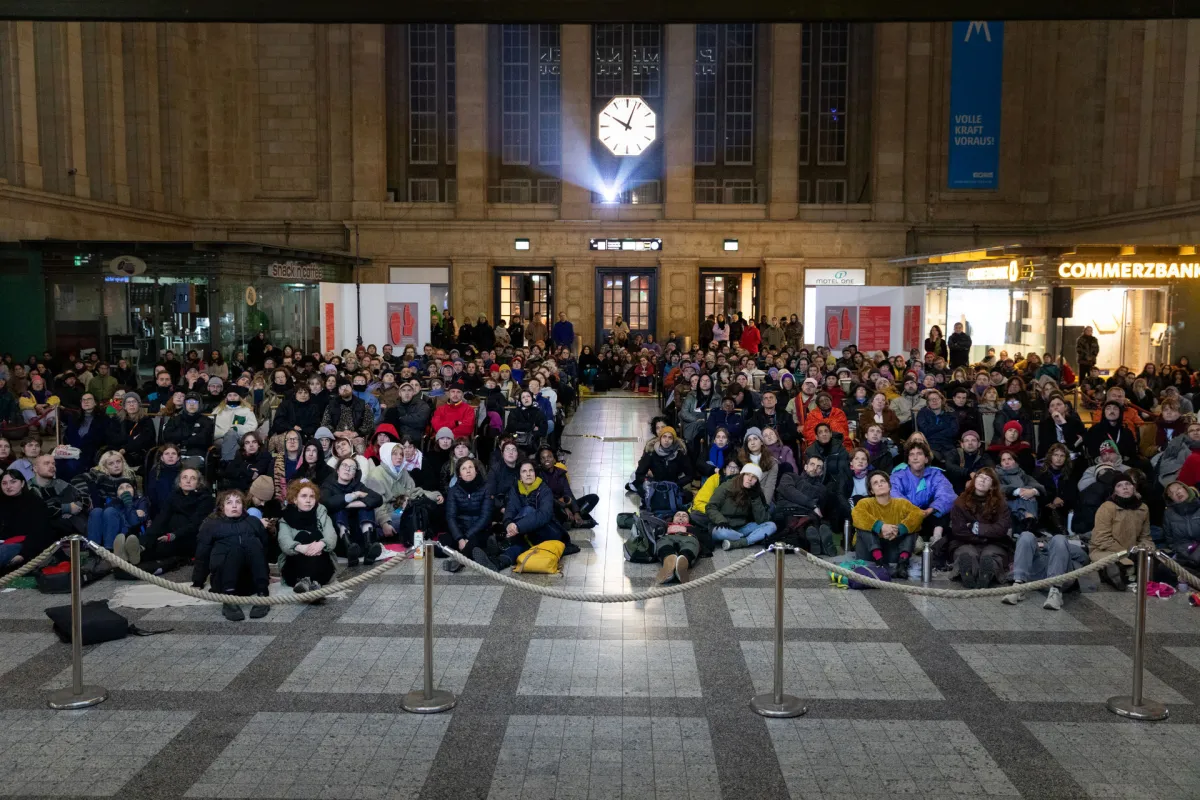
The Ambulante Film Festival, founded in Mexico nearly ten years ago by actors Gael Garcia Bernal and Diego Luna, producer Pablo Cruz and founding director Elena Fortes, will take its traveling film festival north of the border with Ambulante California, which runs September 21 to October 4. Following the Mexican "tour model" of a traveling film festival that screens in 12 states over a three-month period, Ambulante California, a project of IDA's Fiscal Sponsorship Program, will screen in different locations in greater Los Angeles each night of the 13-day festival. The idea is to reach as many diverse audiences and communities as possible-a sort of cross-pollination, says Christine Davila, director of Ambulante California.
In many ways the touring festival resembles CicLAvia, the triannual event where selected streets of Los Angeles are closed to motor vehicles for a day and temporarily transformed into dynamic public spaces. "There is something very aligned with that kind of ‘transit through LA,'" observes Davila. "In some cases we are doing a screening for a specific community and we don't really expect too many people to come outside of that community, but at the bigger venues we hope that people will take a chance and go into a neighborhood that they typically don't know well to experience that film, that neighborhood, that communal experience."
In the final stretch leading up to Ambulante California, Documentary sat down with Christine Davila to talk about the festival, which is the first edition of what aspires to become Ambulante USA.
Documentary: What was the impetus to expand the Ambulante Film Festival and bring it north of the border?
Christine Davila: For a couple of years now, the founders of Ambulante have been thinking about expanding the model. They've done showcases and curated sidebars in several different other countries, but this is the first time that we're actually doing the model as it works in Mexico here in the US. We decided that Ambulante California in Los Angeles would be the best way to establish a base.
How would you differentiate Ambulante California vs. Ambulante Mexico?
In many ways the spirit and the concept remains the same: To broaden the reach of documentary and to reach as many diverse audiences as possible. What I'm finding is that in Mexico it's an international film festival, but because of its Mexican roots, here in the US it is immediately looked at as a Latino film festival.
Whether we're a Latino film festival or a documentary festival, I feel like we cover so many niches that we end up being universal and accessible because we are honing in on all of these different elements. Ambulante remains an international window into different perspectives, and Los Angeles really lends itself to that kind of mixed bag.
I think the concept of Ambulante allows for the execution to be constantly changing and fluid and adapted to each location, to each specific social and geographical context.
Since this is our first year we're going to focus on the outdoor screenings, which I think is a really powerful way to start. Eventually the idea is to incorporate high schools, and perhaps jails and hospitals.
A hallmark of Ambulante is its mobility. Where are the screenings going to take place?
Every day we're going to be screening at a different place, including parks, plazas, community centers and makeshift spaces created for the screenings.
We're going to be screening at MacArthur Park in downtown LA, the James M. Wood Community Center on Skid Row, and we're doing our closing night screening alongside the LA River, which I'm really excited about
MacArthur Park in Los Angeles, site of opening night of Ambulante California, September 21.
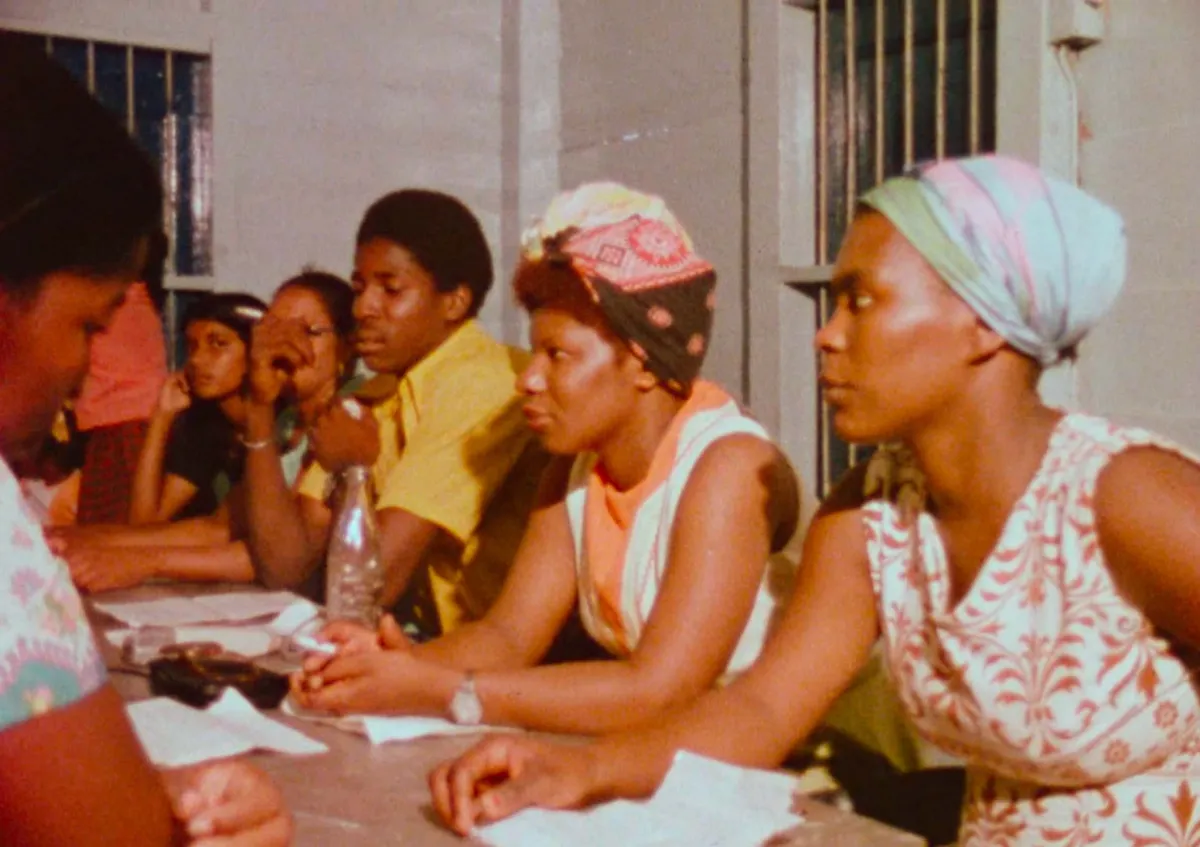
Other venues include Orange County at El Centro Cultural de Mexico in Santa Ana; and Wilmington Waterfront Park, which is a fantastic park that overlooks the Long Beach Harbor. We are also going to have a screening at the Stanford Avalon Community Garden in Watts, and in the parking lot of the Vision Theatre in Leimert Park Village, to name just a few. We're having a couple of screenings at USC School of Cinematic Arts, which is probably our most traditional venue, and we're doing a panel with the Los Angeles Central Library as part of their ALOUD series. Two of our films—Yakona and The Exiles—have to do with indigenous themes so we're going to have a conversation the night before we screen those two movies.
From Kent MacKenzie's The Exiles.
Keeping in mind the screenings will be in a different community each night, what was the programmatic philosophy behind choosing the films?
We wanted to take the "multiculture" social fabric here in LA and whenever possible organically curate to each community audience. Our objective was to be specific, yet "California-based." It's powerful to show a reflection of a culture. It's also compelling to see something on screen that may not have anything to do with your life or your culture but in listening to or watching it, you actually discover commonalities.
Spanish-language films were also important for us, knowing there is a large Spanish-speaking population here in Los Angeles. About half the films we are screening are Spanish-language films: feature films and some shorts from Mexico, Argentina and Spain. Ambulante has an archive of amazing films that are both classic and experimental Mexican documentaries as well as international films.
What are some of the films that you'll be screening to local communities?
For example, Bronx Obama is our opening night film. That will be on Sunday, September 21, in Macarthur Park. We are going to have both the filmmaker, Ryan Murdoch, and Louis Ortiz, who is the Obama impersonator in the film.
From Ryan Murdoch's Bronx Obama.
This will be preceded by a really beautiful short film called Ink and Paper, about a local printing press right in the Macarthur Park area. It's one of these stories in which you have a family-owned, generation-to-generation business. They use a printing press that is about 600 years old, and now they are just scraping by. They offer something really unique and yet they are trying to marry new technology with nostalgia for the way it used to be done. We're going to have the family at the screening—and that will kick off the tour.
Working with individual communities is an essential aspect of the Ambulante model. How did you go about building community partnerships in Los Angeles?
I came on in this role about a year ago and the first thing we did was reach out to the mayor's office, which helped open up a lot of doors. They really liked the idea of a festival that was going to travel to the many different enclaves and communities of the LA metropolitan sprawl.
The mayor's office was really helpful in telling us which districts to reach out to. We took a very old-fashioned, grassroots approach, starting with calling districts and contacting the neighborhood council, scouting, being there, seeing how a community works and talking to people from that community.
It's a very multi-faceted kind of approach with civic and community leaders and local businesses. Also, there's a very vibrant, nonprofit/activist/social service industry here, which is really important. Whether it's people who are converting vacant lots into spaces or centers that offer all these wonderful services to lower income immigrant populations, it was just really figuring out how to get into that whole network.
What are some of the nonprofits you are partnering with?
I'm really excited to partner up with From Lot to Spot. They are a nonprofit that converts vacant lots into green space. From Lot to Spot reached out to us as soon as we announced the festival. They understood how we can work together to recuperate and revitalize public spaces and to program cinema in spaces that are typically not available.
We are going to show Three Voices, a beautiful Mexican documentary, to the people who have those little parcels of land at the Stanford Avalon Community Garden in Watts.
The Stanford Avalon Community Garden in Watts, site of one of the screenings of Ambulante California. Photo: Dore Burry
What are you hoping for the first year of Ambulante California?
Audiences! For me it's as simple as seeing community members actually show up, give us a try and have them anticipate more screenings in the future. I really hope that we are able to penetrate these communities. I really hope that we are able to penetrate these communities and introduce ourselves as year-round collaborators, not just an in-and-out kind of festival. This is like a first dance. We have already been embraced by our community partners and now we need to deliver a film experience with the filmmakers—for free.
What is your vision for the future of Ambulante north of the border?
We want to expand it all over California, not just the greater LA area. We want to be able to go to different cities and states. We've already had a lot of interest—and people reach out to us—from San Diego, San Francisco, Sacramento and Fresno. At some point we're also thinking about Texas, Illinois, New York, Arizona, New Mexico.
Any last thoughts?
Having experienced Ambulante in Mexico, I'm so excited to have it be born here.
It's been really fulfilling for me to be at the intersection between community and film, and to see how interdisciplinary it can all be. There is something so magical about seeing all these faces captivated by a documentary. If we really focus on each community, I think we will be able to convey something a lot bigger than those communities.
For a complete schedule of Ambulante California, click here.
For a complete list of documentaries with synopsis, click here.
Laura Almo is a Los Angeles-based journalist and documentary filmmaker. Currently she is an instructor at El Camino College teaching classes in film analysis and editing. She can be reached at lauraalmo@mac.com.
What's the time? It's time to GET REAL—with the special Documentary Film Conference edition of Documentary magazine!
It's a brand new season—for football fans, television addicts, awards fanatics, election enthusiasts and fashion mavens—and just as they're readying the runways in Milan and Paris, we at IDA are rolling out our brand new look this fall. And that makeover includes Documentary magazine-are you for a brand new beat?
In that spirit of new, we celebrate one of the strongest signals of change coming out of IDA: GETTING REAL: Documentary Film Conference 2014, which runs September 30-October 2. Long in the planning, GETTING REAL will bring filmmakers together for conversations on art, career and impact in the documentary industry. In the issue, we sit down with Michael Lumpkin, IDA's executive director, and Ken Jacobson, IDA's director of educational programs and strategic partnerships, for a discussion of the genesis and goals for GETTING REAL and their process for developing the components.
Given that GETTING REAL is billed as "a filmmaker-to-filmmaker event," the IDA team brought filmmaker Allison Berg into the fold to produce the conference. Suzanne Curtis Campbell talks to Berg about her perspective on the documentary landscape and what she hopes the conference will accomplish.
GETTING REAL will be anchored by keynote addresses from major figures in the documentary community. One of these, filmmaker Dawn Porter, made the bold move of leaving a more lucrative career as an attorney to plunge into the venturesome and volatile world of documentary. Valentina Valentini speaks to Porter about her take on her profession of choice, and where the challenges and opportunities lie.
Given that The Documentary Career is one of the central pillars of exploration at GETTING REAL, Suzanne Curtis Campbell talks to five established filmmakers about what it takes to follow a career in documentary, the lessons they've learned, the sidelines and day jobs they've taken on to survive, how they've juggled essentials like lifestyle and family in a capricious and not-so-remunerative field, the importance of finding a community—and why they chose this career in the first place.
So, don those autumnal colors. Join IDA and get Documentary magazine year-round: Fall, Winter, Spring and Summer!
The 2014 Fall granting cycle is full of opportunities! Several of the major players like NEH, ITVS and Tribeca are open for submissions, offering substantial amounts of funding to documentary filmmakers. Any filmmaker would be happy to work with these esteemed organizations, which is why it’s important to remember that each grant is also quite competitive. Be sure to do your homework to find out if a particular grant is right for your film.
If grants are a large part of your fundraising strategy, you might think about branching out from documentary-specific grants to look toward subject-specific possibilities. Is your film about an endangered toad species in the Amazon? Try visiting the Foundation Directory Online to research grantors who support environmental projects in that specific region. Look into organizations that have funded similar films in the past and see if there are funding opportunities that could be a good fit for your project.
Identifying what makes your subject unique and then finding the grants to match will help create some diversity against the competitive documentary funding landscape.
Without further ado, here are some great funding opportunities for the Fall granting cycle!
GRANTS & OPPORTUNITIES
TRIBECA FILM INSTITUTE
TFI Documentary Fund
Grants and guidance to support exceptional character-driven, non-fiction works-in-progress that sit outside of the social issue landscape. For films, based anywhere, that are in advanced stages of development or in production or post-production. Grants of at least $10,000. TFI/ESPN Prize and TFI/A+E Feature Doc Workshop are programs within the fund.
Submissions open: September 5, 2014
Submissions close: November 5
TFI New Media Fund
Funding and support to non-fiction, social issue media projects which go beyond traditional screens—integrating film with content across media platforms, from video games, apps, social networks and Web. For projects based anywhere in advanced development or beyond. Grants range from $50,000 to $100,000.
Submissions open: September 5, 2014
Submissions close: November 5
Tribeca All Access
Celebrating over ten years, TAA supports working filmmakers and producers, based in U.S. and Puerto Rico, who come from communities statistically underrepresented in the film industry and whose projects are in all stages of production or post. Grants of $15,000, plus eligibility for our on-going alumni grants.
Submissions open: September 5, 2014
Submissions close: November 5
NEH – DIGITAL HUMANITIES START-UP GRANTS
The NEH funds programs that reach the general public (digital projects, museum exhibitions, radio, library events, documentaries etc.). This digital projects category presents a new funding initiative such as games, apps, websites, immersive experiences etc. There is no emphasis on innovation in terms of technology. There are two stages of planning including Discovery (up to 25K) and Prototyping/Testing (up to 100K).
Deadline: September 11, 2014
MOVIES THAT MATTER
Committed to the promotion and a wider circulation of human rights film screenings worldwide, Movies that Matter has initiated an extra stimulus for the circulation of human rights films in Africa, Asia, Latin America and Eastern Europe. Movies that Matter offers modest financial assistance up to € 5.000 of subsidy to organize various types of human rights film events in countries in Africa, Asia, Latin America, Middle East and Eastern Europe.
Deadline: September 15, 2014
ROY W. DEAN FALL GRANT
Applications are now being accepted for the Roy W. Dean Fall Grant. The grant gives filmmakers a chance to get their films going or completed with an award of $2,500 in cash and $30,000 in film products and services. Films can be documentaries, short films, and features and must be unique and contribute to society. Deadline for submission is Deadline: September 30th, 2014
THE WOMEN'S FILM PRESERVATION FUND
The Women's Film Preservation Fund, founded by New York Women in Film & Television, seeks proposals for the preservation or restoration of American films, from any era, in which women have held significant creative positions, including, but not limited to, writer, director, producer, editor and performer. Applicants are encouraged to apply early so that we can check to make sure the application is complete.
Deadline: October 1, 2014
ITVS DIVERSITY DEVELOPMENT FUND
The Diversity Development Fund (DDF) provides up to $15,000 in research and development funding to producers of color to develop single documentary programs for public television. Funded activities may include travel, research, script development, preliminary production for fundraising/work-in-progress reels, or other early phase activities.
Deadline is now extended: October 24, 2014
FILM INDEPENDENT DIRECTING LAB
Directors prepping their independent feature films are invited to apply to Film Independent's Directing Lab, an intensive eight-week program that runs in Los Angeles from February to March. Accepted filmmakers receive individualized mentorship while workshopping select scenes from their feature projets with actors, cinematographers and editors.
Deadline: October 6, 2014
CAL HUMANTIES – CALIFORNIA DOCUMENTARY PROJECT (CDP)
Guidelines are now available for the CDP, a competitive grants program of Cal Humanities that supports documentary film, radio, and new media productions that enhance our understanding of California and its cultures, peoples, and histories. Projects must use the humanities to provide context, depth, and perspective and be suitable for California and national audiences through broadcast and/or distribution. Eligible applicants may apply for Research and Development or Production grants. Award amounts range from $10,000 up to $50,000.
Deadline: October 15, 2014
SHAW MEDIA-HOT DOCS FUND
Established in April 2008, the Shaw Media-Hot Docs Funds consist of a $3-million Completion Fund and a $1-million Development Fund that aim to provide Canadian documentary filmmakers with much needed financial support at critical stages in their projects. Hot Docs will manage and disperse the Funds’ benefit monies over a seven-year period.
Deadline: October 22, 2014
FRAMELINE COMPLETION FUND
The Frameline Completion Fund provides grants to emerging and established filmmakers. This program seeks to provide a much-needed source of financial contributions to artists who often struggle to secure funding to complete their works. Submissions are being accepted for documentary, educational, narrative, animated or experimental projects about LGBTQ people and their communities. Grants up to $5,000 are available for films that represent and reflect LGBTQ life in all its complexity and richness.
Application Deadline: October 31, 2014
2015 MEREDITH-CRONKITE FELLOWSHIP
The Meredith Corporation and its Phoenix television station, KPHO CBS 5, sponsor a weeklong multimedia fellowship program for top broadcast journalism students from underrepresented groups at the Cronkite School and around the country. Ten fellows are selected each year in a competitive process, half from the Cronkite School and half from other schools around the country. Students leave with a highly polished newscast from KPHO’s studios. Students from universities outside of the region each receive a $2,000 stipend to cover expenses. Cronkite students receive a $500 stipend.
Deadline: October 31
ARTHUR VINING DAVIS FOUNDATION PUBLIC TELEVISION GRANTS
Grants support "capstone" funding to complete production for major series assured of national airing by PBS. These should include innovative uses of technology to enhance community outreach and contribute to teaching in grades K-12 and beyond. Preference is given equally to children's series and programs of enduring value on subjects such as history and science. Consideration is given on occasion to single stand-alone programs of exceptional merit with a confirmed national airing. Programs whose primary purpose is advocacy, topical news coverage or entertainment may not be competitive.
Deadline: November 1
THE FUSION DOC CHALLENGE
The Fusion Doc Challenge is a timed filmmaking competition sponsored by Fusion where filmmakers from around the world sign up to make a short documentary in five days that is 4-7 minutes in length. The Fusion Doc Challenge is very similar to International Doc Challenge, but filmmaking teams get to choose the five days they would like to make their film between now and November 5, 2014. After November 10, the top 12 films are determined by an esteemed panel of judges and premiere at the Fusion Doc Challenge Screening at Slamdance in January 2015.
Deadline: Open August 25 - November 5 2014
PACIFIC PIONEER FUND
The Pacific Pioneer Fund supports emerging filmmakers committed to the craft of making documentaries, who have demonstrated that commitment by several years, but no more than ten, of practical film or video experience. Grant amounts range from $1,000 to $10,000. Please note: grants are limited to filmmakers or videographers who live and work in California, Oregon and Washington. Applications are accepted on a rolling basis as the committee meets twice each year.
Deadline: December 1, 2014
ROLLING DEADLINES
THE BERTHA BRITDOC DOCUMENTARY JOURNALISM FUND
The Bertha BRITDOC Documentary Journalism Fund is a new global fund awarding £10,000-50,000 to documentary filmmakers from any country as a mixture of grants and investments. The fund supports projects at the intersection of film and investigative journalism that break the important stories of our time, expose injustice, bring attention to unreported issues, and cameras into regions previously unseen. Grants are recoupable.
Application Now Open
ITVS (U.S. PUBLIC TELEVISION)
LINCS (Linking Independents and Co-Producing Public Television Stations
Provides matching funds (up to $100,000) to partnerships between US public television stations and independent producers. To apply for LINCS funds, independents must first approach a public television station and establish a partnership. Single documentaries and innovative genre combinations will be considered. Projects must have begun production as evidenced by a work-in-progress tape.
Discretionary Funding
ITVS Commissioned Funding
ITVS accepts proposals on an ongoing basis for documentary projects that fall outside of the standing initiatives (DDF, LINCS, Open Call). For development funding, activities may include travel, research, script development, preliminary production for fundraising/work-in-progress reels, or other early-phase activities. For production funding, all production and post-production activities are eligible. Commissioned Funding is not a grant; applicants receive funding in the form of a development agreement or production agreement that assigns ITVS certain important rights over the project during the term of the contract.
Deadline: Year Round
JEROME FOUNDATION - NEW YORK CITY FILM AND VIDEO GRANT PROGRAM
The Jerome Foundation's Film and Video Grant Program is a production grant program for individual film and video artists who work in the genres of experimental, narrative, animation, and documentary production. Applicants must reside in one of the five boroughs and must be emerging artists whose work shows promise of excellence.
Deadline: Rolling
NATIONAL FILM AND VIDEO FOUNDATION (SOUTH AFRICA)
Individuals, companies and organizations may submit funding applications to the NFVF for grants or grant loans for South African productions in any of the four funding categories; education and training, script development, production, marketing and distribution. Please check website for eligibility and other regulations.
Deadline: Rolling
NPBC – AFROPOP: THE ULTIMATE CULTURAL EXCHANGE SUBMISSIONS (U.S. Public Media)
AfroPoP: The Ultimate Cultural Exchange is a US based public television show featuring independent documentaries and short films about life, art, and culture from the contemporary African Diaspora. NBPC is looking to support and broadcast strong stories that will capture the breadth and scope of the diversity of experiences of contemporary African peoples.
Deadline: Year Round
WORLD CINEMA FUND
The World Cinema Fund works to develop and support cinema in regions with a weak film infrastructure, while fostering cultural diversity in German cinemas. The World Cinema Fund supports films either in production or distribution. Eligibility requires that the director originates from one of the listed WCF regions ( Africa, Latin America, Central America and the Caribbean, the Middle East, Central Asia, Southeast Asia and the Caucasus) and have a German partner, normally working as a co-producer or distributor.
Distribution Grant Deadline: Rolling (Production Grant Deadline: February 26, 2015)
FESTIVALS
CAAMFest
Regular submission deadline: September 15
Late submission deadline: September 29
Sundance Film Festival
Short films late submission deadline: September 15
Feature films late submission deadline: September 29
2014 PaleyDocs Pitch Workshop Contest
Late deadline: September 17
Toronto International SHORT Film Festival
Extended deadline: September 19
SXSW Film Festival
Early submission deadline: October 2
Regular submission deadline: October 30
SFFS San Francisco International Film Festival
Early deadline: October 6
Regular deadline: November 3
Final deadline for short films: December 1
Final deadline for features: December 8
Big Sky Documentary Film Festival
Late Deadline: October 14
Final Deadline: October 25
Full Frame Documentary Film Festival
Regular submission deadline: October 15
Environmental Film Festival in the Nations Capitol
Deadline for a variety of awards: December 1
The 38th annual Festival des Films du Monde (Montreal World Film Festival) took place this year from August 21 to September 1 in Canada's second largest city. It offers, as festival president Serge Losique writes in the catalogue, "a rich program based on cultural diversity, innovation, independence and creativity...Without the Montreal World Film Festival and its annual selection of some 400 films from 80 countries, the Montreal film landscape would be drastically reduced." There's certainly no disputing this is a problem plaguing many cities, and is why film festivals are more culturally vital today than ever. With that said, a repeated topic of conversation overheard while waiting on queues suggests the festival's programming has seen better years. But with 28 feature documentaries this year, there was a worthy handful to choose from.
For two and a half years, Iranian composer Sara Najafi had an impossible dream—to put on a concert of women singing as soloists in Tehran. What stood in her way was that since the 1979 Islamic revolution, women have not been permitted to sing on their own. In fact, for many years they couldn't sing on a stage—not even as backup singers. Nevertheless, Najafi refuses to give up. Her journey is documented in the French-German co-production No Land's Song directed by her brother, filmmaker Ayat Najafi. No stranger to such subjects, Ayat previously made Football Under Cover (2008), about the struggles of an Iranian amateur women's soccer team who have never played a match because of government restrictions on women's behavior. Sara's role as provocateur is both endearing and inspiring throughout. Meanwhile, government and religious officials lecture her about how simply hearing a woman's voice could cause men to have sexually impure thoughts. At another point Sara is told she could put on the show as long as men are on stage pretending to sing along with the women. The Kafkaesque nightmare continues when, on the eve of the show, it is called off, then permitted again. The film succeeds in keeping audiences on the edge of their seats throughout. Between her struggles, we are also treated to the soulful voices of the Iranian, Tunisian and French female singers whom Sara has enlisted for her cross-cultural concert. Following the film's premiere, Ayat revealed that he had also made the film surreptitiously; as far as the government knew, he was only filming the concert. How the Iranian government will react to the film, he doesn't know. He added that Sara's concert was still a one-time event, and women continue to be banned from singing as soloists today. No Land's Song took the Audience Award for Best Documentary.
In We Were Rebels, German documentarians Katharina von Schroeder and Florian Schewe have found a perfect subject in which to tell the story of South Sudan's dream of democratic self-rule, from its 2011 creation through its descent into civil war in 2013. Agil Ring Machar had been a child soldier but was able to escape to Australia, where he went to university and played professional basketball. He returned as the country gained independence, at first to serve as captain of the national basketball team. But as financial issues continued to plague the world's youngest nation—and one of the poorest—Agil redirects his efforts to help his country by forming an NGO to bring water to remote villages. If you ever feel hopeless about humanity, Agil should turn that around for you. He continues to believe in the ideals of democracy and freedom, while having witnessed humanity at its worst.
From Katharina von Schroeder and Florian Schewe's We Were Rebels
While graffiti and stencil artists have been featured in several documentaries of late, Beyond the Walls takes us around the world to meet community-based mural artists. From Belfast to Bethlehem to Buenos Aires, Brooklyn and beyond, American producer/director Gayle Embrey finds commonality in both the sociopolitical ideals and in the artists' visual sense. Regardless of whether they are trained artists or village schoolchildren, the film seems to suggest there may be, innate in all of us, some kind of need—as well as an understanding as to how—to depict stories pictorially on a wall. The muralists all see their works as portraying an alternative "people's history," and believe they serve not just to remind us of where we've been, but also to help point us to where we should to be going.
From Gayle Embrey's Beyond the Walls
Grazing the Sky also takes us around the globe to meet artists working in the same medium. In this case, we voyage to over 11 countries to witness some of today's most innovative and accomplished circus acrobats and hear their stories. Madrid-based director Horacio Alcalá studied film in Mexico, then moved to Germany, where he wound up working with Cirque du Soleil for seven years. His desire to make Grazing the Sky grew from his fascination with the circus world during his tenure there. Alcalá's passion, however, works somewhat against him as he tries to cram a bit too much in just 82 minutes. The film seems either to want to be longer, allowing the many characters' stories to have more space to breath, or to make that always-painful decision to leave one of them out. Nevertheless, what these acrobats do with their bodies is breathtaking to watch, with kudos to the exquisite cinematography by David Palacios. The film is a Spanish-Portuguese-Mexican co-production.
An utterly different type of artist is featured in Beltracchi: The Art of Forgery. Wolfgang Fischer, aka Wolfgang Beltracchi, who has been called "the greatest art forger in history," is painted here as the most roguishly charming criminal of our time. Beltracchi claims to have over 300 forgeries in museums and in private collections—but where would the fun be in telling us exactly which and where? It is estimated, before he went to jail in 2011, that he made over $22 million in profit from his forgeries of works "by" Max Ernst, Fernand Léger and George Braque, among others. German filmmaker Arne Birkenstock (who, interestingly, happens to be the son of Beltracchi's defense attorney) has the artist/forger demonstrate some of the tricks of his trade as he works away in his warehouse-sized studio/home with his partner and wife, Helene. But when their day is done, the couple get into separate cars and drive back to their prison cells for the night. This engaging film also raises questions about how ever-hungry art collectors and the bizarre industry that feeds them make easy targets for con artists such as Beltracchi. In fact, Beltracchi is hard at work creating more forgeries, only now signing them with his own name, with the hopes of selling them to art collectors in order to pay off the millions in reparations to the collectors he was caught bilking.
From Arne Birkenstock's Beltracchi: The Art of Forgery
Two other films of note include La Trace (The Trace), in which we join Swiss artist André Sugnaux as he journeys to one of the most desolate areas along the eastern tip of Russia to collect memories of those who were sentenced to gold-mining gulags there, and also those who guarded them. Nearly a million people were sent there during the Soviet era, and the road they took to the former camp, we are told, was paved with the bones of the dead. Sugnaux visits the decaying and forgotten camps and uses these images, and the survivors' tales, to create his drawings. Directors Gabriel Tejedor and Enrico Pizzolato offer us a glimpse into a history that few, except the survivors and Sugnaux, care to document before it vanishes. Crustáceos (Crustaceans), a Medium Cool-esque blend of documentary and narrative, using footage shot during the 2010-2013 street protests in Madrid as a backdrop to tell the story of several couples' personal relationships. Presented in black and white by Spanish filmmaker Vicente Pérez Herrero, the film succeeds more as an experiment, as the mostly-improvised love stories seem to lose focus at times. But the footage of the street protests are fascinating to watch. When asked after the screening whether Medium Cool was partly the inspiration for Crustáceos, Herrero said he had never heard of the Haskell Wexler film, which was shot in Chicago during the demonstrations against the 1968 Democratic National Convention.
Ron Deutsch is a contributing editor with Documentary Magazine. He has written for many publications including National Geographic, Wired, San Francisco Weekly and The Austin American-Statesman. He is currently associate producing the documentary Record Man, about the post-war music industry.
Career Opportunities: An Interview with Getting Real Keynote Speaker Dawn Porter
Dawn Porter had a couple of careers before she landed in documentary filmmaking-where she feels most at home. She was an attorney for BakerHostetler, where she learned the true meaning of rigorous thought and how to pay attention to detail. But she felt she was missing out on creative opportunities in that world, so she moved on to work in television, for ABC News and A&E Television Networks. There, her creativity flourished a bit more, and she was also able to learn a lot about the business of making media. "I learned that it doesn't matter if you have the most brilliant project in the world," she says. "If you can't deliver it on time and on budget, it won't be seen."
Porter took the mechanics of the business side of the entertainment industry and combined that with her skills as a lawyer to undertake two documentaries in the last three years—Gideon's Army and Spies of Mississippi. As a relatively new filmmaker, she may not seem like a prime candidate for keynote speaker at a conference aimed at mid-career filmmakers, but the leadership team behind the GETTING REAL Documentary Film Conference feels differently.
"She's a really great example of our process," says Ken Jacobson, IDA's director of educational programs and strategic partnerships. "We've had many conversations with filmmakers, but when we introduced the idea of the conference to her, her vision of critical issues in the documentary filmmaking community really aligned with ours. We knew then and there that what Dawn said to us should be said to everyone attending the conference."
Porter believes it's an exciting time for documentary filmmaking; there have never been more opportunities for so many people to pick up a camera and begin making a film. However, she sees the democratization of funding as a double-edged sword, and the representation of women and minorities as an ongoing matter to be addressed. "Funding is always an issue when it comes to documentaries," she admits, "but the fact that the equipment has gotten better and less expensive has made the production playing field a bit more level. So many people can shoot and edit on their own—and that's where it gets tricky. When you're looking to get funding for projects, oftentimes there are unrealistic expectations. [Potential funders] look at a budget I've given them and exclaim that it's higher then they'd anticipated. That's because I pay everyone to do everything. A lot of filmmakers are doing multiple jobs with little or no pay to get their movies made. We all do that for these labors of love, but it's not a realistic or long-term business model."
Porter feels that this first issue is inextricably related to the second: gender inequality in filmmaking. Even in documentary, where we see a much better gender representation than in narrative filmmaking, there is still a discrepancy as to who is making a big-budget film.
However, Porter cautions using the word "issues" when discussing these topics, as it connotes "problems." She prefers the term "opportunities," adding, "There really are opportunities out there, including more avenues for widespread distribution and entering foreign markets. I think people are excited about Netflix as a distributor, about Pivot as a network channel, and I think the next five years are going to be really interesting for us. There are many more players in the market, which means more opportunity for some films that might never have been able to see the light of day. What we need to do is make sure that talented filmmakers, who are willing to work hard, are getting enough work to get the experience they need to capably handle the big projects. It's in everyone's interest to figure out how we can fund, finance and make the best films we can."
Porter's enthusiasm about the opportunities she sees in the industry directly reflects her enthusiasm about the conference. What tends to happen with filmmakers, distributors and broadcasters is that they are all having conversations about the business, projects and making a sustainable career—but they're happening in small groups. "If you happen to be at a particular festival and at a session that's been organized, or even at the bar later on, you'll get to have these conversations," she notes. "This conference is very democratically opening those conversations up to anybody who's available and willing to attend."
And not that Porter feels the more cloistered conversations aren't helpful; rather, they are limited to a select group of films and filmmakers, excluding voices that represent particular regions, groups or genres.
Regarding whether a pay-to-play conference might exclude some voices as well, Porter understands this concern. "This an investment in yourself," she counters, "and in your business and in your longevity. I think this cost is quite reasonable, given what I hope people will be able to take away from it. And it's not a little bit of money; I understand that and know that people have to make sacrifices to attend, but this is a big effort, and I think just as we would invest in a scouting trip, or a network meeting, we should invest in getting ourselves together to learn and connect."
This leads back to the emphasis Porter wants to put on educating those involved in documentary filmmaking that making films costs money. To expect passionate, dedicated and talented filmmakers to work for nothing is an unfair and unhelpful assumption.
"It's also helpful for people to know that even the most successful documentary filmmakers still struggle," she adds. "It might be easier for those people to get meetings, but I think if you asked Alex Gibney, he'd say that he's always trying to find the best avenue for funding, the best avenue for distribution. Even if you're very successful, you still have to be mindful and understand all these different aspects of the business, and you still have to keep them balanced. There are very few people I know, if any, who just go off and make their film in a cave in the dark and go on to have a successful exhibition without significant help."
Ultimately, Porter believes that there is a good ecosystem in place in the documentary community. It's not just filmmakers, but also private funders, and executives from foundations, broadcasters and outreach organizations, all of whom Porter wants to identify what they think their best practice is.
"This may be one of the first conferences dedicated solely to discussing the issues affecting documentary filmmakers," Porter concludes. "It's unique that it's not associated with a festival, and it's all about contemporary issues. We need to share that information so we can all do better for all of us, and I think this conference will provide that platform."
Register today for GETTING REAL, an unprecedented 3-day national conference for documentary filmmakers that will take place in Los Angeles from September 30 - October 2, 2014.
Valentina I. Valentini is a freelance journalist and producer based in Los Angeles. She contributes to Variety, IndieWire.com, Vulture.com, ICG Magazine, British Cinematographer, HDVideoPro and more.
For this month's #FunderFriday, we asked Lisa Chanoff and Bonni Cohen from Catapult Film Fund to answer some questions from our Twitter community. Below, they answer our community's questions, while also offering up answers to frequently asked questions. Don't forget: the Catapult Film Fund deadline is August 25th!
Is Catapult a fit for Indie Docs Seeking Post Production Funds? #FunderFriday
— ljfogel (@ljfogel) August 5, 2014
Catapult Film Fund: No. Catapult is all about early money. Our focus is to help launch documentary film projects near the beginning of their process. These "development grants" allow filmmakers to take crucial next steps in the development of their films, generally enabling a first shoot and editing pieces for production fundraising. We come in at that early stage where you know the story, you have access to your characters but you need to "show something" to successfully raise production funding. Catapult grants are designed to get you to the point where you have something to show. There are several ways to define "development." Generally, for the purpose of the Catapult grant, a project is in development if: you have not yet begun shooting, you have some footage but have not yet edited a fundraising piece, you have done some editing but what you have is not adequate for your fundraising.
#FunderFriday would you fund a historical animal conservation film with an audience engagement component?
— Carey Lundin (@CareyLundin) August 5, 2014
#FunderFriday Would you consider an observational film on unarmed civilian peacekeeping and mediation in a conflict zone?
— Julia Guest (@YearZeroFilms) August 8, 2014
#FunderFriday Would you fund a documentary that focus on the stigma of mental illness in the African American community?
— Jelly Donut (@JNiceWitIt) August 5, 2014
Catapult: We often get asked if we would fund particular subject areas . This is always hard to answer because we are open to all stories. We don't have any issue areas that projects have to address or a subject matter mandate. It's all about how compelling the particular story is, how great the characters are, and how creative and interesting the story telling approach. That said, historical films can be tough unless there is a particularly unique approach or access to particularly fascinating archival material or characters. We don't ask applicants to outline an audience engagement plan. But contemporary relevance is one of the criteria we look at in the application review, so if your historical project has current relevance, that is good to highlight.
Unfortunately, @Adlamassoud deleted her tweet before we could answer it here. On August 5, she asked: "do u fund first time filmmakers?"
Catapult: Generally no, but there are exceptions. If you are a first time filmmaker you have a somewhat tougher time receiving a Catapult grant. The reason is that since we come is so early there is relatively little to go on for the current project, so we rely heavily on past work in order to get a sense of the filmmaking style. Prior work can give us a sense of whether the filmmaker can pull off what he or she is proposing in the application, both in terms of artistry and the nuts and bolts of production and fundraising. If you are a first time filmmaker, there are ways to it strengthen your application, such as partnering with a more experienced filmmaker in a key position on the production team, submitting some visuals for the project either a bit of footage or even photographs, writing an amazing application, and letting us know how your prior experience lends itself to creating the film you are proposing.
#FunderFriday what are you looking for in the documentaries that would be funded?
— Jelly Donut (@JNiceWitIt) August 5, 2014
Catapult: Here is our criteria when reviewing an application. (This can be found on the Catapult website under "How to Apply.")
- Creative, artful, compelling and innovative storytelling techniques
- Strong story narrative at the core of the film
- A unique perspective or approach; use of humor a plus
- Contemporary relevance
- Feasibility of the project with respect to its budget, financing, schedule and scope
- Demonstrated ability of the creative team to have implemented previous projects
- Grant amount should have significant impact on development stage of the project
- Emphasis on the story not the lesson or agenda of the filmmaker
- Filmmaker must demonstrate credible access and rapport with the proposed subject(s) of the story.
- Originality of form, approach or content
- Potential of the project to generate public discourse and social engagement
Catapult: While we're at it I would also want to address a couple of questions that come up a lot.
Do you accept applications from outside the US?
Catapult: Yes. We accept non-US applicants and are certainly interested in all stories, whether local, national or international. Any filmmaker, whether or not in the US, chosen for a Catapult grant needs to have a fiscal sponsor in order the receive the grant. The fiscal sponsor is a US 501(c)(3) public charity which sponsors the project for the purpose of fundraising through grants and donations. You do not, however, need to have a fiscal sponsor at the time you apply to Catapult.
How strict is the one-page limit for the Project Description and the Narrative Treatment sections of the application?
Catapult: Not that strict. We will not cut you off after one page, but are just asking the the answers in these sections are about that length.
We want to thank Bonni Cohen and Lisa Chanoff for taking time during their busy funding season to answer all your questions! Keep an eye out for our next #FunderFriday in September with Cal Humanities' John Lightfoot, who will answer all your pressing questions about their upcoming California Documentary Project grant.
It seems lately like nonfiction series are popping up left and right on cable networks. This boom reflects networks’ increased desire for original content. But how can documentary filmmakers navigate new opportunities and get their projects slotted on cable schedules? For our June Doc U on cable and nonfiction series, we brought together a dynamic cast of cable movers and shakers to discuss what they look for in nonfiction offers, to give tips for filmmakers, and to present their side of the pitching table. Anne Thompson, of Indiewire’s ‘Thompson on Hollywood’ blog, moderated the discussion between Cynthia Kane (Al Jazeera America), Lizzie Kerner (CNN), Jennie Morris (Pivot), and Mary Lisio (Scott Free Productions). We distilled the discussion down to 5 key take-aways for filmmakers so that your contact with cable networks will be as fruitful as possible.
We follow it up with a brief guide to what our panelists say Al Jazeera America, CNN and Pivot are looking for.
1. Be Open to Collaboration
Both Cynthia Kane of Al Jazeera America and Lizzie Kerner of CNN stress the importance of collaboration between filmmakers and their networks. Kane likes to hear seeds of ideas that have the potential to open up bigger conversations, as opposed to having too many details already planned out. Kerner says that if someone comes in with a project that is not quite the right fit for CNN, then the likely and obvious answer will be “no”. However, if there’s enough room to make adjustments and collaborate so that the project becomes an agreeable match for CNN, there’s a good chance they will pick it up. The panelists recommend that filmmakers ask what the networks are looking for before diving into a pitch. That way, filmmakers can make changes to their pitches to better suit what the networks want.
2a. Reach Out…
Reaching out to a network can feel daunting. At the very least, you may assume that your pitch will get buried under the pile of other emails, never to see the light of day. However, broadcast networks are always on the lookout for new material, especially since there have been more outlets and networks looking to build their own original content. Kane says that at Al Jazeera America, they are highly responsive to emails. She encourages filmmakers to contact her or one of her colleagues. Meanwhile, Jennie Morris reminds us that Pivot scouts content online for new, young voices.
2b. …But Know the Boundaries
There can be a fine line between reaching out and pestering the person who might be the one to give you a chance. Unfortunately, sometimes networks simply can’t read and respond to every email they receive. If you don’t get a response from a network, the answer is not to stalk a producer by phone or email. That’s a quick way to turn them off. Also, during a pitch session, sometimes you need to know when the pitch is over and that it’s time to leave the room. Kerner adds one more thing to the list: don’t start your pitch by telling the network what they’re doing wrong! She was quite surprised when this happened during a pitch to CNN, saying that it didn’t get things off on the right foot.
3. Listen to Advice
Your big idea won’t always be met with a 'yes.' If a network turns down your pitch, don’t abandon it, and definitely don’t close yourself off to advice. Tune in to what the 'no' is really about. Panelists encourage filmmakers to try and figure out why the network was saying 'no' and then see if they can make changes to their pitch in order to fit what the network is looking for. Sometimes, you have to work at turning your pitch’s 'no' to a 'yes.'
4. Take the Extra Step
Mary Lisio, who develops program ideas and pitches them to different networks for Scott Free Productions, believes that a sizzle reel (or a short promotional video) can be a crucial component to getting a project picked up by a network. It’s an extra step that gives the people to whom you’re pitching the ideas behind the show, the point-of-view, and a clearer idea of what the show might look like. And it shows that you really care about your project. If it’s within your means, a sizzle reel is another component that can help get a ‘yes’ for your pitch.
5. Know the Network
Kane advises that you "do your homework." Make sure that your idea is fresh and hasn’t been recently produced. Know to whom you’re pitching, because something that may work for Pivot might not work for Al Jazeera.
Below is a guide to the three networks and what the panelists say their companies are typically interested in producing:
Al Jazeera America is known for fact-based and investigative news, so they want their nonfiction programming to be current. Kane affirms that while they’re open to one-offs, their primary focus is on heavy-hitter series that will offer a voice to the voiceless and foster deeper discussions on the issues they cover. They keep an eye out for immersive documentaries and series with a global scope for everyday American audiences. Recent programming includes The System with Joe Berlinger, which explores the criminal justice system in the U.S.
CNN looks for nonfiction programming that is both entertaining and topical. Many of their shows have hosts like Inside Man with Morgan Spurlock, and Kerner believes that it works for them, because people generally associate CNN with anchors and hosts. Like Al Jazeera, CNN’s focus is on series, but they are still open to one-offs. In fact, this summer they are airing a weekly documentary from their in-house documentary unit. A few of their well-known series include Anthony Bourdain: Parts Unknown, Chicagoland, and Death Row Stories. A new program, Somebody's Gotta Do It, is currently in production.
Pivot skews toward the young and the digital. Their target audience is millennials and Jennie Morris is always on the lookout for content that she thinks will resonate with that demographic. They want their content to be meaningful and inspire social change and also want to find ways to foster online engagement and bring more people to their network. Their nonfiction programming includes Jersey Strong and the forthcoming Human Resources, which will focus on an entrepreneur and his employees at TerraCycle, a company that takes waste and makes commercial goods out of them.
The text that follows is a statement from the Drew family on the passing of Robert L. Drew, the father of American cinéma vérité.
Documentary filmmaker Robert L. Drew, the father of American cinéma vérité, died today at his home in Sharon, Connecticut. He was 90 years old.
Drew and his associates pioneered a new kind of reality filmmaking in the early 1960s that is now a staple of the documentary form. Drew made more than 100 films over his 50-plus-year career, many on social issues, politics, and the arts.
Drew’s entire collection is being preserved by the archives of the Academy of Motion Pictures Arts and Sciences, of which he was a member. Two of Drew’s films are in the Library of Congress’ National Film Registry. His list of honors includes the Cannes Film Festival Special Jury Prize, blue ribbons from the New York Film festival, the International Documentary Association Career Achievement Award, an Emmy Award from the National Academy of Television Arts and Sciences, First Prizes in the Venice Film Festival, 19 Cine Golden Eagles, the Flaherty Award, and the Dupont-Columbia Best Documentary award.
Drew was a Life Magazine correspondent and editor, as well as a former WWII fighter pilot, when he formed Drew Associates in 1960 to produce his kind of films. He hired a team of filmmakers who would later become well known, among them Ricky Leacock, D.A. Pennebaker, and Albert Maysles.
Drew’s films pioneered a strict journalistic code that allowed no directing of subjects, no set-up shots, no on-camera narrator. The candid footage was edited into a dramatic narrative that gave the feeling of what it was like to be there as events occurred. His technique became known as cinéma vérité or direct cinema, though he liked to call it reality filmmaking.
To accomplish this, Drew and his associates re-engineered a motion picture camera and sound recorder so they could move freely and in sync with a subject. This allowed them the mobility to capture real life as it unfolded before the lens, as documented in the documentary Cinema Verite: Defining the Moment.
For their first film with their new equipment, Drew convinced a young senator from Massachusetts who was running for President to be his first subject: John F. Kennedy. Drew and his team recorded Kennedy as he campaigned for the 1960 Democratic Presidential nomination in Wisconsin. The resulting film, Primary, was the first film made where the sync sound camera could move freely to capture events as they were actually happening.
Primary, along with the famous 1963 film about Kennedy’s decision to back racial equality as a moral issue and force the integration of the University of Alabama –Crisis: Behind a Presidential Commitment – won numerous awards and have been named to the Library of Congress’ National Film Registry as works of enduring importance to American culture. Crisis includes candid scenes from inside the Oval Office, the only time a U.S. president has allowed independent cameras to film actual White House deliberations.
Drew refined his early ideas about documentaries with dramatic logic in a 1954-55 Nieman Fellowship at Harvard, where he studied storytelling in order to craft documentaries that used narrative and what he called “picture logic” rather than following “word logic,” or a lecture format. When he returned to Life Magazine, Drew made several experimental films.
Drew explained in a 1962 interview that he envisioned a documentary form that would be “a theater without actors; it would be plays without playwrights; it would be reporting without summary and opinion; it would be the ability to look in on people’s lives at crucial times from which you could deduce certain things and see a kind of truth that can only be gotten from personal experience.” See resources below for a link to that interview.
Drew formed Drew Associates and made several films under contract for Time, Inc., which owned a handful of television stations and sometimes teamed with ABC and commercial sponsors to broadcast the independent films. In addition to Primary and Crisis, these included some of the recognized seminal works of early cinéma vérité: Yanki No! (1960) about Latin America’s rising anger at its northern neighbor; On the Pole, (1960 and 1961), which follows top driver Eddie Sachs at two Indianapolis 500s; Mooney vs. Fowle (1961), an inside-the-locker room story of a high school football state championship game; The Chair (1962), in which a crusading lawyer saves a man from the electric chair; and Jane (1962), about Jane Fonda’s debut as the lead in what turned out to be a Broadway flop. Each of the films won major awards at film festivals in the U.S. and Europe.
Drew’s contract with Time, Inc., ended in 1964, and from then on Drew Associates functioned as an independent producer. Drew won an Emmy Award in 1969 for Man Who Dances, which depicts the grinding physical stress on New York City Ballet’s then-premier dancer, Edward Villella. That film was edited by a filmmaker who would soon become Drew’s second wife and filmmaking partner, Anne Gilbert Drew. The two were inseparable personally and professionally until Anne’s death in April, 2012, from lung cancer.
Drew won the Dupont-Columbia Best Documentary award in 1986 for For Auction: An American Hero, the story of a rural auctioneer and the family whose farm is put up for sale when their debts become overwhelming.
Robert Lincoln Drew was born in Toledo, Ohio, in February, 1924, the eldest of four children. His family soon moved to Ft. Thomas, Kentucky, where his father ran a seaplane base on the Ohio River and taught his son to fly. Drew remembered his father taking a dollar from a customer for a seaplane ride and quietly slipping it to his son to run down to buy the fuel needed to gas up the plane.
Drew left high school shortly before graduation to enlist as a cadet in the U.S. Army Air Corps. After flight training school, Drew was posted to a combat squadron near Naples, Italy, and flew 31 missions before being shot down behind enemy lines on January 31, 1944, 16 days before his 20th birthday. Drew survived for three and a half months eluding German troops in the mountains near the town of Fondi, Italy, before finding his way through the approaching battle lines to return to his squadron.
Drew returned to the States and enrolled in a military engineering school so he could qualify to join the first squadron of jet fighter pilots, a posting he was finally granted only after he impressed the squadron leader with a highly visible, illegal dog fight in the air over a military base against two Navy airplanes. He was still in training when the war ended. When Life Magazine came to his base to do a story on jet fighters, Drew wrote a first-person essay for Life about what it was like to fly the plane. That essay eventually landed him a job as a Life correspondent. That was when he found himself asking the question “Why are documentaries so boring?”
Drew is survived by his three children: Thatcher Drew, Lisa W. Drew, and Derek Drew; and three grandchildren: Jonathan Drew, Kimberly Drew and Seth Drew. He is also survived by his first wife, Ruth Faris Drew, his brother Frank M. Drew, brigadier general, U.S. Air Force, retired; and a sister, Mary Way Drew Greer.
Jill Drew, his daughter-in-law, is General Manager of Drew Associates, which is active in distributing the company’s library of films.
A celebration of Drew’s life will be held on August 3 in Sharon, Connecticut. A memorial service will also be held in New York City at a later date.
Read our article about the 10-DVD boxed set of Drew's work, released in 2013: This We Know is Drew: A Box Set of American Vérité
Los Angeles has never been much of a hockey town, so the convergence of the LA Kings’ Stanley Cup Championship match with the third day of the 20th Los Angeles Film Festival brought an unexpected flood to Downtown LA. My attempt to navigate from IDA’s offices in Koreatown on Friday the 13th to the Regal Cinemas at LA Live was fraught with traffic jams and last-minute parking changeups. So, I missed the 4:45 p.m. screening of The Great Museum, opting instead for the easier option: throwing up my hands in defeat and heading home. My colleague Thomas White was wiser than I in forgoing the Fest that evening altogether, instead enjoying the Kings’ victory from the comfort of his couch. You win this round, Mr. White.
Thanks to generally smooth parking protocol for the other eight days of LAFF (important in a city where the car is king), I was able to catch 13 feature-length documentary films, including six of the eight in competition. Thomas Miller’s Limited Partnership and blair dorosh-walther’s Out in the Night offered a strong representation for LGBT stories alongside a heavy focus on observational filmmaking in Àgnes Sòs’s Stream of Love. (See Thomas White’s report for some of the more meditative and powerful vérité selections from the fest.) Wildly entertaining character docs came in the form of The Battered Bastards of Baseball and Adam Rifkin’s Giuseppe Makes a Movie, an offering that will either shock you silent or laugh you onto the floor (spoiler alert: I experienced the latter reaction). The selection of music documentaries was rather weak compared to previous years, with Billy Mize and the Bakersfield Sound offering a somewhat exhausting history of a forgotten West Coast country singer.
When a filmmaker is a direct descendant of his main subject, a viewer tends to keep the eyes peeled for overly tender treatment of the material. In the case of Billy Mize, filmmaker William J. Saunders, Mize’s grandson, handles his main subject with kid gloves. That’s not to say that the story’s subject matter doesn’t warrant sensitivity: the handsome country crooner with a face made for television lost two children and suffered a stroke in his mid-60s that rendered him unable to sing. It seems trivial to lament the would-be success of a man who insisted on placing family before career, especially a man who hosted several wildly popular country music television programs.
Billy Mize is not a household name, so it’s understandable that Saunders is interested in putting his grandfather on the map. But what is the crux of his story? The filmmaker struggles with the arc of his narrative, setting up tragedy after tragedy to be confronted and belabored in a jerky rollercoaster of emotions. The one force that separates the film from a straightforward biodoc is the anticipation of Billy’s performance at his 80th birthday: Now that his stroke has made speech so difficult, will he be able to sing? Unfortunately, the answer to the film’s driving question left me cold.
Where Billy Mize is mired by the filmmaker's relationship with its subject, directors and brothers Chapman and Maclain Way are able to set aide the relationship with their grandfather/subject to produce a film so engaging that the climax elicited wild cheers from the audience. The Battered Bastards of Baseball, which premiered at Sundance and is now available for streaming on Netflix, offers a history of one independent baseball team and the vibrant man who served as its manager. Sports documentaries often fall victim to excessive jargon and inside baseball (ahem!), but Bastards invites the audience into the story of manager Bing Russell and the Portland Mavericks, at the time the only independent team in the Class A Northwest League. The Way Brothers unfurl their grandfather Bing Russell’s transition from minor league ball player to what his son Kurt (yes, that Kurt Russell) describes as “a plumber actor” cast in hundreds of television Westerns before landing the role of Deputy Clem Foster on Bonanza. After the cancellation of this second-longest-running television Western in 1973, Bing turned back to his first love.
Through interviews with sports journalists and former members of the now-defunct team and well-aged archival footage, the filmmakers recreate the excitement that was palpable in the Portland stadium when the rough-and-tumble Mavs would take the field. Game footage showcases their speed and their chances, especially the risky frequency of their base stealing. Even as the intricacies of Bing’s management style and the Major League backlash it incurred unfold, the Way brothers never lose sight of what makes the Mavericks such an entertaining team to watch and discuss. Exposing their beer bellies in the locker room and sporting some of the most iconic (and definitely outside of MLB regulation) '70s hairstyles you’ve ever seen, the Mavericks’ motivating force was the pursuit of fun. The narrative doesn’t dwell in the team’s dissolution, but rather celebrates this rare moment in history when an independent team dared to take on the major leaguers—and actually came out victorious.
Adam Rifkin’s Giuseppe Makes a Movie offers a delightful look at one of the most prolific filmmakers you’ve never heard of. You might recognize Giuseppe Andrews from the iconic '90s films Detroit Rock City (also directed by Rifkin) and Independence Day, but odds are you won’t – his years living an electively transient lifestyle have visibly weathered his face and his body. Giuseppe is a true auteur who, after spending enough time in Hollywood, just wants to make movies his way: improvised shock and exploitation flicks void of continuity and staged without rehearsal. Rifkin’s doc is a lively, behind-the-scenes look at the making of Garbanzo Gas, Giuseppe’s then-latest story of a cow who receives an all-expenses-paid vacation from the slaughterhouse—to a motel room.
The doc follows Giuseppe through the entire process of developing, casting and shooting this latest feature which, unlike his previous films,Touch Me in the Morning, Trailer Town and Who Flung Poo?, will be shot in two days instead of three. He is a whirlwind force of encouragement and idealism for his projects and his collaborators, and provides an engaging guide through his offbeat, breakneck creative process. Those easily offended should steer clear of Rifkin’s flick, but those with a stomach for the lurid exploitation genre will delight in the 82 minutes you spend with one of its most prolific artists. If you like Pink Flamingos, you’ll fall in love with Giuseppe Andrews.
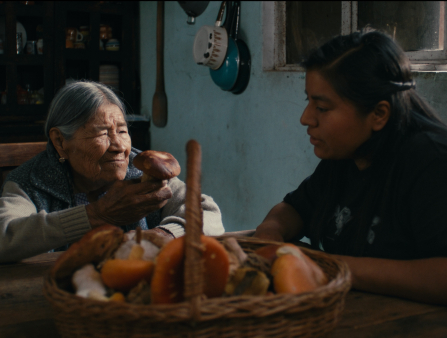
While the idea of octogenarians openly discussing their sex lives might sound like a premise ripped from Giuseppe’s ribald filmography, the tone of Àgnes Sòs’ Stream of Love is more a contemplative portrait of a rural Romanian village and its vibrant inhabitants. Sure, the film is replete with racy remarks about sex and self-pleasure. But there’s nothing exploitative about Sòs’ camera, a testament to the trust she gained from her senior citizen subjects over the two years she spent with them. The Hungarian film contains traditional interviews intercut with vérité footage, but its standout feature, to be sure, is its humor and humility. Women openly speak about their intimate experiences while preparing communal meals, laughing while reflecting on the folly of their youth. The film ends with a group of the women taking great joy as they roll down the grassy hill that looks down on their village, drenched in sunlight and laughing like teenagers.
One of the more serious and poignant docs in competition was Out in the Night, the story of four gay African-American women who were assaulted on the streets of New York City by a male aggressor. Because the women defended themselves with a weapon, Venice Brown, Terrain Dandridge, Renata Hill and Patreese Johnson were all sentenced to at least three years in jail, with Patreese receiving an 11-year sentence. The film actualizes the trials and convictions of these four women, placing blame squarely on a media that dares to label them “a gang of killer lesbians,” and “a seething Sapphic septet.”
In the trial testimony, the male assailant claims that he reacted because one of the women “was disrespecting [him] as a man,” which made my hair stand on end: the same misogynistic privilege and expectations were echoed in the Isla Vista killings not more than a two weeks prior to this film’s screening. After we see all four women convicted while the male assailant walks free, a civil rights advocate is interviewed, proclaiming, “male supremacy hurts everybody.” If there’s one timely take-away from blair dorosh-walther’s film, it should be this.
Another resilient LGBT narrative comes from Thomas Miller’s Limited Partnership, which proved to be one of the more emotional offerings of this year’s selections. In a festival season that left everyone talking about The Case Against 8, Miller’s film reminds us that while the fight for marriage equality has certainly come to a head in the last decade, this battle actually began in 1975, when a Colorado clerk issued the first same-sex marriage license. Following the lives of bi-national, same-sex couple Tony Sullivan (an Australian native) and Richard Adams (an American), Limited Partnership depicts their struggle to make a life in a country that refuses to recognize their union, and thus criminalizes Sullivan for what is considered a visa violation. The couple’s story plays out through family photos, clips from an extensive interview with Tony and Richard from 2002, and more present-day footage, following the couple through a decades-long struggle to live openly and without fear. In a Q&A following the Los Angeles premiere, attorney Lavi Soloway reminded the audience that the 40-year evolution of same-sex partnerships is one of the quickest revolutions in modern history. Limited Partnership shines a light on some of the early fighters in this struggle, reminding us that the fight for our civil liberties is all part of an evolution.
Katharine Relth is the Digital Communications Manager for the International Documentary Association.
The distribution landscape is constantly evolving. We already gave you 10 Keys to Successful Theatrical Distribution for Your Doc and the most important 5 Digital Distribution Tips for Filmmakers. Now, here are some of the most oft-used terms and their definitions to help you figure out how best to get your doc out into the world.
Theatrical Releases:
Wide release: a film is shown nationwide simultaneously in hundreds of theaters.
Limited release: a film is released in a select several theaters across the country. This release style is frequently used for documentaries, art films, and independent films.
Platform release: a strategy included under the umbrella of the limited release that utilizes word of mouth to gain momentum. Usually shown in very few select theaters in major cities such as Los Angeles, New York, and Chicago.
Semi-Theatrical Release: A one-time special event screening that can take place in a movie theater, museum, college campus, art center, etc.
DIY Release: Filmmakers make deals with individual theaters to screen their films. Filmmakers usually either pay the theater a fixed sum upfront and take on the risk and potential profits, or, if the theater believes the film will be successful, share both the risk and profits with the theater. Includes online platforms like Tugg and Gathr to crowdsource theatrical screenings.
Video on Demand
Video-on-Demand (VOD) is an interactive system that allows users to select and watch video content in real time or download content whenever they choose in lieu of watching at specific broadcast times. Users can stream and/or download video content. For streaming, the content plays as it downloads; for downloaded content, the file must be completely downloaded before it will play.
Subscription Video on Demand (SVOD) allows users unlimited access to a bundled set of content for a fixed fee during a specific time period (typically one month). SVOD providers include Netflix and Hulu Plus.
Advertising-supported Video on Demand (AVOD) offers access to video and audio content with ads to users, often for free, since the platforms rely on selling ads to generate revenue. One AVOD provider is Hulu.
Transactional Video on Demand (TVOD) allows customers to pay a single price for individual VOD content or set of viewed programs. TVOD includes download-to-buy options like iTunes and Amazon as well as Internet VOD (IVOD) like Vudu rentals.
Free Video on Demand (FVOD) is demand programming that is available as part of a basic content package, to which subscribers can have unlimited access for a specific time period.
Direct and Retail
Direct sales
The purchasing of goods from manufacturers or distributors in person. An example of this is the purchasing of a DVD at a film screening.
Retail
When consumers go directly to a retail outlet or store with multiple products on display in order to make a purchase. Direct selling can also counts as retail.
Digital Distribution
A distribution method in which media content, such as video, is delivered without the use of physical media, typically by downloading from the internet straight to a consumer's home. Examples include: filmmakers’ own websites, Netflix, Amazon Instant Video, and iTunes.
Educational Distribution
The selling of DVDs to high schools, universities, colleges, research institutes, non-profit organizations, libraries and other institutions that use film for educational purposes like research and as teaching tools.