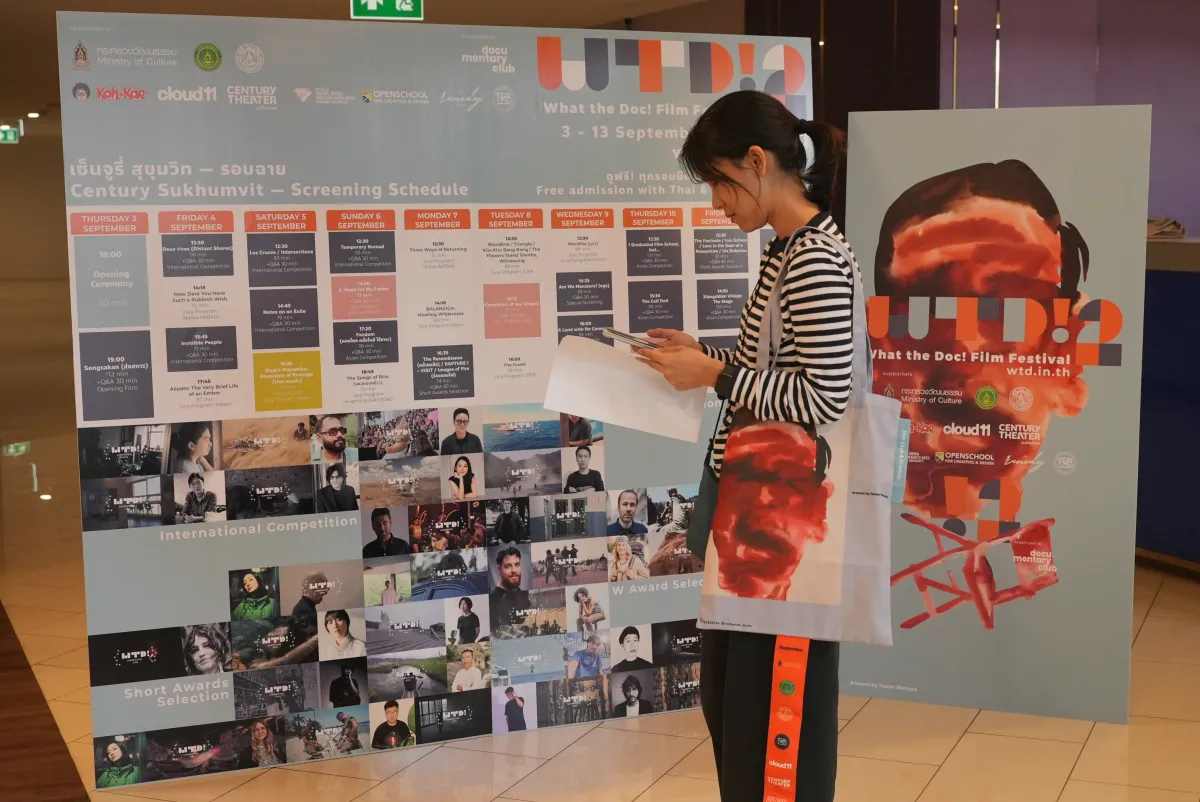


At a time when several of Asia’s documentary festivals have faced uncertainty, the inaugural edition of the International Documentary Film Festival What the Doc! (WTD!) in Bangkok in 2025, was a welcome addition to the region. The West Lake International Documentary Festival and Macao International Documentary Film Festival were not held that year, while the Guangzhou International Documentary Film Festival had been absent for the past two years. In Southeast Asia, where the documentary festival landscape is particularly sparse, the arrival of a new festival in Thailand was especially significant.
The first edition announced itself with considerable ambition, bringing together an impressive roster of figures from across the Asian documentary world. It invited as jurors and hosted masterclasses with Wood Lin, the program director of the Taiwan International Documentary Festival (TIDF); Makiko Wakai, the New Asian Currents program coordinator of the Yamagata International Documentary Festival; and Peter Yam, a Hong Kong producer of Blue Island, alongside some 70 films in competitions and curated programs.
The success of that first edition has turned WTD! into an annual affair. Its second edition ran from September 3 to 13, 2026, and was again organized by Documentary Club, a locally beloved distributor that also works in exhibition and documentary production. The most conspicuous change this year was also an instructive one. What had been the Thai Competition in the inaugural edition became the Asian Competition this year, a decision announced alongside the lineup. This change was made, according to the festival, to “better reflect the range and number of works submitted this year” and “to maintain the quality and integrity of the competition.” The shift could be read as an acknowledgment of a practical difficulty in hosting a dedicated national competition every year when local production may not be consistent enough. It also raises a more interesting question about what WTD! might offer that distinguishes it from the better-established documentary festivals elsewhere in Asia.
Since both Yamagata and TIDF have competitions dedicated to Asian nonfiction cinema, perhaps the ASEAN competition model of the Salaya International Documentary Film Festival, held just outside Bangkok between 2011 and 2017, could be reconsidered. Such a competition would potentially offer documentary practitioners from Thailand and neighboring countries a more committed regional platform and position WTD! as a hub for Southeast Asian nonfiction cinema, rather than another pan-Asian documentary festival. But the move also highlighted the need for greater coordination among the already scarce Southeast Asian documentary events. This year, WTD!’s dates coincided with two Indonesian-based events: the Arkipel Jakarta International Documentary and Experimental Film Festival and Docs by the Sea, an international documentary forum focused on Asia. This meant that filmmakers, programmers, and the press who might otherwise have attended all three had to choose among them.
The 2nd edition of WTD! was, in some ways, more streamlined than the first. From 1,268 submissions, the festival selected 32 projects across four competitions: Asian, International, Shorts, and W Award (for films directed by and about women). The same seven jurors—three international and four Thai—served across the competitions, with most sitting on two juries. The festival also invited jurors Mania Akbari, Khavn De La Cruz, and Uruphong Raksasad to program screenings of their own films, while IDFA shorts programmer Jasper Hokken presented a selection from the Dutch festival. A highlight among these was a screening of De La Cruz’s silent film Rizal’s Makamisa: Phantasm of Revenge (Rizal’s Makamisa: Pantasma ng higanti, 2024), accompanied by the filmmaker’s own live piano score. The screening at WTD! was all the more intriguing because the film is a work of fiction.
This breadth and eclecticism were one of the first edition’s strengths, and they remained intact this year. The competition lineups moved freely between documentary conventions and more hybrid forms, from A Land with No Ceremony, the predominantly fictional Asian Competition Jury Prize winner by YANG Bichun, to Temporary Nomad, YouTube video journalist Valentin Macke’s vlog-like account of backpacking through Iran, which took home the International Competition Grand Prize. This lineup reflects the taste of the festival’s artistic director and filmmaker, Thunska Pansittivorakul, who single-handedly curated this year’s program alone, which felt more idiosyncratic than institutionally calibrated.
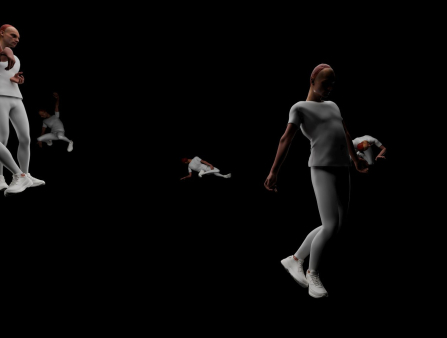
Rapture I – Visit
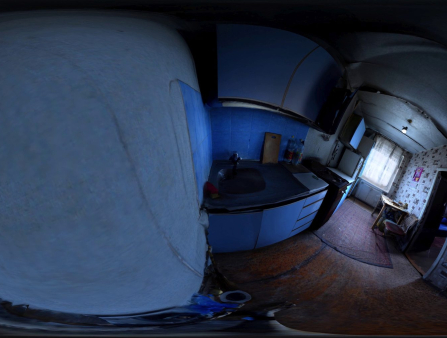
A throughline connecting many of the films, however, was homecoming. The most straightforward example was the Asian Competition Grand Prize winner Xiangzidian Village: The Stage, in which director HU Sanshou chronicles the people and places of his titular hometown. But others returned home differently. In Alisa Berger’s short film Rapture I – Visit, homecoming is only possible as a virtual experience. Berlin-based Ukrainian vogue dancer Marko is unable to physically go back to Alchevsk, his hometown in the Russian-occupied Donbas region. Instead, he revisits his childhood apartment via a VR reconstruction, while the film plays as a recording of the experience. Standing alone against a completely dark background, like an actor in a black box theater, he introduces himself to the camera as images of the old apartment are intercut. For the first few minutes after he puts on a VR headset, the film withholds what Marko sees. The audience can only observe Marko’s face and body as he navigates the empty space: looking around, reaching out, smiling, crying, and stating the uncanniness of the experience. When the film finally reveals what Marko sees, the audience is invited into his home: a VR environment assembled from 3D reconstructions of photos and videos taken in the apartment by a wedding photographer living in the occupied city.
The film’s synopsis frames the experiment as “a digital reconquest of the occupied space,” but it’s not a straightforward celebration. Ethical questions emerge and remain unanswered. During the post-screening Q&A, Berger acknowledged that the experience didn’t prove wholly therapeutic for Marko. Revisiting the apartment also revived painful memories from his past, leaving him angry after the session. In the film, what would ordinarily be an intimate return becomes a strange mixture of technological experiment, rapture, and mourning. The project was created as a multimedia diptych, with the other part being a VR piece in which viewers could virtually visit the apartment with Marko as their guide, titled Rapture II – Portal. Now being developed into a feature, Berger’s short stands out amongst the multitude of works addressing the Russo-Ukrainian war in its creative concept and form.
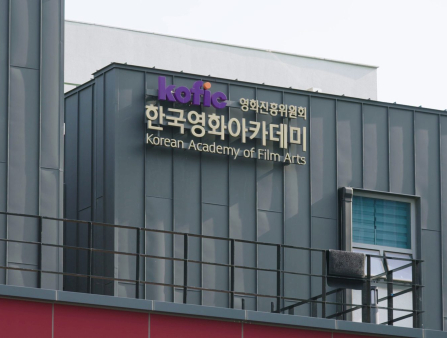
I Graduated Film School, But...
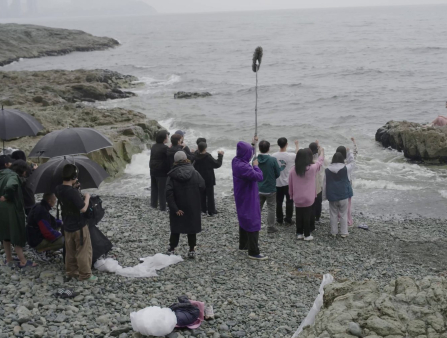
In I Graduated Film School, But…, KIM Dong-ryung returns not to a place where she grew up or once lived, but to her home institution where she became a filmmaker. The Korean independent documentarian, who served as a jury member for the first edition of WTD!, was invited by her alma mater, the Korean Academy of Film Arts (KAFA), to make a documentary commemorating the institution’s 40th anniversary in 2024. Kim agreed, on the condition that she could also make a different film about the school. The result became I Graduated Film School, But…, a decidedly nondramatic film that was one of the few world premieres at WTD!.
Kim’s intervention-free observational approach is a response to what she found upon returning to KAFA. “It had changed a lot and become a lot more competitive,” she explained during the film’s post-screening Q&A. Rather than interviewing students or following them closely through the making of their graduation films—the kind of struggle-for-success stories already abundantly covered by Korean reality television—she turns her camera toward the faculty. Much of the film’s 130-minute runtime consists of meetings between administrators and instructors, in which seemingly mundane bureaucratic matters about school rules and procedures gradually expand into broader questions of pedagogical philosophy. The teachers discuss which student should present their graduation film first (thus having less time for production) and whether students who exceed the permitted script length should be financially penalized in their budget, raising fundamental questions about merit and need, reward and punishment in education.
Two particularly moving moments explore the goals of a public educational institution. At a panel at the Jeonju International Film Festival, KAFA’s executive director participates in a debate over whether the publicly funded institution should cultivate future auteurs or genre specialists. The question is essential in the Korean film industry, which Kim says during the Q&A is dominated by three vertically integrated conglomerates—CJ CGV, MEGABOX, and Lotte Cinema—and where pursuing an independent path can be daunting. Near the end of the film, an alumni meeting with the executive director follows the school’s preliminary decision to restructure its animation program, which is seen as insufficiently productive. A tearful graduate of the program argues that short-term results aren’t everything. A public institution should focus on cultivating and providing opportunities, including the opportunity to fail, for students, she reminds, and it cannot operate under the same logic as a commercial production company. There are plenty of documentaries about filmmaking, but I Graduated Film School, But… is a rare, candid one about film education. All dewy-eyed wannabe film majors should watch it.
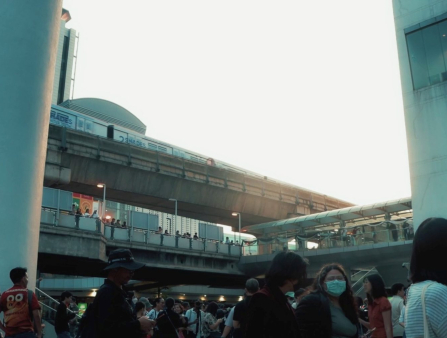
Images of Fire

Of the three Thai films spread across this year’s competitions, Buariyate Eamkamol’s Images of Fire stood out for both its subject matter and its formal approach. The film returns to the deadly crackdown on political protests in Bangkok in 2010, gathering audiovisual evidence of the military violence while probing the more elusive question of how such events enter official history and collective memory.
Over a conversation with his partner, Buariyate layers archival images, newspaper clippings, cellphone recordings from the protestors, and his own nighttime footage of the key Bangkok locations where the protest took place. He mentions how his father used to take him to protests and how he was killed during one of them. In a creative attempt to challenge the audience’s proximity bias, Buariyate zooms in on individuals in the archival photos and on pavements where protestors were shot. In several cases, it remains unclear who fired first or from where the fatal bullets came. Referring to Chatchai Chalau, a protester who was shot while filming, Buariyate draws a parallel between the camera and the gun—both of which share the act of shooting. The film also briefly takes a forensic turn, using sound analysis of gunshots recorded on protesters’ footage to argue that military forces opened fire first, even if the specific perpetrators cannot be identified. Yet the film ultimately refuses the certainty that its investigative passages might seem to promise.
In its final moments, Buariyate appears to let slip that his father, whose death has implicitly framed the film’s personal narrative, is actually alive, a fact he confirmed during the post-screening Q&A. The contradiction throws the film’s earlier accounts of loss into question. Buariyate seems to blend truth and falsehood to show how the historical record of the crackdown remains fragmented and contested. That uncertainty became even more pointed when Thunska, speaking from the back row during the Q&A, expressed partial disagreement with the film’s representations of people he had known personally. He suggested that certain passages of the film inadvertently echo the government’s post-crackdown discourse, while nevertheless expressing gratitude that a younger generation of Thai filmmakers continues to remember and revisit this history. Winner of the Short Doc Award Special Mention, Images of Fire is ultimately less concerned with giving a definitive account of what happened than with examining what survives and what gets remembered.
The jury statement for Buariyate’s honor took the form of a free verse poem by Khavn, while another statement read by Uruphong ran over two pages. Laughter and applause abounded. The charming enthusiasm of the small but eager crowds, filmmakers, and jurors, visible throughout the festival, reached a climax at the closing ceremony, held at Doc Club & Friends, Documentary Club’s new micro cinema and bar, which had not yet officially opened. Decorations and construction materials were still piled against the walls, and there was only one microphone to be shared among the host, the interpreter, and the jury members. But these small organizational hiccups did little to dampen the atmosphere. Thunska revealed that the festival was operating with one-third of last year’s budget due to cuts in government funding. He seemed confident, however, that WTD! will return next year and that its growing pains won’t last long.