

In this interview, filmmaker Matthew Rankin talks about raiding the National Film Board of Canada archives to craft his satirical portrait of 80s
Canadian Media

In this interview, filmmakers Jack Weisman and Gabriela Osio Vanden talk about turning their 14-minute short into the Sundance-premiering feature
At its 50th anniversary, Toronto’s flagship festival maintains steady documentary commitments while expanding commercial programming and contracting
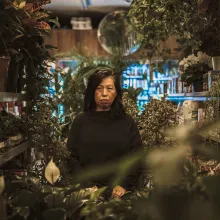
Veteran documentarian Min Sook Lee’s TIFF-premiering feature addresses generational silence and trauma

Last year, national and international press widely reported on what The Globe and Mail described as “the most tumultuous year in the festival’s history,” complete with sweeping personnel changes, social and financial pressures, and the temporary closure of their flagship Ted Rogers Cinema. Though Hot Docs managed to pull through for its 32nd year with a new executive director (Diana Sanchez, formerly of TIFF) and a replenished staff (some of the programmers, including department head Heather Haynes, returned after their prior exodus), what frightened this hamstrung fixture of Toronto’s flailing film scene was dismally clear. Social issues don’t entirely permeate the programming, nor do their chosen films observe such issues in totality, but Hot Docs has always strived to stay in tune with urgent matters of the present, especially through films that align their audience’s point of view with what will one day be the right side of history.
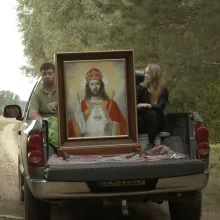
Amid the past few decades of Holocaust-focused works, queer artist Kinga Michalska has found a unique approach to “the Holocaust memory documentary” in their native Poland. Their feature-length debut, Bedrock, is a psychological journey through the contemporary sites of former concentration camps and mass graves. It also poses the rhetorical question: What does “never again” really mean? Bedrock premiered in the Panorama section at the Berlinale, where Documentary spoke with Kinga Michalska.
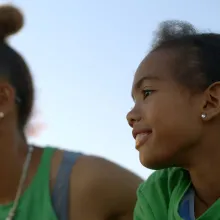
Laurie Townshend’s A Mother Apart allows Staceyann Chin to tell the story of her abandonment by her mother, Hazel. Chin proudly identifies as Caribbean, Black, Asian, lesbian, a woman, and a resident of New York City, as well as a Jamaican national who has spent her entire career speaking candidly about her own life. In our interview, we talked about the genesis of the film, shooting remotely during the pandemic, mothering oneself, and the ethics of care while working on A Mother Apart.

Softening the boundaries between fiction and nonfiction, the films of French-Canadian director Antoine Bourges are marked by their hybrid nature and

Sometimes the right people win the big awards. Certainly, that’s the case with John Zaritsky, a fiery, truth-telling filmmaker, who garnered the Best

It’s been more than nine months since the deadly movement of COVID-19 from China to North America and Europe—and nearly every other continent—utterly