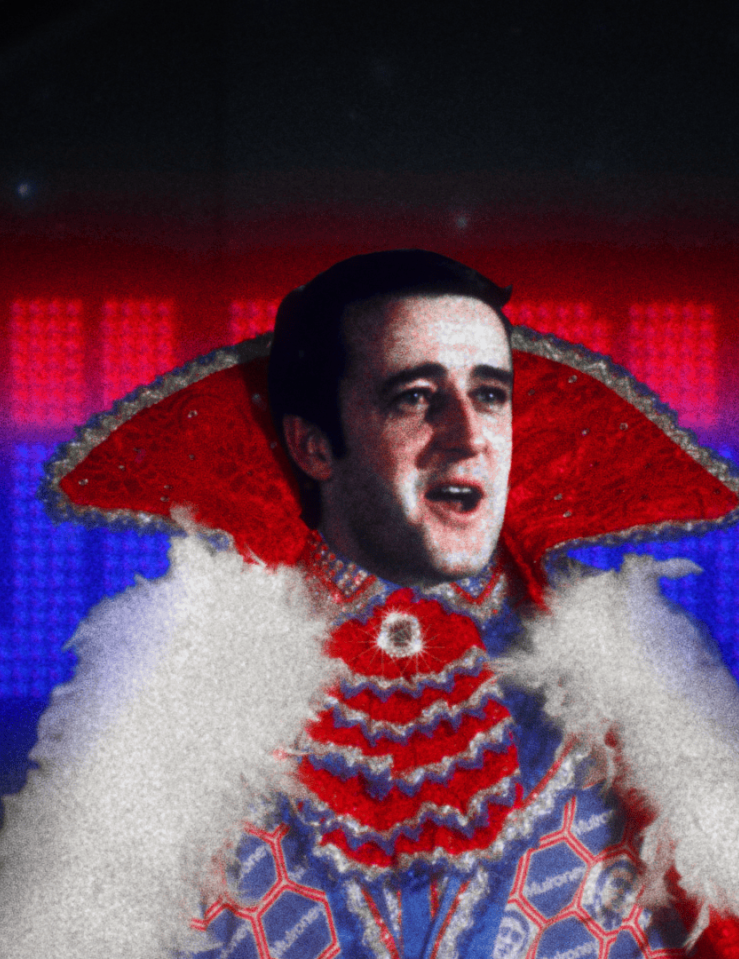

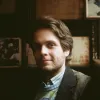
In the 1971 short Black Film, six homeless men describe how they wound up staying on the streets of Novi Sad. Their parade of portraits ends with a close-up of the filmmaker himself: “I am Želimir Žilnik. 28 years old, 72 kilos, 167 cm tall, a lawyer, I make films.” Black Film is a harsh and hilarious critique on a problem that officially did not exist in Yugoslavia. Žilnik’s temporary solution to house the men in his small flat with his wife and kid is intentionally absurd, using the situation of filming as a way to prompt conversation at home, in word-on-the-street interviews the next day, and in the movie’s afterlife. “I made a similar film two years ago,” Žilnik tells the audience. “But it didn’t change anything.”
Žilnik has remained a stalwart critic since the start of his filmmaking career in the 1960s to today. He was associated with the “Black Wave” of Yugoslav cinema, so named by conservative functionaries in the Eastern Bloc who saw Žilnik and his contemporaries’ riotous and anarchic visions of youth to be blasphemous to communism, despite the filmmakers often being militantly left-wing. Žilnik is perhaps best known for his first fiction feature, Early Works (1969), about a group of young people carrying on the student demonstrations of 1968, running around speaking in quotes from Marx and Engels, and making revolution against what they see as a petit bourgeois way of life in Yugoslavia.
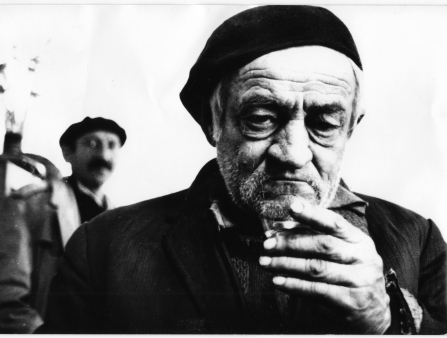
Black Film.
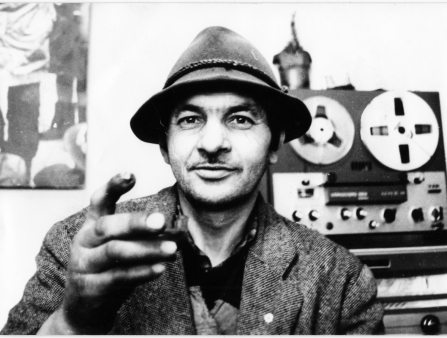
While his political savvy and stalwart beliefs have gotten him into trouble over the years, Žilnik has found ways to be a prolific filmmaker for nearly 60 years despite censorship, lack of professional materials, and lack of funds. While the director has worked in more traditional modes of fiction filmmaking (even experimenting with science fiction in 1986's Pretty Women Walking Through the City), much of Žilnik’s body of work is done in a hybrid-documentary form, often having subjects play versions of themselves to transpose a dramatic structure onto reality. Žilnik sometimes even revisits his full-fledged documentaries into fiction films, like when he used The First Trimester of Pavle Hromis (1983), about a teen returning from Germany to live with his grandparents in Yugoslavia, as the basis for his hybrid follow-up Second Generation (1983), which uses whole sequences from the former film while filling in the in-between scenes with a teen hangout movie.
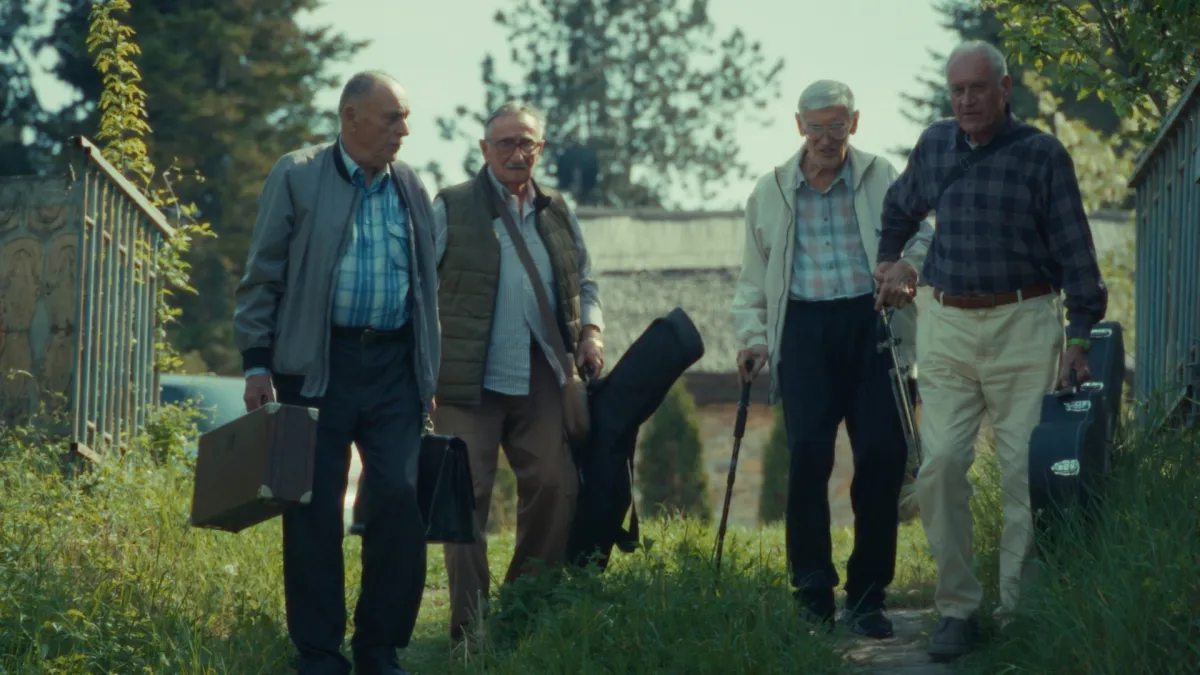
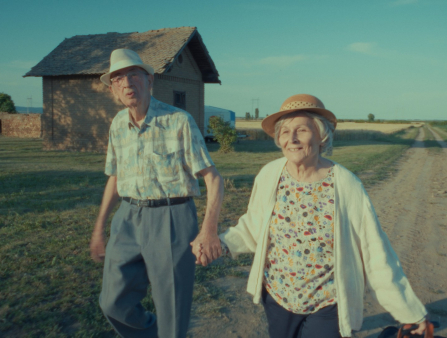
Žilnik’s cinema is close to life, and his methodology has allowed him to put a scalpel through the ever-evolving present, first in the waning days of Tito (The Unemployed, 1968), a brief look at West Germany from a self-imposed exile (Inventory, 1975), the final years of Yugoslavia (Second Generation), its violent and ultranationalist Balkanization (Tito Among the Serbs a Second Time, 1993 and Marble Ass, 1995, which is also notable for having a trans sex worker as its protagonist), Serbia’s crooked transition to capitalism (The Old School of Capitalism, 2009), and the migration crisis of the 2010s (Logbook_Serbistan, 2015). Žilnik’s newest film Eighty Plus (2025) follows an octogenarian returning to Serbia after spending six decades abroad as a musician, coming back to his home country on the promise that his family estate, seized by the communists after WWII, will be restituted to him. While technically a work of fiction, Eighty Plus takes a real remigration ploy in Žilnik’s country and uses it to prod at the societal contradiction pulling at present-day Serbia.
Earlier this month I talked to Žilnik over Zoom about his new film and life’s work, which was presented in an American Cinematheque retrospective in April. Special thanks to Sarita Matijević for arranging the conversation and assisting with the transcript. This interview has been edited for length and clarity.
DOCUMENTARY: Can you tell me about the genesis of Eighty Plus?
ŽELIMIR ŽILNIK: It is my reaction to today’s new propaganda from politicians in capitalist Serbia. What they are proclaiming to offer to families all the wealth that the communists took after the Second World War. We know that it is, first of all, impossible, because 90% of these families either fled Yugoslavia or they died out. These new crooks, these new politicians, they are making this kind of propaganda to hide that they will take and plunder that wealth [for themselves].
D: Much of your work is documentary or hybrid documentary, I wanted to ask how much of the actors’ lives informed this film?
ŽŽ: I chose the topic first, and then started searching for the main actor. The main actor, he never acted in any film, but he was all his life in front of the cameras, so he doesn’t have any fear of cameras. He is also a son of a wealthy guy and he knows that his family could not get anything from the state. When we started preparing the film and also engaging him with all the professional actors who play his family, we understood that they would work together. It also helped because he was abroad. He has all this knowledge of how our musicians lived in Europe. We have had first, from Yugoslavia, a few million guest workers in Europe. Second, musicians had also been invited in bars, invited in some touristic areas, and so on.
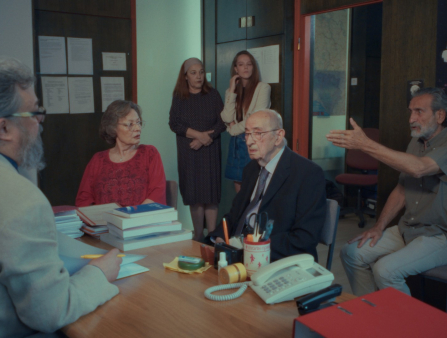
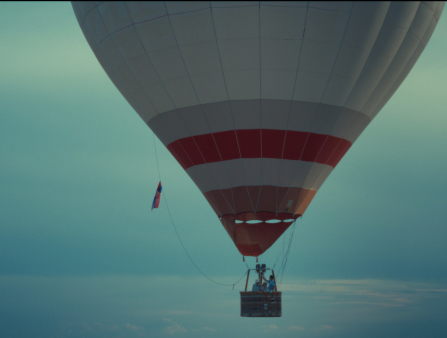
Eighty Plus.
D: So much of your work in the last 10 years was on immigration in Europe from people in South Asia or Africa, but this film you focus back on re-immigration of people into the former Yugoslavia.
ŽŽ: Yes, because we were the only socialist country that had open borders to the western countries. In this time of Tito being president, the Yugoslav passport could go all over the world. It was only not received in Albania and China. It was, for us, so easy, so normal to wander around Europe and try to find a job. Some people were going to Australia, some people went to America. They were completely free to return back, and even to continue living in Yugoslavia. They had not been treated as some sort of enemy of socialism, they were people who went just to find a way to feed their families.
D: And it provides a unique perspective, too. There’s a quote that one of the children in Second Generation says, “A guy doesn’t have to think that because he lives in socialism, everyone else is worse. I was in both places, and I still don’t know.”
ŽŽ: Yeah, that is how it is. This open gate to go abroad helped me very much when I started making professional films. I first started with four or five documentary films, and then I made one fiction film, Early Works. That brought me some appreciation at festivals and among the young people and the film critics. But politicians were very outraged with that film, like it was an insult to socialism. In our country, we were not threatened by being sent to jail. You know what happens? In this old time, the film industry was done in big studios who had the machines, who had the lights, who had laboratories—that was in the possession of the state. Every one of us who claimed we were independent, and very much against the regime, we had to get the help of the studios, otherwise there was no way to make the films.
There were about five or six of us directors—[Dušan] Makavejev and Žika Pavlović, me, and some others—we had been cut off from any possibility of working. Because we had not been employed, we had been freelance. Film in Yugoslavia was different than in other socialist countries, they did not employ directors and screenwriters. So, the five or six of us, we simply just ran out of money and resources to continue life. I myself, I thought, I’m not well known, I’m going with another million of our workers to Germany.
But when I went to Germany, just in two or three days, several filmmakers heard that I came, and they invited me in Munich to Filmverlag der Autoren. There was [Alexander] Kluge and [Rainer Wener] Fassbinder and others. They have been watching our films—and I already got some awards in Germany—so they just asked me, “Are you willing to join us?” So in two-and-a-half years I made nine documentary films and one fiction film there. It was, first of all, good training for capitalism. But also it was a good possibility to [learn to] communicate with guest workers and our people in an informal way. I remember this good director said to me, “How can I speak with a Serbian, a Bosnian, a Macedonian guy? I don’t know the language, I don’t know how they behave.” I just grabbed that position, so I was just filming all the time. What is funny is that in ’74 or ’75 at the Oberhausen Film Festival, each nation could come with 10 documentary films; for Germany’s presentation, I had five of the German films.
D: Your films in Germany got you into some trouble there, as well.
ŽŽ: At the end. They had actually been very well received. The whole film industry was completely open to encouraging German production of the young generation. They also had this opportunity to screen their films on television. That helped me because I was now producing for German television. And it went very fine. But then in one moment, that was late ’75, when I presented my first and only German feature film with actors [Paradise. An Imperialist Tragicomedy, 1976]—that moment in Germany, a hysterical campaign started against provocations and critics. Why? Because some of their intellectual groups like the Baader-Meinhoff Group, they stepped out of the culture into terrorism. They started chasing and killing some very high-level state employees and bankers whom they found collaborated with Hitler’s regime when they were 16-, 17-, 18-years-old. Over 24 hours, it was a change in the whole mood of society. They said, “Look, we see this film of yours, it is a bit anarchistic and threatening our democracy” or whatever.
After the premiere [of Paradise], I thought we were going to have some sort of celebration but the police found me and brought me to my apartment, which was very close to the cinema. They started going through the papers. They found that we did not pay some health insurance and taxes. Because of that, me and the cameraman were brought to the police station in the center of Munich. I said, “But we have the money here on the table, it is 3 or 4,000 euros, we did not have time to pay what we needed to the state.” I thought we were done, but then I remembered that Kluge was a lawyer. I asked the policeman to give me the telephone. So Kluge came at half past 12, and he made arrangements with the policemen that me and my cameraman would leave the country in the morning. That’s how I went back to my country. Of course, I didn’t say anything, even to any journalists, that I had this problem, because maybe the two of us would be put in jail.
This German experience was most intense, but helped me in that I started working for the various television stations. These German colleagues, they always asked me when I come with some project, “Which television station is supporting you?” I said, “No, I am not doing it for television.” They said, “You are mad. Half of the budget of our films comes from television.” So when I came back to Yugoslavia, I didn’t say anything [about the legal troubles], just telling them I had enough of Germany, and I want to do something for our television. So the third part of my filmmaking I did for Yugoslav television, and it was very well received, which I did not expect.
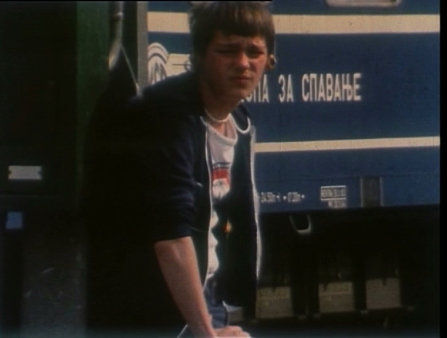
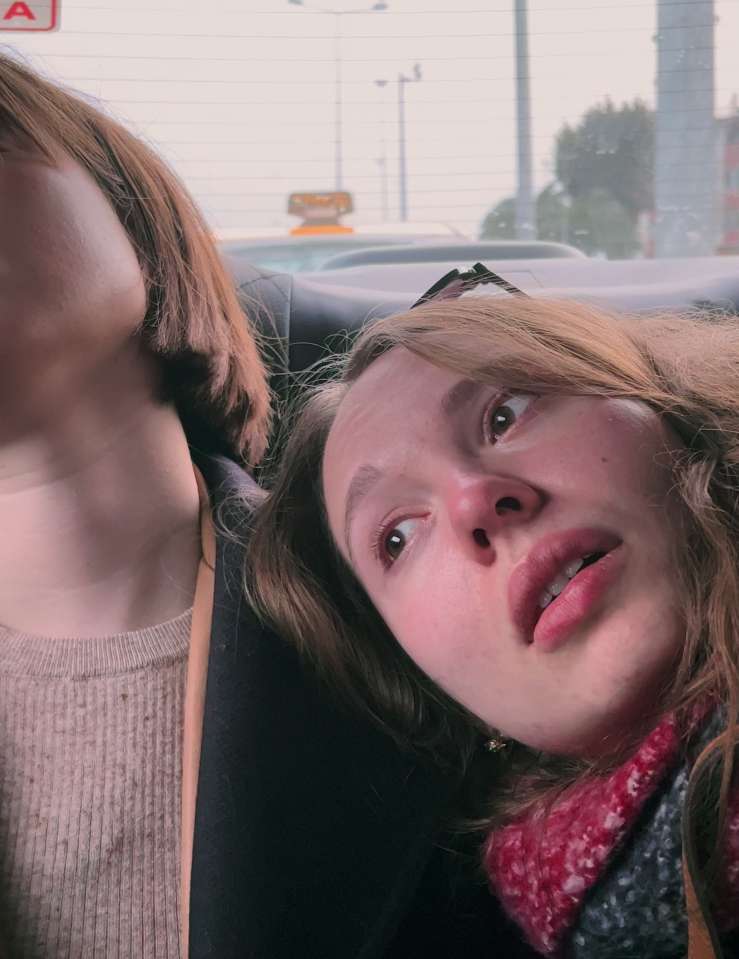
Second Generation.
D: How did the economics of your filmmaking change after communism and the transition to capitalism?
ŽŽ: The whole country was just facing hell in front of them. These people that took power had been presenting themselves as a nationalistic, ideological people who were going to bring the values of our tribes and nations and so on. What they found is that the working people are their worst enemies. In our socialistic system, we had these working councils. By law, the factories and the production was owned by the working class. When I was making programs in factories or in collective farms, we always had to talk to workers’ councils. Of course, there was a director—someone who was running the business with the state and banks—but they actually came as a representative of the collective that was a working council of about 12 or 15 people. I would get their help, because when I take three or four people to act in some small roles, then we have all the help of the collective: we can film in factories, we can film during working hours, they will let us put up lighting, and so on.
I made six or seven of those feature films, which ran all over the country—Macedonia, Slovenia, Croatia, and so on. In two or three days after screening the television film, the press of these various areas reacted to it. That was very helpful, because the people running television said, “Ah, you have support from Macedonia. You have support from here and here.” So they started actually inviting me here and there. I spent about maybe five or six years in tremendous tempo making films.
D: Approaching the subjects for collaboration seems to be such an essential part of your filmmaking practice. I think of Uprizing in Jazak, where you go there and ask the villagers how they would make the film.
ŽŽ: That was a specific moment, and also an inspiration. That was the moment when our president, Tito, was ailing. He was already 80-years-old. He was very good in this fight with the Germans and this fight with the Soviets, but in his later years, he started being a bit senile. He said, “We had a few big battles in the Second World War with the Germans, let’s make some films of this big moment in our partisan stories.” He asked the film studio to find Richard Burton to play his role. Richard Burton came with Elizabeth Taylor, they went on the mountains, and Tito was beside him with his big cigar, and all the time telling Burton what to do. For ordinary people it was not convenient. It was self-promotion. The German occupation, Italian occupation, Bulgarian occupation, and Hungarian occupation of Yugoslavia were terrifically destructive. Yugoslavia was in the middle of the Balkans, and everybody wanted to take some part of it.
I asked some older friends, “Do you know where near Novi Sad there were these brutal anti-fascistic battles?” They said there is one very small village, called Jazak, where half the men and a lot of children had been killed. When I went there, I said to the people, “I would like to hear you. What were your losses? What were your moments of struggles? Moments of victory?” There were not more than 50 older men, and about 67 older women, who had passed through the war, and many of them had lost their children. They start to talk about what happened. I said, “Stop, stop, stop. I will get the camera and we will just follow you.” I didn’t give any advice. They just started actually having a feeling that they now have the power to bring to the younger generation the memories of what they had. It was tremendously exciting and full of emotion.
In two or three days we finished the film, because they said, “We told you everything we know. A lot of things went away from us, with our poor kids who have been killed.” And I said, “Okay, the film is finished. Let’s run editing.” In our country at that time, the first showing was to the Censorship Group for Filming. When I showed the film, there were some new bureaucrats, the young ones, they just jumped and said, “This Žilnik, our enemy, he now has taken dozens of bums as actors.” They said, “We ban the film. It cannot go out.” The next day I went to Jazak, and they said, “Where is our film? Where is our film?” I said, “No, our film is stopped in this political forum.”
Five or six of them took a pistol and got on a tractor to Novi Sad, and went into that building. They had been anti-fascist [partisans] from 1941 and so had special identity cards that gave them entrance in all official places. They said, “Do you want to be killed here or on the street?” One started bringing [the bureaucrat] like this [Žilnik tugs on his collar]. “Go in the streets, we don’t want his filthy blood making a mess in here.” So this man almost dies, screaming, “No! No! It’s a mistake! Secretary, please write another paper!” So she wrote another paper and the film went out. I mean, those things happen.
In this old time, the film industry was done in big studios who had the machines, who had the lights, who had laboratories—that was in the possession of the state. Every one of us who claimed we were independent, and very much against the regime, we had to get the help of the studios, otherwise there was no way to make the films.
—Želimir Žilnik on making films in Yugoslavia in the 1960s
D: I know you’ve described your film Tito Among the Serbs for a Second Time as less a documentary and more as an “event.” Would you describe much of your filmmaking that way?
ŽŽ: We had to make very strict plans, because we had been very short of the material all of the time. Kodak film stock came all the way from Rochester, United States. It was impossible to buy.
I was always insisting that my crew should be very open and friendly with the participants. Not asking them how they should act themselves, but listening and getting informed who was in which situation. We tried to see who is the most inspired to come out with some facts and have more of the material filmed with them. That is also why my editing process, especially for documentary films, is quite short. These short films have to be made in those meetings before the camera starts. But everybody has their own method. I was watching what my colleagues were doing, so many of the people were working in a similar way. Maybe I was more relaxed in the communication with the [protagonists].
D: A lot of your work over the last 40 years has been shot on video and digital. Was that liberating?
ŽŽ: Yes. That is the first moment when we could really have our own private productions—we didn’t rely on anything by the state, we didn’t have any need to somehow inform anybody what we were doing. First of all, this whole process is much quicker, and it is more liberal. You don’t have to have any arrangement with the [TV] station bureaucracy. Then, second, we fear less the cost of the material. It was the first time I started engaging not only one cameraman but two, maybe three. And then, of course, the editing is also now digital. The whole film industry, at least that which is actually low budget, is much more open to not only experienced and older people, but also to younger people.
D: You have talked previously elsewhere how serious you are about the need to make these low budget films in a place like Serbia, which has also paused its state film funding for over a year. That they can be a bit more honest or truthful to the experience of the people.
ŽŽ: After all these different phases, I was not someone who is very well received by the people in power, either in the republic or in the cities. So we don’t have much support. Then, if you are waiting for any support from the state it takes maybe one, two, or maybe three years. I simply understood that I should be comfortable with continuing the low-budget films. And then I feel somehow more secure that we will come to the end. Many films in these small countries, many of the colleagues, they have to put two or three years into making a film until it is finished. And we always did it in two or three months altogether.