
What’s on My Desk is Documentary’s strand of photo spotlights of the setups that help create the stories of our times. For these pieces, we ask editors in the field for essential tools of the trade and the accessories that help us do our best work.
How can a space help you create a story?
The word that best describes my office—and the one many directors have used for it—is cozy. It’s not a big space, but it feels like home. I spend a lot of time in the editing room, and I rarely work alone; I almost always work with the director. Even though we are in the same room the entire time, I like to keep a small physical distance between us; it creates a greater sense of comfort for both of us. They usually sit on the couch in front of a big TV screen, while I sit behind my desk with two monitors. Working with the director is essential for me. I need the film to look like them, and the way they watch the rushes, what makes them laugh or feel emotional, is crucial. Films are often closer to who directors are than to what they want them to be.
Creative documentary is more often about what the director didn’t shoot rather than what they did, and that’s where we have to be creative. This is where the director’s point of view becomes important. It is also where we build trust between us.
Spending months with the same footage takes energy and a certain mental endurance. You want it to remain honest. People share part of their lives with the director, and I’m there to create the most honest vision of the story, to re-create the emotions the director felt during shooting, and pass them on to the audience.
In How to Save a Dead Friend by Marusya Syroechkovskaya, for example, we watched 12 years of her life with her friend Kimi. Her way of looking at him and her love for him guided how we shaped the film. We had very little material from the beginning of their relationship, and most of it was shot on different formats, DV cameras, and early mobile phone footage recorded in 3GP. The language of the beginning of the film became inseparable from the relationship itself: free, chaotic, fast. Rather than trying to smooth out those differences, we embraced them and allowed the footage to carry the energy of that time.
The space starts with scent. Palo santo is my favorite. A small Edison light bulb across the room creates a warm light. I don’t usually take notes or make Post-its during derushing; I can watch 500 hours without writing a single word. Writing right away would feel more like a reaction than a reflection. I trust the accumulation of images over time. Sometimes what stays is not what felt important at first, but what quietly returns. Only once we’ve finished the process do I write down the moments that I remember in a handmade notebook, and I ask the director to do the same. This later becomes the essence of our film. While going through the footage of Little Palestine: Diary of a Siege by Abdallah Al-Khatib, I came across a scene of a dog hunting a cat during the Yarmouk siege—one of the most disturbing images I’ve encountered. It never made it into my notebook, and we never used it. In contrast, a moment of boys running toward the camera and speaking about their dreams was the first thing I wrote down; one of them says his dream is to see his deceased brother again. That scene stayed with us until the final cut. Writing things down is less about guiding the process than about letting the footage sink in.
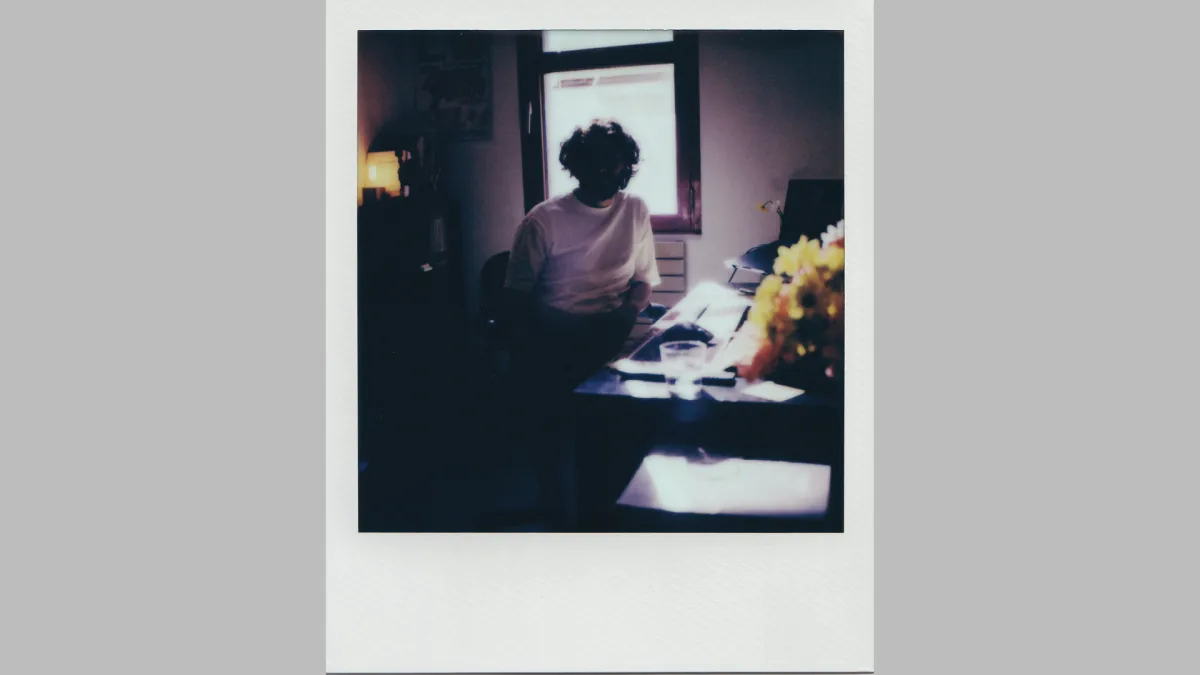
The notebook I write in now was a gift from a Hungarian director. I usually collect notebooks while traveling to festivals or workshops; my favorites come from the TYPA Printing and Paper Arts Centre in Tartu, Estonia. Most of the stories I’ve edited are tough and difficult to process. Regardless of the sound system’s quality, listening to people’s testimonies is a demanding exercise. Small breaks are necessary. During winter, a pause to stretch or drink Moroccan tea in a mug made by my friend, artist Liisu Arro, can warm the soul. Sometimes I take a Polaroid of the room to capture how the light falls at that moment and to remind myself to stay present. I often look out the window to rest my eyes. From time to time, a tiny Eurasian blue tit comes to the feeder, reminding us of the life around.
Something I can’t work without is a room with a view. I need the light outside, the sense of seasons. Being immersed in a project can feel overwhelming; I need a way to ground myself, and I insist on a light, airy space that lets me remain in the moment. This imbues my work with a sense of intimacy and humanity: it’s a reminder that the footage I am watching and working with exists in the real world around me. During the warmer seasons, I empty the bird feeder to reduce the spread of avian diseases, and I can enjoy the cherry trees blossoming in the garden.
During COVID-19, I edited a couple of films on a laptop trackpad, which resulted in mild tendinitis. Since then, I’ve used an ergonomic mouse and a wrist pad gifted to me by an Iranian director. It rests on a handmade rug from an Armenian director.
Many of the stories I work on try, in their own way, to repair something. For Do You Love Me by Lana Daher, it was about holding fragments together so they could be felt again. To that end, there’s always a lottery ticket on my desk that I share with the director when we start a project, and another when we lock the picture. What happens to a film is unpredictable. Who knows? Maybe we’ll win someday.
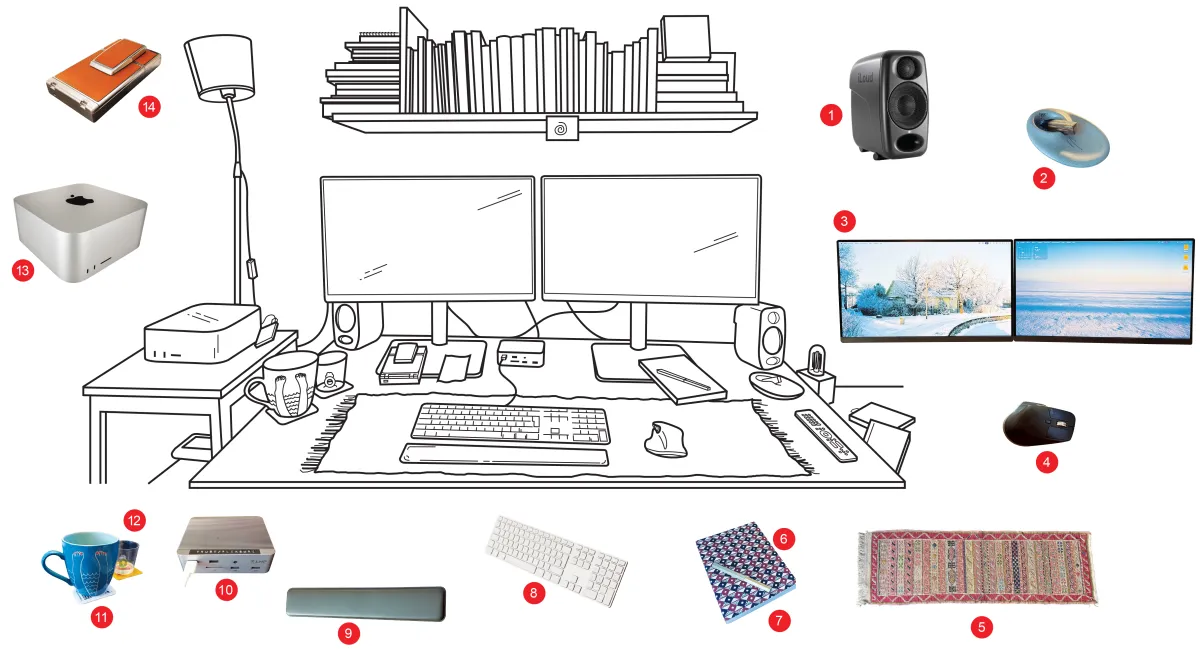
Annotated List
- iLoud speakers
- Palo santo
- Two BenQ 4K monitors
- Logitech ergonomic mouse
- Handmade Armenian rug
- Handmade notebook
- YSTUDIO pen
- Apple keyboard (2009)
- Wrist pad
- USB dock
- Handmade mug by Liisu Arro
- Glass
- Mac Studio
- Polaroid SX-70
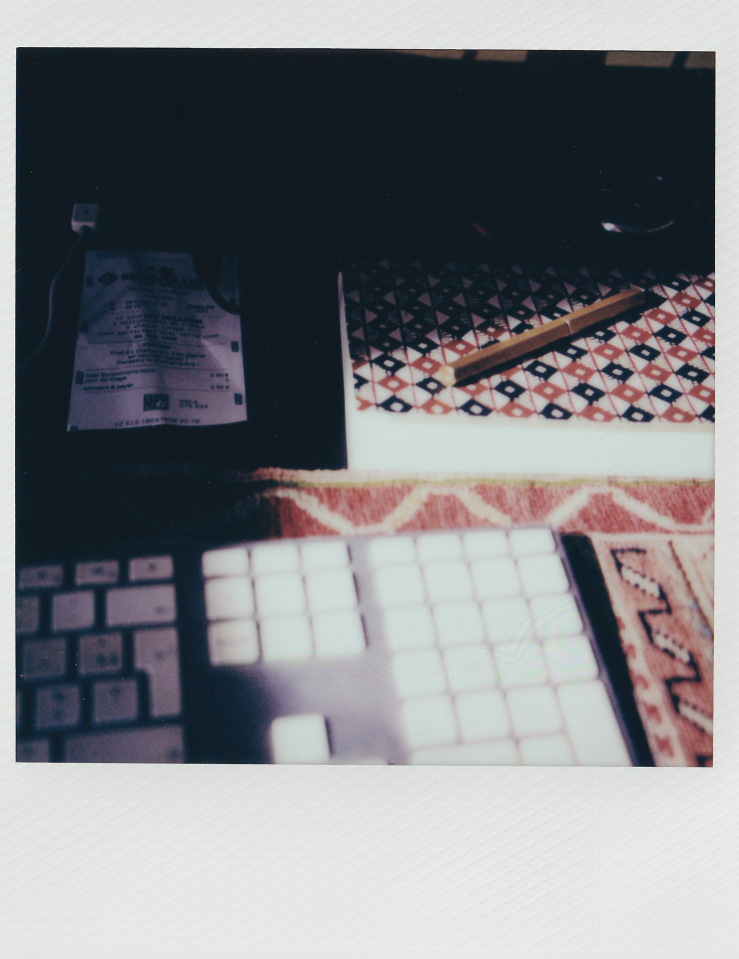
A Polaroid of the sunlight hitting the desk.
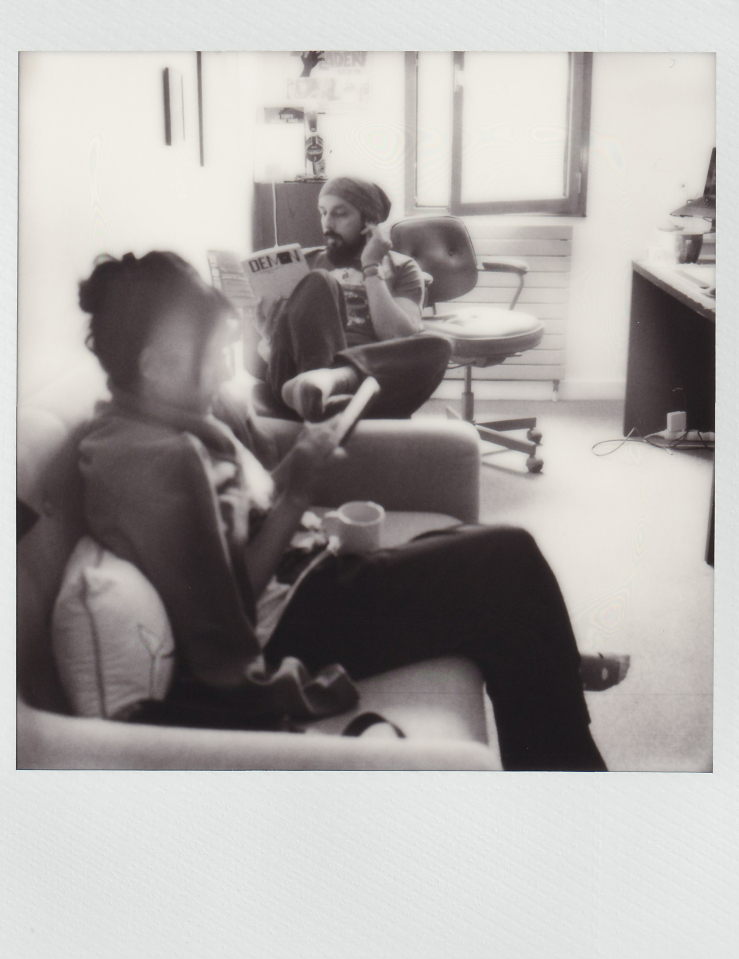
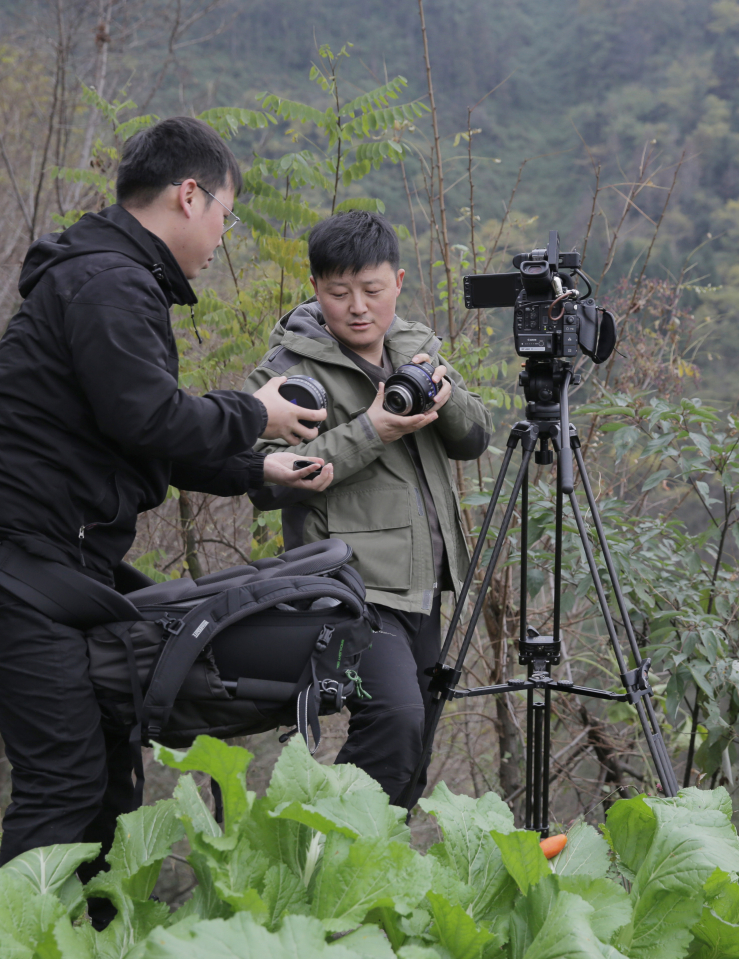
Working with directors Rintu Thomas (L) and Sushmit Ghosh (R).
This piece was first published in Documentary’s Summer 2026 issue.