


Welcome to The Synthesis, a monthly column exploring the intersection of Artificial Intelligence and documentary practice. Co-authors shirin anlen and Kat Cizek will lay out ten (or so) key takeaways that synthesize the latest intelligence on synthetic media and AI tools—alongside their implications for nonfiction mediamaking. Balancing ethical, labor, and creative concerns, they will engage Documentary readers with interviews, analysis, and case studies. The Synthesis is part of an ongoing collaboration between the Co-Creation Studio at MIT’s Open Doc Lab and WITNESS.
This year, for the first time, IDFA asked submitting filmmakers to disclose their use of AI on their entry forms. When Vladan Petkovic, IDFA Industry Talks Editor, invited one of the co-writers of this column to moderate an industry panel on AI films, he drew on this question in the submission forms to compile a list of the 12 accepted films that had declared AI use.
As we reviewed the films and the disclosures, we found ourselves in deep debates about perception, creative use, and audience reception. As a result, The Synthesis asked Petkovic and IDFA Artistic Director Isabel Arrate Fernandez to join us ahead of the festival for an interview on the subject. The following interview has been edited for length and clarity.
This year, the IDFA submission form included this question:
Use of Generative AI
IDFA asks for your transparency in declaring any AI-generated content in your film or changes expected to be made to the film. This information will not be used as an assessment criterion. Rather, it acts as a reference point and disclosure statement which IDFA will consult if in doubt of the veracity of the audiovisual material.
DOCUMENTARY: Why did you decide to include an AI disclosure question for your film submissions this year?
ISABEL ARRATE FERNANDEZ: It was something we were starting to question last year when watching films.
I have a very specific memory of a film we saw last year, a Dutch film, a poetic essay delving into Morocco. There was an animated fish. And when we saw it in a rough cut, and this film is just live action with archive, and this fish was suddenly being animated. But also this fantasy that is in the writings of the writer, and we saw the film at a very rough stage. So this was a conversation we had with the programming team. Because it felt off. That’s when this idea started to grow, and we decided maybe we should ask, just to understand and to know.
It’s also part of the process for ourselves to understand how we, as an organization, internally should relate to the use of AI just in our work. As an extension of that, or parallel to that, what this means for documentary filmmaking. In the end, that’s why we’re doing these panels. It's also a conversation that needs to be had in the field. We are still evaluating films and projects in the same way, looking at the creative elements of a film. As long as the creativity of the maker is what is leading, and AI is used as a tool. So the intention of adding this question to the entry form was never one with the idea to include it in the judgment or the evaluation. It was just to get knowledge, to understand. I realize that assumes we will always sense it somehow when it’s wrongly used, or when it’s ethically crossing a border.
But the more I have these conversations in the last few weeks, I also realize that there are people saying, We will get to the point where you won’t know. How are we going to deal with this? It’s not us deciding; that’s not how I see our role. And it’s interesting to start having these conversations with organizations like ours that we haven’t had so far.
Will you include the use of AI in your end credits, or in your credits?
—Isabel Arrate Fernandez
D: I know you couldn’t tally up exactly how many submissions filled this question out in the affirmative, due to limitations of the portal. But can you describe some of the answers you received?
VLADAN PETKOVIC: I’m on the selection team for shorts. There would be, let’s say, 1 in 10 that declared use. There are seven of us on this programming team. So, my batch could have had fewer or more films with the use of AI. But usually, if they did use it, they described it in detail. And if not, it’s just “No. No use of AI,” or “NA.”
It was interesting. There’s one relatively young filmmaker from Kosovo who submitted two films. I know him personally. And he submitted two films because we have three deadlines. So, in two different deadlines, he submitted two short films. And with the submission of the first, he wrote, “Fuck AI.” And in the second, he [said he’d] used AI.
D: We usually hear the story the other way, so that’s interesting. With the question in place, did it help your programming process?
IAF: In that conversation we had, where we discussed these hundred titles that make it to our shortlist, it simply did not come up. Last year it did, because of this one fish that I was talking about earlier, but this year it didn’t.
D: Well, Vladan, it did come up in our conversations for our panel. What kinds of trends came up for you by pulling out selected films on this question alone and thinking about them?
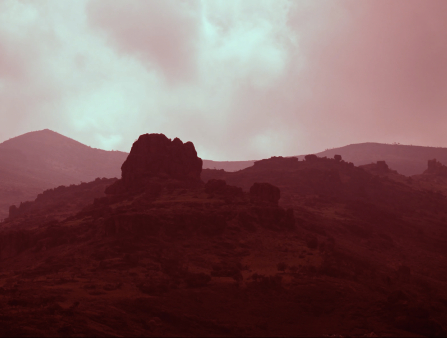
VP: There’s a spectrum from really very subtle technical use that I, even as an experienced viewer, cannot detect to those that really probably wouldn’t exist without the idea of AI, like End of Times [dirs. Juan David Cárdenas and Bibiana Rojas, 2026] for instance. Or The Recce [dir. Daniel Mann, 2026], would probably exist, but not in the same form. In The Black Box is Orange [dir. Yuula Benivolski, 2026], you don’t really see it. And in Morro Grande [dir. Isabel Joffily, Rita Toledo, 2026], if they tell you they used it, then you can understand, but it could have plausibly been a real photo as well. So either way, it doesn’t, to me, take away from the film that the AI was used, only just the fact that AI was used.
IAF: The thing is that often the films we watch don’t have credits yet, because they haven’t had the post-production done. So one of the things that I find interesting is the transparency: Are they all putting it in their credits?
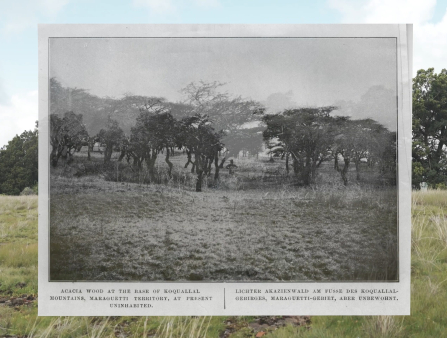
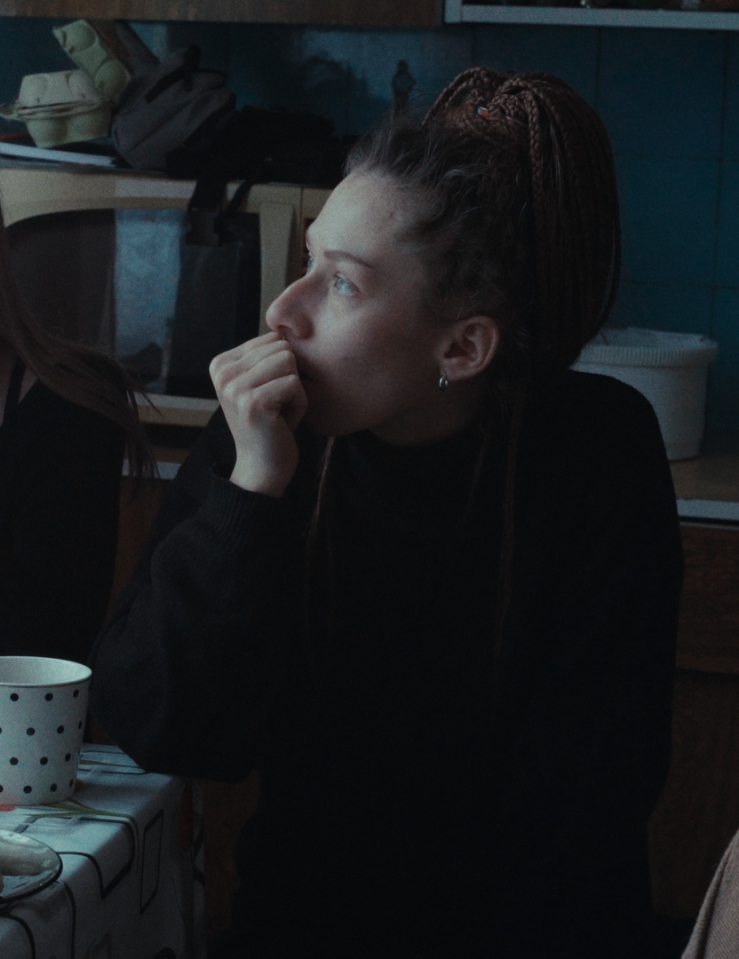
The Recce.
D: How important is it for audiences to understand what they see?
VP: If you asked me this question three months ago, I would have said that knowing that AI was used would be off-putting to me when watching a film. Since I saw that we included this question and started seeing shorts that used it, I realized it makes no sense to have such a complete rejection of AI as a tool. But through the process, and also talking to filmmakers and Michala Pnacek(ova) with her project that this is a big responsibility. If you are using AI, there should really be a good reason for this. I was completely rejecting it. But then it proves to be very useful and helpful sometimes. It’s not just films. It’s the way we see the world; it is one part of the larger conversation of the place of AI in society, the economy, and so on. So, for instance, I’m a little bit afraid of this slippery slope of AI, because if it’s becoming very common, and then if we disregard it and say it doesn’t matter if AI is used, then I feel it’s irresponsible, and it could be dangerous.
Films are just a small piece of a larger picture, but they are important because people watch them, and they have a relation to what they see on their screen, and then they have a certain understanding of the role of AI in the whole thing. And then [the question is] how to position it toward the audience. If you put it at the beginning of the film, how does that shape the viewer’s reaction? Do they believe now it’s all fake? Or if you put it at the end, will anybody stay for the closing credits to see it? Or if you put it on one particular scene, well, you’re messing with the filmmaking.
IAF: For me, it was going back 20 years ago, when setting things up started to be used in the documentary genre. Directors sometimes would ask characters to walk through the door again because they missed the shot, and would even go further than that. That ignited a lot of conversations about fact or fiction: Is it real? Is it not real?
The conversations around ethics are always there. Not only in what is being produced, but also in holding an organization like IDFA accountable. Where is your political stance if you show these films? How do you protect the film? All the other consequences can be big, or will be even bigger.
Last year, the winner of our Envision Competition was a film called Past Future Continuous [dirs. Firouzeh Khosrovani and Morteza Ahmadvand, 2025] that was completely directed. [The film follows] an old couple in Iran living in their apartment, watched by their daughter through security cameras, because the daughter fled Iran and is in the US. She feels the distance and her parents getting older. In each room, there is a security camera, so you see them dance in front of it so she can see it. In the Q&A, people find out that it’s based on real experiences of many people who have had to flee—of families being torn apart. But also that the whole film is a setup. It’s scripted, in a way. We received letters from audiences, not huge amounts, but several, saying, “This is not a documentary.” People felt tricked, in a way.
I relate to it personally because my father and my grandfather lived in another country too far away, with an ocean in between. It was one of the most beautiful documentaries I saw last year that really touched me deeply, and I didn’t care about all this. It was the feeling that it was portraying.
The thing about “tricking audiences” is always there, but the transparency has to be clear. So, to your point, maybe we should think about adding a question to our entry form: “Will you include the use of AI in your end credits, or in your credits?”

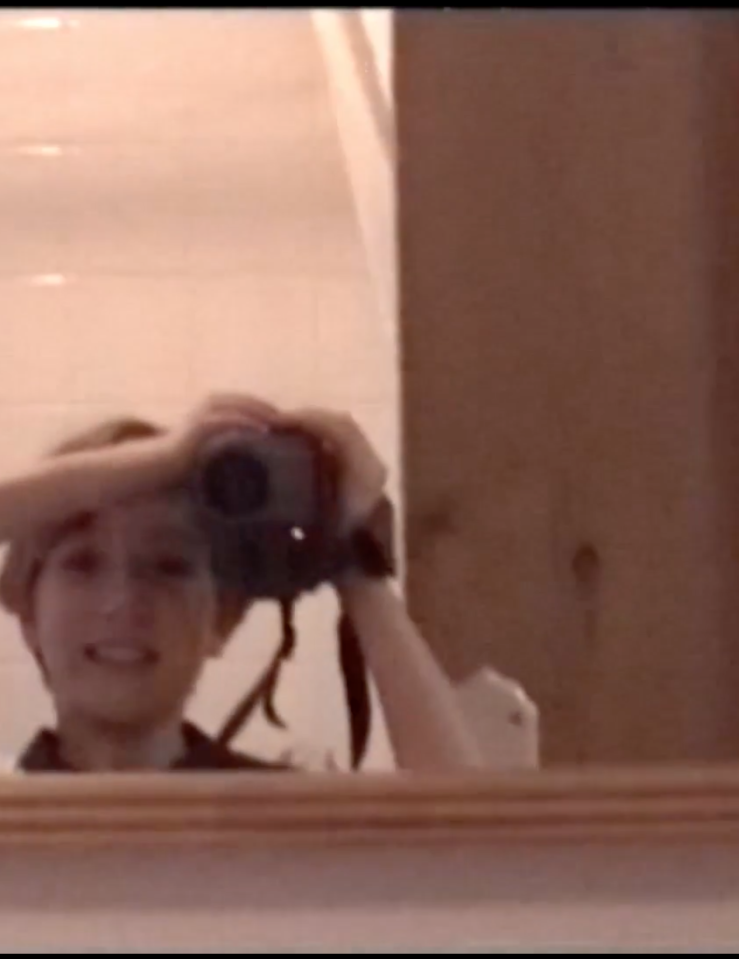
The Black Box is Orange.
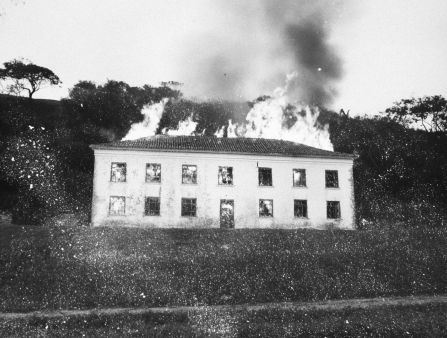
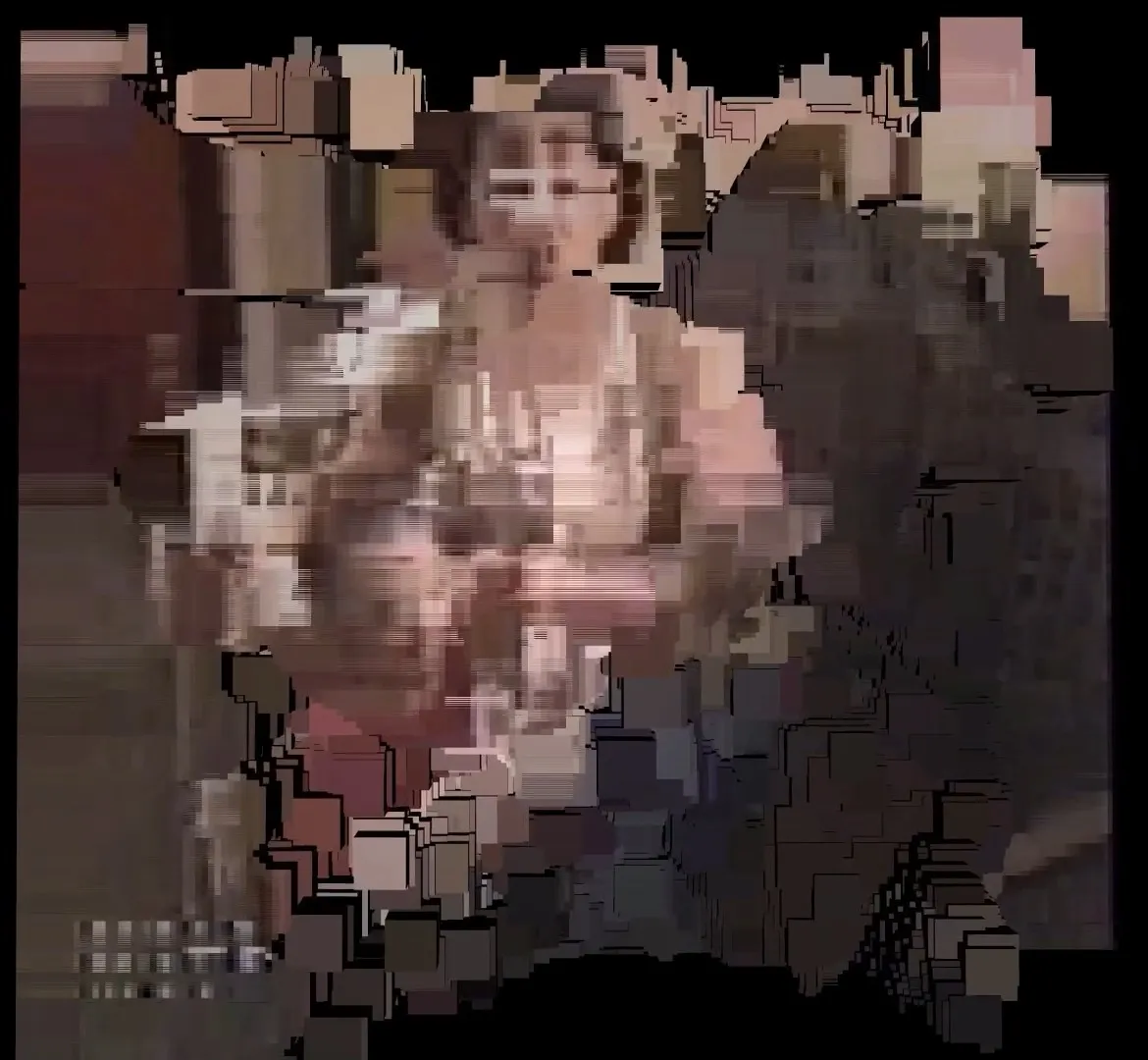
Morro Grande.
D: Or how will you disclose AI use to audiences?
IAF: Yeah, maybe that’s better. How will you decide? Just also to get people thinking about this, because that’s the slippery slope Vladan is talking about.
D: It is a question of public trust. Increasingly, AI is being integrated into every tool that a filmmaker might use. Adobe Premiere, the number-one software for documentarians, uses Assistive AI.
IAF: I don’t know for how long, but I am still holding on to the thought that we will sense that use and that it will not make it a better film. I mean, how will it work? What will come out of this that still surprises us, that makes you leave a cinema in awe? I don’t believe that is possible. Vladan, do you believe that’s possible?
VP: No, I mean, there are so many branches that this point can lead to. As viewers, we are used to a certain thing we call rhythm in a film. So AI software fed with enough films will easily replicate this rhythm. The fact that it’s integrated into everything—we don’t really have an option to opt out of AI.
IAF: But I would almost call it laziness. Our brain cells will stop making connections.
VP: We are users of it, but we are also prisoners of it.
D: This context is demanding, perhaps, a new cinematic language and new tools for documentarians to invent?
IAF: One of the things that I think really goes side-by-side with that, or along with that, is the transparency, also, in the AI use.
IDFA is holding two panels on AI this year: “End Times — AI and documentary” and “Is AI stealing my documentary? – Issue of licensing to AI companies.”