

In 2025, I set myself a challenge: to stop flying for 12 months and reduce my air miles from 66,000 a year (106,216 kilometers) to zero. For my health, for the planet’s health, and to change the way I live and work. I wanted to spend more time with my husband and to feel rooted in our new home. What kinds of opportunities and changes might emerge from creating gaps and opportunities in my work commitments?
My main goal was to stay connected to terra firma. A grounding in the real sense of the word. No more sprinting from one side of the world to the other and popping up in far-off cultures before I feel I’ve fully arrived. (An Indigenous filmmaker from Peru once told me he believed his soul took two weeks to return from Paris, even though the flight took less than a day.) No more stale plane air and navigating over-heated, consumerist-focused airports. This was about doing things not because I can but because I consciously want to, and learning to stop saying “yes” too readily.
As an editorial consultant for the London-based yet global documentary fund The Whickers, my job has for years depended on crisscrossing the world to attend film labs, markets, and festivals. Choosing not to travel by air for a year would be challenging and require some necessary sacrifices. But I hoped it would illuminate how the documentary film industry could embrace and nurture greener possibilities.
To accurately assess the impact of this decision, I kept track of all my travel and worked with sustainability consultant Clare Lindsey to create a carbon scorecard for my year. My carbon emissions data is published below to show the real difference we can make by changing the way we do things.
What Did a “No-Fly” Year Really Mean?
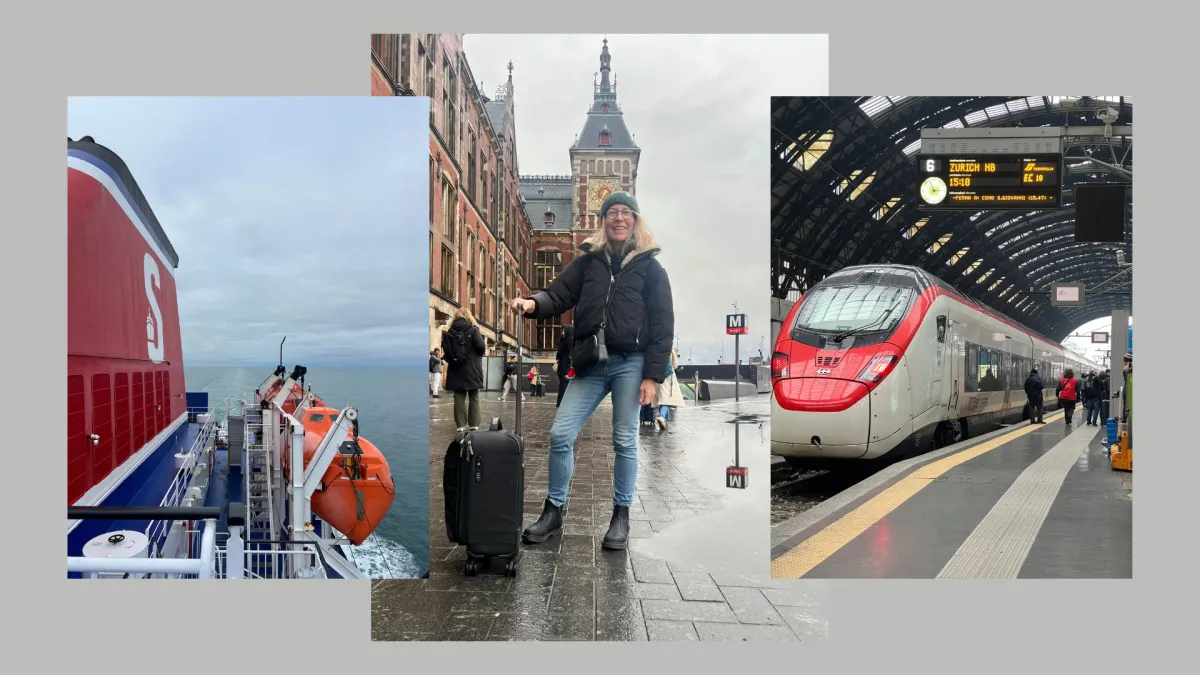
Well, it has been a challenge—logistically, financially, and mentally. I started the year attending When East Meets West in Trieste, Italy. The plan was to combine the business trip with some leisure time spent with my husband. We took the slow route from our home south of London in England to Basel, then to Milan and on to Trieste, stopping at Zurich on the way back. I organized the trip through a specialist train travel agent called Byway, which made it effortless but more expensive than booking it myself. It cost me £795 (US$1,090) to travel there and back, including the hotel stays en route. My travel stipend for attending the market was €200 (US$240), the price of a flight. However, we were rewarded with the fun of seeing new cities, driving through the Alps, and enjoying great food around the stations.
The next challenge emerged unexpectedly. I needed to visit The Whickers’s new finance team in Jersey. For each of my colleagues, this meant a one-hour, round-trip flight costing £50 (US$68). In mid-February, winter ferry schedules and high winds made it a different story for me: a 10-hour boat journey each way with an overnight cabin needed for the return, at a cost of £199 (US$272). However, good Wi-Fi meant I had lots of time to shortlist applications for The Whickers’s Film and TV Funding Award, something I would otherwise have done at home. Plus, I had a magical view of Guernsey by moonlight from the boat.
Throughout the spring, I learned how to book trains, use Interrail, take deep breaths, and go with the slower flow rather than fight it. Instead of relying on the nonexistent train Wi-Fi, I also set up work that could be done on those long journeys. I traveled to FIFDH, the International Film Festival and Forum for Human Rights in Geneva; to Visions du Réel in Nyon; to a Whickers meeting in Nice; and then to Copenhagen for CPH:DOX. That was a big one. It takes two days each way from the South of England, with a stop in Köln each way and a change in Hamburg on the second day. When my train arrived just six minutes late for the Hamburg connection, I had to hang around for two hours, waiting for the next train to Copenhagen. I’ve heard many of my European film colleagues complain about the unreliability of Deutsche Bahn (DB). Luckily, DB only let me down this once. I’ve had more delays at airports than in any of my 2025 train travels.
On my return leg from Hamburg to Köln, a long-lost German pen pal, Elke, contacted me out of the blue. When I realized my train went through her hometown, Münster, I got off the train for two hours to meet her. We walked around the walled city, relishing our impromptu catch-up. Then I hopped onto the next train to Köln. That is not something you can do when flying!
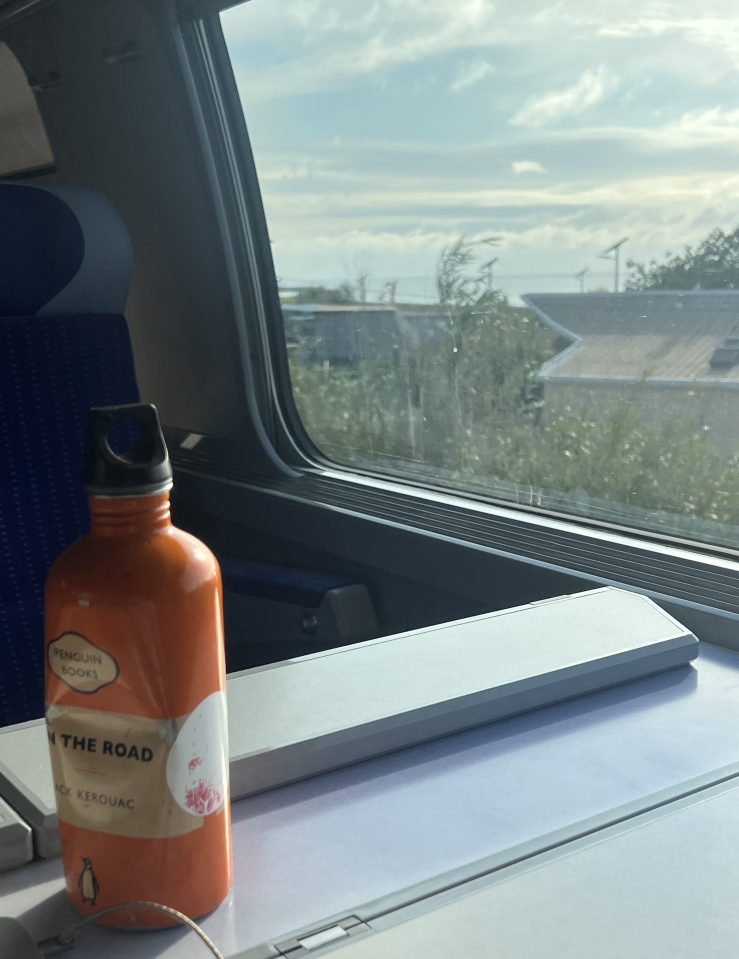
On the Road-themed water bottle on a train.
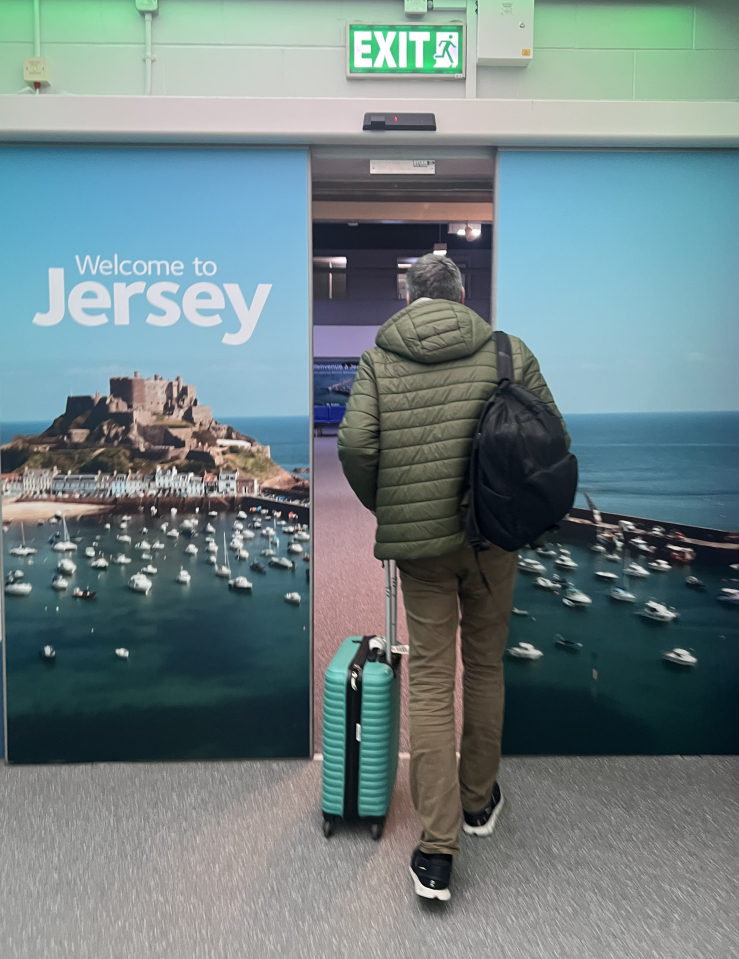
Ports of Jersey.
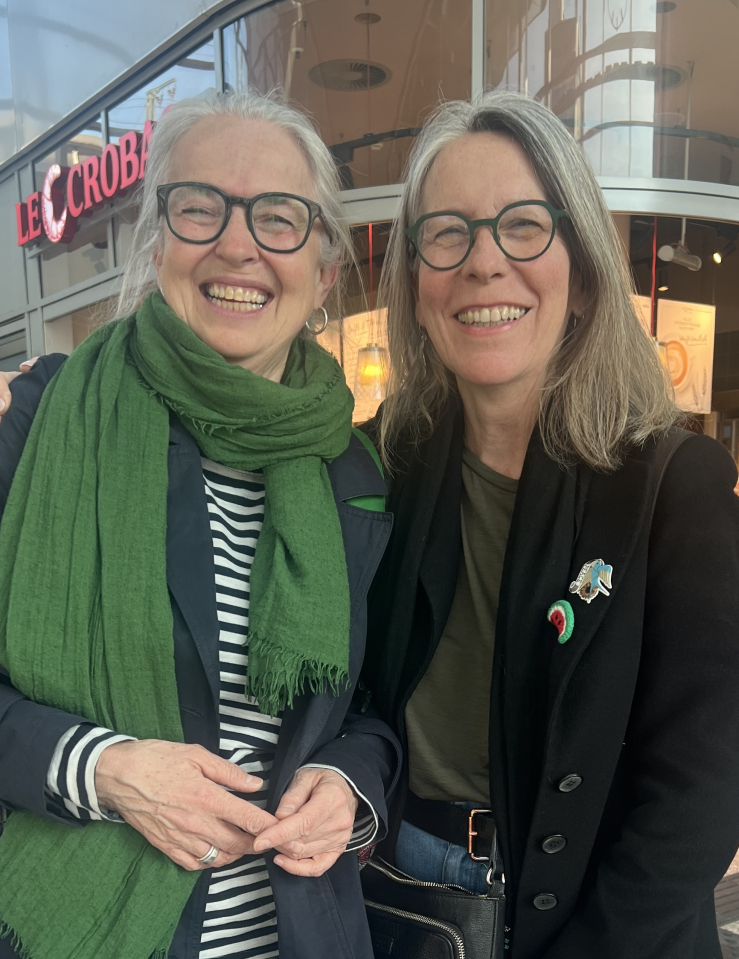
Jane and pen pal Elke Wenzel (L) in Munster.
DocsBarcelona in May, where I was a Campus tutor and industry representative, was my favorite trip. This was month five, and I had become an expert in navigating from Gare du Nord to Gare du Lyon in Paris. I knew all the best places to eat and drink at both stations. Traveling south, I enjoyed a six-hour, 40-minute trip through France along the Mediterranean coast, with the snow-capped Pyrenees in sight. I sat on the top deck of the train, gazing out the window frequently to take in the beauty and enjoy the dramatic change of landscape. I loved the ebb and flow of passengers getting on and off, with their clatter of luggage and platform chat. I arrived in the heart of the city within easy reach of my hotel. I completed the return leg in a day, departing Barcelona at 8:00 a.m. and arriving back at my small countryside station in Berwick, East Sussex, at 8:00 p.m. I felt connected to every mile and every new scene outside my window. The team at DocsBarcelona handled all the bookings for me, too, without questioning my decision to take it slow.
There were many journeys I didn’t make last spring/summer because I couldn’t get there. I was asked to mentor at the new Kathmandu Doc Lab and pitch in Nepal. Following my declined invitation, the founding director, Alok Adhikari, decided to rely solely on the huge talent of filmmakers from South Asia to be on-site mentors. And I agreed to mentor these mentors online as extra support for their work. This was an instance where my no-fly year prompted a more sustainable, decentralized (and replicable) model for the future.
After traveling to the Edinburgh Pitch by train and on to Sheffield DocFest in June, that was it for summer travel. Now I had time to tend my garden and catch up with friends and family, in between taking meetings, pitches, and workshops—all online.
My first autumn trip, in October, was to EURODOC25’s final session in Cork. It doubled as a mini break with my husband and the new fellow in my life, our rescue dog, Jack. We drove (in our electric car) through Wales, stopping off to see friends and family, before taking a ferry from Fishguard to Southern Ireland. We based ourselves in a cottage near the sea, from which I traveled to attend the three-day industry session at EURODOC. We managed to get back from southeast Cork in a single day. We left early, catching up on sleep on the ferry, then tag-teamed the long drive home.
Next up was DOK Leipzig. By month ten, that journey was water off a seasoned train traveler’s back and manageable (just) in a day’s travel each way—all booked by the fest’s lovely industry team. No Chile Conecta for me in December, for obvious reasons. My travel stopped in late November with the Eurostar to and from Amsterdam for IDFA.
The previous year, I read a statement to the industry from the East Africa Screen Collective, which called on funders, festivals, and organizers to give them a greater stake in the industry; to decolonize the power base. That had stayed with me. Throughout my year of no air travel, I realized our absence could create opportunities for others.
What Did the Scorecard Look Like?
I turned down 15 invitations to markets. Saying “I am not flying this year” is a bit like refusing a drink for religious reasons: people don’t push it. I attended two new markets that were closer to home and managed to attend five virtually in total. Thank you to AIDC – Australian International Documentary Conference, Dhaka DocLab, Kathmandu Doc Lab, CIFF – Camden International Film Festival, and Nordisk Panorama for making that possible. A couple of the markets I declined to attend were picked up by others in The Whickers team, and we sent our apologies to several others.
Beyond my concern for greening my travel and the need to feel more grounded and reduce my air miles, a more radical thought ended up driving this experiment of mine. The previous year, I read a statement to the industry from the East Africa Screen Collective, which called on funders, festivals, and organizers to give them a greater stake in the industry; to decolonize the power base. That had stayed with me. Throughout my year of no air travel, I realized our absence could create opportunities for others. We decided to create new Whickers ambassadors employed from global majority countries.
When I first explained to Magdalene Reddy, the director at Durban FilmMart, that I would not be at the 2025 edition, her face fell. When I said Sam Soko, one of our valued Whickers judges and producer of our first African winner, No Simple Way Home (2020), would be in the hot seat, she smiled from ear to ear. Similarly, Mandakini Gahlot, the Indian producer of our winning film Camels of the Sea (2024), shadowed my colleague Jane Ray, presented our bursary winner at DocedgeKolkata, and will be our sole representative there in 2026.
At The Whickers, we are committed to changing how we manage our other two bursaries to ensure greater regional representation. We are also now recruiting preselectors for our main fund from different parts of the world. Opening our processes to fresh influences and thinking will make us more accessible to new storytellers, help us source new talent, and enable us to be truly global in our reach.
Let’s look at the hard statistics now. I significantly reduced my carbon emissions. The trips I took by land and sea emitted 283kg CO2e (or Carbon Equivalent) versus 2,074kg CO2e if I had flown to the same places. My impact was only 13.7% of what it would have been otherwise. If I had also taken long-haul flights to the markets I usually attend, my miles traveled would have risen to 55,234 miles (88,889 km)—up from 12,032 miles (19,364 km), and my footprint would have risen to 10,709kg CO2e, making my actual impact this year only 2.6% of what it could have been.
Forcing myself to work and travel differently brought into sharp focus whether I needed to be present or not. It changed my perspective on work and travel, embracing the slower pace as an opportunity to create space for thinking, writing, planning, reading, and watching films. It also made me recognize that our industry has a long way to go to make it easier to be ‘green.’
The planet benefited greatly. My back pocket did not. My trips were more than three times more expensive than flying. Trains cost more, and overnight hotels were needed on many routes when events finished too late to return that day.
The biggest increase was in travel time. It took me over 30 days to travel by train and ferry to my various destinations—including stopovers en route. Flying would have cut that drastically to just 10 days. Booking my own rail and ferry journeys was complex and time consuming. However, because I didn’t take any long-distance journeys, and my husband joined me on two longer trips, I still spent more time with him than in 2024.
Most markets or events understood that trains would cost more, and those who invited me met the difference. Others could only reimburse me with the cost of a flight, usually less than half of the cost of the train, as aviation fuel is subsidized. I often had to pay out of pocket for the extra hotel accommodations I incurred. Reducing the number of international consultancies I undertook also reduced my income.
I know I am privileged to live in Europe, where it is possible to reach many major markets by train and ferry. I can also afford to turn down income and spend more time traveling slowly. This is not an option open to many others. But forcing myself to work and travel differently brought into sharp focus whether I needed to be present or not. It changed my perspective on work and travel, embracing the slower pace as an opportunity to create space for thinking, writing, planning, reading, and watching films. It also made me recognize that our industry has a long way to go to make it easier to be “green.” Not taking (or providing) a tote bag or printed catalogue won’t make a significant difference in addressing climate change. It will take more fundamental changes than that.
The proof of concept will come in 2026. Wherever possible, I will choose train travel over flying; the carbon cost is significantly higher by air. I hope markets will continue to offer online alternatives, which makes it easier to spread our engagement with filmmakers without the associated travel costs. The Whickers will outsource and increase the number of our ambassadors worldwide to make us more relevant and connected. We will also vary our attendance at markets. I want to learn to say “no” more often to work that could be done online or by others who would benefit more.
But this should not just be a one-off experiment that affects only my organization and me. With any luck, it will help others in the industry reappraise their choices about travel and work. We all have the potential to reduce carbon emissions, and doing so intentionally opens up opportunities to rethink how we can empower a more sustainable, decentralized approach to making and supporting documentary filmmaking. Meanwhile, I have my vegetable-growing plans sketched out for 2026, and I’m hoping, as much as possible, to keep my soul grounded and open to the green futures we can sow together.
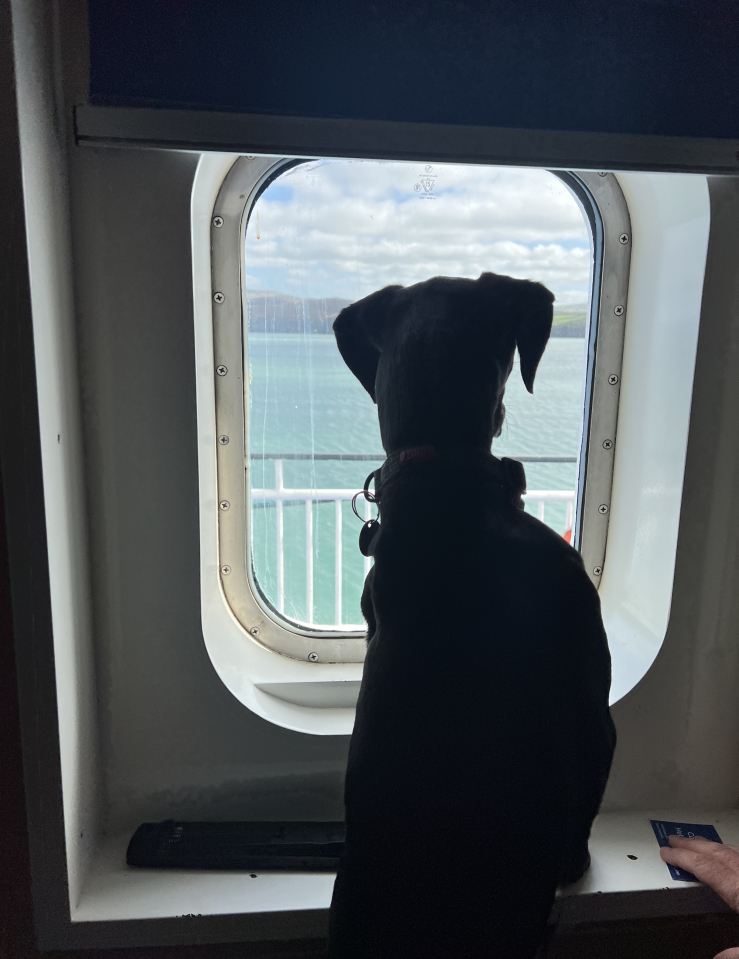
Jack looking out portal.
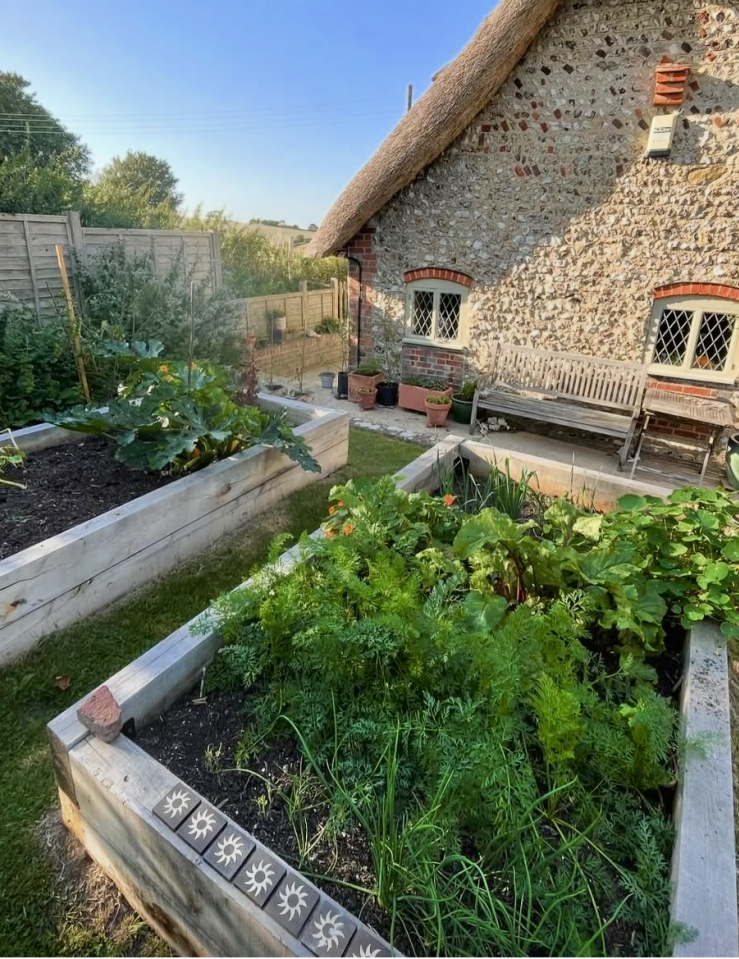
Jane’s raised vegetable beds, kitchen garden.
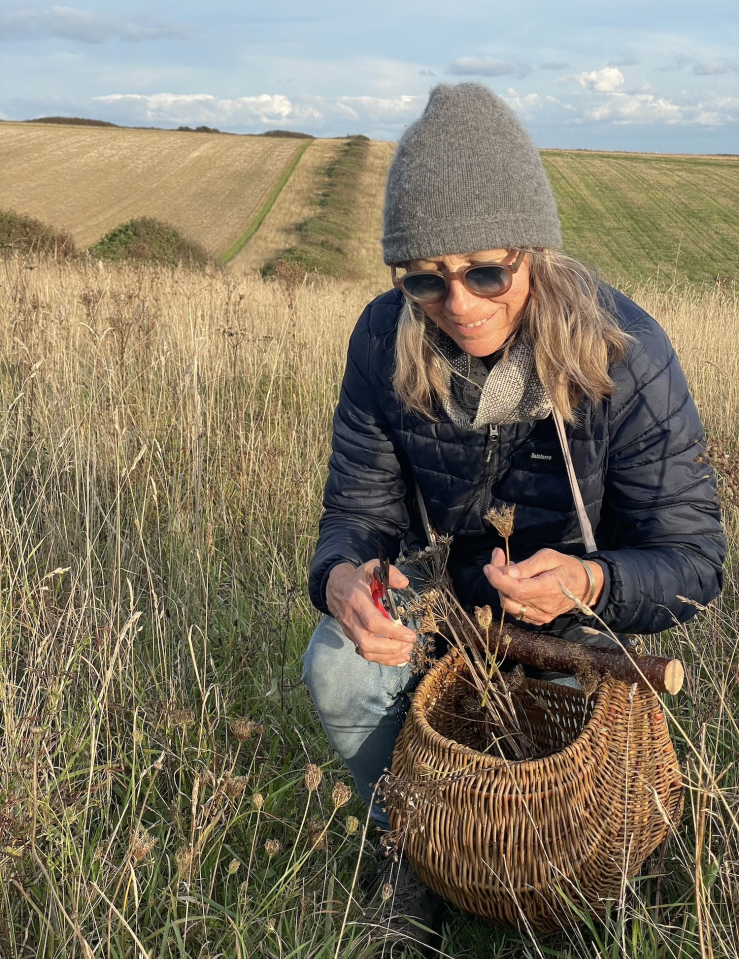
Jane collecting wild flowers.
Methodology Used for This Article
Carbon emission data calculated by sustainability consultant Clare Lindsey using UK government emissions data (see details below). Rough calculations can be done on https://travel.routezero.com/search, but there’s no clarity of calculations behind the numbers.
Context
Brander, M., and G. Davis. “Greenhouse Gases, CO2, CO2e, and Carbon: What Do All These Terms Mean?” Ecometrica: Whitepaper, 2012), pp. 2–3.
Carbon dioxide equivalent or CO2e is a term for describing different greenhouse gases (GHGs) in a common unit. For any quantity and type of greenhouse gas, CO2e signifies the amount of CO2 that would have the equivalent global warming impact.
GHGs occur naturally in the Earth’s atmosphere, but human activities, such as the burning of fossil fuels, are increasing the levels of GHGs in the atmosphere, causing global warming and climate change. The Kyoto Protocol is an international treaty for controlling the release of GHGs from human activities, and the GHGs controlled under the treaty are shown in the table below. Often these GHGs are referred to as the “Kyoto gases.”
It’s worth noting that different greenhouse gases last in the atmosphere for different lengths of time, and they also absorb different amounts of heat. The “global warming potential” (or “GWP”) of a GHG indicates the amount of warming a gas causes over a given period of time (normally 100 years). GWP is an index, with CO2 having the index value of 1, and the GWP for all other GHGs is the number of times more warming they cause compared to CO2. For example, 1kg of methane causes 25 times more warming over a 100-year period compared to 1kg of CO2, and so methane has a GWP of 25.
| Greenhouse Gas | Global Warming Potential (GWP) |
|---|---|
| 1. Carbon dioxide (CO2) | 1 |
| 2. Methane (CH4) | 25 |
| 3. Nitreous oxide (N2O) | 298 |
| 4. Hydrofluorocarbons (HFCs) | 124-14,800 |
| 5. Perfluorocarbons (PFCs) | 7,390-12,200 |
| 6. Sulfur hexafluoride (SF6) | 22,800 |
| 7. Nitrogen trifluoride (NF3) | 17,200 |
Emissions Factors
To calculate CO2e, governments and businesses make use of Emissions Factors (EFs), to best estimate the amount of carbon any specified activity might be responsible for. These factors are usually based on Life Cycle Assessments (LCAs), which systematically quantify environmental inputs (energy, materials) and outputs (emissions, waste) across a product’s or activity’s entire life, from cradle (raw materials) to grave (disposal). Assessments are generally standardized with ISO14040/44.
The UK Government, specifically the Department for Energy Security and Net Zero, releases new Emissions Factors each year to accommodate changes to Emissions Factors due to new research and the specificity made available. The Emissions Factors used for this calculation can be found in the “Conversion factors 2025: full set (for advanced users)” Excel file accessed here.
Assumptions
A set of assumptions has been made for these calculations, which can be found here (in kilometers):
- All flights taken were in Economy Class.
- The ECar used is of an “average size.”
- Where international emissions factors were not available in the dataset, the next most logical EF was selected.
This piece was first published in Documentary’s Spring 2026 issue.