
From August 6 to 16, the 78th Locarno Film Festival transformed the Swiss lakeside town into a hub for global cinema. Within this framework, Locarno Pro (August 7–12) offered a key meeting place for filmmakers, producers, and industry professionals, spanning fiction, documentary, and hybrid forms. For nonfiction creators, in particular, Locarno Pro proved a welcoming space for experimentation and boundary-pushing storytelling, reflecting the gathering’s reputation for eclectic and daring programming.
The 2025 edition opened with StepIn, the festival’s flagship think tank, addressing pressing challenges in contemporary cinema, from technological innovation to ethical storytelling.
Meanwhile, Open Doors continued its mission to champion underrepresented regions, newly focusing on Africa in the first phase of a three-year plan, presenting six feature projects in development, workshops, and an awards ceremony. Emerging producers engaged through Match Me!, while Alliance 4 Development offered co-development support for projects from Austria, France, Germany, Italy, and Switzerland.
Canada was spotlighted as this year’s focus country for First Look, Locarno’s post-production showcase. Six carefully selected films—including documentaries—were brought to industry attention. Documentary projects and nonfiction professionals were present across all programs, highlighting the event’s openness to hybrid and experimental storytelling.
Documentary Highlights and Hybrid Experiments
Headed for the fifth time by Giona A. Nazzaro, Locarno featured a selection of documentaries combining close observation, historical perspective, and thoughtful formal choices, with three titles in particular standing out. In the International Competition, Kamal Aljafari’s With Hasan in Gaza retraces a personal journey begun in 2001, when the filmmaker set out with a MiniDV camera to locate a friend he had known in prison over a decade earlier. Accompanied by Hasan, a local guide whose fate has also slipped into uncertainty, Aljafari records the streets, markets, and beaches of Gaza, capturing children playing by the sea, shopkeepers at work, and elders immersed in card games. These intimate gestures and glances, shot under the shadow of occupation, resonate with both political weight and human dignity, revealing fleeting fragments of a life already precarious yet enduring. The unpolished texture of handheld MiniDV footage—its grain, occasional shakiness, and abrupt cuts—reinforces the film’s urgency, situating memory as a political and ethical act. By returning to these tapes two decades later, the documentary confronts the cyclical nature of loss, the persistence of erasure, and the traces of humanity that survive amidst devastation. In doing so, With Hasan in Gaza transforms personal recollection into a testament to a city and its people, showing how cinema can preserve what might otherwise be obliterated.
After just one year from his endeavor Bogancloch (2024), Locarno regular Ben Rivers visited the Swiss festival with Mare’s Nest, which exemplifies hybrid storytelling and adapts Don DeLillo’s The Word for Snow into a post-apocalyptic poem where childhood becomes prophecy. The film, which scooped the Pardo Verde, follows Moon (played by newcomer Moon Guo Barker) as she clambers out of a crashed car, wanders through barren landscapes, and finally drives away into an uncertain horizon. Along the way, she meets siblings who speak like Shakespearean oracles, a scholar whose words require a child translator, and even confronts a Minotaur roaming the colossal Lithica labyrinth in Menorca. These surreal encounters are punctuated by stark imagery—a gravestone marked with a single handprint, or a tunnel of frozen adults recalling Pompeii—that anchor the film’s reflections on ecological collapse and the fragility of language. Rather than resolve its enigmas, Mare’s Nest turns elusiveness into a storytelling approach, asking whether humanity’s future lies in reinvention, illusion, or quiet extinction.
From the Semaine de la Critique, the Swiss Association of Film Journalists highlighted Dennis Harvey and Lars Lovén’s Celtic Utopia, winner of the section’s Grand Prix. Blending archival footage, contemporary performances, and interviews, the film surveys Ireland’s musical and political history while positioning folk and popular music as instruments of collective memory. It portrays a nation still negotiating its postcolonial identity, unafraid to confront turbulent chapters such as corruption, sectarianism, English rule, and, inevitably, the Troubles. By setting nostalgia against reinvention, the documentary shows how identity remains fluid, continually reshaped by new generations. The notion of a “Celtic utopia” surfaces less as resolution than provocation—a question of whether art can imagine reconciliation where politics has so often faltered.

With Hasan in Gaza. Courtesy of Kamal Aljafari Productions
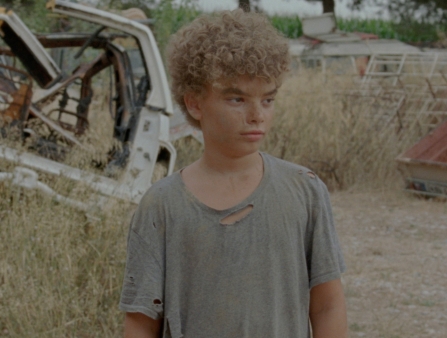
Mare’s Nest. Courtesy of Ben Rivers
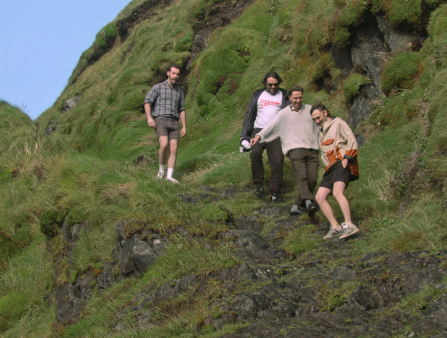
Celtic Utopia. Image credit: Tuva Björk. Courtesy of MDEMC
Producers and Projects
Despite Locarno Pro’s primary focus on launching boundary-pushing fiction works, limited space for documentary projects was still made available. Nonfiction producers seemed quite satisfied with the industry response and networking opportunities. During the Alliance 4 Development showcase, for example, producer Ivan Casagrande Conti presented Solastalgia, Yosr Gasmi and Mauro Mazzocchi’s hybrid feature following Aurora-Hela, an Italian-Tunisian shepherdess navigating ecological and personal upheaval. Casagrande Conti described Locarno Pro: “A truly intense experience. We had meetings with sales, distributors, producers, and festival selectors. Feedback was generally positive, with curiosity around the hybrid fiction/documentary nature of the project.”
From Canada, Audrey-Ann Dupuis-Pierre showcased Sophie Leblond’s First Look entry Lhasa, following musician Lhasa de Sela. On pitching at First Look, Dupuis-Pierre noted: “A privilege. There’s interest in non-traditional forms, and feedback came from European festivals and distributors. We didn’t secure our last partner yet, but the exposure will help.” Filmed across Canada, France, Mexico, and Cuba, and budgeted at €380,000, the project seeks world sales agents, post-production funding, and festival placements.
For this first edition focusing on Africa, Open Doors aimed to highlight authentic African stories, with filmmakers proudly and rightfully retaining creative and narrative control while seeking new European partners. Two intriguing documentaries were included in the final line-up of projects. The first is Erickey Bahati’s The Bilokos, a Congolese-French co-production presented by producer Giresse Kassonga. The film follows Assumani, a former soldier and amputee, leading a small group of outcasts—ex-child soldiers and wounded dreamers—trading sweets for worn banknotes. Their fragile enterprise carries hope amid growing ambitions. Through Assumani’s story, The Bilokos foregrounds humanity, trauma, and resilience, offering a rare perspective on war from those who live it.
The second project, Azata Soro’s Diary of a Goat Woman (Ivory Coast/Burkina Faso), blends live-action footage with abstract 2D animation using papier-mâché, cut-outs, and stop-motion The film follows the director, who, after years in exile, returns to Burkina Faso for her daughter’s baptism, confronting patriarchal expectations and her traumatic past. A self-proclaimed “goat-woman,” she challenges societal norms and wrestles with the values she wants to pass on.
Speaking to Documentary, both teams have expressed satisfaction with their participation at Locarno Pro, mentioning “fruitful meetings” and receiving small grants; however, the concrete impact of their attendance will only be visible in the long run, when the projects are finalized. The next three years will be an important test for Open Doors, which has chosen to focus on one of the most challenging continental markets but can also plant seeds for a future harvest.
Kevin B. Lee on the Future of Reality Conference
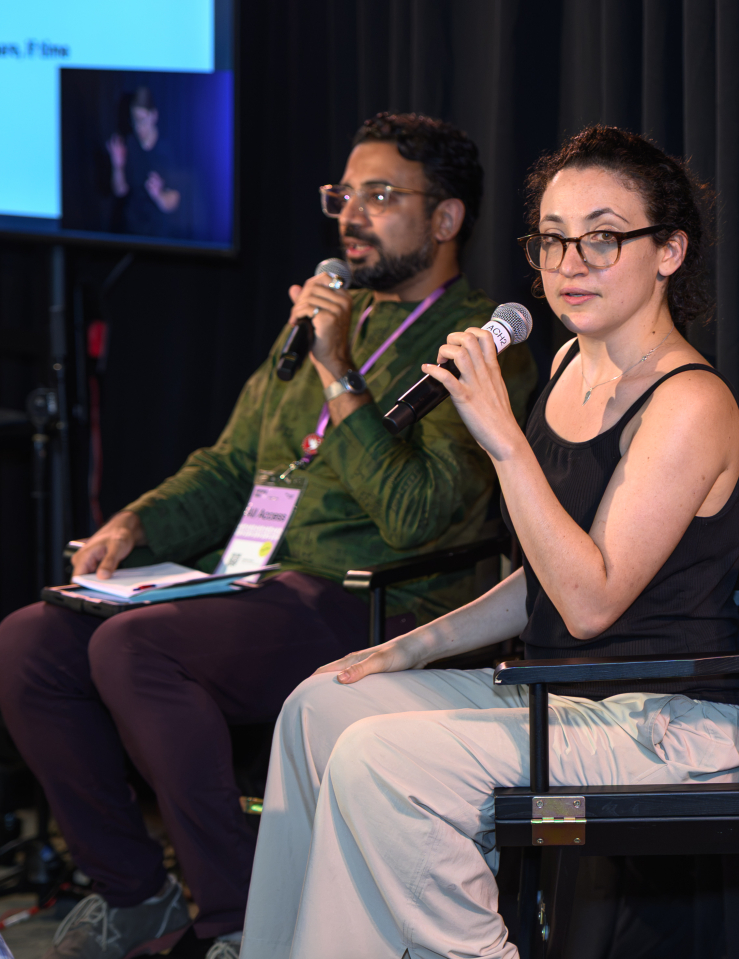
A central highlight for nonfiction practitioners this year was Kevin B. Lee’s conference, the Future of Reality. Lee, who serves as Locarno Film Festival Professor for the Future of Cinema and Audiovisual Arts, articulated the event’s main theme: reflecting “how our sense of the real is being reshaped by technological, ecological, and political forces.” He added, “Everyday life is now inseparable from audiovisual media—whether through generative AI, algorithmic platforms, or digital archives.” Panels, performances, and interactive events unpacked how cinema contends with constructed realities shaped by computational systems.
Lee underscored the conference’s interdisciplinary nature: “Filmmakers, artists, and scholars of different backgrounds came together to present a vivid panorama of the current state of cinematic reality.” On 11 August, for example, the game show “If AI is the Answer, What’s the Question?” saw the participation of Radu Jude, Hito Steyerl, and Antonio Somaini and proved quite successful, with young festivalgoers attending en masse and enjoying the Romanian filmmaker’s playful approach to AI, one of his Dracula’s most memorable features. Other standout moments included the conversation between Philippe Parreno and Véréna Paravel and a talk by Igor Simic, who used 300 slides to map artistic crises. Parreno and Paravel tackled topics such as synchronicity in the digital age, the impact of the camera on observation, and the score of Paravel’s next film, made of “sounds biologically impossible to hear” and recorded through dedicated scientific instruments. Meanwhile, Simic discussed how traditional art forms are merging with digital culture on platforms like YouTube, Fortnite, and TikTok, where the audience becomes the creator and content knows no boundaries—something that certainly extends beyond documentary to cinema and information at large.
Overall, generative AI, algorithmic media, disinformation, and propaganda were major themes, approached as lived realities with ethical and political consequences. What set these discussions apart from panels hosted by other festivals was their format: rather than traditional lectures, they were highly interactive, resembling natural conversations that actively involved BaseCamp students. This mix of industry expertise and academic insight, combined with a friendly, informal atmosphere likely shaped by the young age of participants, gave the sessions a distinctive energy and accessibility.
Evening events at BaseCamp and final screenings of video essays showcased alternative audience engagement. To date, BaseCamp has hosted 200 young talents, aged 18–30, throughout the festival. Over ten days, participants live together and take part in screenings, programmes, and other dedicated activities. Lee described it as “an outdoor communal space capable of generating intimacy and exuberance.” In this sense, BaseCamp can be seen as a looser version of the Industry Academy, with less guidance but much more freedom.
If one were to take stock of the whole conference, they might perceive its overambitious scope, yet still acknowledge that it was inspiring and compelling in parts, particularly when the academic discourse was set aside or better contextualised. For this reason, it probably makes more sense for newcomers or multidisciplinary artists to attend the event in its entirety, whilst filmmakers may prefer to focus on selected sessions that directly involve them or address relevant topics.
The main challenge of attending Locarno as a nonfiction professional is that, although the offer is undeniably broad and includes valuable networking opportunities and public talks, it can be difficult to navigate the programme. Therefore, a thorough review and careful planning of one’s schedule are essential before attending.
Africa and the Global South: Redefining the Documentary Market
Across panels, pitches, and one-on-one meetings, hybrid forms blending fiction and nonfiction continue to gain legitimacy, supported by festival frameworks receptive to experimentation. Within the industry, there is heightened awareness of technological, political, and ecological forces reshaping cinematic reality, including AI and algorithmic media in perception and storytelling.
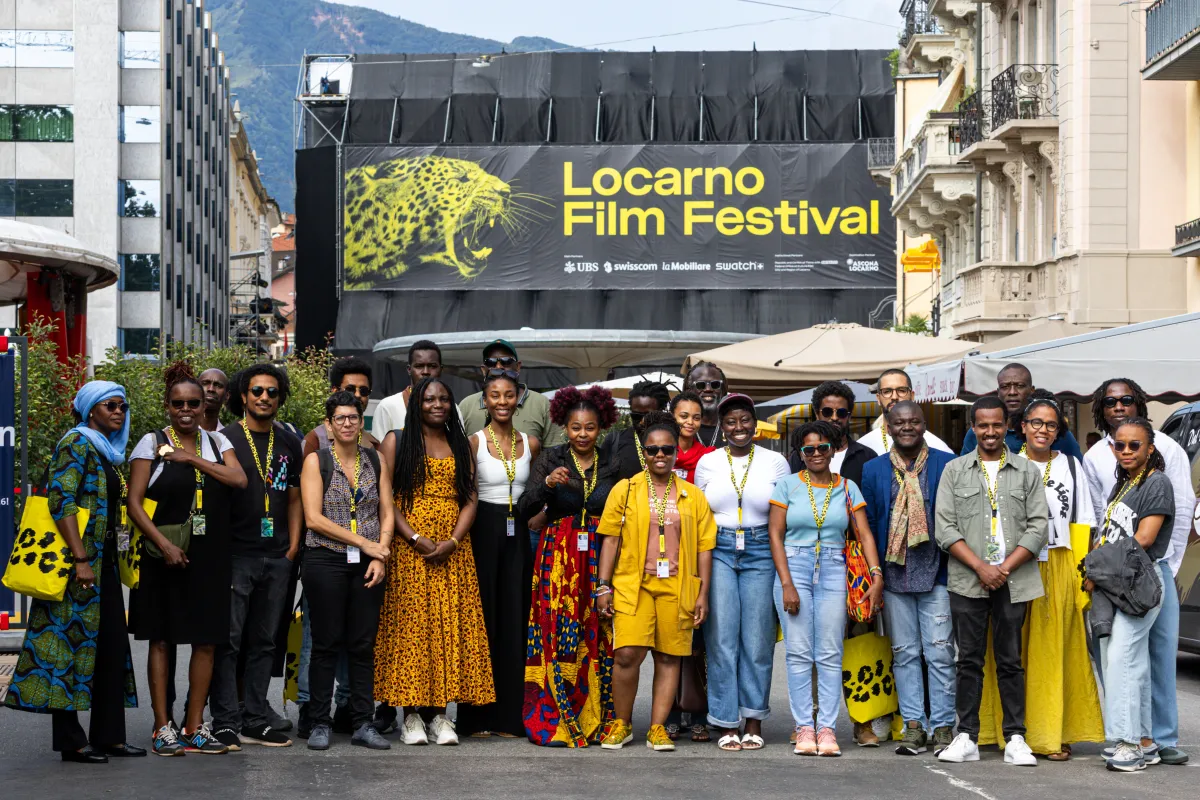
Funding remains a pressing challenge, particularly for Global South and experimental projects. The voices of Global South filmmakers in particular boasted a blend of optimism and pessimism; on the one hand, there’s more pride and confidence than ever before. On the other hand, they also seem to be affected by the Western “doom and gloom” feeling experienced in recent times. Yet Locarno platforms also enable those emerging filmmakers to secure partnerships and visibility. The August 9 panel “Building Sustainable Film Ecosystems in Africa” positioned the continent not as a passive “emerging market,” but as a dynamic industry actively shaping its future. Participating filmmakers (Tshepiso Chikapa-Phiri, CEO of Johannesburg-based Known Associates Entertainment; Ema Edosio-Delen, creative lead of Lagos-based Citygates Film Production; Yannick Mizero Kabano, curator of Kigali’s oldest independent cinema, Cinema Mayaka; and producer of French and Trinadadian descent Neigeme Glasgow-Maeda) highlighted home-grown strategies, vertical integration, self-reliance, and new distribution models, showing Africa is forging its own path toward local and global audiences.
Throughout the festival, audience engagement was addressed through video essays, interactive panels, and immersive presentations, demonstrating alternative ways of reaching public spheres. At Locarno, the combination of hybrid experimentation, technological awareness, and the assertive rise of Global South cinema signals a documentary market that is increasingly diverse, ambitious, and globally interconnected.
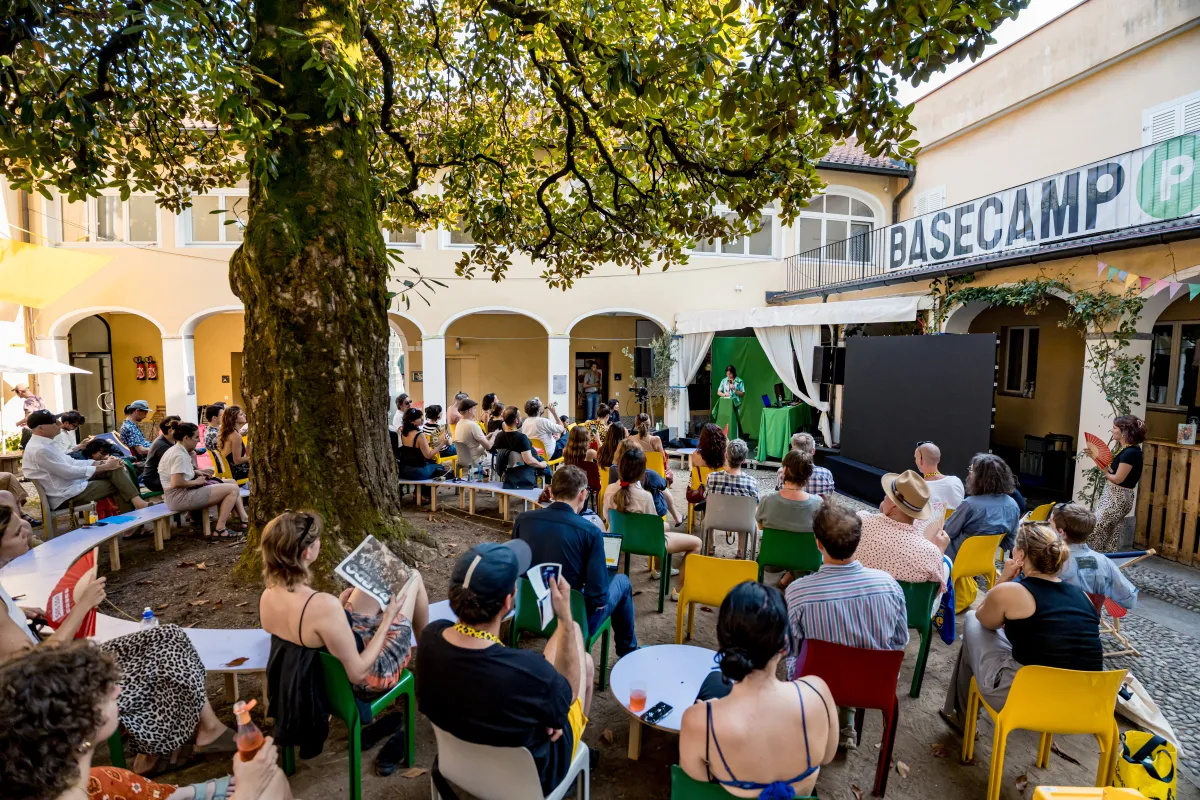
Future of Reality Conference. Image credit: Luca Chiandoni. Courtesy of Locarno