
What’s on My Desk is Documentary’s strand of photo spotlights of the setups that help create the stories of our times. For these pieces, we ask editors in the field for essential tools of the trade and the accessories that help us do our best work.
As I sit in an edit room in Zurich on a bright day this month of June, a soft wind blows in the plane tree across the balcony. The air is quiet; the distant sounds of kids playing and laughing make me feel at ease. I am thinking about the sensations the world imprints on us, physically and emotionally, and how cinema remains a space where we can rekindle these sensations; how, through films, we can be connected to both our sense of wonder about life and ourselves. This connection is at the heart of creative documentary editing.
Making and editing documentary films for over three decades has been a choice about how to live my life and a way to tune in to the world. It is fed by a deep sense of curiosity about people and a disposition toward observing and tracing minute details, habits, and movements, looking at the unseen, and hearing things beyond what our ears are used to hearing. It is a practice of attentiveness, of being present with one’s intuitions.
When I first began making films at film school in Brussels, I certainly could not name these intuitions. I was looking to manifest myself through ideas and cinema. Technique was certainly a stumbling block, as I had learned to shoot and edit on film stock. The technical realities led to an economy of language—or rather, a precision in intention and style.
Later, when I moved to New York in the mid-’90s, lighter digital technology allowed for a more individualized way of making films without a lot of money. These were the early days of the Sony PD150 and Final Cut Pro, which, despite the hiccups, freed many of us filmmakers and editors from the heavy workflow of AVID, its 2-GB drives, and endless nights spent consolidating in postproduction facilities.
A friend built me an edit room in his loft on the corner of 9th Street and Avenue B. My editing set-up has always been minimalist—a bit the same as now, ironically. Back then, a Mac computer, two screens, a good monitor, some drives, cables, good speakers, a keyboard, and a mouse were all it took to edit a film.
In that room, I began editing my own films, and filmmaker colleagues would come to edit theirs with me. This kind of intimate, DIY way of making films has never really left me. It has to do with the practice of hospitality; being an editor means inviting someone into your room, and in turn they invite you into their way of looking at the world.
I have lived in Paris for 20 years now, and I work with filmmakers from around the world. The ecology and technology of our work has shifted. Films now live on small, fast SD drives with 100 hours of footage, and everything is handled in Premiere or DaVinci. Although the editing process has become ever more demanding, it also provides for a lot of mobility and different ways of working.
My commitments as a parent have not allowed me to travel to edit all the films I’ve worked on. Rather, I sit in front of a screen, traveling the world through the images I am entrusted with, while the filmmakers come to work with me. For every new film, I pack and unpack my worn-out monitor boxes, speakers, and cables, and set up my makeshift desk in rented apartments in various neighborhoods around Paris. It always feels a bit like moving in together for long months at a time.
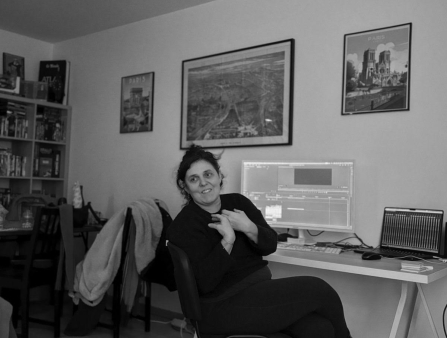
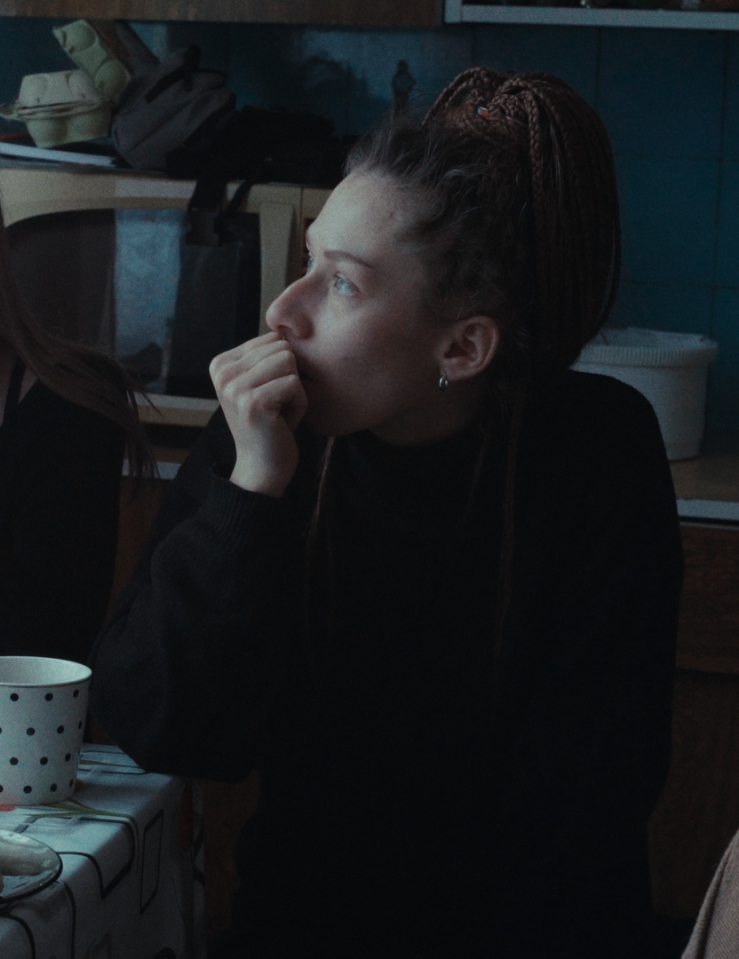
Yaël Bitton starting the edit process on Metropolis in December 2025 at a rented apartment in Paris. Photo credit: Anirban Dutta.
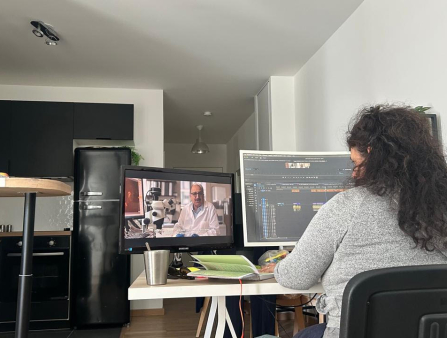
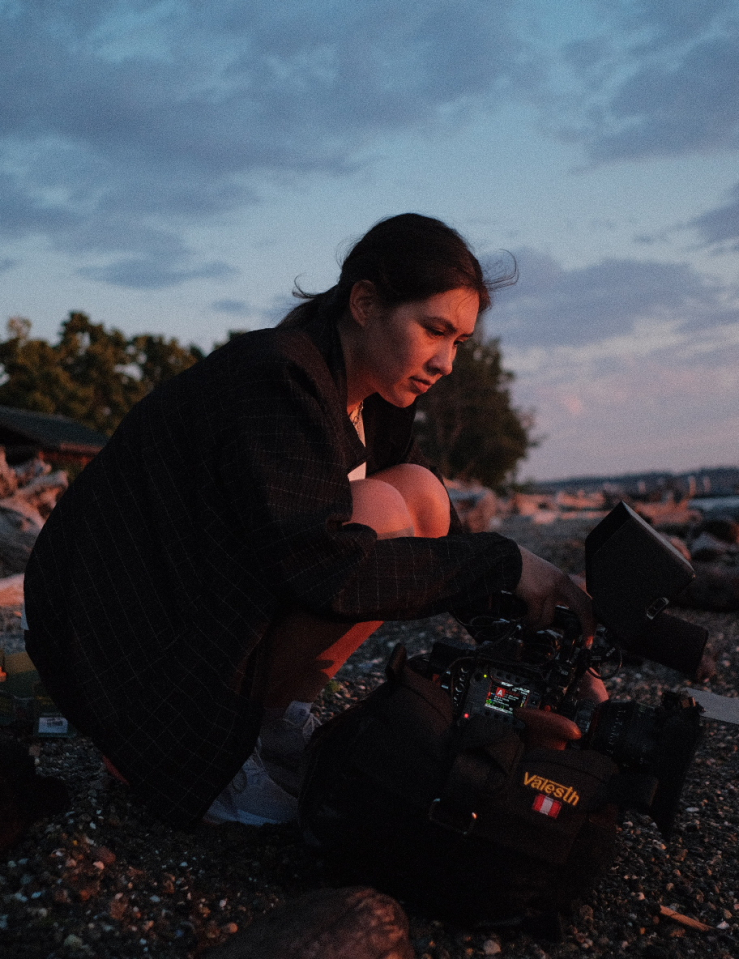
Yaël Bitton editing Metropolis in May 2026 at a different rented apartment in Paris. Photo credit: Anirban Dutta.
During the editing of Nocturnes (2024) a few years back, I shared a living room with Anupama Srinivasan and Anirban Dutta. Together we spent hours looking at moths on clothes in the Himalayan forest, surrounded by the sounds of insects and the most amazing birds, while in the background some delicious potato jalfrezi was cooking. Some two years ago, I set up my system in a house with Natalia Koniarz, the director of Silver (2025), where for many months we peacefully dug into her footage of miners drilling ore in the depths of the earth, in what used to be the children’s bedroom. Last year, with Vahagn Khachatryan and Aren Malakyan, we traveled with cows on a truck in the Middle East while moving the edit room four times in the center of Paris.
I cherish this communal way of making films as a practical philosophy. For every film, there’s a new place, and a new kitchen where we take turns cooking. Eating together is almost as important as editing, during which the process continues, but where silence can exist and kinship can grow. This intimacy allows for a less formal approach to editing as we live with the film in the making. Epiphanies can arise during nap time, taking a walk, or listening to music. It makes the process of unearthing the film from the footage a lot more organic.
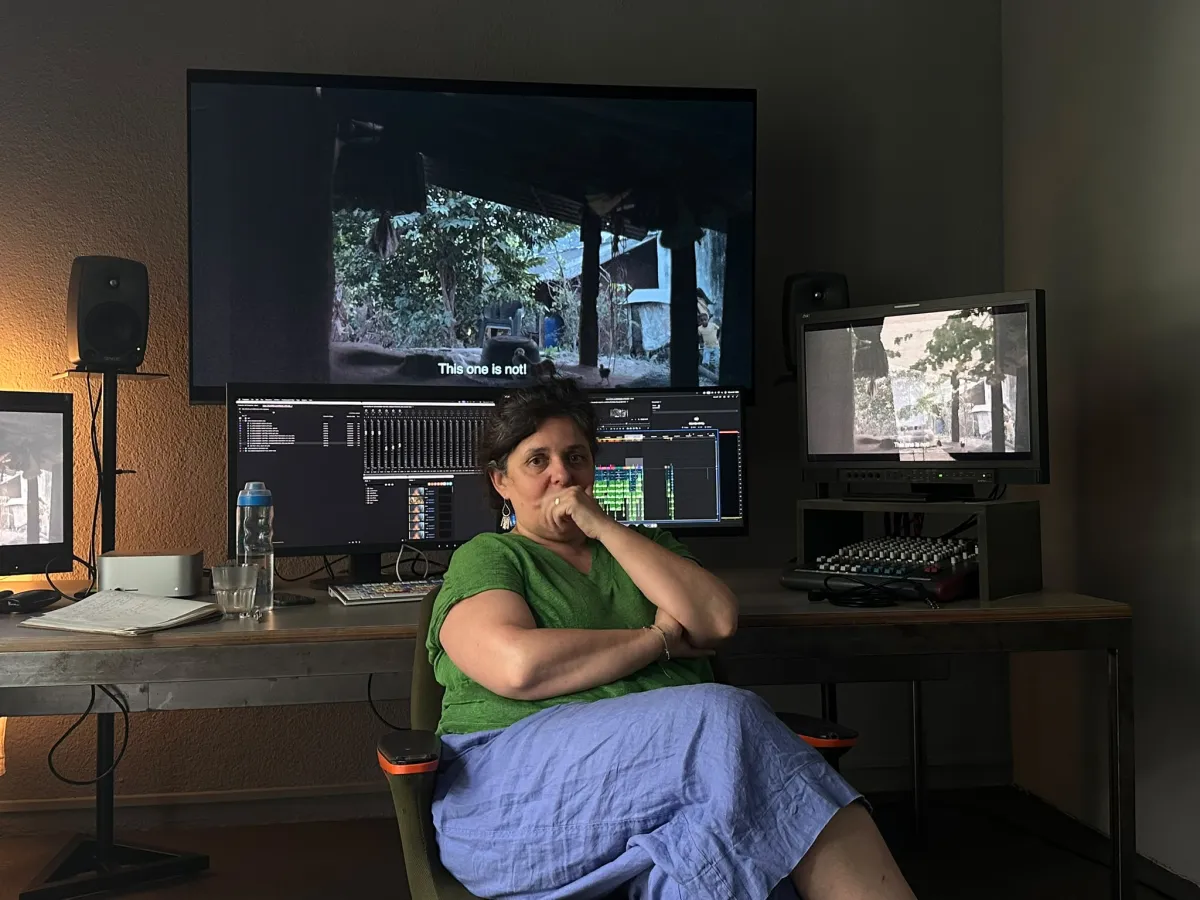
Sometimes, though, I also work in proper editing rooms—like now in Zurich, working with a collective of three women directors—which feels like driving a fancy car, with big screens, a big desk, a mixer, and perfect speakers. I love working with a big wide screen, as it allows the filmmakers and me to see the film as a film. Editing is essentially the mental process of assigning meaning and dramaturgy to an array of visual signifiers, taking them out of our heads and onto the screen.
Regardless of where I’m working, I always have a few MUJI notebooks on my desk to trace the process, as I take a lot of cryptic notes while watching the footage. Writing allows me to remember and track my initial thoughts and feelings. First impressions are key to the truth of the film. I also never part from my trusty 4-color Bic, colored markers, and Post-its for narrative organization and shaping dramaturgy. And I make use of a big whiteboard whenever possible. I also make sure that I have a good chair—spending hours sitting is hard for me—and that the desk height is functional, so discomfort does not interfere with my thinking and concentration.
Also mandatory are a flask of water, some coffee, lots of tea, fruit, some dark chocolate, and almonds as treats.
All these elements are conducive to shaping singular films. The acts of looking, feeling, choosing, selecting, cutting, discussing, and listening are at the core of this practice. For this, a sense of quiet is needed, as well as an inclination toward reflexivity, curiosity, humor, and generosity. The setup is important, yes, but not as important as the relationships and trust we editors and filmmakers foster during the long, arduous process of editing over months of co-living in a single room where films are born.
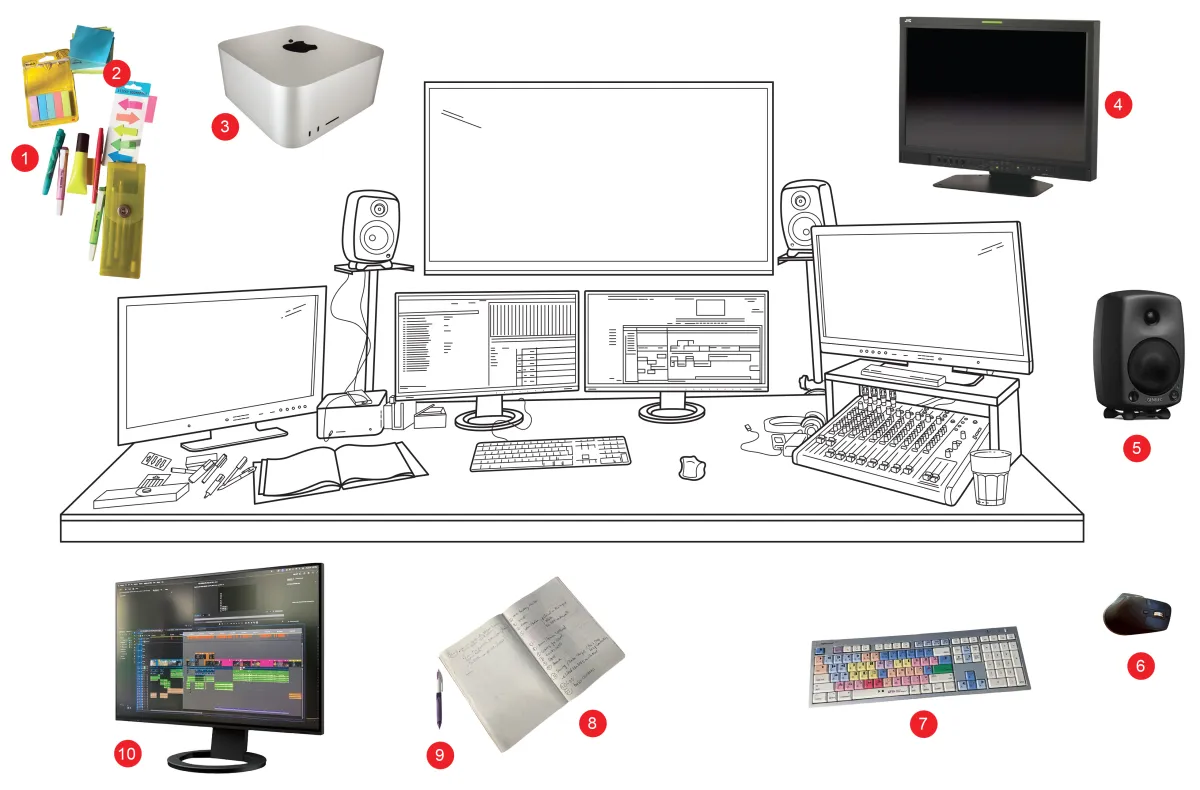
Annotated List
Colored markers
Post-it notes
Mac computer
Two JVC DT-V monitors
Genelec speakers
Logitech mouse
Logickeyboard
MUJI notebook
4-color Bic pen
Two LCD monitors
This piece was first published in Documentary’s Fall 2026 issue.