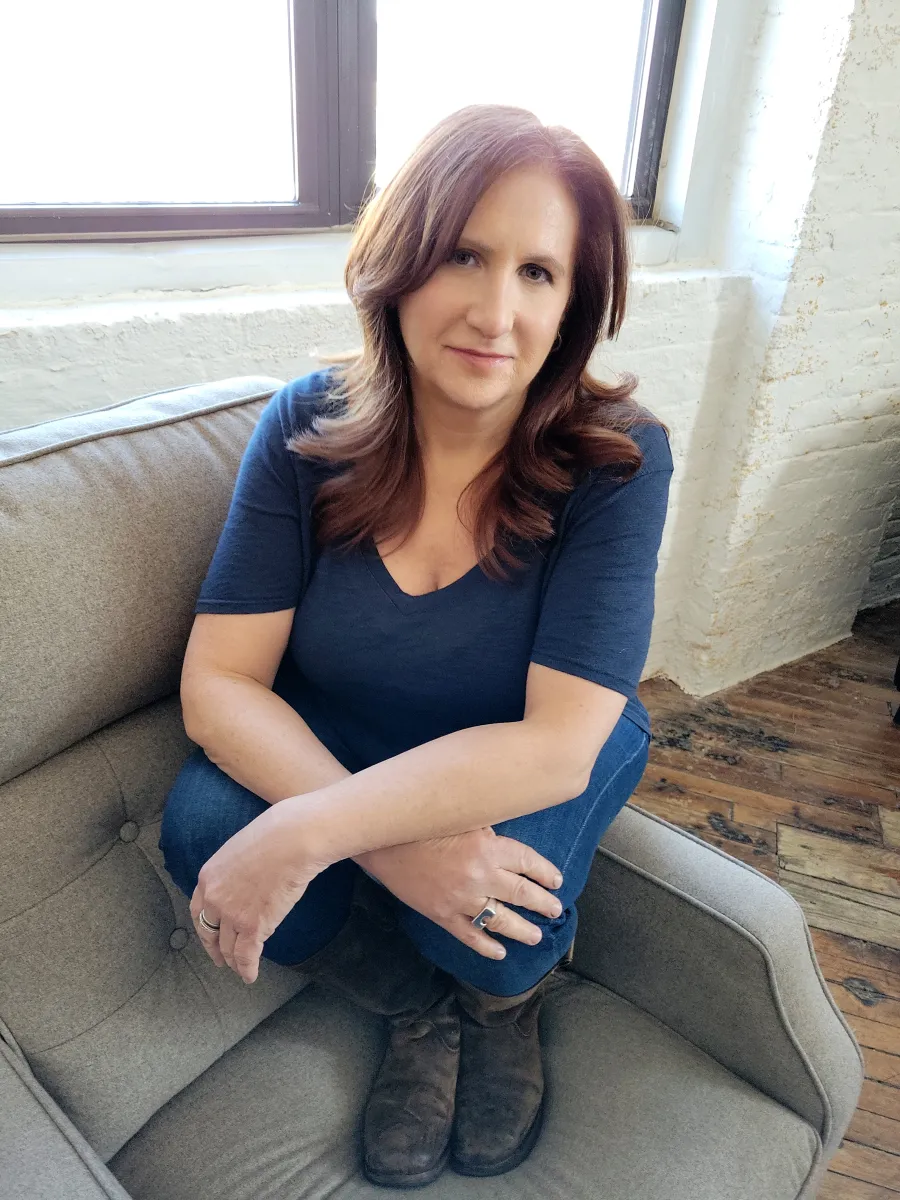
Tia Lessin
Academy Award–nominated filmmaker Tia Lessin is the director and producer, with Carl Deal, of Steal This Story, Please! They made the Hurricane Katrina survival story Trouble the Water, winner of the Sundance Grand Jury Prize and the Gotham Film Award; their Oscar-shortlisted film Citizen Koch explored the extremist takeover of the Republican Party in the Midwest. Tia received three Emmy Awards and the duPont-Columbia silver baton for her work directing The Janes (with Emma Pildes), a film about the underground network of abortion providers in 1960s Chicago.
Tia’s work has premiered at major film festivals including Sundance, Telluride, Berlin, and IDFA. She was a producer of Michael Moore’s Palme d’Or–winning Fahrenheit 9/11, the highest-grossing documentary of all time, his Academy Award–winning Bowling for Columbine, and the satiric travelogue Where to Invade Next, which premiered at the Toronto International Film Festival and the New York Film Festival.
In television, Tia received the Sidney Hillman Prize for Broadcast Journalism for her documentary, Behind the Labels, about labor trafficking of garment workers. She line-produced Martin Scorsese’s Grammy Award-winning No Direction Home: Bob Dylan. And as a producer of the television series The Awful Truth, she earned two Primetime Emmy nominations (and one arrest).
Tia is a fellow of Open Society and the Sundance Institute and a grateful recipient of the Black Lily Lifetime Achievement Award, the Creative Capital Award, the Reel Women Direct Award for Excellence in Directing by a Woman, the Ridenhour Prize, the Women of Worth Vision Award from L’Oréal Paris and Women in Film, and the Woodstock Film Festival’s Art of Change Award.
Tia is a member of the Directors Guild of America and the Academy of Motion Picture Arts and Sciences.
IDA: You have had a long and impressive career. What drew you to documentary, and can you tell us a bit about your background?
TIA LESSIN: I was born in Washington, DC, and raised by two civil servants during the post-Watergate era, so politics was simply part of my upbringing. Ever since I can remember, I’ve been drawn to stories about resistance. In college, I skipped class to watch the Eyes on the Prize series in the library, and later I saw Roger & Me and Paris Is Burning in the theaters. I can’t remember exactly when I first saw Harlan County, USA, but I do remember the impact those films had on me. They changed the way I understood the world and opened up the possibilities of nonfiction storytelling.
Thirty-five years ago, I answered a classified ad and landed my first job in film as an assistant editor on a series of shorts for the Holocaust Museum in DC. It was a turning point professionally and personally. My mother had arrived in the U.S. in 1941 as a refugee. All four of her grandparents, along with more than seventy relatives on both sides of her family, were murdered in the ghettos, slave labor camps, and extermination camps of Poland. Immersing myself in that history gave me a way to begin making sense of my family’s past and my grandmother’s grief.
From there, I went to work for Charles Guggenheim, Davis’ father, who was then making a historical film for the Southern Poverty Law Center. I spent months navigating the National Archives film collection in DC, the film libraries at Fox Movietone News and Sherman Grinberg in New York, and the news archives at ABC, CBS, and NBC. This was before the digital era — collections were cataloged on index cards, we screened footage on Steenbecks and Moviolas, and used a rostrum camera to zoom and pan photographs and newspaper clippings.
When Avids hit the market, I was a quick study and began working in the edit rooms of filmmakers Arthur Dong, Barak Goodman, and on Michael Moore’s nonfiction series TV Nation, where documentary filmmakers like Roger Ross Williams, Pamela Yates, Paco de Onis, and Stanley Nelson were paired with comedy writers to make a new kind of television.
I continued working with Michael and Kathleen Glynn in the years that followed, climbing up the rungs on the producer ladder; we made a lot of good trouble and great films together.
IDA: Can you tell us about Elsewhere films and your collaborations with Carl Deal?
TL: Steal This Story, Please! is the third feature that Carl and I have directed and produced together, though our collaboration really began much earlier. In 2001, I lured him away from broadcast news to work on Bowling for Columbine. And then two years later, we went to Iraq in the weeks before the invasion to document daily life for residents in Baghdad, Basra, and Kerbala before their world was turned upside down. This was the first unofficial shoot for Fahrenheit 9/11.
In the days after Hurricane Katrina, we traveled to New Orleans alongside Amir Bar-Lev, Nadia Hallgren, and PJ Raval to film National Guard troops returning home from Baghdad to rebuild their city. Kimberly Rivers introduced herself to Carl, and that chance encounter set us on a different path. Back in Brooklyn, Woody Richman joined our dream team, and together we made Trouble the Water.
During that time, Carl and I founded our production company, Elsewhere Films, partly as a response to the passes we were getting from commissioning editors. In November 2005, just months after Katrina, we were told there was already “Katrina fatigue.” Others urged us to find a white subject, or at least someone without gold caps on their teeth. We pieced the financing together through small grants and by my moonlighting on music documentaries. After the film was invited to premiere at Sundance, my college friend Joslyn Barnes helped us raise finishing funds.
“Elsewhere” is Carl and my attempt to name the creative space we’ve tried to build for ourselves outside traditional institutions—a place where we can make artistically ambitious, politically engaged, and genuinely risk-taking films. We literally created our own elsewhere.
IDA: Congratulations on the success of Steal This Story, Please! (2026) and your nationwide theatrical release! For those who might not know about the project, please tell us a little about the film.
TL: Steal This Story, Please! is a film about independent journalism, told through three decades of Amy Goodman’s on-the-ground reporting as she risked her safety – and at times her freedom – to bear witness and hold power to account. The story feels especially resonant today, as journalists have become targets of physical assault, civil lawsuits, and even criminal prosecution by a president who has labeled them “the enemy of the people” and as the corporate owners of news outlets have too readily capitulated to these attacks.
In 1991, Amy survived the massacre of civilian protesters in East Timor by the Indonesian military, and her eyewitness reporting forced U.S. broadcast outlets to cover a genocide being carried out with American weapons. In 1998, she documented the complicity of multinational oil companies in human rights abuses committed by Nigeria’s military dictatorship. After 9/11, Amy and her co-host, Juan González reported on the toxic conditions at ground zero, while much of the press took at face value assurances from Mayor Giuliani and the EPA that the air was safe. And in 2016, her footage of private security forces attacking peaceful protesters during the Dakota Access Pipeline protests went viral.
Carl and I worked with editor Mona Davis, drawing on decades of studio and field recordings, broadcast news reports, footage shot by other filmmakers, family home movies, as well as our own contemporary vérité footage. That allowed us to follow Amy’s work as it unfolded in real time — across decades, movements, and front lines around the world.
IDA: Many of us are huge fans of Amy Goodman! When and how did you first start working on this project, and were there any unexpected challenges you faced along the way?
TL: As longtime listeners of Amy’s show — and occasional guests with our films — Carl and I have watched Democracy Now! grow from a scrappy radio broadcast airing out of the attic of DCTV into a multi-platform news program produced in a state-of-the-art studio in Chelsea. Along the way, its audience has grown as well, with more and more people turning to independent journalism as an antidote to corporate-owned news sources.
Over the years, we repeatedly crossed paths with Amy and her team in the field — from the 1999 protests that shut down the WTO meetings in Seattle to the streets of Baghdad in the weeks before Shock and Awe, to the 2008 Democratic convention in Minneapolis. But I really got to know Amy twenty-six years ago at the Republican National Convention in Philadelphia. Democracy Now! was trying to pivot from radio to television journalism, and I volunteered my skills that weekend, filming Amy as she cornered politicians, asking questions no other reporters would dare ask.
When Carl and I, together with producer Karen Ranucci, first approached Amy about making the film, she was reluctant. She had built her career by turning the camera outward, centering other people’s stories rather than her own. But it helped that she already knew us and trusted our work. The biggest challenge was getting her to talk about herself. But we found a way through that, and in the process, we discovered a lighter side of Amy that surprised us: irreverent, mischievous, sometimes downright silly, with perfect comedic timing. It made us all the more curious — how did this wisecracking middle-class kid from Long Island end up dedicating her life to documenting war, injustice, abuses of power, and the grassroots movements that rise in response?
IDA: At the age where independent journalism is under threat, a film like Steal This Story, Please! is incredibly important. What has the reception been from the audiences?
TL: Since screening at the Telluride Film Festival last fall, Steal This Story, Please! has received audience awards at nine festivals – the Palm Springs International Film Festival, Santa Barbara International Film Festival, Mill Valley Film Festival, Santa Fe International Film Festival, Woodstock Film Festival, St. Louis International Film Festival, Seattle International Film Festival, Hamptons Doc Fest, and most recently the Pittsburgh Jewish Film Festival.
What has meant the most to us, though, is not the awards themselves, but what they seem to say about the moment we’re living through. Everywhere the film has screened, audiences have responded to Amy’s story – not simply as a portrait of one journalist, but as a reminder of why independent journalism matters. Especially at a time when press freedoms and the very idea of truth are contested.
And the audience response hasn’t been limited to the U.S. Just days after President Trump publicly threatened to sue the BBC for a documentary it aired, Steal This Story, Please! screened twice back-to-back at IDFA, filling Amsterdam’s 1,200-seat Carré Theatre both times. It was striking to see how strongly the film resonated with that international audience.
Those experiences convinced us that Steal This Story, Please! needed a theatrical life — not only because people were showing up, but because they seemed genuinely hungry for films that speak to this moment, and for the shared experience of coming together to watch them.
We launched theatrically in New York in April, where Steal This Story, Please! had the strongest opening weekend for a documentary at the IFC Center in more than a decade. Since then, the release has expanded steadily across the country. Working with Michael Tuckman, we’ve booked the film in more than 150 theaters nationwide, and Carl, Amy, and I have crisscrossed the country, showing up at opening-weekend Q&As. Along the way, we’ve also helped organize fundraisers for nonprofit community radio and TV stations that are struggling in the wake of the elimination of CPB funding.
We hope that distributors take note: Chicago’s Music Box theater told us it was their biggest documentary opening weekend in at least 25 years, since they’ve been keeping records. And at the IFC Center, the film continues to hold over week after week. For us, all of this has reinforced something simple but profound: that these kinds of stories still matter, and that people still want to gather together to experience them.
IDA: For our members eager to watch Steal This Story, Please! and stay connected with your work, what’s the best way to see the film?
TL: The theater listings are on our website, stealthisstory.org, and we regularly post updates and photos on Instagram @stealthisstoryplease