


Getty is familiar to any archival producer and most documentary filmmakers because it is one of the largest repositories of audiovisual history in the United States. In addition to holding significant stock footage and photo collections, they represent important and wide-ranging historical collections, including NBC News, the Bettman Archive, the Hulton Archive, the BBC Motion Gallery, and ITN. As such, Getty has an extremely important role to play as a guardian of our shared historical memory and an obligation to build and retain public trust.
As co-founders of the Archival Producers Alliance (APA), which is fiscally sponsored by IDA, we recognize how difficult a task this is in the age of AI, where the veracity of media is constantly questioned. Getty is also wading into the field of generative AI tools, so it was important to us to understand how they were approaching it: what kinds of guardrails they were employing, how they viewed transparency, and their commitment to the integrity of historical media.
That’s what guided our conversation with Bob Ahern, director of archive photography, and Cherie Park, senior director of production sales at Getty Images. As an organization representing over 600 archival producers worldwide, the APA was also interested in learning how Getty was working to support independent filmmaking, what they were doing to make their collections more accessible and affordable, and how they hoped to partner with mediamakers to tell their stories. We are deeply aware of the ways that media consolidation is impacting creatives, and the archival world is no exception—especially amid talk of a possible Getty-Shutterstock merger (which Bob and Cherie declined to comment on). The interview has been edited.
DOCUMENTARY: We wanted to start with a personal question: what excites you both personally about working at Getty and repping such an extraordinary archival collection?
BOB AHERN: Historical storytelling is never-ending. I still find it extraordinary that you can pull out a glass plate negative from 1865, and you can see the thumbprint of the person.
D: To reflect on what you just said, I want to identify that an important part of being a steward is caring for what that image means, but then also the physical object.
BA: It’s a really critical point. We look after a lot of physical materials. It’s complicated. It can be expensive. But we do it because it’s important.
D: Tell us about a project that you’ve been involved in that really took advantage of the depth of Getty’s collection.
BA: A project that really highlighted for me the importance of collaboration with our customers and our audiences is Picturing Black History, which is actually a partnership with the Ohio State University. It started back in 2020, when we embarked on what would become a digital humanities project. We opened certain parts of our archive to Ohio’s networks of academics, to PhD students, but also gallery directors or curators, and cultural commentators. And they would write an 800-word essay centered on photography in a moment of Black history that was probably less told, to better educate everyone, to illuminate the role of photography and storytelling.
What really struck me was the academics who were coming online to look into the archives and to really dive in. It was a good reminder that when a true expert comes in, they know the exact value, context, and relevance of that single frame. The beauty of working with experts and customers is that they have their own lines of inquiry, and suddenly you’re finding something incredible.
D: And then Cherie, I know you’re newer, but are there any stories you’ve worked on that have really excited you about what it is to work at Getty?
CHERIE PARK: We recently worked on a Billy Joel documentary [Susan Lacy and Jessica Levin’s Billy Joel: And So It Goes], and we had such a great experience working with the producers. One nugget that came out of that was a session that Billy Joel had that had never been unearthed and seen before. What was key about this particular project was early engagement, where we could really be a true coproduction partner, unearth the content, and make sure that no stone was left unturned.
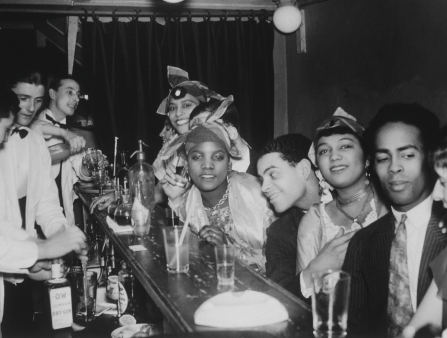
The crowded bar at La Boule Blanche, a much-frequented Paris nightclub. Photo credit: Sasha/Hulton Archive/Getty Images
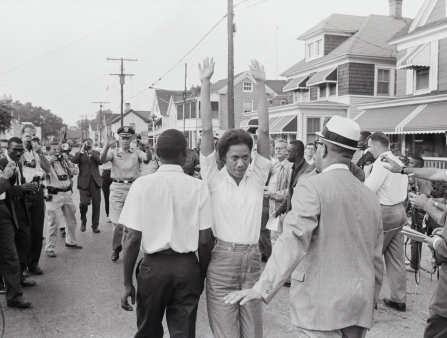
National Guardsman Stopping Demonstration. Photo credit: Bettmann Archive/Getty Images
D: I think we’re all drawn to this work for similar reasons: the serendipity of deep research, and the fingerprints of history, both figurative and literal. But we also wanted to touch on some of the business aspects of archival, because they impact us all. Many of us in APA work on both small, independent documentaries with tight budgets that tell really unique and important stories. And then we’re also working on larger, big-budget productions and network series with greater resources. We consistently find that, at Getty, independent projects are required to spend 3 or 4 times as much on license fees for the same image or clip as high-budget projects. We understand this is because big companies like Netflix or HBO have more licensing volume overall, but it feels upside-down, and can make it prohibitive to license Getty content for the smaller productions. Are there any plans to help independent producers partner more effectively with Getty?
CP: We understand that budgets and licensing needs vary. And as long as we can assess the scope early, there’s so much flexibility as far as what we can do and the fees and all of the services that are involved. Nine times out of ten, we’ve got either pre-existing relationships or agreements in place, and if we don’t, we see that as an opportunity to lay a foundation and create an easy workflow. One example might be film festival rights. We also offer limited theatrical. We try not to create any one-size-fits-all solutions. We prefer to be a little bit more bespoke with each client.
D: Another thing we’ve experienced is that Getty’s fee structure can vary pretty widely depending on which representative we’re working with. Are there any plans to standardize fee structures and increase transparency about how those work?
CP: Getty is a global organization. We do recognize that there can sometimes be historical relationships that may have a different agreement, but A) we do try our best to keep transparency top of mind, and B) consistency is something that we strive for. Within the Americas, one of our priorities last year was to create that through-line to the smaller third-party partners that could be working with a larger streamer, and then extend those larger streamer discounts on down. We’ve really tried to emphasize creating open communication. If we can use Netflix as an example, that has been a jewel in our crown, as far as taking that relationship, building the infrastructure, not just internally, but externally with their third-party partners. We’ve laid out a very clear onboarding process, and that has been very rewarding, both figuratively and commercially. We’re very proud of that.
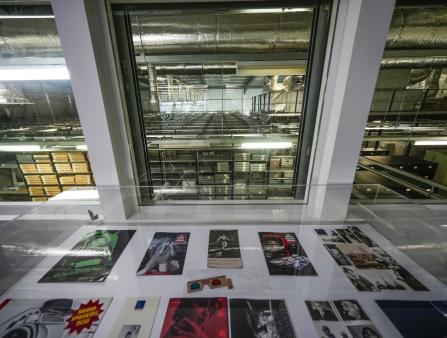
Getty Images Hulton Archive. Photo credit: Chris Furlong/Getty Images
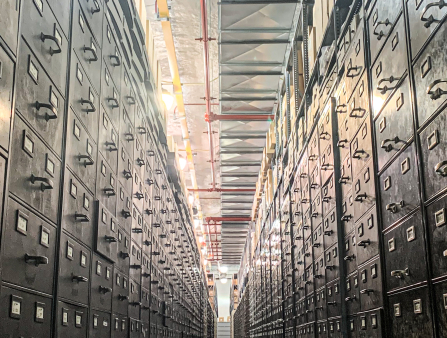
Underground Archive of the Bettmann collection. Photo credit: Bob Ahern/Epics/Getty Images
D: As we know, you’re constantly acquiring new collections, and folks can go through your online portal. But for many collections, it is difficult to access offline, undigitized material, especially for deepfile research, such as negatives and film footage, or even to find out what is there. Can you address Getty’s approach to offline collections and research, and what efforts are happening to grow and democratize that search?
BA: We have four facilities. So it’s 150 million still images, and including all our partners, it’s around 3.1 million hours of offline footage we have access to. We believe in the power of deepfile storytelling. That’s why we have those facilities; it’s why they’re all so well-staffed. There’s no point in just housing 150 million bits of plastic, paper, and glass if you don’t have some expertise. So that online offer, which is ultimately the way into the deepfile, is constantly expanding. And that’s not to mention the network of photographers and partners that are also mining their own files, and we work with them quite closely to make sure what they’re bringing in is commercially focused. In any given year, we’re looking at adding around 250,000 new historical images and videos to the platform. So we hope that that is servicing those that aren’t thinking about deepfile, and that aren’t getting behind the pixels on the screen, as it were.
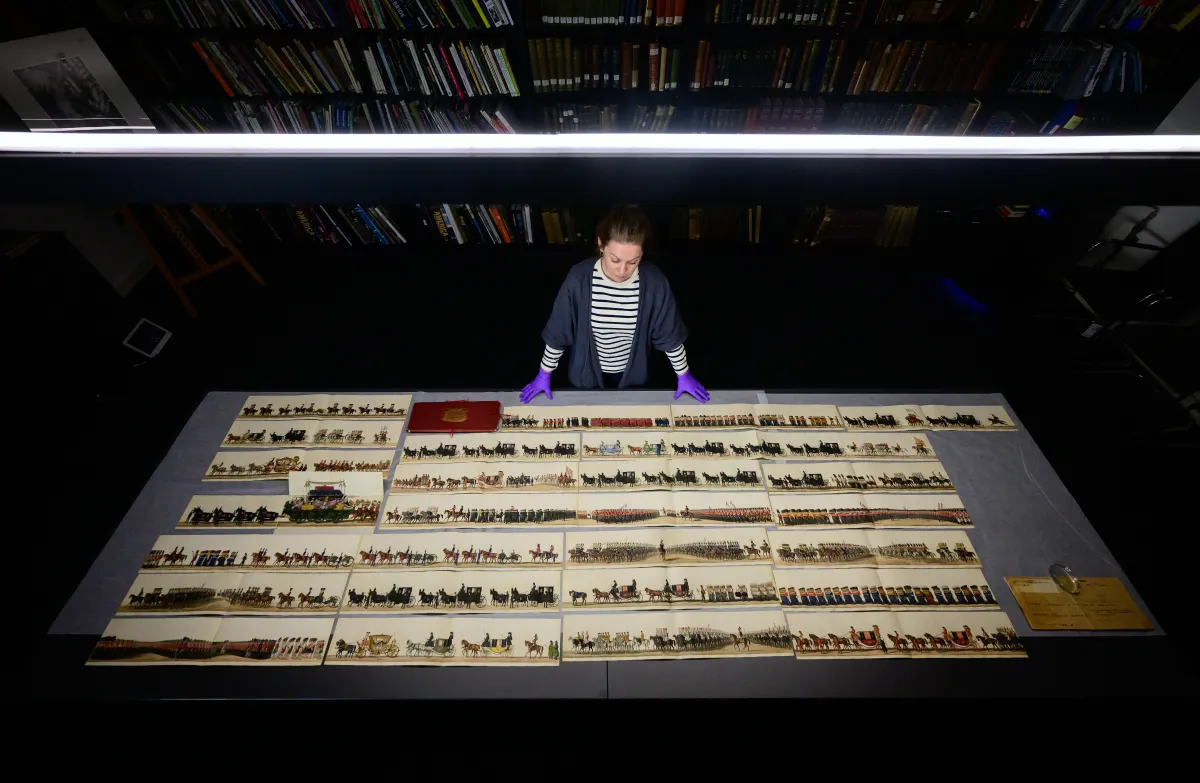
If you can collaborate with us early enough in your process, in terms of the ideation and your wish list, you can physically come in. You can sit down with contact sheets and everything else. Video is a little trickier in terms of in-house, but we welcome people in to do that. If not, we will do it on their behalf.
We can scan low-res, we can show you what we have, we can compile shot lists about what the video archives might hold in store, and we do have dedicated teams to service NBC and BBC Motion Gallery. There’s a fairly well-documented process about how you can do that.
About 2% of what we have is online, so that 98% is a massive resource, it’s too big to just scan everything, so we have to take a very commercially and curatorially responsible approach to how we bring that to market, and that is a blend of us doing it, and our customers working with us, and actually helping us draw out more content.
D: APA has been involved in looking at how generative AI is impacting documentaries and archives. We know that Getty has developed an AI model using their own stock materials and does not accept the use of AI software to generate or modify your editorial images, which is great. Is Getty committed to continuing that model?
BA: Firstly, we don’t allow AI into our editorial libraries on the front end. The veracity of the image is sacrosanct to us, particularly as our archive kind of straddles our news business. And right now, no, we’re not using that for training, for AI, for modification. The world is a fluid place, and we’re aware of all the conversations that are happening out there. We are talking to documentary producers about AI, obviously, and their need to thrive in the creative environment as it is. But right now, that’s where we are.
About 2% of what we have is online, so that 98% is a massive resource, it’s too big to just scan everything, so we have to take a very commercially and curatorially responsible approach to how we bring that to market
—Bob Ahern, director of archive photography at Getty Images
D: You were touching on how important trust is in this new era. One of our initiatives—the Trust in Archives Initiative—is working directly with archives to develop ways to protect their collections and communicate the authenticity of their primary source materials. How are you verifying that new materials that are being repped by Getty (including stock) are actually made by humans and not synthetic?
BA: There are checks and balances on the incoming materials for editorial. Getty Images can be relied upon as a trusted source of authentic human-created visuals, and serve the needs of customers who wish to avoid using AI generated visuals. We don’t obviously speak widely about how we might do that. I’m not saying there are bad actors out there, but those goalposts shift all the time. Maintaining the editorial integrity of our libraries is top of our list.
D: That’s great, because we’ve been hearing from archives that they are seeing materials submitted to them, and represented as authentic, which are actually AI-generated. And on the flip side, with trust in media being so low, people are questioning the authenticity of their actual historical materials, which is scary.
BA: It is, and sadly, I feel that’s where we’re heading. In terms of the tools and the importance of a library that is still intact though, if those materials are questioned, we have the ability to go back and check not just the neg; we probably have the daybook, we probably have the index card, we probably have all those library finding aids that go back into the day that situate that picture within its original context. That’s really important. How do you translate that online, when someone’s looking at pixels? I hope our brand goes far enough to say it’s a Getty picture and has the watermark, but I totally hear you. Everyone’s given that some serious thought, and we have preserved and continue to preserve those tools and index finding aids that make that possible.
D: Looking at Getty in the future and your relationships with nonfiction filmmakers, could you talk about ways that Getty is looking to promote or advance the work of independent filmmakers?
CP: Something that we’ve been quite excited about for the last couple of years is this new coproduction offering that we are extending to a lot of our production companies and people that we really want to support in just maybe a slightly different model. Getty has always been a library of content and services, but we’re looking to help storytellers and filmmakers create their projects by offering a little bit more flexibility through this new coproduction model, where we can offer them the cash savings, opening up our library, and making it more accessible. Then, if and when there’s a commissioner or a distributor that gets everything finalized at the latter stages, then we’re all able to win.
D: Are there any other upcoming projects or things that have been recently announced that you’re really excited about, coming from the archives or coming from Getty?
BA: This is probably inside baseball, but we’re celebrating 90 years since Otto Bettman turned up with two steamer trunks of pictures in New York in 1936. And it’s also 30 years since Getty acquired the London Hulton Archive, which is probably the largest archive that we have. They’re internal milestones, but they make us reflect, and they make us think about who we are, where we came from, and where we’re going.
Editor’s Note March 10, 2026: The piece has been updated to accurately account for Picturing Black History’s relationship to the Getty collection and to better reflect Getty’s labeling of AI in their archive.
Editor’s Note March 13, 2026: Getty’s response to APA’s Trust in Archives query was updated.