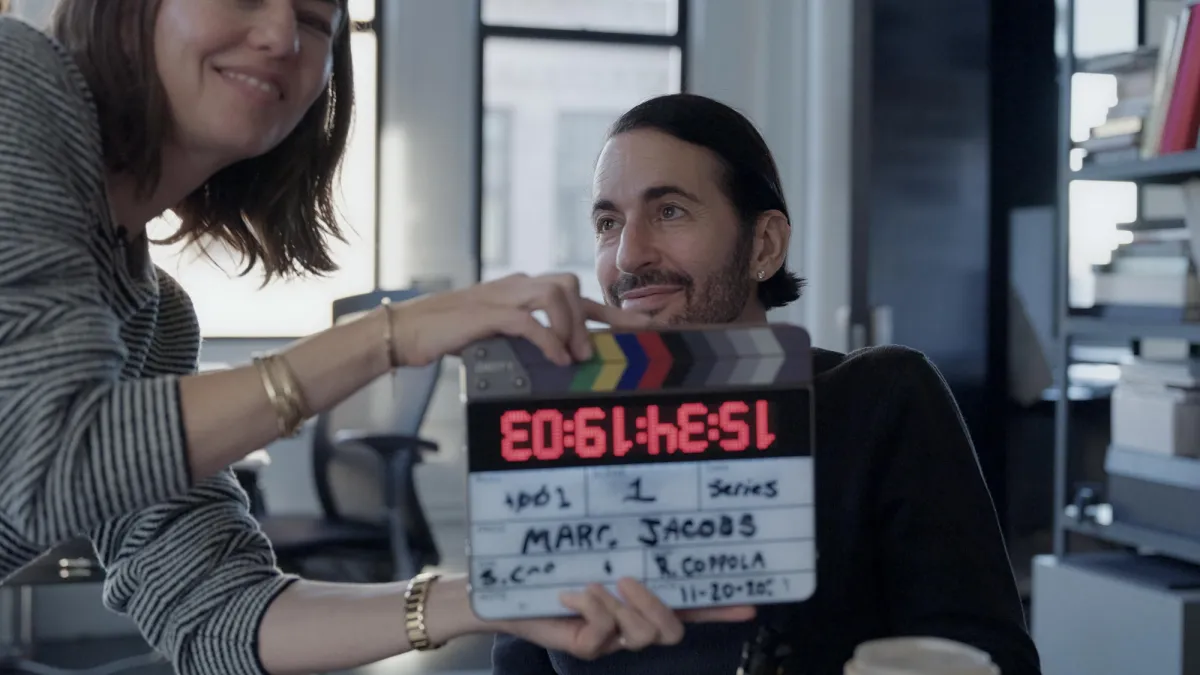


Sofia Coppola has been at the forefront of the intersection between cinema and style for decades—directing fashion videos, collaborating with designers on accessory lines, and even modeling. As part of this, she’s long been a friend of influential designer Marc Jacobs. Jacobs agreed to appear in a film profile only if Coppola directed, and so Marc by Sofia has become the director’s first feature-length documentary.
The film follows Jacobs as he creates his Spring/Summer 2024 collection, culminating in his show that year. Interspersed, Coppola focuses less on traditional biographical details (though she does delve a bit into his childhood) and more on his artistic influences. As a filmmaker, she’s particularly drawn to forebears like the films of Bob Fosse and Rainer Werner Fassbinder’s The Bitter Tears of Petra von Kant (1972), excerpting clips from them with Jacobs’ voiceover.
Ahead of the film’s New York premiere at the Museum of Modern Art’s Doc Fortnight festival, we sat down for a phone call with Coppola to discuss adjusting to nonfiction feature filmmaking, collaborating with Jacobs and his team, and her work on the obscure but very fun ’90s Gen-X TV newsmagazine Hi Octane. This conversation has been edited and condensed for time and clarity.
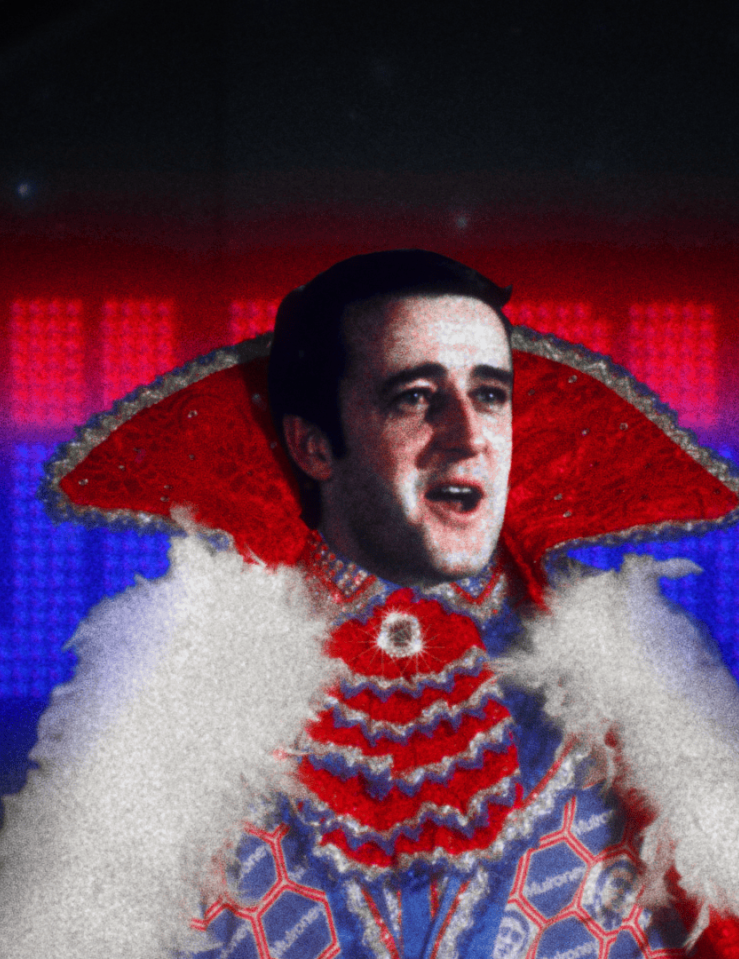
DOCUMENTARY: This has been described as your first documentary, but early in your career, even before your first short, you directed the Comedy Central show Hi Octane.
SOFIA COPPOLA: I never thought that counted as documentary work...
D: We absolutely count it. It’s legitimately an interesting historical document.
SC: Oh my god, thank you. I was a little embarrassed at first when it resurfaced, but it’s fun to remember now. There’s some footage that we misplaced that I would like to find.
D: I actually wondered whether any of the footage of the 1994 X-Girl show in the movie was related to the series. The show is featured in the second episode. More broadly, how did you source the archival material?
SC: I think the footage of the X-Girl show was from [MTV’s] House of Style. My friend Andrew Durham was shooting it on Hi8. He also shot us going to Marc’s show at the Plaza. Marc doesn’t really have a whole archive put together, so he wasn’t that involved in it, but someone in his office found boxes of stuff that we went through—sketches and old Polaroids. It was like a treasure hunt. We’d also just look through YouTube, find stuff, and remember things. I’d forgotten about X-Girl, and looking at that reminded me of other things. I remembered the Sonic Youth video shot at Perry Ellis, and one thing led to another. It was a fun process of rediscovering stuff and remembering shows that I loved.
D: Did any of your collaborators help guide you in making a documentary feature for the first time?
SC: I really relied on the editor, Chad [Sipkin], whom I’d worked with on shortform fashion projects before. I loved working with him; he gets fashion, and I love his sensibility and the way he cuts and uses music. It felt like an extension of the work we do on short pieces. I was excited to do something in a different way than I usually do. He helped me work through how, without a script, you’re finding your way in the edit, which was exciting and fun. And I learned about fair use and the legal side of it, and how to incorporate material for stuff that we couldn’t find footage for.
D: What kind of gaps were there, and how did you fill them?
SC: We didn’t have any images of Marc’s dad, who was an agent at William Morris in the ’70s, so we got archival photos of office buildings to give that atmosphere. We pulled pictures of ladies on Fifth Avenue, of Bergdorf Goodman, for his grandmother’s world. I’m a big photography fan, so we got a lot of Joseph Szabo photos of ’70s teenagers, which is a series I love, to build the visuals for Marc talking about the teenagers in the ’70s that influenced him. We relied on photography and clips of New York at that time to give the feeling of the time and the place.
D: What shifts in going from making fashion-focused shorts to a feature?
SC: In a short format, you don’t have to think about a story; it’s just kind of a mood. I wanted this to be an impressionistic portrait of Marc, but I had to sustain it over 90 minutes and have some kind of an arc, even though it wasn’t a dramatic one. So I just wanted to follow him on his creative process, from the beginning to his show at the end. In between, I wanted to incorporate all his creative references and the artists he’s worked with over the years.
I was excited to do something in a different way than I usually do. He helped me work through how, without a script, you’re finding your way in the edit, which was exciting and fun.
—Sofia Coppola on her editor, Chad Sipkin
D: Were any existing fashion films useful examples for you?
SC: I’ve seen footage of Yves Saint Laurent from different documentaries, of him sketching and being in the studio. It struck me that I’d have loved to see a whole film about him shot by a friend. I have so much admiration for what Marc does, so I wanted an inside look at him and how he works. And I really didn’t want to make a conventional TV talking heads documentary. I wanted it to have the spirit of how I think of Marc.
D: The name of the movie is Marc by Sofia, and the two of you are sometimes seen conversing, but you’re very selective about when you let yourself appear. How do you measure out your presence in the film?
SC: I wanted it to feel personal, but I didn’t want to be in it too much, but of course, there’s an awareness that I’m there asking the questions. My brother [Roman Coppola] shot the first day, and he said, “Oh, go be in the shot,” or “Let’s see you coming in.” It was a balance.
D: You mentioned your brother shooting part of it. Which of the three credited cinematographers handled which parts of the film?
SC: Roman shot the first day, and also came back to help shoot the show. We also brought in Jenna Rosher for the show. We had a few cameras that day. I first asked Shane [Sigler] to help film Marc talking to students at Bookmarc. Marc knows Shane, so he feels comfortable with him. It was helpful to have my brother on the first day, because I felt like I didn’t know what I was doing. Him helping gave me more confidence.
There were also days when I went to the office by myself with my Sony snapshot and was there watching Marc. That footage is shakier, and I’m self-conscious about it, but since it was just me with a little camera, nobody changed the way they were acting, because it felt natural and not imposing. A lot of it was just me going into the office on my own to pick up little details.
D: It’s funny that you weren’t thinking of Hi Octane as documentary work, because what you describe is very much in the spirit of the way that show was made.
SC: That totally makes sense now that you say it. At the time, it was just shooting stuff I was interested in and wanting to do this TV magazine. So the approach is pretty similar. But I never thought about that until you mentioned it. This movie could have been an episode! I wanted it to have the same collage or scrapbook idea of all these different elements of Marc coming together.
D: You’re also revisiting some of the exact same ground. You mentioned going to his show at the Plaza, and the X-Girl show happened around Lafayette Street in Manhattan, where you also did the “Thurston’s Alley” segments, featuring interviews by Sonic Youth’s Thurston Moore, for Hi Octane.
SC: I forgot about that! That’s so funny. There are ones that are missing, though. Did you see the Scorsese episode? I think that’s missing.
D: No, it’s not! The three episodes that aired are available, and he’s in the second one. Also, there’s randomly a baby with him in his segment.
SC: Yeah, the cameraman had a baby and was watching him. I’ve seen that kid now as a grownup, and it’s so funny to remember carrying him, and how unprofessional we were, that we were like, We'll just bring the baby with us. And then he’s crawling around during the interview.
D: Comparing what you captured of New York and the fashion world then and now, do any differences strike you?
SC: It was fun to revisit what our old friend shot of us going to Marc’s show at the Plaza. It was all much more informal back then, not as polished or business-like as it is today. It wasn’t all these big celebrities going to be photographed.
D: There’s also a lot of fashion stuff in Hi Octane, even beyond X-Girl. There’s footage of a Karl Lagerfeld show in the first episode, and he appears briefly. So does André Leon Talley, who tells your correspondent that you need to enunciate more. You’re very experienced and comfortable in this world. Was there anything you were still unfamiliar with going into this film?
SC: I was an intern at Chanel when I was a teenager and had been backstage then. But I had never been backstage at Marc’s shows. I’ve gone to a lot of them, but I was always in the audience. I’d never seen that moment right before, of everyone getting ready. So that was really fun. We worked with their crew about where we could be, making sure that each camera was covering different parts of the show. There wasn’t too much planning; more showing up and trying to stay out of the way. For the parts at the office, I’d stay in touch with his team about whenever they were doing anything interesting, checking in on the show as it progressed as much as I could.
D: Given your history with Jacobs, was there ever a concern that you were too close to the material? How did you maintain some distance?
SC: I was worried about interviewing him because I know him so well. I didn’t want to seem fake, asking questions that I knew the answers to, but I wanted it to be cohesive for someone who didn’t know him. I tried to be a presence but not make it about me, and for the audience to feel like they were coming along with us. Still, there is an aspect of a friend looking at a friend, and of a creative person looking at another creative person’s process.