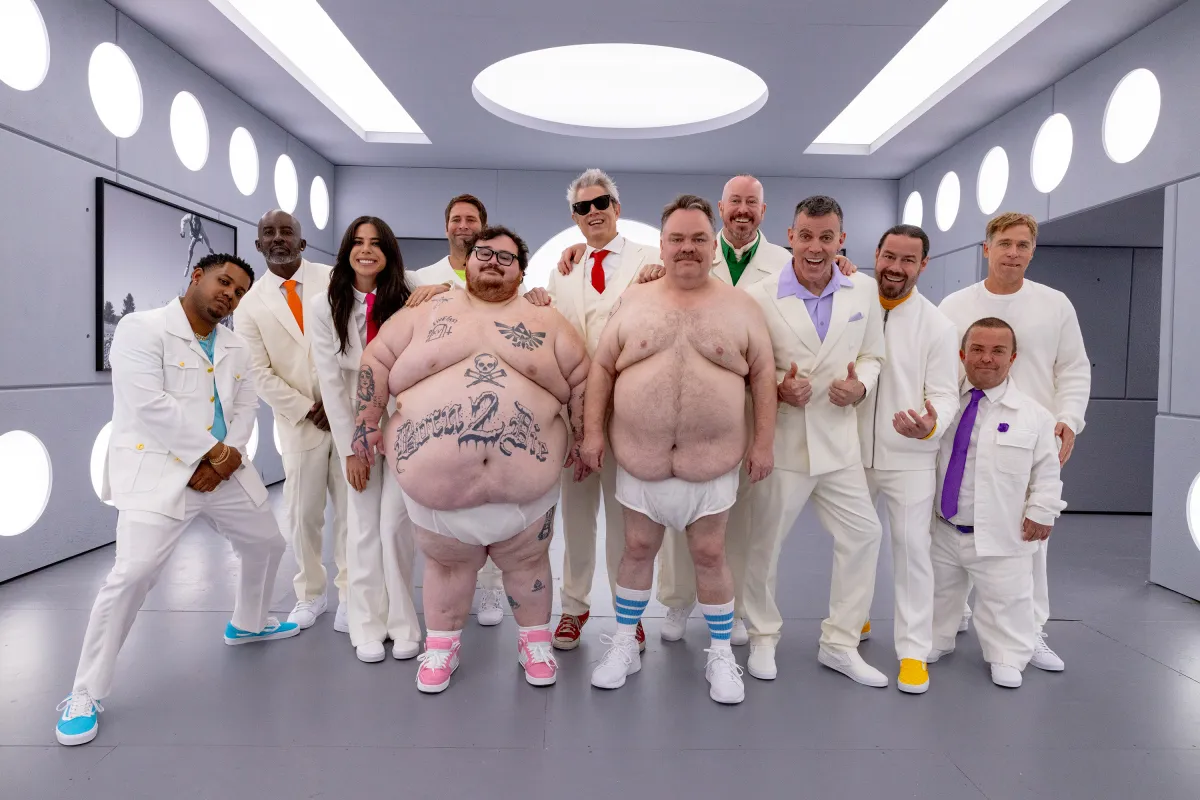


From the crunchy visual noise of a ’90s digital camera emerges a 20-something guy with a Southern twang. “I’m Johnny Knoxville, United States of America,” he says by way of introduction. With some friends filming, he will go out to the desert, strap on a bulletproof vest, stuff some copies of Hustler under it for extra protection, and then shoot himself with a low-powered revolver. This agonizingly tense and extremely funny scene was part of the proof of concept Knoxville and his compatriots used to pitch what became Jackass to MTV. This particular footage was too extreme for use on the show proper, so its use as the opening for the fifth (and, supposedly, for real this time, final) feature-film installment of the franchise marks its mass debut, more than 25 years after it was shot.
We then see the modern-day Knoxville, along with the rest of the Jackass cast, and the contrast between his weathered silver fox look and his youthfulness in the pitch video is striking. Jackass: Best and Last, billed as a celebration of the series, is rife with this temporal shuffling. It’s a compilation of never-before-seen footage like the revolver stunt, best-of bits like the “Poo Cocktail Supreme” (Steve-O strapped into a full portable toilet launched high into the air by bungee cords) from Jackass 3D or Knoxville taking a brutal hit from a bull in Jackass Forever, and new skits like Sean “Poopies” McInerney getting a comically enormous amount of Botox injected into his lips.
Jackass, once deemed fit only for brainless young men and a frequent cause of moral panic, has over time been embraced both by wider audiences and the critical establishment. Many now recognize and respect the artistry of the physical comedy that longtime director Jeff Tremaine, producer Spike Jonze, and the cast and crew can pull off. Ahead of the Jackass: Best and Last’s theatrical release, we sat down with Tremaine over Zoom to discuss the film, stunt development, and how the series has charted both changing technology and the lives of its cast members. This conversation has been edited and condensed for time and clarity.
DOCUMENTARY: Was the plan with this film always that it would be a hybrid of old and new material? Did the ratio of old to new stuff shift over time?
JEFF TREMAINE: There was no plan. This movie came about because last year was our 25th anniversary, and Knoxville and I are so disorganized that we didn’t think to do something until then. We called Paramount to see if they’d re-release any of the old movies, and an exec there was like, “Why don’t you make a greatest hits movie? Who else can do that? Jackass is one of the only franchises you can really reassemble however you want.” And we’re like, “Oh yeah, and maybe we’ll shoot some new stuff.”
It was not very well-thought-through at first, but as we started putting it together, it became apparent this would be the last one. So we decided to find things fans have never seen before —things that are important to us and just our favorite bits—and to open them up and find new footage within them, even.
D: Were there any rights or clearance issues with using any of that old material? The movie specifically mentions that the escaped convict skit from the show wasn’t allowed to air at the time.
JT: Yeah, the convict one was held up for legal reasons for a while. I don’t know if the ban expired or if someone worked it out. A lot of it was simply not having an age gate anymore. It was just time to put it all out there.
Jackass: Best and Last.
D: Where did all this material live? Did you have to dig hard for any of it? Was there anything you remembered that you couldn’t find?
JT: We went back to the original source material as best we could find it. Some of the stuff we couldn’t find the masters for, but we had a version of everything we ever shot. Someone on the team was good at putting everything somewhere. Knoxville getting hit by the car—that was pulled off an old dub of a dub of a dub. This whole process has been great because we ended up digitizing everything we ever shot.
I’m surprised some of those tapes have held up. We’re talking about MiniDV. Some of them weren’t in the best shape. I was surprised we had as much original material as we did, to be honest. We did this event, the 24 Hour Takeover, in 2008, where we took over MTV for 24 hours. All 24 hours of that footage survive. I thought we’d only have the two-hour edit we ended up making from it, but now we have it all.
D: There’s no lost Jackass media. That’s beautiful. The film lets us in on the series’ creative process, how stunts often start with people drawing sketches of their ideas, which we see with Bam’s drawing of what became the bungee cord jump. From there, how do you plot out a stunt—finding a location, sourcing materials, figuring out the logistics?
JT: It’s funny; the ideas come from all of us, so who knows who has the original one? I think the Poo Cocktail Supreme [from Jackass 3D] started with Steve-O wanting to do something with a porta-potty, and his idea was to throw it off a bridge with a bungee cord on it. Then we figured out that using cranes would be more practical than finding a high bridge and transporting all the equipment there. And launching the porta-potty upward created a much bigger gravitational effect than just dropping it would have.
D: Do you have dedicated technicians on the crew whose job it is to figure these kinds of things out?
JT: We met this guy named Elia Popov, who owns an effects company, between the first and second films. We used to try to do everything ourselves, and it almost never worked. Our ideas would be so DIY and limited by our lack of understanding of physics. Handing things over to an effects guy who could build things that work really changed our game. Now we could do almost anything we wanted. Ideas sometimes evolve by becoming practical, but a lot of times, they evolve through us spinning them upside-down. This would be funnier if you did this or that.
Jackass is almost a history of digital camera technology. We started off on consumer-brand MiniDVs and have gone up to both big and little 4K cameras.
—Jeff Tremaine
D: Once the engineering parts of the stunts are ready, how do you figure out your camera setups?
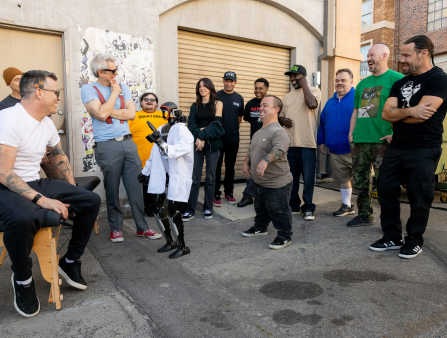
JT: Camera plans come from us onsite thinking, Alright, you go here, we’re going to put the peanut gallery, which is the cast that’s just going to watch, over there. We make sure it’s all covered, and then we hope for the best. We have a team of camerapeople who have been with us for the whole run, from the TV show to now. A lot of them weren’t trained professionals; they were just friends of ours who had cameras. We’ve gotten better as we’ve gone on. We know where to place the cameras and have a better understanding of gravity—if we’ve set something up, we know where it’s going to go wrong and have a camera there right there for that.
Camera technology has also gotten a lot better. We have smaller cameras we can put in places we didn’t use to be able to—not just GoPros, even high-quality small ones. Jackass is almost a history of digital camera technology. We started off on consumer-brand MiniDVs and have gone up to both big and little 4K cameras.
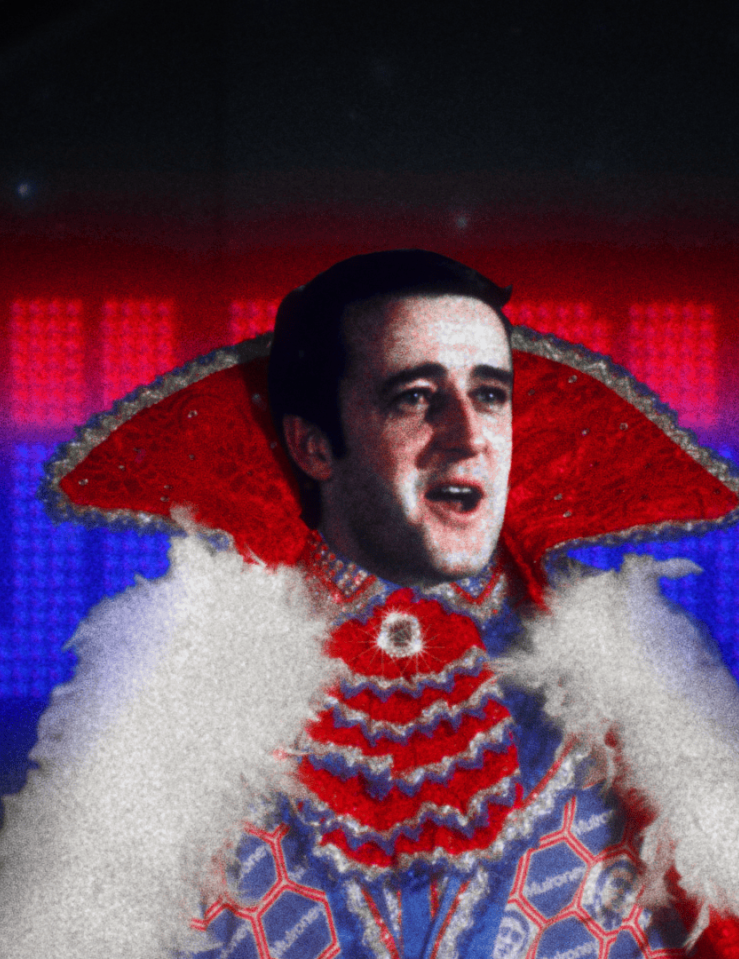
D: You also experiment with the visuals a lot, especially with the start and close of each film. This one’s opening credits play over a parody of the “Virtual Insanity” music video. How did that come together? I read that Spike Jonze directed the sequence.
JT: I couldn’t write for it at first. I didn’t understand it. Same with Knoxville, to be honest, and he was the one who pushed for that idea. But we built a life-sized model box over at Elia’s shop that we could slide around, and that’s when we really could understand it. It took me forever to wrap my head around the set moving around the camera in its locked-on position.
D: Did you consult anyone who worked on the original video?
JT: No, but we did watch the making-of doc. It was trial and error, especially once we built this huge set. It was hard to move. Elia had it on these different winches to slide it around, but then it turned out that the best way was manpower—just putting a lot of handles on the set and having strong men pushing it.
D: You have a new ‘cast member,’ a robot voiced by Adam Ray. Who was controlling it?
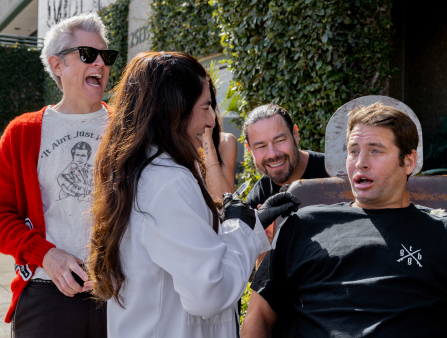
JT: A guy from the company that provided the robot was operating it. Knoxville was really gung-ho on adding a robot. We did all this research, found the right one, and talked to the company, and they were into it. It took a minute to figure out. They had to program it to do the things we wanted it to, but once they got into it, they started coming up with ideas. They got us pretty quickly and easily. They actually wrote the idea for the robot prostate exam, which sounded funny. When I pictured that skit, the robot had these little hands, then later they replaced them with these big, clunky claws, and the idea got a lot better. The operator was back in the video village with his controls and a virtual headset, sitting close to Adam. They could look over and see what the robot was doing, but they were tucked away so they wouldn’t be in the shots.
D: You often shoot so much that you have enough leftover material to make the 0.5 interquels. Over time, when editing these, have you found that the rhythm becomes intuitive—how long a segment should go on, and how to order them?
JT: You would think we would be better than we are at it. We still shoot too much for too long with too many ideas. You just throw a lot of shit against the wall and see what sticks. You can’t predict what will work. I think what people like about Jackass, what makes it exciting, is that we don’t know how anything’s going to end. You can pretty much guess it’ll end badly for the guys, but we don’t exactly know.
Jackass: Best and Last.

D: Speaking of throwing shit, there’s a pronounced emphasis in this installment on bodily fluids and grossout scenarios over heavier physical stunts. Is that a natural pivot, given the gang’s physical limitations? I believe Knoxville medically isn’t allowed to get another concussion, right?
JT: Yeah, we have to protect his head. He actually took a liver punch from a heavyweight boxer, which didn’t make the final cut. We have more stuff like that. There won’t be a 0.5 for this one, but there will be quite a bit of extras on the home release. A lot of what we are doing now is meeting where we are in our lives. Prostate exams and drinking colonoscopy prep liquid come straight from our own experiences. I got the idea for the prep drink skit after having a colonoscopy done. That stuff flushes you right out. What if we used it and did something disgusting? And it was sort of a bad idea, but we did it.
D: It’s juxtaposed with the skit that closed the first movie, with Ryan Dunn having the X-ray of the car stuffed up his rectum. It creates this oddly poignant picture of time’s passage.
JT: At the time of the butt X-ray sketch, that was the line for a lot of them. No one was willing to do it. Steve-O initially agreed to it, then he backed out after talking to his dad. I was going into a production meeting, and he had just called me and said he was out, the day before we were going to do it. I told them at the meeting, and Ryan was sitting next to me. He got upset, saying, “That bit has to get done!” And I said, “Ryan, you’re right. Someone does have to do this. Someone who really cares needs to do this.” So he became the guy. Then over time, Steve-O has definitely loosened up about that. The line moves. Even what’s funny to us moves.
D: Since you’ve been doing this for a quarter-century, you’ve built a long-form study of these guys’ lives.
JT: And that’s what’s funny about watching this. You can see the evolution—or de-evolution—of how they respond to stuff. When we know each guy’s nuances, we can exploit them.
D: The perception of the series has also changed over time. The crew used to be nothing but a bunch of bad influences, and now there’s a great deal of affection for them and respect for them as physical actors. What’s it been like, seeing that evolution?
JT: I’ll be honest, I didn’t like it. I noticed it most on Jackass Forever. We started getting these really positive reviews, and it bummed me out. I was like, Oh god, maybe we’re just not punk anymore. Maybe we’ve been doing this for so long that the critics were our fans originally. It meant we’re old. We don’t want Mom’s approval.
D: I know someone who’s writing a book about the series, taking it seriously as art.
JT: Interesting. I’ve never been one to try to intellectualize what we do. I love it when I read a review like that; it makes me feel smarter than I am. But we’re just doing what makes us laugh, and I’m not thinking deeper about it.