

The biggest news to hit this year’s CPH:DOX (March 11–22, 2026) was when Copenhagen-based director David Borenstein’s Mr. Nobody Against Putin won the Academy Award for Best Documentary.
The following morning, on the first day of the festival’s industry program, which has become the most important nexus for the North American and European documentary communities, the locals were elated. The majority-Danish-backed production came up repeatedly throughout the rest of the week as evidence of the strength of Denmark’s—and Europe’s—prominence in the documentary industry. But the rejoicing was short-lived, as the dire realities of the current global nonfiction marketplace set in.
“Even if you win an Oscar, it’s never easy,” says Helle Faber, the Danish producer of Mr. Nobody Against Putin, who flew back from L.A. to Copenhagen to pitch a new project with David Borenstein at CPH:FORUM (which they decided to skip after the Oscar win). While Faber says their Academy Award victory may have opened some new doors for equity financing, she sees the tried-and-true model for making international documentaries—where filmmakers cobble together financing for their projects through a range of broadcast sales and national film institute cash—as severely challenged.
According to Faber and others, while funding may be stable or only marginally cut in some nations, the budgets haven’t kept up with the rising costs, making it more difficult to finance as many projects as before. Faber notes that one of the major Norwegian broadcasters won’t even support one-off documentaries anymore, only series.
“Broadcasters are getting less and less slots each year. Instead of 14 films, now it’s 10 films or less,” says Faber. “And they’re only putting their money into what they really need for their audience.” Other producers and sales agents suggest that broadcast slots are nowadays more focused on journalistic content and less on creative documentaries—the kind that make up the bulk of CPH:DOX’s 74 feature competition titles.
“The eye of the needle is so small,” adds Faber, noting that producers need to nail down a deal in almost every country for broadcast, and the accompanying national institute funding which the slots unlock, to raise a budget of around 800,000 euros.
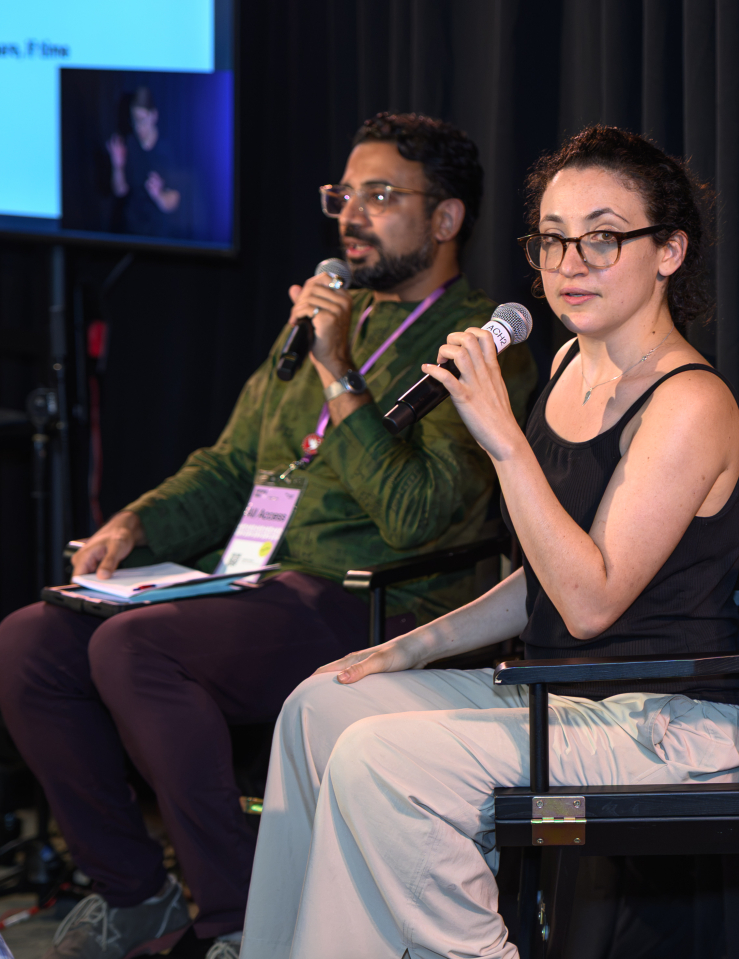
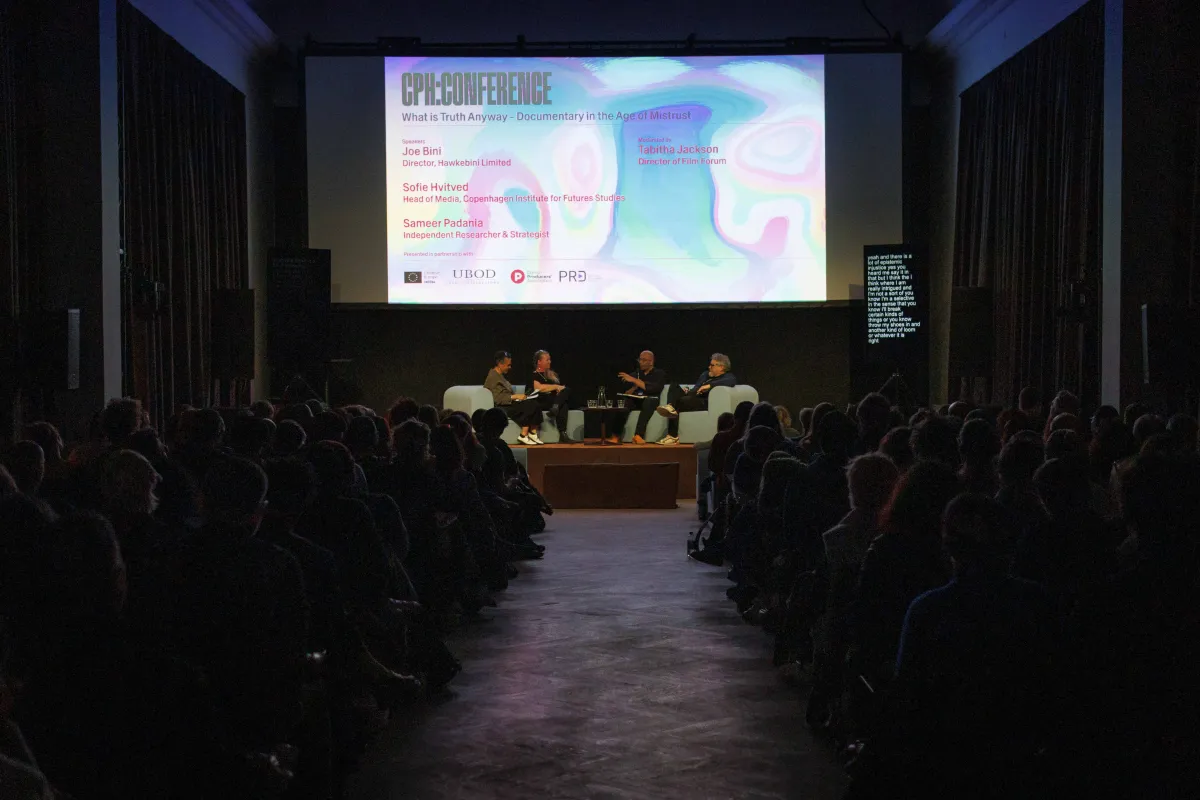
At an industry conference panel discussion called “What’s Next? Future Perspectives on the Shifting Eco-System of the Creative Documentary,” Barbara Truyen, former Head of Documentaries for the major Dutch public broadcaster VPRO, noted that the Netherlands’ film budget was cut by 20%, “so that means 1 out of 5 people loses their job and 1 out of 5 programs is not made, and that’s happening all around,” she said. “Lots of broadcasters say we’re going to keep the same amount of money, but we’re going to do less documentaries.”
Ford Foundation’s Jon-Sesrie Goff noted on the same panel that some US$40 million has been sucked out of the independent documentary landscape in the U.S. “Philanthropy cannot replace that,” he admitted, “and what has happened is not just a monetary loss, it’s a structural loss.”
Earlier in March, Greece’s documentary filmmakers had faced similar structural problems, and issued a statement lamenting the rebranding of public broadcast channel ERT 2, which had been associated with documentaries and cultural programming, as a sports channel, ERT 2 Sport.
“It sucks,” said Mandy Chang, the veteran documentary executive and producer who recently left top positions at BBC Storyville and UK entertainment company Fremantle to head the UK’s Documentary Film Council (DFC), an advocacy group for documentaries. “These are all little red flags and a warning that this can happen to all of us.”
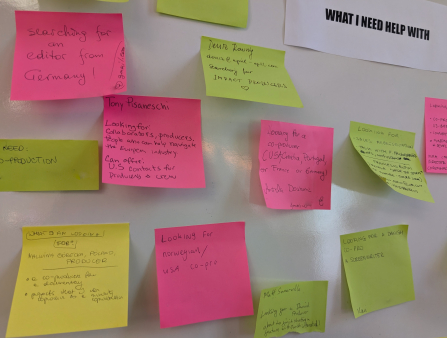
These Post-it notes, many of them asking for coproduction partners, were posted under the heading "What I Need" in the festival’s HQ. Photo credit: Anthony Kaufman.
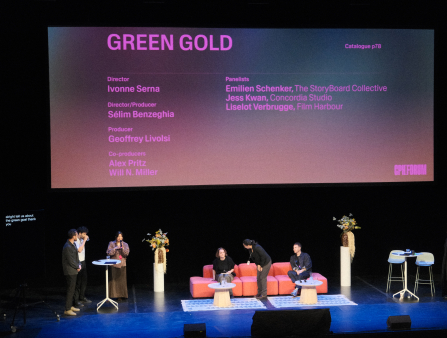
The pitch team of Green Gold during the CPH:FORUM pitch. Courtesy of CPH:DOX
Coalitions and Divisions
With “independent media under increasing pressure politically, economically, and technologically,” as CPH:DOX Managing Director Katrine Kiilgaard said during the opening of CPH:DOX’s Summit, there was a lot of discussion about the ways in which smaller coalitions across the global independent nonfiction sector must partner up to stave off an increasing array of threats: from diminished national arts and public media funding and the increasing power of U.S. based global digital platforms to the rise of far-right governments and artificial intelligence. It sounded a lot like Canadian Prime Minister Mark Carney’s speech at Davos: “The middle powers must act together,” as he said, “because if we’re not at the table, we’re on the menu.”
CPH:DOX’s Kiilgaard notes that while their festival itself has seen growth, “it’s not a sign of the health of the ecosystem,” she tells Documentary. While CPH:DOX is becoming “more and more important, both as a physical space for audiences” and for reaching viewers across Denmark through its online PARA:DOX digital offerings, she admits, “festivals can’t stand alone.”
“All week, we’ve been discussing how do we create coalitions between broadcasters and festivals, and also among festivals,” she continues. “How do we up our game to show the importance of documentaries, because there are more productions out there, but the distribution is not following, and the audiences watching are not following, so there’s some breakage in the links.”
For this year’s Summit keynote speaker Bruno Patino, president of French-German public media giant Arte, one possible answer is leaning into Arte’s already broad pan-European coalition of 14 public broadcasters, not to create a “European Netflix,” as he said, but to forge a multilingual streaming platform that he referred to as “Arteplus Europe,” which would connect national public broadcasters—not compete with them—“to build stronger and more regular links with the creative communities across Europe.”
For years, Arte has been working towards expanding the reach of its arte.tv streaming platform, but scaling up and balancing the needs of other territories is easier said than done.
While Arte may be the most important financing partner for documentaries in Europe, says Danish producer and director Andreas Dalsgaard, who was at the festival showing his latest The Oligarch and the Art Dealer (co-created with Christoph Jorg), “it’s challenging because Arte are taking more territories for their different stations,” such as Arte channels in Spain, Italy, and Poland. “So you have to negotiate very hard for those to get out of their contract,” Dalsgaard explains, “because the way we finance films is territory by territory, and that means there are less territories to sell to.”
To achieve their required budgets, Dalsgaard says his company Elk Films needs to rely on equity sources, but having equity can also create problems with public broadcasters. One larger broadcaster in Europe won’t accept a project with equity, he notes. “If that’s the standard, then we would have to cut our budgets by 30%.”
At the same time, Dalsgaard was excited at the prospect of other streaming options internationally. “It’s a real positive to make a pan-European streaming service that can battle the U.S.-owned services and can unite broadcasters from across Europe,” he said. “I just wonder why we didn’t do this 10 years ago or 20 years ago.”
Another potential hiccup could come with upcoming elections. Europe’s cultural community was closely watching elections this past week in France and Denmark, which could imperil cross-European collaboration. (France’s Euroskeptic far-right National Party fell short of expectations, but gained control in an additional 55 new municipalities; in Denmark, the reigning central Social Democrats had their worst showing since 1903, but the right doesn’t have a majority either.) But one European media executive says that if Maria Le Pen’s right-wing party wins France’s elections next year, “it could be disastrous.” In that case, he says: “We can forget Arte. The German-France motor won’t function anymore.”
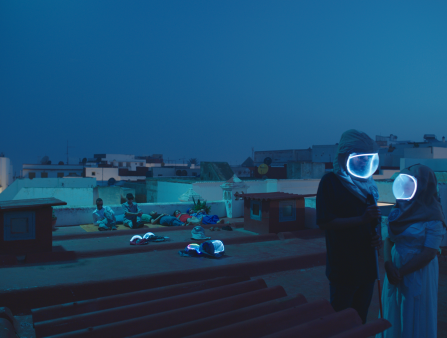
Still from Asmae El Moudir’s Don’t Let the Sun Go Upon Me. Courtesy of CPH:DOX
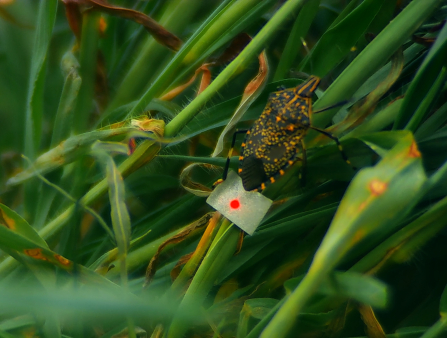
Still from Véréna Paravel’s Cosmofonia. Courtesy of CPH:DOX
Collective Actions; Funding Wins
At CPH:DOX, there was, however, a promising and perhaps more viable structural collaboration that emerged. The Nordic countries’ five major public broadcasters (SVT, NRK, DR, Yle, and RÚV) and their national film institutes (Danish Film Institute, Swedish Film Institute, Norwegian Film Institute, Icelandic Film Centre, and Finnish Film Foundation) announced the creation of a new joint open call for the Nordisk Film & TV Fond in response to “increased competition from global platforms” and to “provide opportunities for faster financing.”
“I think there is real power in joining forces,” says Chang, referring to the Nordisk partnership and what it signifies. “Netflix is international, so why we can’t we aggregate our viewing numbers; why we can’t we aggregate our money?”
In her new role as an advocate, Chang believes “as a collective, we have to fight back against all these issues,” she says.
Pointing to one recent success by the Documentary Film Council, Chang notes their help in lobbying the BFI’s Global Screen Fund to increase its budget from £7 million to over £18 million per year. “That’s the kind of change that we can do,” she says. “There is power in filmmakers having a voice, and we collectively have the clout and influence to have a say in how things are funded, whether it’s broadcasters or existing funds or raising the level of funding for documentary filmmakers.”
CPH:DOX also has its own role to play. As a crucial meeting point for the documentary industry, it has become a place where alliances—and even money—is exchanged for the types of creative documentaries that are at risk. Attending producers cited such potential significant new sources of money in the halls of CPH:DOX, including the presence of Harriet Gugenheim’s Placeholder Films and Alex Simon, Director of Storytelling Partnerships from the Emerson Collective, founded by Laurene Powell Jobs.
Additionally, a range of modest, but by no means insignificant monetary awards were given out for projects in development, such as €30,000 and €20,000, respectively, from Eurimages for new projects by doc auteurs Asmae El Moudir (The Mother of All Lies) and Véréna Paravel (Leviathan), as well as a US$25,000 prize from Sandbox Films for Nobody Compares director Karthryn Ferguson’s upcoming Matrescence.
Filmmakers who didn’t win one of the monetary pitch prizes also cited a positive experience pitching. As an example, Finnish filmmaker Arthur Franck pitched his film The Helsinki Effect in 2024, which led to funding from Germany and Norway, and Oscar-nominated producer Rémi Grellety (I Am Not Your Negro) joining his subsequent project, Bromanski, which he pitched this year at the Forum and yielded promising meetings with Arte in France and Germany. “We also spoke with other pitch teams about co-production opportunities in Finland, and hopefully we can make that a reality with one of them,” Franck says. “The vibe amongst the filmmakers was good despite the uncertainty in the industry.”
For many of the producers, filmmakers, and commissioning editors attending CPH, there was the firm sense that all of the “middle powers” need to work together, “because we have to,” as Truyen said.
“We can’t just have this monolithic road we’re going down,” Mandy Chang tells Documentary. “There is power in diversity—a diversity of funders, a diversity of storytellers, and a diversity in the kinds of storytelling that we see at these festivals. This narrowing of subject matter isn’t a good thing, and it’s going to implode at some point,” she adds, referring to the narrowing of the types of nonfiction content being produced. “Everyone is bored with it. I’m bored with it. And I hear about it from filmmakers and audiences who don’t want to watch another true crime documentary.”