
Essential Doc Reads is our curated selection of recent features and important news items about the documentary form and its processes, from around the internet, as well as from the Documentary magazine archive. We hope you enjoy! The Jihad Rehab conversation continues with an article by Moustafa Bayoumi from The Nation. Bayoumi explains that the questioning of the ethics and execution of the film dates back a few years, and that the issue is not the fact that a white, non-Muslim woman made the film, but rather that filmmaker Meg Smaker put participants in dangerous and incriminating situations
Latest Posts
Los Angeles, CA – The International Documentary Association (IDA) announced the nominations in 18 categories for the 38th annual IDA Documentary Awards, which will be held on December 10, 2022, at the Paramount Theater on the Paramount Studios Lot in Los Angeles.
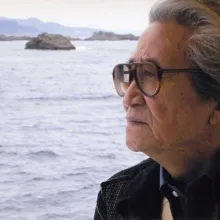
Noriaki Tsuchimoto is a towering figure in Japanese documentary cinema, but only known by name and reputation in the West. Beyond festival screenings, his films rarely show here. That is about to change, however. Following a program held at the Open City Documentary Festival in London, the Museum of the Moving Image in Queens, New York will host a retrospective dedicated to Tsuchimoto’s work; the series runs from November 12-27. Before this rare opportunity occurs, it’s time to take a hard look at just what makes his documentaries special. With a body of work spanning six decades and over 100
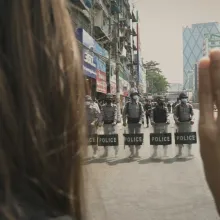
The only film festival in the US dedicated to investigative storytelling, Double Exposure Film Festival returned this year for a hybrid eighth edition. This year’s festival included a lineup of 11 feature films and 15 symposium panels, all taking place in Washington, DC. A selection of films was available on their online screening platform, while all the symposium panels were livestreamed for virtual attendance. Double Exposure Film Festival is known for their focus on the interconnectedness between journalism and documentary as a source of seeking out and exposing the truth for the betterment
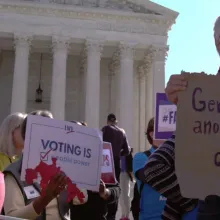
Screen Time Screen Time is your curated weekly guide to excellent documentaries and nonfiction programs that you can watch at home. It’s Election Day in the US, so in the voting spirit, most of these documentaries in this week’s Screen Time delve into the struggles and challenges of voting—the harm of gerrymandering to the vulnerability of the electoral system. The Emmy-nominated documentary The Great Hack, from Karim Amer and Jehane Noujaim, investigates how the political consulting firm Cambridge Analytica used data to influence people’s perspectives on political issues prior to the 2016

Editor’s Note: At the Doc Congress that SFFILM presented as part of its Doc Stories this past week, Carrie Lozano, Sundance Institute’s Director of Documentary Film and Artists Program, delivered a keynote address to the community on collaboration, which we are sharing with you. Hello everyone! It’s amazing to be in this room with all of you, physically and virtually. Thank you to SFFILM for inviting me here today. I like to acknowledge that I was the copyeditor for the San Francisco International Film Festival in 1999. It was my first paid gig in the industry, and ever since, I’ve been in a
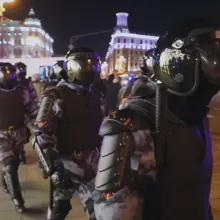
Essential Doc Reads is our curated selection of recent features and important news items about the documentary form and its processes, from around the internet, as well as from the Documentary magazine archive. We hope you enjoy! PBS’s Julia Ingram and Putin’s War at Home director and producer Gesbeen Mohammad and producer Vasiliy Kolotilov discuss how the Frontline documentary highlights the opposition to war in Ukraine within Russia. This was challenging, as in Russia, opposition to the war can result in 10 to 15 years of imprisonment. Because of this, Mohammad and Kolotilov felt it was

Screen Time is your curated weekly guide to excellent documentaries and nonfiction programs that you can watch at home. In observance of Luiz Inácio Lula da Silva’s presidential win in Brazil, Petra Costa’s 2019 documentary The Edge of Democracy explores the convoluted path to democracy in Brazil. The documentary is both an IDA Award nominee and an Academy Award nominee, and is able to transform complex politics into an absorbing and interesting documentary. Watch now on Netflix. In the festivity of Halloween, many of these documentaries feature pressing issues that may forge fear. Though only

Essential Doc Reads is our curated selection of recent features and important news items about the documentary form and its processes, from around the internet, as well as from the Documentary magazine archive. We hope you enjoy! What started as a rejected book idea has evolved into Is That Black Enough For You?!?, a documentary that is rich with archival clips and embedded with interviews from Black talent from throughout the ages. From Vanity Fair, Yohana Desta reflects on how the documentary explores Black contributions to culture, specifically in cinema. Mitchell reexamines and exalts
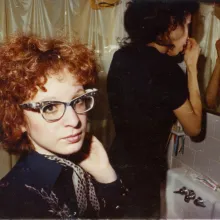
The 60th edition of the New York Film Festival presented many powerful, timely and innovative documentaries. The majority came from abroad—France, Germany, Italy, Austria, the UK, Lebanon, and India. Documentary directors from the US included Martin Scorsese, Laura Poitras, Chris Smith, Elvis Mitchell, Margaret Brown, Elisabeth Suren, and Daniel Eisenberg. The festival’s Centerpiece Selection was Laura Poitras’ All the Beauty and the Bloodshed, about the photographer Nan Goldin and her battle against the Sackler family, makers of OxyContin. This is a case where the personal is political. For