
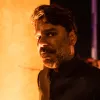
If in recent years it appeared that the ability of oil to influence human affairs had waned, the U.S. invasion of Venezuela and the US-Israeli war against Iran serve as bleak reminders of its centrality in the struggle for global geopolitical domination. Iranian artist-filmmaker Sanaz Sohrabi has thought long and deeply about oil and its role in shaping the narrative of the modern world. For the better part of a decade, the Montréal-based Sohrabi has engaged in a creative audiovisual project about oil, using her native country as the starting point for an examination of the resource’s exploitation and its echoes across the twentieth century.
At the core of Sohrabi’s project is a trilogy of archive-based film essays—two medium-length works and a feature—that trace a story of oil, and reflect on a regime of still and moving images that meticulously documented its exploration, extraction, and exploitation. A significant portion of these photographs and films reside in the archives of British Petroleum (BP), which in 1901 was given a concession by Iran to exploit its oil. One Image, Two Acts (2020), the first film in Sohrabi’s trilogy, considers the operations of what was then the Anglo-Iranian Oil Company (AIOC), followed by Iran’s nationalization of the industry in 1951 and the overthrow in 1953 of prime minister Mossadegh, in a military coup backed by Britain and the United States.
Scenes of Extraction (2023) goes deeper into the methods by which Iran’s landscape was geologically surveyed, and how this mapping by the AIOC worked in parallel with a colonialist apparatus of human exploitation and suppression. And in An Incomplete Calendar (2026), Sohrabi’s first feature, she moves beyond imperial archives to center an informal collection of print and audiovisual materials that tells another story of oil, from the beginning of the 1960s to the start of the 1980s, of the formation of the Organization of Petroleum Exporting Countries (OPEC), and of decolonization and solidarity across the Arab world and the non-aligned nations of the Global South.
Rather than present this history in a classical form, one that tells the story of oil in a seemingly neutral totality (documentary as exhaustive, and exhausting, Wikipedia entry), Sohrabi’s essayistic methodology is rewarding in its insistence in going against the grain, deliberately disturbing the grand narrative of history as told from above. Sohrabi foregoes conventions of historical documentary filmmaking—talking heads, images as illustration, re-enactments—and instead deploys her deeply researched and poetic voiceover narration as an embodied accompaniment to her activation of the archive, and her patient, attentive interrogation of the images therein—“Listening to images,” as Tina Campt would have it.
Sohrabi joins a long, if underknown tradition of archival essayistic documentary filmmaking, going back to films like The Fall of the Romanov Dynasty (1927), Soviet director Esfir Shub’s critical reworking of newsreel footage of the reign of the last Russian tsar, and Letter to Jane: An Investigation About a Still (1972), Jean-Luc Godard and Jean-Pierre Gorin’s deconstruction of an iconic photograph of Jane Fonda in Vietnam. More directly, her films echo works that repurpose archives to meditate on legacies of colonial and post-imperial histories: John Akomfrah’s Handsworth Songs (1986), for example, which reckons with the suppression of Afro-Caribbean and South Asian presence in Britain, and Naieem Mohaimen’s Two Meetings and a Funeral (2017), about the undoing of the Non-Aligned Movement and other initiatives of political solidarity in the Global South in the 1970s. Like these filmmakers, what Sohrabi conjures, and what remains with the viewer, are the ghosts within the archive, specters of the lost and unrealized futures that continue to haunt our fractured world.
An Incomplete Calendar had its world premiere this past March at Cinéma du Réel in Paris, where it won the award for best debut feature, in the midst of the war on Iran. The following interview was conducted virtually in early April, as the war continued and the U.S. president threatened annihilation of the Iranian people. Despite the emotional toll the moment was undoubtedly wreaking, Sohrabi was as engaged and generous in her contributions as at any time in the six years I have known her. This interview has been edited.
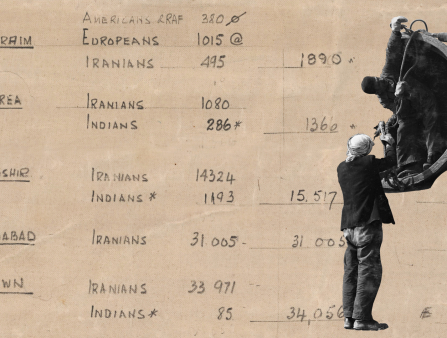
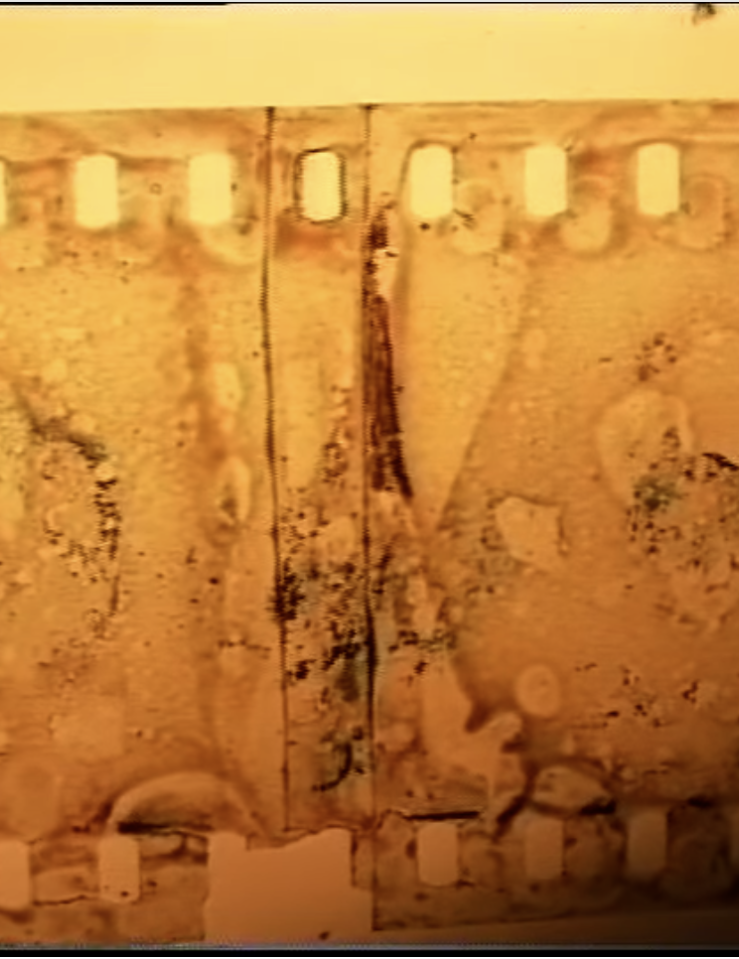
One Image, Two Acts (2020)
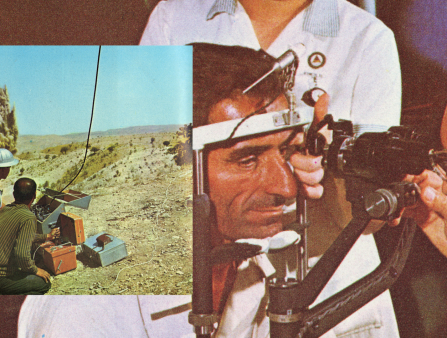
Scenes of Extraction (2023)
DOCUMENTARY: How did you first come to engage with the British Petroleum archive?
SANAZ SOHRABI: I first read about the history of BP’s film unit through Mona Damluji’s influential film scholarship back in 2017. My first in-person field trip was in 2019 but before that I was working with the digital database for two years. It took some time for me to get acquainted with the images and build a relationship with them, understand them, and be able to write with them eventually. I feel that in One Image, Two Acts I was more influenced by the BP images and how they shaped my story, but in Scenes of Extraction, I was interested in going beyond what was in front of me and wanted to challenge the ways in which the archival materials were shaping my way of seeing. This also partly due to having spent more time with the archives and understanding their inner workings better.
D: Indeed, you do not use the BP materials as they are, but engage in collagic reassemblage, disrupting the presented historical narrative.
SS: I like this terminology of reassemblage, because it speaks to how I look at archival montage. Works of John Akomfrah, Black Audio Film Collective, and Harun Farocki have deeply influenced my thinking. I also look at the ways that the archive becomes a fragment that links the past to the future. I have thought a lot about Saidiya Hartman’s concept of critical fabulation as a speculative and interpretive method to transform historical documents into documentary narratives. For me, the poetics and politics of reassembling archives are at the core of working with documentary form as a critical method and discursive practice, examining how you arrive at an image and how images have arrived to you both as materials and historical relations.
D: In One Image, Two Acts you contend that there is much that is excluded from the images of the BP archive, much that exists just beyond the frame: the segregation of various ethnic tribes by the British, the suppression of wage strikes, and the harsh exploitation by the AIOC of its concession, so that Iran received a pittance in terms of profits. How does one unsettle the archive in order to reveal this darker, hidden history?
SS: BP’s archival regime is choreographed by a particular memory politics and way of seeing and remembering the British empire’s violent thirst for oil. The images of the oil company’s camera are an incomplete picture, even though the visual-discursive structure of the archive has a make-believe function to it: persuading the viewer to believe what they see is what has happened. The images seem so coherent and complete, but the tension is that they actually are carefully tailored and curated to seem like they are the truth tellers.
That is a challenge in working with and against such images and relying on them as narrative portals. The fear of reproducing colonial voyeurism in archival encounters is a common ethical dilemma while working with colonial archives, and particularly so across photographic and film material. Despite this challenge, they also allow us to be in a place and have encounters that are otherwise inaccessible to us. The process of disturbing the visual regimes of the archive is partly connected to how we choose to converse with them, through dialectical and relational montage, or through audiovisual manipulations and interventions.
The fear of reproducing colonial voyeurism in archival encounters is a common ethical dilemma while working with colonial archives, and particularly so across photographic and film material.
—Sanaz Sohrabi
D: Audiovisual manipulations are central to Scenes of Extraction, which investigates the methodologies of resource extraction, geologies of oil, and seismographic regime deployed by the AIOC. This raises another set of problematic questions; you ask, “How does one archive destruction?”
SS: When I was doing archival work, I came across BP’s geological department’s section on the seismographic methods for oil probing. Looking at the aerial surveys, documentations of explosions both on film and as photographs showed this inevitable correlation between knowledge-production technologies and destruction of the object that gets “known” in the process. That’s where that line in the film comes from: How does one archive destruction? I was thinking about Farocki’s concept of “operational images,” and Allan Sekula’s similar concept of “instrumental images,” when images are produced not as a means of representation but as part of an operation and are integral to the chain of command.
There was this desire to see the unknown and the invisible, and photography and film played a part in that. I came across a photo album that was an early aerial survey with hundreds of images. We fed those images into photogrammetry software, and the results were these incomplete renderings of the space, with glitches, and empty sections. I became interested in contrasting these two modes: the archival and the digital, because each has a specific claim to representing the “whole of the operation” to imagine the invisible subterranean layers, either from above via aerial surveys or from below the earth’s surface by tracing the sonic map of the explosions via seismographic methods.
D: You go beyond imperial resource extraction in An Incomplete Calendar, telling a different story of oil, one of petro-sovereignty, with an altogether different archive. How did you draw this archive together?
SS: An Incomplete Calendar builds upon my prior engagement with an institutional archive such as BP’s, which resulted in developing a practice that acted as a counter-archival impulse and process. Over the course of making One Image, Two Acts and Scenes of Extraction, I developed a parallel practice of collecting magazines, periodicals, and stamps pertaining to energy infrastructures, labor and industrial nationalism, and cultural networks of Third World solitary and cross-continental friendships, with a focus on OPEC member states that spanned across SWANA [South West Asia and North Africa], West Africa, and Latin America. I gradually realized that I was piecing together an archival repertoire that could work as a counter-archive to the BP archive and its representational regime of oil and the broader regional and national histories. It became necessary to look into these other sets of images and think about what stories they held.
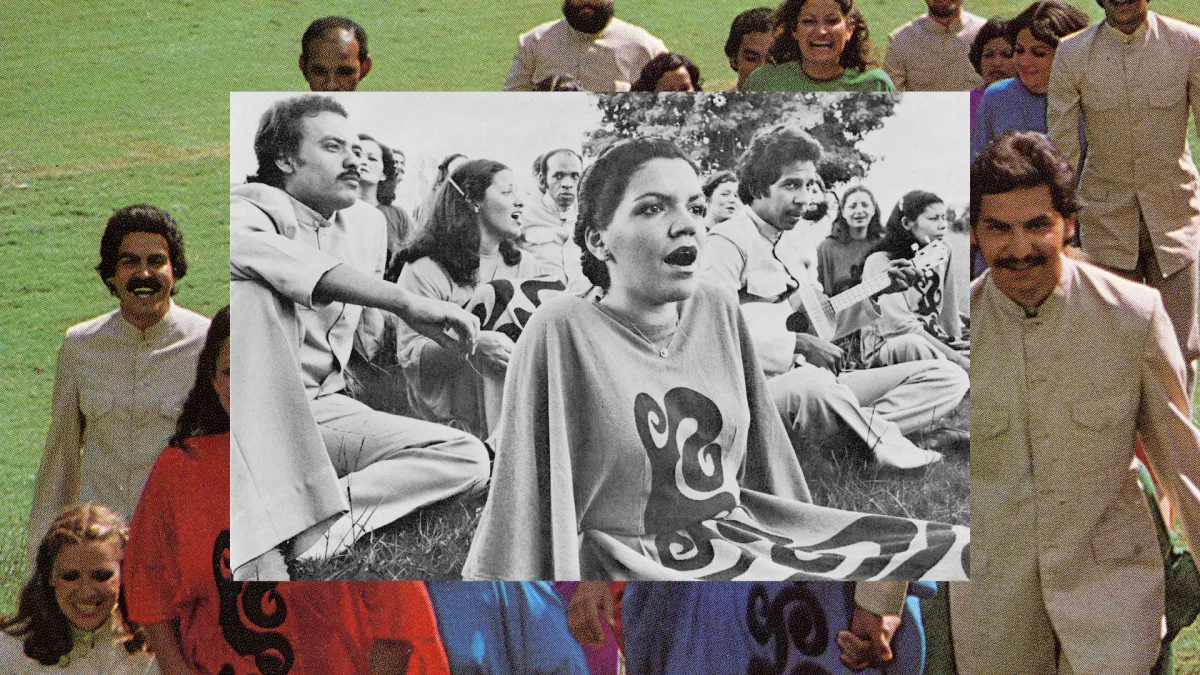
D: This counter-archive also contains a remarkable sonic element, Rhymes and Songs for OPEC, an album of folk songs from member countries recorded in Venezuela in 1980 to celebrate the organization’s twentieth anniversary. How did you discover it?
SS: I came across Rhymes and Songs for OPEC when I encountered the vinyl on eBay, as I did the majority of the stamps and magazines that are in the film. I was blown away. I found it to be an incredible musical record to begin with, but also peculiar and ghostly. What struck me was that I had not come across this musical record in any of the books on OPEC. It was this profound musical history offering a completely different perspective on the cultural production around oil that was sitting silently. As I mention in the film, the album drew an alternative geography of oil through music.
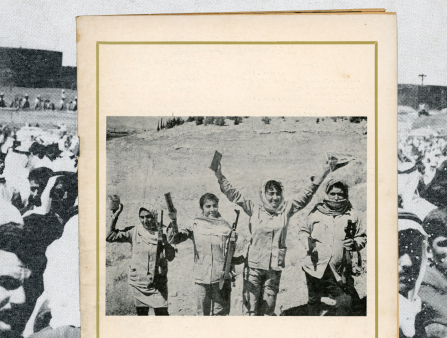
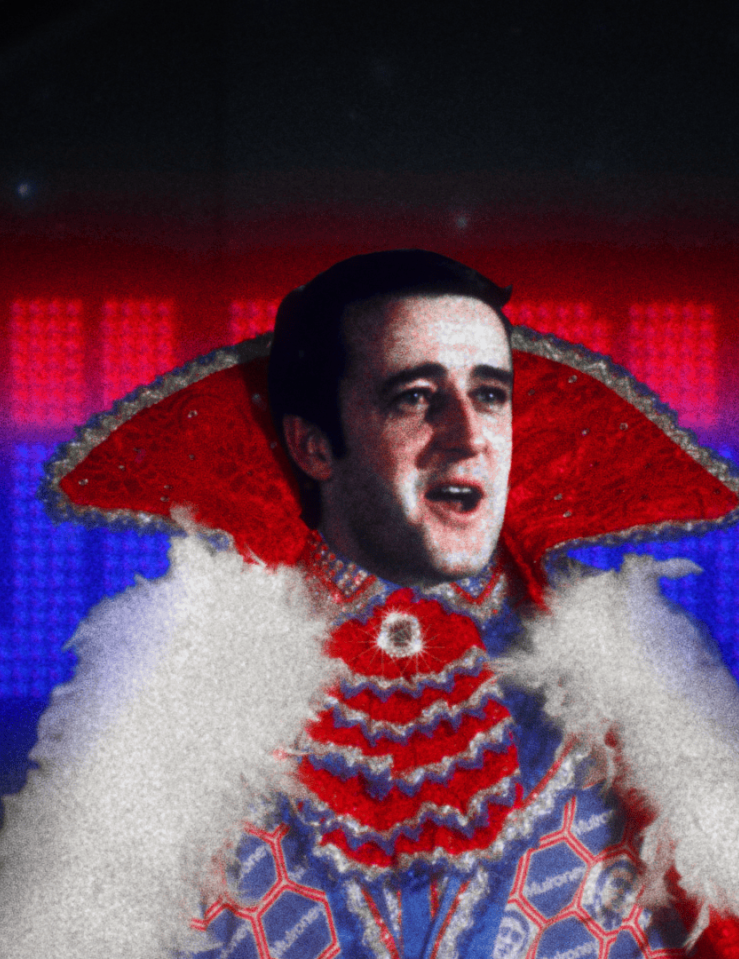
An Incomplete Calendar (2026)
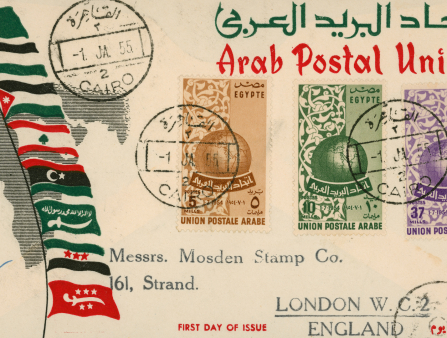
D: Another difference in An Incomplete Calendar is its polyvocality—a plurality of voices joins yours in conversation on the soundtrack. How did these conversations come to form part of the film?
SS: The process of making An Incomplete Calendar was collaborative and built around friendships across Tehran, Caracas, Cairo, and Beirut where I did most of the filming and archival work over the years. As I was piecing together audiovisual fragments from such diverse geographies and histories, I realized that this story of transnational friendship, of a shared political dream, demanded a chorus, not a solo. That’s why I decided to build the film’s script not as a monologue, but a series of conversations, with my voiceover interspersed in between. I eventually developed the film’s script by interweaving conversations with researchers, filmmakers, and former members of the concert choir from the Central University of Venezuela.
D: A month after the recording of Rhymes and Songs for OPEC, Iraq, supported by the West, declared war against Iran, a clear marker in the undoing of comity among Muslim and non-aligned nations. An Incomplete Calendar mourns the lost futures of this solidarity, and the triumph of an era of Western neoliberalism and militaristic hegemony. Is there anything you can look to, particularly in this story of solidarity and utopian vision, with all its failures, that gives you some sense that all is not lost?
SS: Concluding the trilogy after six years in the midst of the genocide in Gaza, the twelve-day war, and the current U.S.-Israeli war against Iran, is an eerie marker in and of itself. If we connect all these nodes from the Caribbean Sea’s murders, a military empire that is suffocating Venezuela and Cuba, Iran, Lebanon, and Palestine, it is clearer than ever that our struggles are intertwined. I recently read an interview with the filmmaker Mohanad Yaqubi, in which he said:
I’ve actually stopped believing in the power of the image and filmmaking, as I have watched the genocide unfold, seeing the entire destruction—live, 24 hours a day. It’s not about the number of images or telling people what’s going on. It’s ultimately a question of geopolitical power.
I tend to agree with Mohanad. But I also believe that we cannot afford to be cynical or fatalistic. We ought to reckon with the fact that the power of images in the techno-fascist era of AI-assisted bombing and drone warfare has changed, but the fight continues.