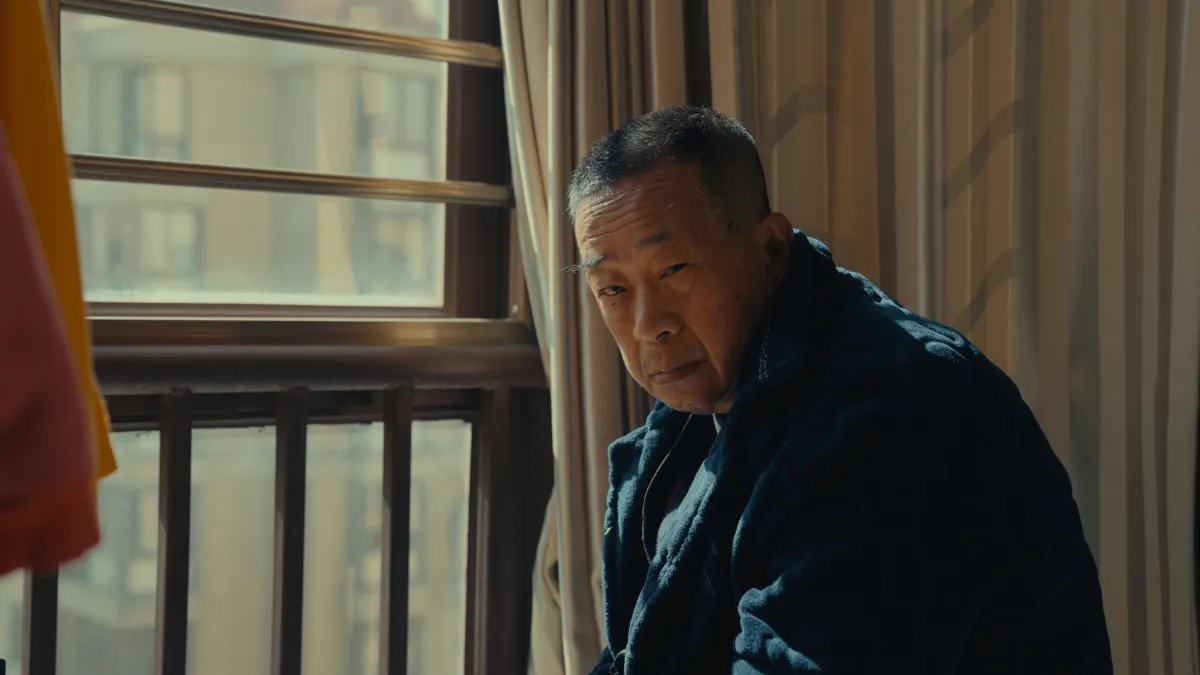


In 2023, after spending decades abroad, Chinese-Australian filmmaker Vee Shi returned home to Longtian, a rural area in China, hoping to persuade his parents to seek a divorce. He intended to do so by casting them in a film where they would play fictional versions of themselves, creating a space where his family could reckon with the physical abuse his father had inflicted on his mother over the years.
His parents had both been raised during the country’s Great Leap Forward, a tumultuous time period that resulted in the death of over 30 million people in history’s biggest famine, and their entire relationship had been marked by an irreparable hardship that Shi struggled to understand. But his plans for that fictional film quickly came undone.
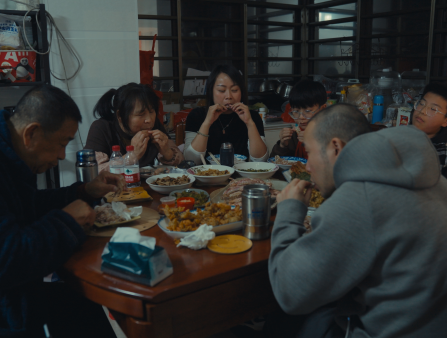
Just as he was about to start shooting, Shi’s father suffered a stroke, once again placing the burden of care on Shi’s mother, who was just on the cusp of leaving him. As Shi began filming this renewed family dynamic, the director came to accept that his parents were uncomfortable performing scripted scenes, and the project gradually shifted from fiction to observation. The resulting work is a hybrid of both forms, in which Shi seeks to mine the fractures of his family by instigating a pair of blisteringly intimate confrontations inside his parents’ home, while his patient and percipient camera documents how outside pressures like urbanization and political reforms have slowly affected their daily lives and routines in more ways than they could ever imagine.
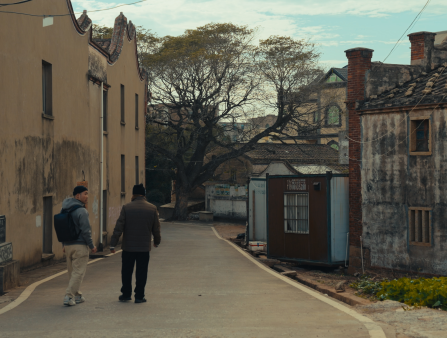
Time and Tide is, according to the Melbourne International Film Festival (MIFF), the first film to be shot in Longtian and only the second to feature the native Fuqing dialect, a cultural identity slowly disappearing as younger generations shift towards Mandarin. Even as it focused on just one family, Shi’s film explores how the socially ingrained obligation of care for a parent, despite their frequent mistreatment of their own kin, reflects a growing disconnect between the traditions of the past and those who seek to break the cycle of pain that sometimes arises from it.
After premiering at Visions du Réel earlier this year, the film won the Documentary Australia Award at the 73rd Sydney Film Festival in June. Documentary spoke with Shi ahead of the film’s screenings at MIFF (the film will screen theatrically in Melbourne and Sydney in September). This interview has been edited for length and clarity.
DOCUMENTARY: Do you remember at what point in the filmmaking process you finally decided to shift from narrative to documentary?
VEE SHI: There wasn’t actually one point where I realized it had to be a documentary. I was initially so resistant to it being that, just because I never considered myself a documentary filmmaker. All of the festivals we aimed for primarily dealt in fiction films as well. So even when things started to pivot towards a more observational style of filmmaking, we still never considered that what we were making was a documentary.
It was only when we got back to Melbourne and started assembling the first cut that things started to take shape. When I wrote the initial screenplay, I had all these sci-fi elements that I wanted to include and actually ended up shooting, but I just couldn’t make it work, so we had to take it all out. I was editing for about six months, and I got so depressed because the film just wasn’t conforming to this version of it I had conceived in my head. We organized a test screening with about 30 people and didn’t tell them what it was about. But after the screening, when people came up to us, they spoke about the film as if it were obviously a documentary.
D: Because they just assumed a story like this would be?
VS: Yeah. After that, I took about two to three months away from editing, because I was just so sick of it. When I finally went back, I realized the reason people resonated with the film at that test screening was because they thought they were observing these real situations. So we did another pass, and from there we entered the Antenna Film Festival’s Rough Cut Lab. We had this session with three mentors, and the comment they all kept making was that the parts of the film that were scripted felt really staged and false.
D: Do you remember what scenes they were talking about specifically?
VS: There was one moment in particular, which is not in the film anymore, where my mom would come home and find the stove practically on fire because my dad had left it on. It’s based on something that actually happened in the past, so we staged a recreation of it and shot it so my mom would walk in on the open flame, and [the mentors] were saying, “So you just happened to be behind the camera?” That’s the moment I realized the film wanted to be a documentary, and I was kind of actively going against it. So we did another round of edits and took out even more of those really obvious staged scenes. The fictional elements that remain in the final cut are mainly just transitional shots.
D: I’m curious about the camera placement during these conversations in your parents’ home. Was there always someone behind the camera?
VS: For the more intimate scenes, the camera would be connected to an iPad, so either my DP, Nicholson [Ren], or I could monitor what was happening in real time. Nicholson would just set up the camera and be in a different room, and then there would be another iPad next to me on a chair, so that I could actually make sure that we were still rolling and that my parents weren’t constantly blocking the camera. In other, more day-to-day moments, we would just put the camera on a tripod and then go to a different room where we could observe what was happening on a monitor. We also had my iPhone 15 Pro set up as a second camera. That was our backup if anything fell through.
D: How often did you blur the lines of fact and fiction while ‘directing’ your parents?
VS: When I first wrote the screenplay, it was based on things that my parents would actually do on a daily basis. But of course, they couldn’t act. So what we did was, naturally, try to find other moments in their lives that could replace what was in the script. They might not be exactly what was written, but they would have the same thematic purpose in the film. There are a few scenes in there that were actually a lot longer when we shot them, but because the camera was locked off, I was able to cut around certain things.
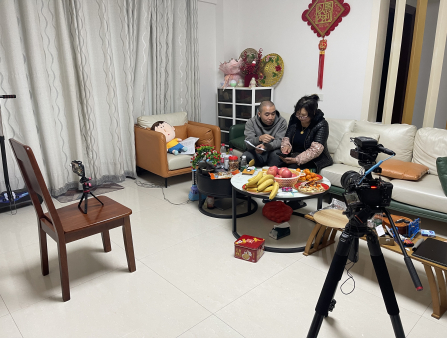
Behind the scenes of Time and Tide.
D: Did you use that same method to initiate some of these difficult discussions with your family?
VS: I would basically just say certain things that I knew would provoke a conversation. Especially in that midpoint lunchtime scene, where my parents and I talk about how my mom wanted a divorce after my dad would hit her. I kind of just initiated things with a question: “Do you want to get a divorce?” The rest just unfolded naturally.
D: What were some of your visual inspirations for the film? I kept thinking about the work of Jia Zhangke in particular while watching it.
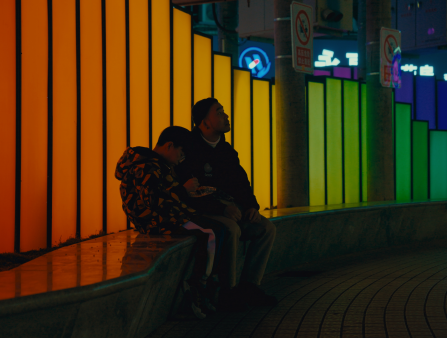
VS: It’s funny you say that. The other day, I actually went back to these documents that I shared with Nicholson during pre-production, which I haven’t looked at in almost three years. One of them was a mood board, and the pictures we have there come mainly from three films. It’s Still Life [dir. Jia Zhangke, 2006], and Ash Is Purest White [dir. Jia Zhangke, 2018]. And then also Memoria by Apichatpong [Weerasethakul, 2021].
D: A lot of the film is you grappling with this friction between the values and ideas you grew up under in Australia and the false hope in coming back home and expecting them to still apply. I wonder what it’s been like to screen the film to non-Chinese audiences?
VS: In Switzerland, I had someone come up to me and say that, even though this film is set in China, it captured a family dynamic so similar to their own. I had someone else—I think she was from Iran—who didn’t spend much time with her father growing up because he was involved in some sort of political event and put in jail, and she was also saying how it made her think about her relationship with her dad, despite the cultural differences. On the other hand, there was a review from someone on Letterboxd who was like, “If you want to see this story, just walk into any Chinese household.”
D: It’s this universal story, despite the cultural and political specificities you highlight in the film.
VS: I had a vague idea about those things, so I did some research. I watched hours of documentaries about the Cultural Revolution and the Great Leap Forward. My parents went through all this hardship throughout their lives that I haven’t experienced. What’s important to them is completely different from my own sort of ideas. But by making this film, I think I’ve learned to see things from their perspective and be a little more understanding.
There’s this Chinese proverb called 吃苦 (chīkǔ), which translates to “eating bitterness.” It’s an attitude that is so ingrained in their generation, about how if you want to achieve something in your life, you have to be willing to suffer for it, and all the bad things that come with it. To them, that’s the only way to get there.