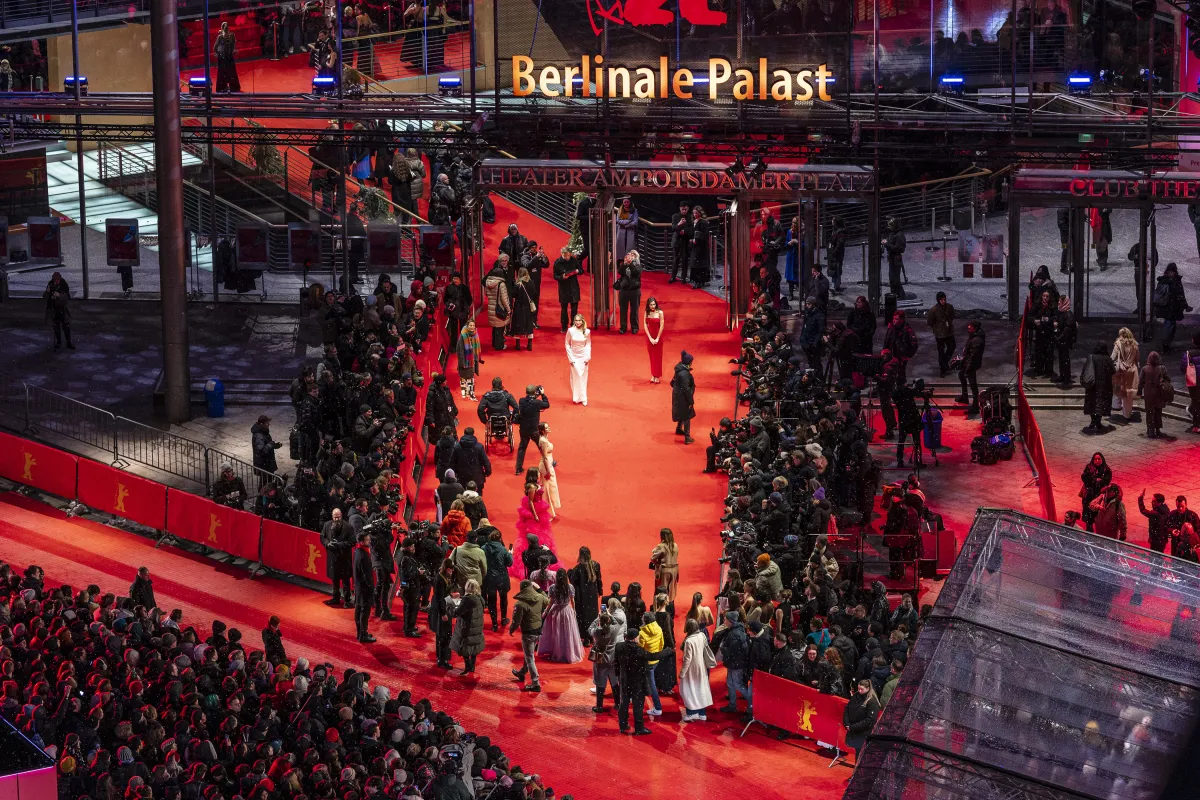


Just three years ago, at the Berlin International Film Festival, a jury led by Kristen Stewart awarded the Golden Bear to Nicolas Philibert’s On the Adamant, a documentary about patients at a psychiatric treatment center on the Seine River in Paris. And one of the Berlinale’s most famous recent premieres by any measure was No Other Land, 2024’s double prize-winner that went on to win the Academy Award for Best Nonfiction Film. But at the 2026 edition—where once again political scandal erupted, putting the Berlinale artistic director on the ropes, and battle lines were drawn—most of the nonfiction prize-winners felt personal in a different way.
No matter the form, the stand-outs had a hands-on (or even handmade) feel and form and, even when touching on greater issues, stayed determinedly filmmaker-centered. That Yo (Love Is a Rebellious Bird) was part of the Competition’s red-carpet-friendly lineup felt like a statement in itself—with its story of friendship between co-director Anna Fitch and her unflappable Swiss-born older friend Yolanda—even before the homey film’s mix of vérité chats with scale models and puppetry garnered a Silver Bear for Outstanding Artistic Contribution. This year’s nonfiction honors highlighted films (including Yo, which was the last Competition premiere) that might get lost in the Berlinale’s sprawling sections or amid the contentious debates about the festival’s political positions (or positions toward politics).
My biggest nonfiction discovery was tucked away in Forum, whose scattered screening venues make comprehensive coverage a challenge. Few films at the festival got to the heart of matters like Sometimes I Imagine Them All at a Party, a German debut feature that could sound overly methodical but keeps boldly asking exactly the questions that need to be asked. Through a series of meticulous interviews, Daniela Magnani Hüller retraces the experience of a grisly knife attack she suffered near a bus stop at the hands of a classmate fourteen years ago. Call it an anatomy of an attempted murder: probing the event from different perspectives, she sits down with a state prosecutor, a teacher at their school, another classmate, her defense lawyer, and so on, in assorted locations (in cleanly staged medium-to-long shots, whether outside the yellow-walled court or by a riverside). Skillfully and disarmingly forthright as an interviewer, Hüller fluidly moves among holding to account, coming to terms, and posing philosophical queries, with each conversation its own stark journey: the teacher’s mild mea culpa melting into wan justifications, the criminal prosecutor getting unexpectedly personal (with an evident gleam of admiration for Hüller’s investigation), or her classmate’s matter-of-fact explanation of why she spoke up despite possible blowback.
But Hüller avoids making the film schematic by breaking away to impressionistic Super 8 photography and dropping in Brazilian pop songs—before departing Germany entirely to visit her sister in Brazil. For much of the film, she hasn’t shown her face, an elision that both reserves her the choice of not performing for the camera and puts the viewer in the position of imagining her in the context of her story’s violence—but then she appears and reasserts herself in another way. During her joyful reunion with her sister, a rock-climbing outing seems to express the learning curves of recovery, and their candid chats inject some humor (as does her harrowing interview with an emergency room doctor, who then earnestly explains how ketamine works). But what rankles is how openly Hüller’s assailant had harassed her for months beforehand, glaring at her for hours in class and somehow cowing everyone else, and then menaced her after he was punished for the attack, making the movie also resonate widely as yet another example of enraged male aggression bending entire worlds around it.
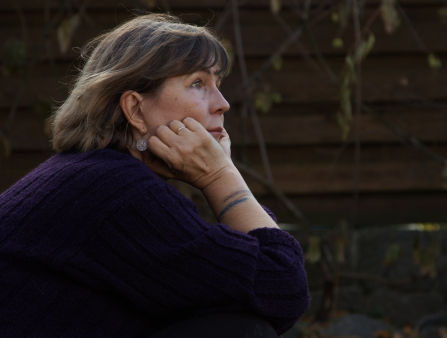
Sometimes I Imagine could run on a double bill with the audience award winner in Panorama for fiction, Prosecution, which follows a state prosecutor independently investigating her own assault by a neo-Nazi. On the documentary side, the audience award winner further suggested that hunger for accountability: Traces, directed by Alisa Kovalenko and Marysia Nikitiuk, records the testimonies of Ukrainian women who survived sexual violence during Russia’s criminal war. Spearheading the project SEMA Ukraine, activist Iryna Dovhan indefatigably gathers testimonies and (when slowed by illness) trains other citizens turned activists. Yet rather than centering on Dovhan, the film mostly consists of portraiture of these women at or outside their homes, telling their stories of brutal abuse and captivity in voiceover. It’s a sometimes dauntingly static approach, but there is a sheer power in hearing the facts of their attacks by Russian soldiers, especially at our noxious moment of widespread propaganda, soft-pedaling media and politicians, and indifferent or harmful government policies toward Ukraine. In its plain approach, Traces cuts through the noise to deliver the kind of testimony that is usually heard years after a conflict has ended, while showing the often ravaged conditions that Ukrainians must still live under.
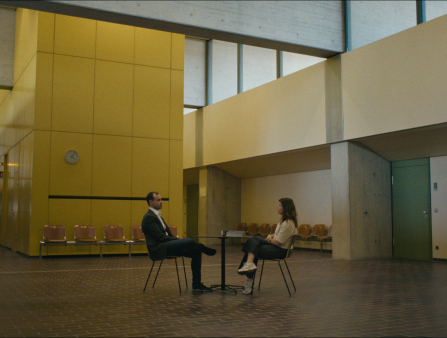
Sometimes I Imagine Them All at a Party. Photo credit: Bildersturm Filmproduktion
Traces. Photo credit: Alisa Kovalenko
Tutu. Photo credit: Getty - Bromberger Hoover Photography
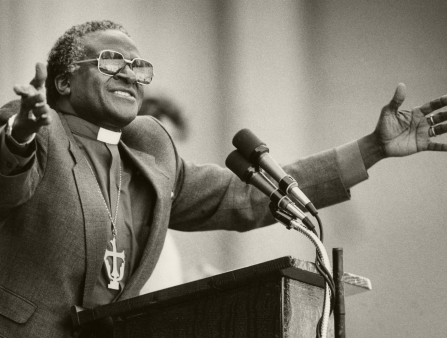
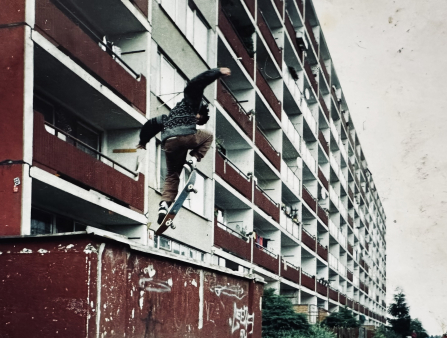
Which is also why a news-timeline hagiography like Sam Pollard’s Tutu could feel perfectly welcome at the festival: it does the soul good to watch the titular Nobel Prize winner giving steely speeches against Apartheid in South Africa, or just joyfully joking with his wife and colleagues like, say, Nelson Mandela (drawn from 20 years of videography by Roger Friedman and Benny Gool). But before the rousing refrains of the film’s final third, Pollard pauses to consider the post-apartheid Truth and Reconciliation Committee and notes that even its noble project could engender some ambivalence about its effectiveness, given all the wrong that had been done. Tutu shared Special Mention in the Berlinale’s documentary category with Sometimes I Imagine, but if that demonstrated any split opinion about approaches, the top prize (endowed with 40,000 euros) immediately put that to rest: If Pigeons Turned to Gold, a sometimes grueling DIY reckoning by Polish filmmaker Pepe Lubojacki with the cycles of addiction in her family.
Previously dubbed the most promising European project at Ji.hlava, the phone-shot movie tracks Lubojacki’s efforts to reconnect with her brothers, who struggle with managing substance abuse and securing housing. Crafted at a somewhat unpredictable rhythm, the vérité sibling chats sometimes cut away to jankily AI-ish animated photographs of the brothers as children, voicing past memories, an at times comical, unnerving way of plunging into an individual’s vulnerable emotional makeup (while also suggesting the I-knew-you-when immediacy of sibling bonds and the sense of a family curse). The exhausting nature of addiction and support is on full display, but the IG-adjacent photo animations and big-font on-screen messages lose their snap after a while, with the whole film feeling a bit run-on and diffuse (though it’s impressive the jury chose a concertedly unkempt film for the top award).
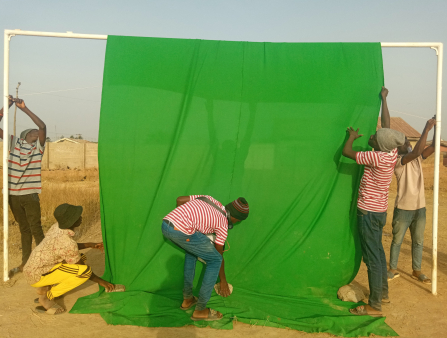
The DIY filmmakers of Crocodile are after something entirely different with their slick, microbudget riffs on SFX-heavy spaceship-and-light-saber science fiction. Naming themselves The Critics, the Nigerian teens are co-credited with Pietra Brettkelly (who was recruited to craft their regular self-chronicling into a feature). Their chops and their moxie are predictably delightful, making the most of the array of software now available, and the movie rolls together their hustle-and-grind workdays with clips from their work (occasionally comically merging them, as when a heavy delivery box is lifted, Jedi mystic-style, by a sister). It’s on the verge of hitting a reality-show groove when the movie jackknifes with a horrible revelation about one of the group members that leads to an unsettling reckoning involving some of their parents. It’s hard to shake for the rest of the movie, which perhaps can’t quite entirely weather the turn, but the inclusion bolsters the film’s sense of integrity
If Pigeons Turned to Gold. Photo credit: CLAW films
Crocodile. Photo credit: Crocodile Film Limited
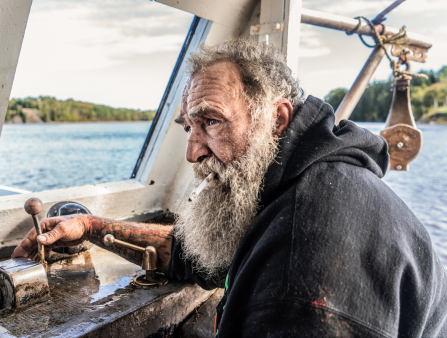
Bucks Harbor. Photo credit: Pete Muller
Bucks Harbor was another noteworthy Berlinale documentary that elicited blank stares when I recommended it. Pete Muller’s meat-and-potatoes subject—a few lobstermen who ply their trade off the Maine coast open up to the camera—is rendered with sensitivity, trust, and a feel for the briny blue light. David, with big pleading eyes (and the unexpected humor of a kid), talks with aching sincerity about recovering from drug abuse to attaining a respected regulatory position in the local bay, while Mark flatly talks about his drag TikTok stream he happily maintains as a secret hobby. The film’s unforced study of masculinity applies most poignantly to the two sons of another fisherman, who’s training his young charges in the family business, while they buck up and model toughness and wisdom beyond their years. Yet there’s a whole other portrait lurking in David’s formidable mother, who’s sweetly patient with her son but also looks stronger and more steadfast than anyone else on screen—like a walking matriarchal portrait staring down on all of them.
Also screening at this year’s festival was Haile Gerima’s nearly nine-hour anticolonialist magnum opus Black Lions–Roman Wolves, on Fascist Italy’s attacks on Ethiopia, which I was only able to catch a portion of in my final hours in Berlin, and so await to finish. But I give a shout-out to the Berlinale’s insightfully curated “Lost in the 90s” Retrospective section, where I saw a wonderful pairing of the post-Soviet Belarusian feminist time-capsule-of-transition Orange Vests (1993) and the essential high-school Riot Grrl document Dirty Girls (1996), both streaked with irreverent commentary. And a final word remains for two borderliners: Tristan Forever, a shattering docufiction about a Frenchman voyaging to the far-flung island of Tristan da Cunha in search of some stability, and, by way of meta commentary on documentary, Nicolas Pereda’s Everything Else Is Noise, a funny, fickle fiction (though drawing on his cellist mother’s milieu) about two male filmmakers struggling to competently interview two musicians in an apartment, as they (and the daughter of one) essentially run circles around them. Suffice to say that wasn’t happening with the documentarians whose work I engaged with at the Berlinale, the best of which burned very bright indeed on the screen.