

I first encountered Tikkun Olam Productions through the fight over their film Israelism, the collective’s debut feature documentary following young American Jewish activists questioning the uncritical devotion to Israel they’d been raised on. In November 2023, weeks after October 7th, Hunter College abruptly canceled a faculty-organized screening of Israelism due to a targeted pro-Israel email campaign. The New York Times covered the cancellation, Hunter’s own faculty senate denounced it as a violation of academic freedom, and PEN America called the decision “totally antithetical to the principles of free expression.”
Within 24 hours, the screening was rescheduled. I remember thinking the film’s makers had been handed a brutal kind of gift—a controversy that proved the exact thesis their documentary was advancing—and what they did with it would tell me everything about who they were.
What they did was build an audience and ensure the film would be useful for student activists. Israelism, directed by Erin Axelman and Sam Eilertsen, had premiered at Big Sky in February 2023 and eventually went on to screen at more than 100 colleges and communities, including several campus encampments. After Watermelon Pictures launched in April 2024 and quickly acquired the film, it debuted as the number-one documentary on Apple TV’s video-on-demand chart. None of that followed the conventional playbook—the film had no Sundance festival premiere or an all-rights streaming deal that allowed the filmmakers to take their hands off the wheel.
Tikkun Olam Productions, named after the Jewish concept of “repairing the world,” is a seven-member nonprofit collective that is structured nonhierarchically, rooted in consensus-based decision making and equal pay. Axelman and Eilertsen founded it in 2016; the others arrived one by one, drawn by word of mouth and a shared politics. Marielle Olentine left a job in local government design to join a Tikkun Olam project on the founders of the Sunrise Movement. Pulkit Datta, a New York–based producer and festival programmer, came in through a mutual contact to help on the back end of the collective’s climate work and never left. Nik Damants, a writer and editor in Los Angeles, had been editing for Eilertsen and Axelman since college. The full roster now includes Eilertsen, Axelman, Olentine, Datta, Damants, Oliver Arias, and Maggie Lemere.
The operation has multiplied outward from single film projects into something heterogenous, creatively rich, and on the pulse. Developed over four years with Fossil Free Media, their independent anthology docuseries Vs. Goliath—about frontline communities fighting fossil fuel giants—premiered at SeriesFest earlier this year, taking both jury and audience awards, and is now running its own coalition-built impact campaign. Other Tikkun Olam Productions activities include equipping climate and environmental justice organizations with low or no-cost video production; holding a three-year research and storytelling lab at the University of Washington; producing the spinoff video podcast Beyond Israelism for Zeteo; and cutting rapid-response videos for BLM organizers. Tikkun Olam creates media in formats that matter, held together not by a business model to diversify revenue but by a refusal to wait for outside authorization.
Now, filmmakers far more established than this collective are turning to them to navigate the current media ecosystem. To address the demand, the collective launched distribution and marketing services for films they didn’t make, and has already supported campaigns for No Other Land (2024), The Voice of Hind Rajab (2025), Life After (2025), The Encampments (2025), and American Doctor (2026).
For this roundtable, I spoke with Olentine, Datta, and Damants about how they choose projects, how they think about the relationship between filmmakers and movement audiences, and the value of hope. In July, they will represent Tikkun Olam at Getting Real ’26 in a roundtable discussion about their multimodal model of filmmaking. This interview has been edited.
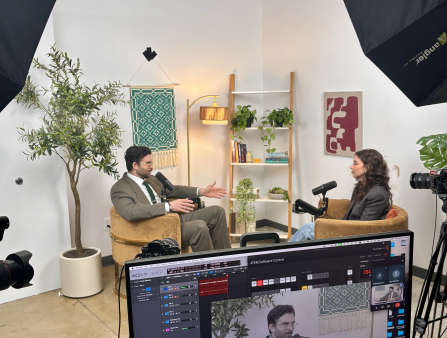
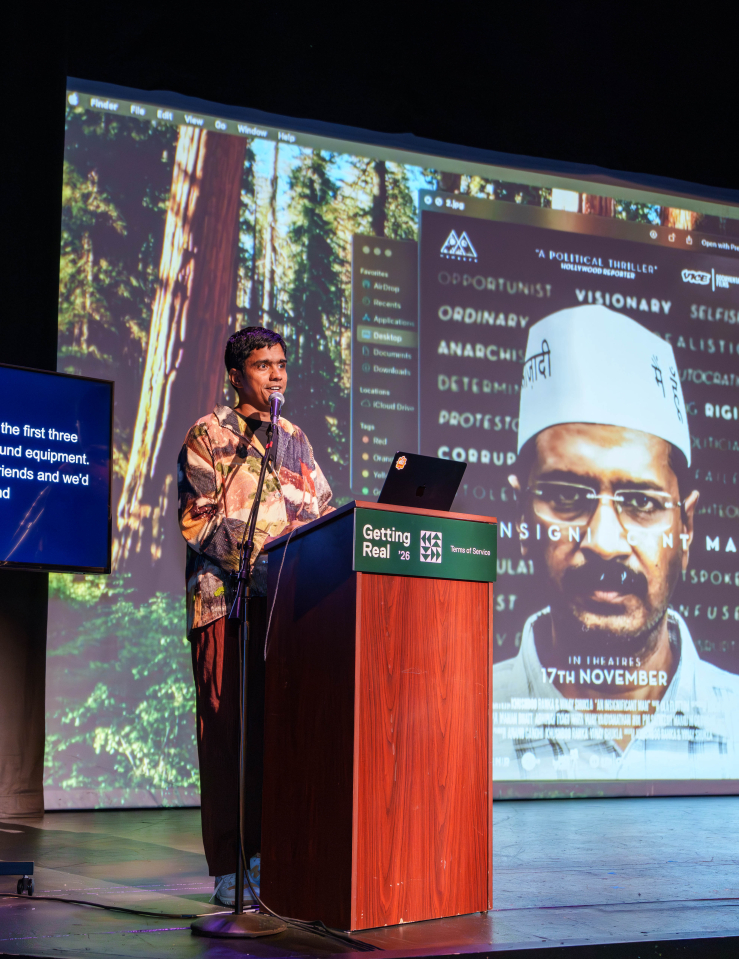
Production of an episode of the Beyond Israelism podcast. Host Simone Zimmerman (R) in conversation with Hasan Piker (L).
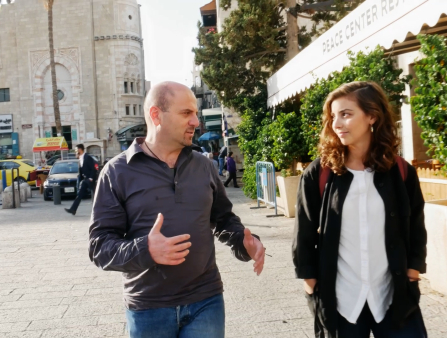
Israelism.
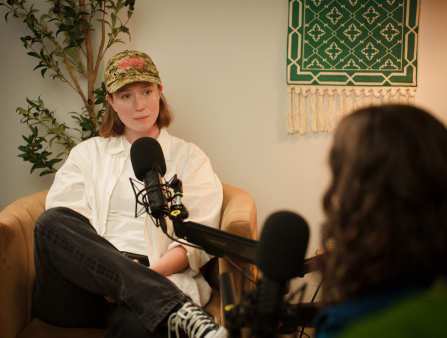
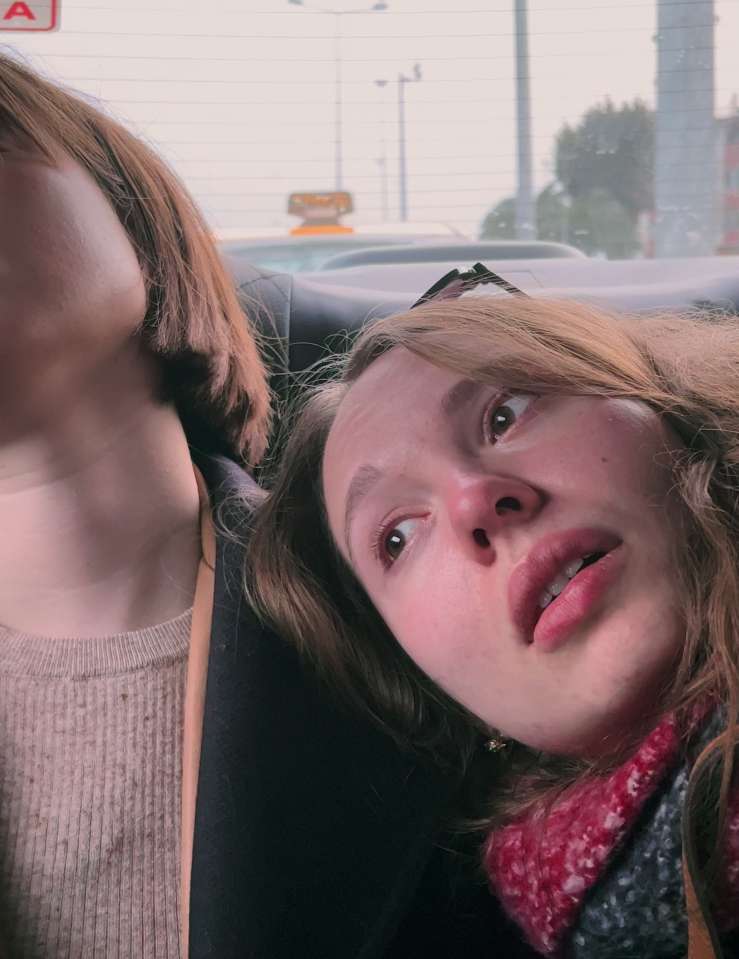
Beyond Israelism episode featuring Hannah Einbinder.
DOCUMENTARY: What was the original distribution strategy for Israelism, and how aligned was it with the community-screening model you’d already built?
PULKIT DATTA: We had probably 30 or 40 screenings set up on campuses and community spaces by the time October 7th happened. The initial plan was to roll those out through the year while also trying to see if a major streamer would pick up the film. We knew it would be a tricky subject, but we were already getting a lot of interest from campuses and organizations, so we thought a campus tour would be the path toward getting a distributor eventually. And then everything changed in October.
D: That’s a surprisingly conventional distribution plan. Did you consider yourselves insiders or outsiders to the film industry?
MARIELLE OLENTINE: Definitely outsiders. I was still early in my career. I had no idea how distribution even worked before this.
NIK DAMANTS: I still think of us as outsiders to the conventional system!
PD: One of Israelism’s main producers, Daniel Chalfen, drove a lot of the conversations with distributors and streamers. And a lot of us were following his lead while trying to do community outreach simultaneously.
D: After October 7, 2023, as university screenings were canceled, what drove you to keep going? And whose instinct was it to turn the canceled screenings into part of the story?
MO: Sam and Erin started Israelism as a passion project because it was their experience—they felt there was this huge gap in the narrative about the relationship between the Jewish community and Palestine, told from the young American Jewish perspective. The goal was always narrative change. If a distributor could get the film to a massive audience, great. But when we realized no distributor was going to touch it, we used our organizer minds and asked how we could get it out anyway. Erin was the first one to not be afraid when screenings started getting canceled. They knew it was an opportunity to use that censorship to elevate the issue—even though half the team was, honestly, quaking.
ND: When we thought our audience was young progressive Jews and activist networks, we knew where we were directing screenings. When it became something the general public was seeking out after October 7th, the context had completely changed—and October 7th isn’t even featured in the documentary. One of the things we tried to do as much as possible was make sure the film was being shown in context. Sam and Erin showed up for Q&As everywhere they could, because they wanted it to be a conversation.
We’re a place that says your film can have a unique life outside the system that isn’t accepting it.
—Pulkit Datta
D: Distribution consultants are proliferating right now. What are you offering that’s different—or do you see yourself in continuity with that?
MO: We’re part of a larger effort to decentralize distribution and prove that the gatekeeping that has kept projects like the ones we work on out of the mainstream can be dismantled. We’ve seen people do that, and we’ve seen how valuable it is when filmmakers give their work extra life by spending time building relationships without needing a gatekeeper. I don’t want to be grandiose about our role in that. But we want to democratize the documentary landscape because we’ve been failed by so many powerful institutions. And in the U.S. specifically, we don’t have the kind of public support for documentary that exists in so many other countries. So part of what we’re asking is: How do we build in that support ourselves? How do we create models that might stand in for it?
Part of it is an organic response—demand came to us and forced us to ask why Israelism worked and what could be replicated. What we offer that I think is genuinely different is that we assess every single project for what will work for that specific film, and then we help implement it. We’re not consulting you to hire a PR person. We’re digging into what the digital narrative should be, what the arc of social media storytelling should be, which movement organizations you should be in conversation with to get people into theaters or into community screenings. It’s very tailored. And we don’t take projects we don’t believe in.
PD: I’d add a less practical answer: it’s about giving filmmakers hope. The way I tend to operate is when doors are closed, find another way. A lot of filmmakers feel disillusioned—rejected by every outlet they thought the film should go to, losing faith in the value of what they’ve made. We’re a place that says your film can have a unique life outside the system that isn’t accepting it. And we genuinely get excited about each project. We have these fun internal conversations about what the cool new thing we can try with this one is. Everyone focuses on what’s collapsing. We’re looking in the gaps, at what people aren’t considering. That’s where the possibilities are.
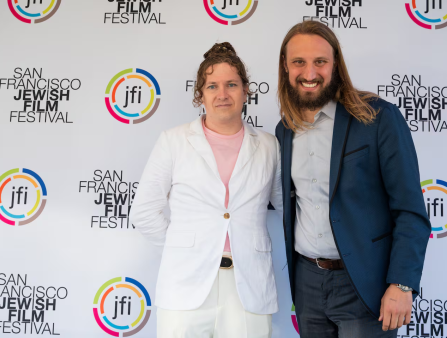
Tikkun Olam team members Erin Axelman (L) and Sam Eilertsen (R).
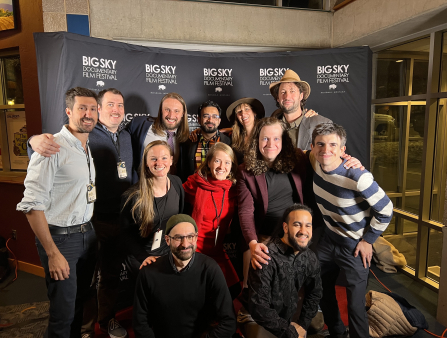
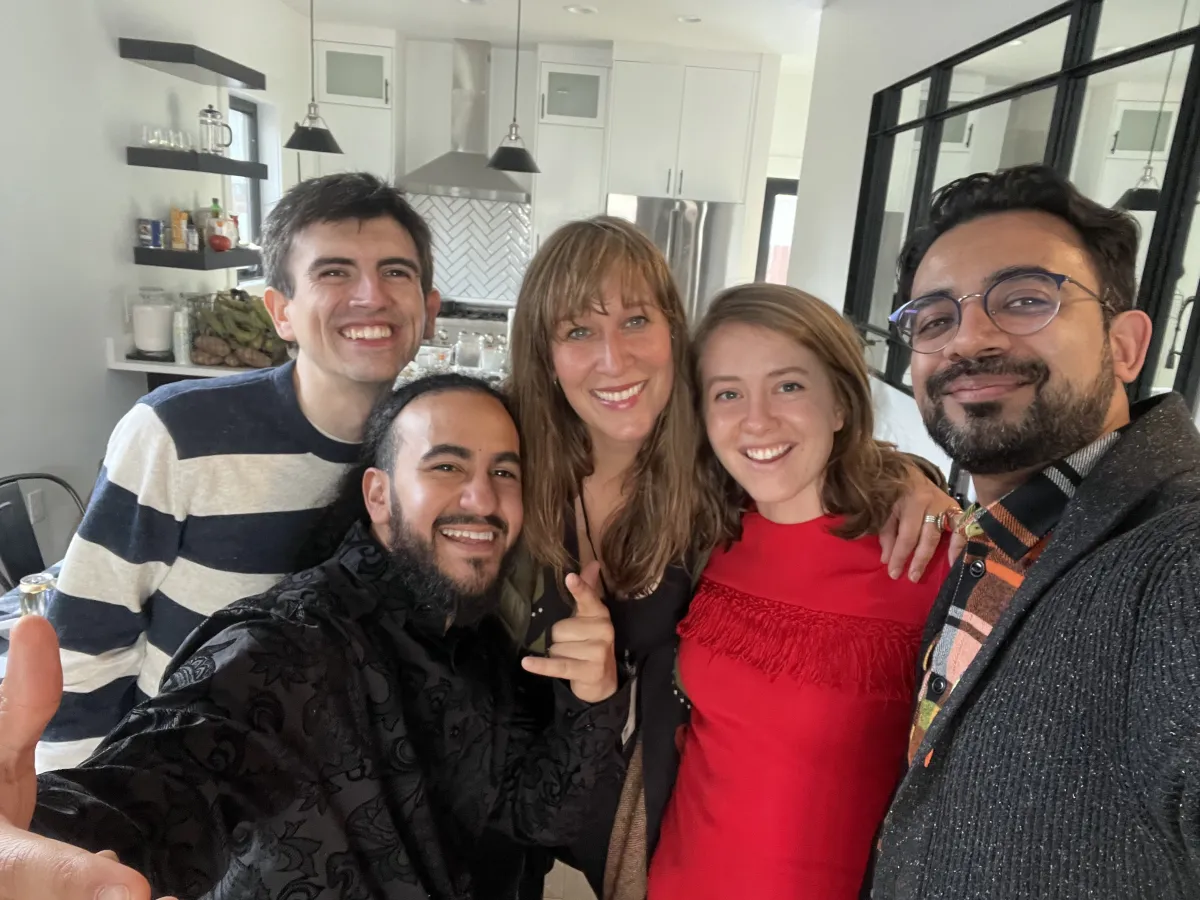
Tikkun Olam team members and collaborators at Big Sky Documentary Film Festival, 2023
D: I want to push on the question of whether your work is bypassing gatekeepers. Because I’d argue that movement organizations are also gatekeepers—they don’t just accept any film that comes to them. You have to build trust with them the same way you’d build trust with any gatekeeper.
MO: A big question we bump up against constantly in social justice storytelling is preaching to the choir—how do you get beyond it? I think the most interesting things happen when films get brought into spaces where you wouldn’t automatically expect them. Faith spaces, for instance. A church or synagogue where some members might be politically active, but the rest of the congregation not so much. That’s where you can crack open curiosity and have it spread by word of mouth. Or the screenings that get galvanized community members to host their own. Those edge-walking audiences are where the real expansion happens.
There’s also the short-form question. We get into documentary because of the long form, but not everyone has the time or attention for it. So a significant part of our work is thinking about how to infuse the same goals into shorter storytelling. What are the most powerful clips that carry a similar impact? That’s what we’re constantly grappling with on social media.
PD: The challenge and the opportunity come from the same place, which is the conditioning of the industry. We’re taught that your film has to get validation from labs, workshops, festivals, and that’s what gives your film value to the market. So there’s an unlearning that has to happen. Once filmmakers get over that conditioning, they realize you don’t have to screen at a major festival to matter. You can do 15 or 20 screenings at local community centers, reach your actual audience, and that is just as valuable, if not more. That’s why you made the film in the first place. Once that clicks, the opportunities unlock. But you have to get them to that point.
I always tell New York filmmakers: Your dream might be premiering at a Manhattan theater, but is your film for people in Manhattan? Or is it for an immigrant community in Queens or New Jersey? Why not premiere there, where the people you made it for will actually show up?
MO: Pulkit’s comments reminded me of something. Maury Johnson is an Appalachian activist from West Virginia, an incredible person, a huge character, and he’s in one of our episodes [of Vs. Goliath]. We hadn’t even premiered the fourth episode yet when he told us he was buying a train ticket—I think Amtrak has a fare where you can do something like ten stops for around four hundred dollars—and doing a screening tour, stopping to connect with friends in every city along the way. He was going to do it whether we were involved or not.
Though it might have been too early for other filmmakers, we got him a hard drive with all four episodes. He called the three of us every single day with updates. We found him a stipend. It reminded us that in each region we’d filmed in, there were community organizers already excited to start planning screenings. Just giving resources to the people who already had those close relationships lit a huge spark for the impact campaign. The energy was already there. We just had to recognize it and not get in its way.
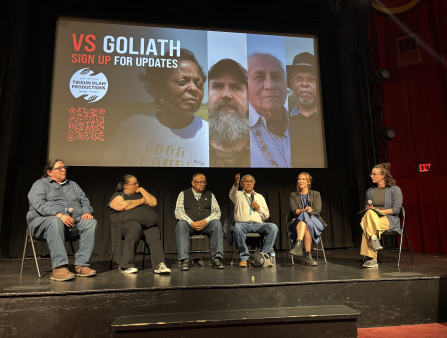
Postscreening Q&A for Vs. Goliath at the DC Environmental Film Festival. Featuring (L to R) protagonists Mario Atencio, Crystal Cavalier-Keck, Samuel Sage, Daniel Tso, Tikkun Olam team member Maggie Lemere, and moderator Jess Stahl.
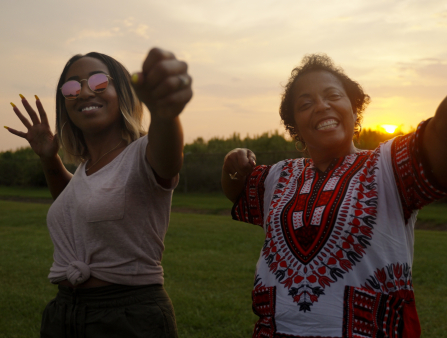
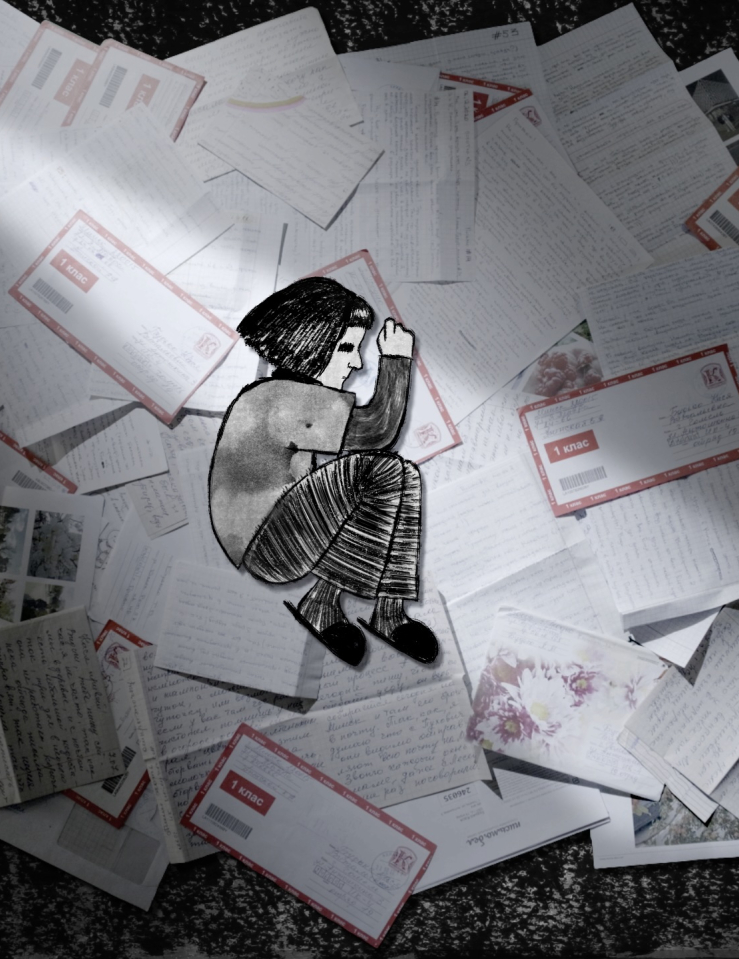
Vs Goliath.
D: In industry terms, what you’re describing is being very flexible, collapsing windows, and empowering participants to be a part of its release strategy. If you were very precious about maximizing the revenue or screening opportunities, these are not the typical recommendations.
Filmmakers often tell me they only want to make films. They’re not distributors, they’re not marketers. What’s your response to that?
ND: We’re always in conversation with our clients about what will work and what won’t work. And filmmakers are precious about their work—they want every social media ad to be a short film in its own right. Part of our job is educating them on how the distribution landscape actually works, helping them understand why this or that strategy matters. We’re never at odds with them. We get them to understand how Instagram works, how this distribution strategy works, and what it actually achieves. The most clarifying thing is that you want more eyes on your movie. We all want the same goal. Once you’re on the same page about that, everything else becomes easier.
D: There’s a real through-line in how you describe Tikkun Olam’s internal structure and how you describe your work. The nonhierarchical thing isn’t just organizational—is that right?
MO: Our work is incredibly relational, both internally and with the projects we take on. I think about Vs. Goliath—we’ve all been working together for over five years, not a single person left the team until this year, and the depth of relationship we’ve built with each other is what allows us to keep our relationships with storytellers, participants, and communities strong. If a need comes up, if support is needed, we’re all equipped to nurture those relationships.
PD: And the structure itself is still a work in progress. We’ve made mistakes, we keep tweaking based on problems that come up. But I think the decentralized structure also attracts the kinds of projects and collaborators that come to us. A lot of filmmakers come to us because they’re burned out by the “conventional system” and want to work with someone doing it differently.
ND: There’s no decision maker [in Tikkun Olam] who doesn’t also do the work. If I’m editing and I see something that might be a better idea, I can go to Marielle, and she has the editing knowledge to know whether it is. We are very bought in. It feels very collaborative just within our one-on-ones with each other. We are flexible but also smart about things. We know when something is a bad idea, when something is a good idea.
D: That’s a million-dollar answer. How do you know when something is a bad idea?
ND: Sometimes it just isn’t compatible with our values as an org—it feels too tacky, too thirsty, whatever. We’re not doing clickbait. We’re not tricking anyone into anything. We have high standards for how we work and for what we put out. We try to be on a team with people, and I think people like being on a team.
MO: A lot of the filmmakers we work with have been doing a huge chunk of this process alone. Documentary can be a solo endeavor. And so part of what people have really valued is finally having a team supporting their project, especially at the moment when they’ve just come out of the exhaustion of postproduction. Filmmakers don’t often get to make films in community.
This piece was first published in Documentary’s Summer 2026 issue.