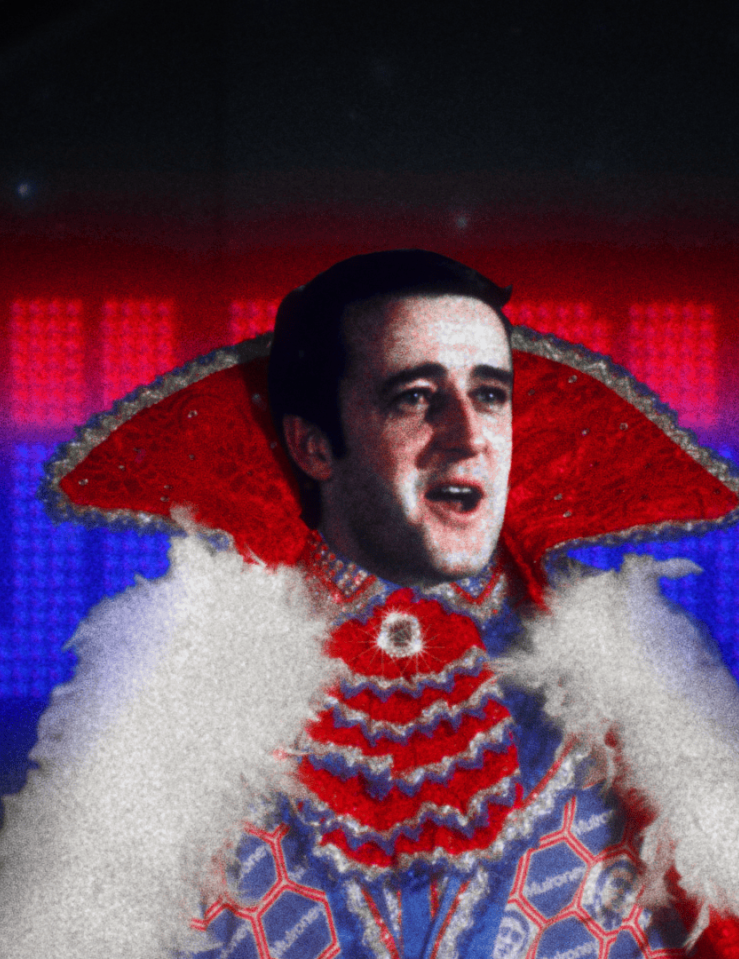


It might be hard to find two documentaries as different as William and David Greaves’s Once Upon a Time in Harlem, a 16mm snapshot of Black culture from the 1970s, and Alysa Nahmias’s Cookie Queens, a portrait of preteen Girl Scouts racing to meet their cookie-selling quotas.
But more than one distribution executive we spoke to at the 2026 Sundance Film Festival suggested both of these films are similar in one important aspect. Potentially, they have what it takes to succeed, relatively speaking, in a marketplace that has been intensely challenging for independent documentaries by providing experiences that sets them apart from the deluge of nonfiction content on viewers’ TV screens.
For Once Upon a Time in Harlem, it’s the chance to experience a vital never-before-seen piece of history through a multifaceted lens; for Cookie Queens, it’s a deftly crafted crowd-pleaser for the whole family with some rainbow sprinkles of capitalist critique. But viability for docs in the current marketplace has never been more difficult to predict or define.
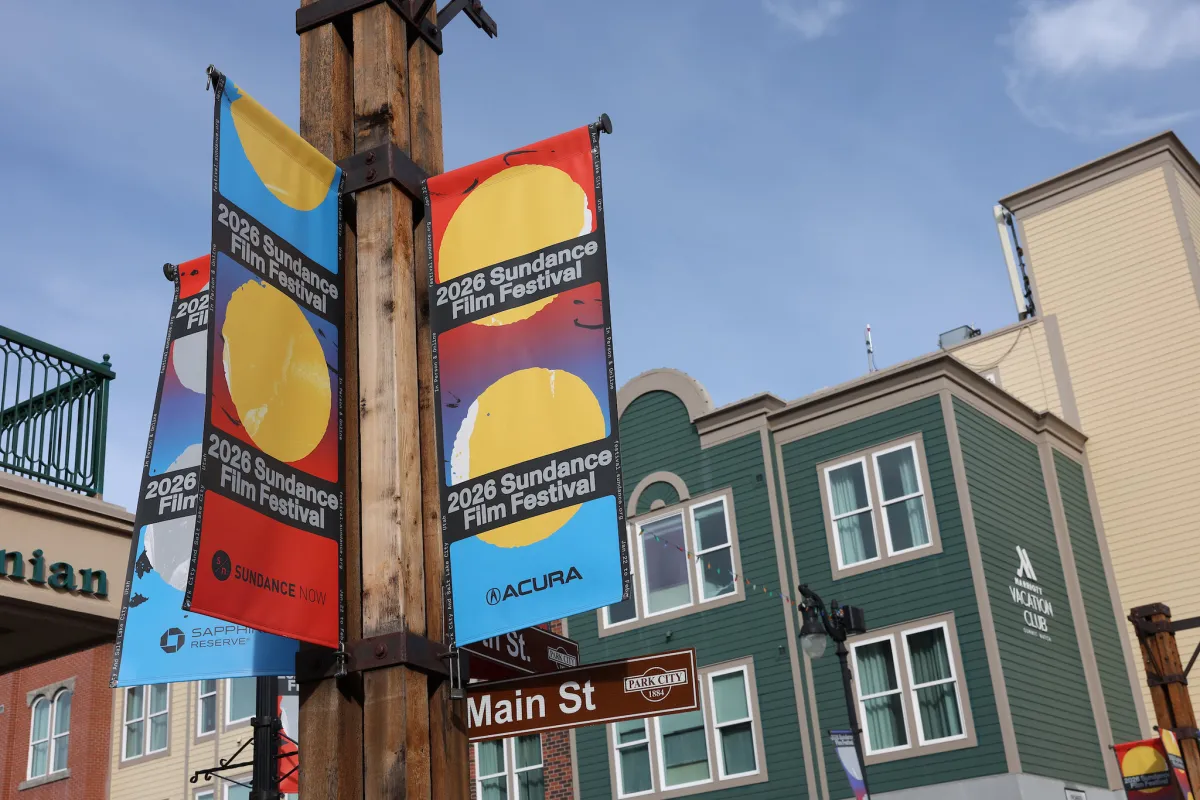
Even at Sundance, arguably the most prized place to launch a documentary, it was the million-dollar (or a lot less) question: Where do these docs go after Park City? A few of the nonfiction titles came to the Festival with distribution, but the vast majority of documentaries were still looking for a home—with not a single reported acquisition deal so far. With the further consolidation of corporate entertainment companies and the defunding of public media entities both contributing to fewer slots across the distribution sector, many in the nonfiction industry are sorting through what it means to release documentaries into the world nowadays.
“It’s a trickle.”
“One thing that’s tricky right now on the distribution side is that it’s not just fewer documentaries are finding distribution, but it takes much longer,” says Jenny Raskin, executive director of Impact Partners, which supported three films at this year’s Sundance, Soul Patrol, Seized, and One in a Million, the latter of which will be released via FRONTLINE’s new initiative FRONTLINE Features. For many of the other docs, though, “It could take up to a year to get released,” adds Raskin. “Even with Sundance films, there’s only a few that get acquired earlier. There’s just no urgency.”
Last year’s Sundance Documentary Grand Prize Winner Seeds, for example, opted for self-distribution and was just theatrically launched at New York’s Film Forum two weeks ago, about a year after its Park City premiere. And last year’s nonfiction Sundance crowd-pleaser, André Is an Idiot, which was funded by A24 and Sandbox Films, is only being released this March.
“In the last couple of years, it’s been slow, but now it’s a trickle,” agrees Dawn Porter, who premiered her new documentary When a Witness Recants at Sundance this year. “It’s the rare film that breaks through.”
While Porter is extremely grateful to have HBO Documentaries on board When a Witness Recants, she is concerned about the industry’s future and HBO itself—“I can only imagine what they’re navigating,” she adds, referring to the pending merger of HBO’s parent company, Warner Bros. Discovery. “But can I keep working? I’m not sure,” she says. “How can we keep our people employed if there’s nowhere for our projects to be sold?”
“There is a different rhythm,” echoes Josh Braun, co-head of sales company Submarine Entertainment, which was representing several Sundance documentaries this year, including U.S. Best Directing winner Soul Patrol, as well as both documentary Grand Jury Prize winners, Nuisance Bear and (IDA Enterprise Fund grantee) To Hold a Mountain. But Braun is feeling good about the prospects for their docs this year. “Even before the awards,”—which can obviously help for some distributors, he admits—“There’s interest in those three movies, and there are offers on the table.”
Braun adds it’s best to be “methodical, to make sure you’ve covered all your bases,” he says, citing last year’s music documentary It’s Never Over, Jeff Buckley, which didn’t close its distribution pact until several months after Sundance because of what Braun describes was a complicated deal between Magnolia Pictures and Universal. The wait certainly didn’t hurt the film, as it ended up being the third highest-grossing documentary at the box office last year.
Even though “the market is really awful right now and it’s been so hard for so many of us,” admits Cookie Queens director and producer Alysa Nahmias, “We can choose to feel powerless—or maybe we are powerless—but I do want to believe that things can change.”
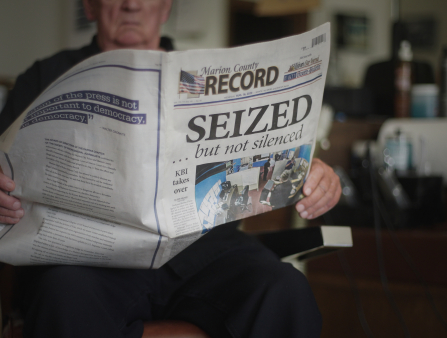
Seized.
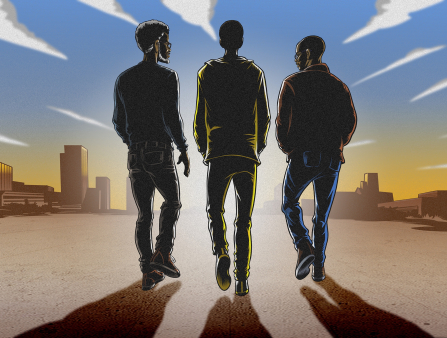
When a Witness Recants.
“It’s very hard for people to see anything as commercial.”
For Cookie Queens, which Submarine is also selling along with WME and which may well generate the largest nonfiction sales at this year’s Sundance, Nahmias suggests the trick to making the film work for our current moment was balancing the need to “express what it means to be a girl in American consumer culture and allow the camera to bear witness to that,” she says, “but not tell us about that.”
Nahmias, who financed the film independently (there are some 20 executive producers, many part of Sundance’s Catalyst program), notes any documentary’s “commercial” potential isn’t self-evident in the industry. After Nahmias’s produced documentary Wildcat was acquired by Amazon Studios for US$20 million in 2022, she remembers taking several industry meetings where the conversation “boiled down to, ‘Bring us the next Wildcat when you have it,’” she recalls. “But my heart would sink, because I would just think, Would you know when you see it? Are you willing to take a risk on nonfiction cinema that is asking questions and not knowing its ending. As soon as they see it, they can label it commercial, but before that, it’s very hard for people to see anything as commercial.”
Tim Horsburgh, VP at National Geographic Films, which launched Sara Dosa’s Time and Water at this year’s Sundance, sees a landscape where many films that would have been acquired a decade ago remain “‘festival’ documentaries,” he says. “They would have been arthouse ‘theatrical’ films in the 2000s and 2010s,” he says, “but now that middle has dropped out.”
With respect to Time and Water, Horsburgh is hopeful that Dosa’s Fire of Love follow-up can break out theatrically when NatGeo releases it because of its unique cinematic qualities. “There are not many films out there like Time and Water,” he says. “with its blend of archival material and this magnificently monumental natural world.”
According to another distribution executive who preferred to remain anonymous, it’s especially difficult to find the right kind of documentary that audiences will want to pay to see in a theater, “because docs are so ubiquitous on streaming, so it needs to feel really different,” they say.
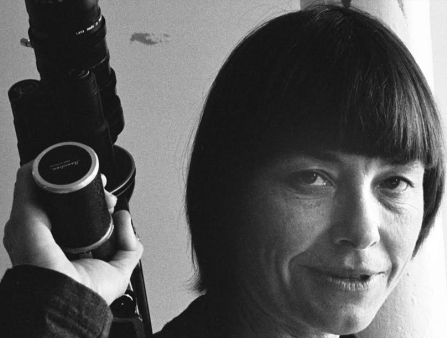
Barbara Forever.
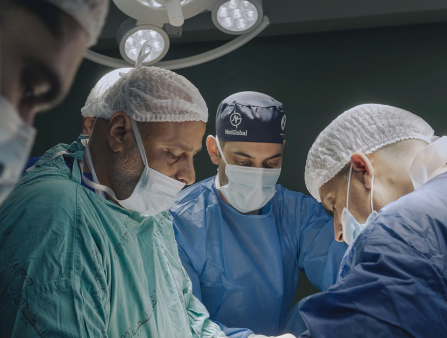
American Doctor.
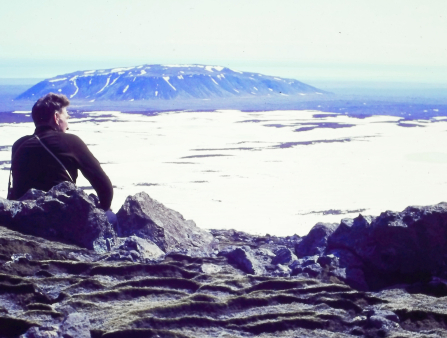
Time and Water.
Independent distributors also used to rely (and be somewhat at the mercy of their) output streaming deals, but with the streamers showing less interest in nonfiction acquisitions, these companies are largely now focused on the theatrical release. “In some ways, it’s simplified things for us,” says the executive, “because the only we can we recoup, or the filmmaker can profit, comes in the form of theatrical grosses—that’s where the money is, nowhere else—so the documentaries that we’re looking for are the ones that work theatrically.” (Once Upon a Time in Harlem and Cookie Queens, as mentioned above, might be among those that fit the mold, but for different reasons.)
In addition to corporate consolidation, the current U.S. government is also making it more difficult for filmmakers and companies to work with streamers on films that “have an ounce of political content,” says the executive, “because they don’t want to be a headache for their parent company, because no one wants the Administration fucking with you. It was an already difficult time before the election; now it’s even harder.”
Dawn Porter agrees. “We can only conclude it’s the political calculation that’s slowing the demand,” she says, “especially for social justice work and human rights films, which is what so much of our work is.”
For that reason, one would expect Poh Si Teng’s American Doctor, a startling and visceral observational look at American doctors working in Gaza’s besieged hospitals, wouldn’t have a chance in the current U.S. marketplace. Indeed, last year, says Teng, “I was scared we couldn’t bring the film to America.” But while American Doctor won’t likely end up as part of a streaming corporation’s release slate, Teng says the audience and industry reaction at Sundance gives her confidence the film will find a home. “I think the society has shifted,” says Teng, referring to the country’s apparent increasing openness toward stories from Gaza, such as the Oscar nomination and decent U.S. ticket sales for The Voice of Hind Rajab. (Teng also shared a video of the film’s standing ovations at a screening in light blue Salt Lake City.) “Some conversations have started [with buyers],” she says, “so I’m cautiously optimistic.”
I know philanthropists who would donate $50,000 to fund a film, but they totally get they now have to give money for distribution and impact. If the whole industry is coalescing around filmmakers to help them find distribution, that’s a signal that things have changed.
— Orly Ravid, co-executive director of distribution nonprofit Film Collaborative
When Plan B Is Plan A
Even if several of this year’s Sundance documentaries don’t end up with distribution deals, that may just be the new normal.
Orly Ravid, co-executive director of distribution nonprofit Film Collaborative, which is working with this year’s Sundance entry Barbara Forever, acknowledges “acquisitions are way way down,” but she is quick to point out that significant documentary deals were always “for a small subset of people.”
Ravid says more and more filmmakers and the film community itself are finally starting to understand this, making their back-up distribution option their “Plan A rather than their Plan B,” she says. “I know philanthropists who would donate $50,000 to fund a film, but they totally get they now have to give money for distribution and impact,” she says. “If the whole industry is coalescing around filmmakers to help them find distribution,” she says, “that’s a signal that things have changed.” Ravid also points to the number of impact and distribution service platforms—Kinema, Eventive, Gathr—that filmmakers are now utilizing as a sign of filmmakers recognizing the need to create alternative plans.
Film Collaborative will also be stepping up their own distribution support. “We’re going to be putting money where our mouth is and collating best service providers and allocating resources for this purpose,” says Ravid. “We’re not going to be a solution for everybody,” she explains, but hopes they can make a difference for 2-3 films each year, especially for specific issue categories that need help such as LGBTQ+ stories.
Impact Partners’ Jenny Raskin says the entity is also stepping up and has raised specific funding to support creative distribution and marketing of select Impact Partner titles. “I don’t think anyone should be panicking,” says Raskin. “It’s just about managing expectations.” If deals are slower to come by and potential recoupments may not be as large as they once were, she says, it still remains the priority for all involved—funders and filmmakers alike—that these documentaries reach audiences.
Similarly, Subject Matter, the social issue nonprofit run by Colleen Hammond and David Earls, awarded grants of US$60,000 each to two of this year’s Sundance films, When a Witness Recants and Seized, to support both grassroots screenings and film-aligned organizations (respectively, Gideon’s Promise and Reporters Committee for Freedom of the Press). When a Witness Recant’s Dawn Porter welcomes the initiative, and acknowledges that philanthropists are stepping up a bit, “but I would love to supersize it,” she says.
“I do not think people understand the degree of harm that has befallen the documentary community,” continues Porter. “I don’t think they understand if your film gets into a big festival and has a good screening, it’s papering over the decimation of everything that’s below it. I agree we shouldn’t panic,” she continues, “but we also have to talk about what is really happening, because putting up a good front is not going to help anyone.”
Editor's note: Ravid’s quote about philanthropy and distribution funding has been updated