

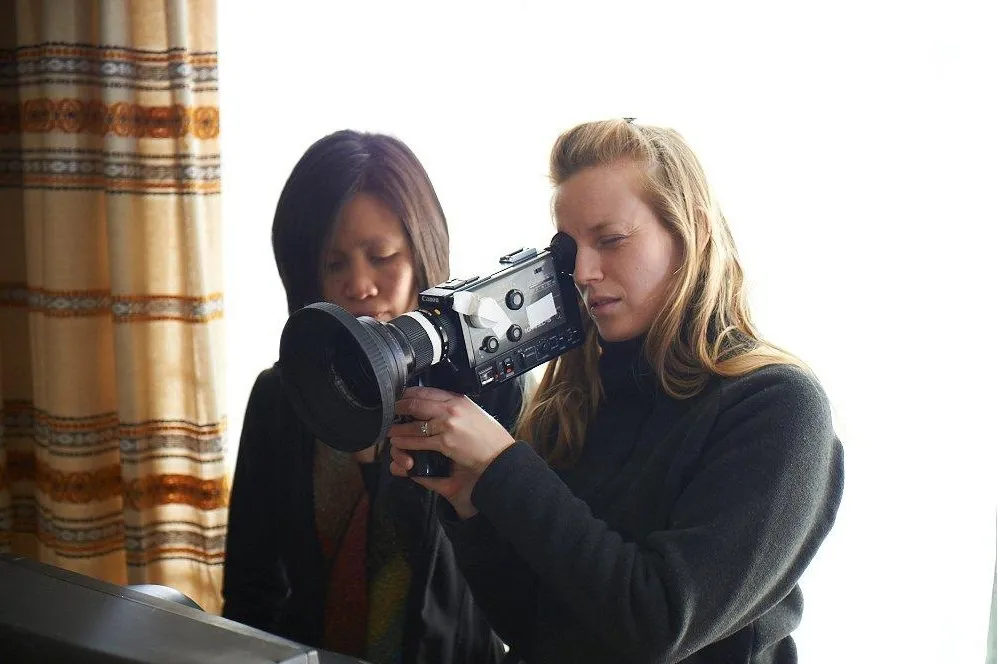
Located only 200-odd miles from the Arctic Circle, Pasvik Folk High School in Norway offers teenagers on the precipice of adulthood an opportunity to get some distance from the fast-paced demands of modern society and immerse themselves in snowy survivalism. Longtime collaborators and co-directors Heidi Ewing and Rachel Grady (Jesus Camp, Detropia) follow three students—the ever-determined Helge, socially awkward Bjorn Torne and keenly sensitive Romain—throughout the school year. While rooted in the filmmakers’ interest in unconventional educational institutions, FOLKTALES also marks one of their most ambitious projects yet, which necessitated a dozen two-day trips from New York to the remote Norwegian wilderness over a nine-month shooting period. Ewing and Grady spoke with me over Zoom the week before FOLKTALES premieres in Park City. Below, they shed insight on the origins of this project, the magic of finding one’s “dog twin” and embarking on a five-day shoot to secure the film’s poetic final shot.
Sundance
To Catch a Predator (2004–2007), a periodic segment on the TV newsmagazine Dateline NBC, was one of the biggest nonfiction sensations of the 2000s. The new documentary Predators, recently premiered at the Sundance Film Festival, examines this and other ethical issues around the program. In particular, the film scrutinizes the host of copycat media operations that have arisen over the years, as well as the show’s broader influence on the true crime genre. Ahead of the premiere, we sat down with director David Osit over Zoom to discuss To Catch a Predator and its modern fan community, finding all the materials used in Predators, and the delicate balancing act involved in incorporating so much raw footage.
At the start of Violet Du Feng’s Sundance-debuting The Dating Game we learn that, due to the former one-child policy, China now has 30 million more men than women, an eye-catching number that presents dire implications for the country. But behind the cold facts are flesh and blood human beings—and potential clients for a dating coach named Hao. While the doc is specific to China, it’s also universal in its critique of how capitalism, consumerism, and social media collide to create a generation that assumes everyone is faking who they are and therefore concludes that they too must “fake it to make it.” A week before the film’s World Cinema Documentary Competition premiere today, Documentary reached out to Feng, whose Peabody and Emmy-nominated Hidden Letters (2022) tackled gender stereotypes from the female side. This interview has been edited.

Another year, another Sundance. This second edition under festival director Eugene Hernandez doesn’t portend many changes from last year’s. The big
I had been given such a wide breadth of opinions, suggestions, thoughts on Sundance that it felt a bit like I walked into somebody else’s IG story

Documentarians Stephen Maing (2018’s Crime + Punishment) and Brett Story (2019’s The Hottest August) have wielded different observational filmmaking approaches to explore social and political issues in the United States, from the possibility of police reform to the psychogeography of the carceral state.

Seeking Mavis Beacon follows two fabulously charming e-girl detectives: director Jazmin Renée Jones and associate producer Olivia McKayla Ross, as

A dizzying, fast-paced, 150-minute montage about American jazz, Western imperialism, European colonization, and the assassination of Congolese
A revelatory portrait of psychics and their clients, Lana Wilson’s Look Into My Eyes is also an unexpectedly poignant love letter to the myriad artists and performers that fake it till they make it in NYC—as well as to the city itself. A few days prior to the film’s January 22 premiere at Sundance, Documentary was fortunate to catch up with the director.
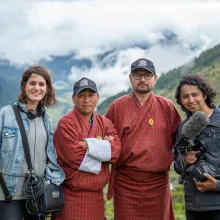
As a clueless American not previously aware that “Gross National Happiness” is a measurable index in the Himalayan country of Bhutan, I did a double