
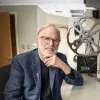
Compared to ethnographic filmmaking in communities relatively unknown to filmmakers and film audiences, or cinema vérité films recorded within evolving political events, personal documentary can seem among the least dangerous approaches to representing reality. Nevertheless, filmmakers whose films focus on their personal lives can find themselves faced with traumatic situations. Ross McElwee’s Remake, at this point the concluding episode in the McElwee family story, is a case in point. The film documents his son Adrian’s descent into drug addiction, and in the end, his death at age 27 from a fentanyl overdose at McElwee’s home on December 24, 2016.
McElwee, best known for Sherman’s March (1986) and Bright Leaves (2003), has built a career out of chronicling his own personal family history. And this latest project—his first in over a decade—finds him grappling with his legacy as a father and a documentarian. One of the pleasures of following the McElwee personal-documentary saga has been the way that later films reference earlier moments from the series, suggesting how each film’s present has built on a past we’re familiar with. Like his earlier films, Remake builds on McElwee’s cinematic past, but it also radically transforms it.
McElwee’s cinematic past—and filmmaking future— began to take shape in 1978. That year, he assisted on John Marshall’s ethnographic portrait, N!ai, the Story of a !Kung Woman (1980); he also collaborated with Michel Negroponte on Space Coast (1979), about three residents of Cape Canaveral, Florida, in the wake of the Apollo moon landing missions. But most importantly, he finished and released Charleen (1977), a portrait of his ex-teacher and friend, Charleen Swansea. This intimate collaboration with Swansea—as well as the films that soon followed, including Backyard (1984) and Sherman’s March—established McElwee’s distinctive and influential approach to documenting his personal experiences.
By the 1980s, there were two relatively distinct arenas of personal filmmaking. Filmmakers associated with the American avant-garde—Maya Deren, Stan Brakhage, Jonas Mekas, Bruce Baillie, Carolee Schneemann, Su Friedrich—had made a variety of often-intimate films about their own lives. Other filmmakers, several of whom had ties to the MIT Film Section and to Ed Pincus and Ricky Leacock, who mentored Film Section students, were making what are usually referred to as personal documentaries. McElwee was one of the first students at the Film Section, and the McElwee films that followed Space Coast and Charleen owe a great deal to that budding documentary legacy.
Backyard is a portrait of McElwee’s family and their home in Charlotte, North Carolina, focusing on the interplay among Ross, his parents, his brother and sister, and Lucille and Melvyn Stafford, African Americans who had worked for the McElwees since Ross was a child. The complex family and racial dynamics evident in the film are effectively contextualized by Ross’s engaging, often-amusing narration.
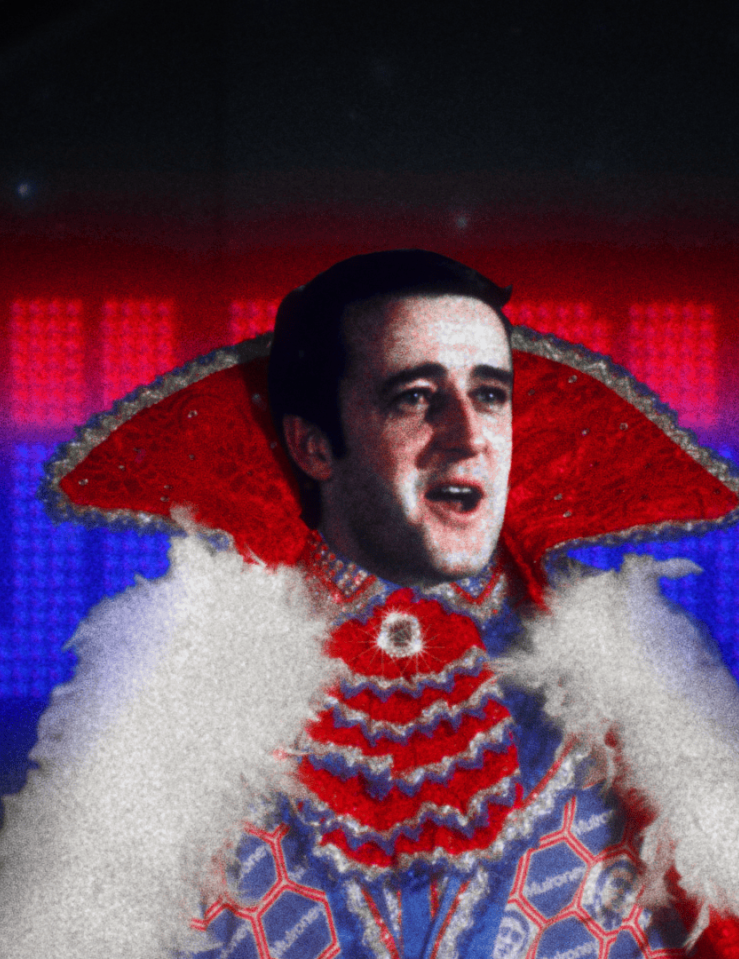
Similarly, Sherman’s March’s subtitle, A Meditation on the Possibility of Romantic Love in the South During an Era of Nuclear Weapons Proliferation, suggests the wry humor that runs through McElwee’s 155-minute mock epic. McElwee travels around the South, using General Sherman’s devastating march through the Southern states during the Civil War as a structure for documenting his dating experiences with the young women he meets during his travels (to some extent under the guidance of Charleen). Sherman’s March remains McElwee’s best-known film. For a time, as Remake’s other central narrative thread reveals, there was talk about adapting it as a television series.
In light of Remake, McElwee’s oeuvre of personal documentaries feels marked by the presence (and now absence) of Adrian. In Time Indefinite (1993), McElwee had turned to the intimacies of family life, guiding us through his marriage to Marilyn Levine, which is soon followed by three challenges: the sudden death of his father, his grandmother’s passing, and a miscarriage that ended Marilyn’s pregnancy. As a means of coming to grips with these losses, McElwee visits his brother, his sister, and Charleen, as well as Lucille and Melvyn. In the end, the filmmaker and his wife welcome their son, Adrian, into the world, and the three of them celebrate with a visit to Charleen’s home on the Carolina coast.
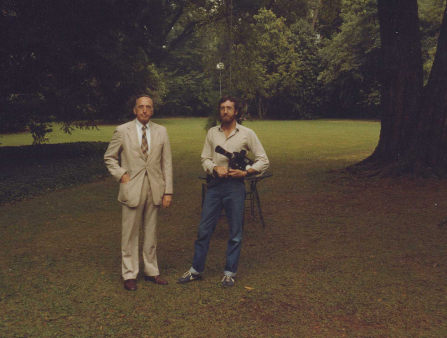
Ross Sr. and Ross Jr. in Backyard. All stills courtesy of Giant Squid unless otherwise noted.
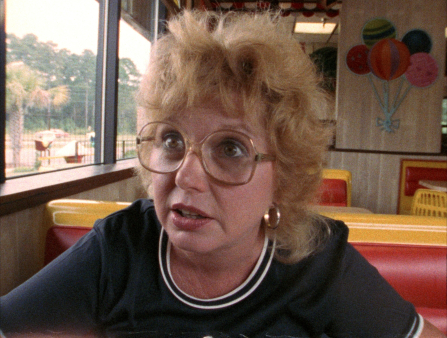
Charleen Swansee says, “I’m gonna couple you!” in Sherman’s March.
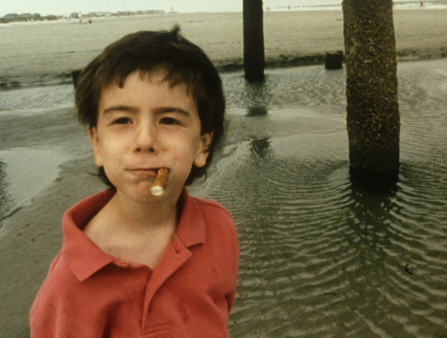
Ross’s son, Adrian McElwee, in Bright Leaves.
After Time Indefinite, Levine became less supportive of her husband’s filming their personal lives. Indeed, Levine’s developing resistance resulted in McElwee’s suppression of In Paraguay, which he’d shot in 1995 as the two struggled to adopt their daughter, Mariah, there. The film was not released until 2008. For McElwee, the three-month stay in Paraguay was a “golden moment” of parenthood and of enjoying Adrian’s immersion in the adoption process. However, his completion of In Paraguay, followed by its premiere at the Venice Film Festival, exacerbated the rift between the couple, ultimately contributing to their separation and divorce.
During the years between the months spent in Paraguay and the premiere of In Paraguay, McElwee had responded to Levine’s increasing resistance to being filmed by choosing projects that avoided including her. In Six O’Clock News (1997), we first see McElwee interacting with a very young Adrian, but after learning from a TV news story that Hurricane Hugo has devastated the Isle of Palms, where Charleen has a home, he leaves to find her. Later, having become fascinated by evening news stories about personal tragedies, he decides “to take my camera on the road for a while.” McElwee waves goodbye to his wife and son as he heads out to travel the country, exploring and expanding on individual personal tragedies that have attracted the attention of local six o’clock news broadcasts.
Bright Leaves, meanwhile, begins after Levine has apparently urged McElwee to go south to visit his family in North Carolina. This prompts a dive into the earlier history of the McElwee family, beginning with John Henry McElwee, who vied with James Buchanan Duke for domination of the American tobacco industry—and lost. After McElwee’s second cousin, John McElwee, shows Ross Bright Leaf (dir. Michael Curtiz, 1950), which dramatizes a battle for control of the tobacco industry, Ross and Charleen explore the possibility that the Gary Cooper role in the Curtiz film is based on John Henry McElwee. Ultimately, Ross and Charleen meet with actress Patricia Neal, who had a central role in Bright Leaf, and with the widow of the author of the novel the film is based on. McElwee’s interest in his familial past in Bright Leaves leads to an exploration of the history of the tobacco industry and of cigarette production.
Bright Leaves may have been shot away from McElwee’s family in Massachusetts, but Adrian is a motif throughout the film, both in flashbacks to the boy’s childhood and in the present, sometimes assisting his father by taking sound (he’s credited with “additional footage”). In the concluding shot of Bright Leaves, we see a young Adrian on a North Carolina beach, rescuing a small fish left behind by a receding tide and returning it to the ocean.
The release of In Paraguay was soon followed by Photographic Memory (2011), which was made as a collaboration with the now grown-up Adrian. McElwee’s return to more intimately personal filmmaking intercuts between his revisiting his travels in France as a 20-something—including an early romance there—and his ongoing interactions with Adrian, who is engaged in various creative activities: shooting ski videos, designing T-shirts, writing a screenplay. The concluding moment of Photographic Memory reveals Ross, under Adrian’s direction, filming his son acting out a moment from Adrian’s screenplay, a scene that simultaneously references Ross himself; we see his shadow as he films Adrian.
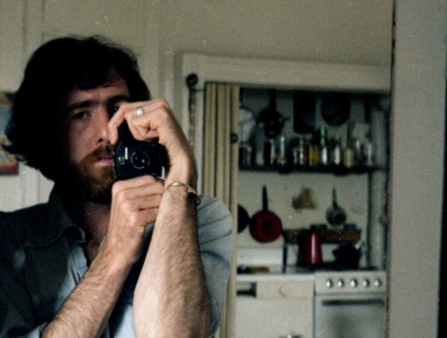
McElwee self-portrait, c. 1980, in Photographic Memory.
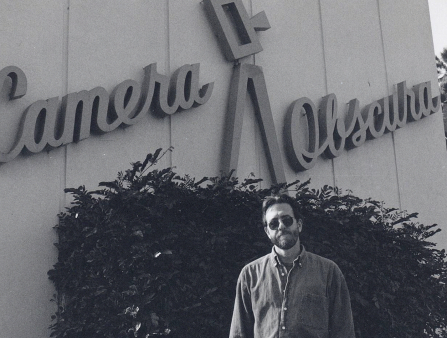
McElwee outside Santa Monica’s Camera Obscura in Six O’Clock News.
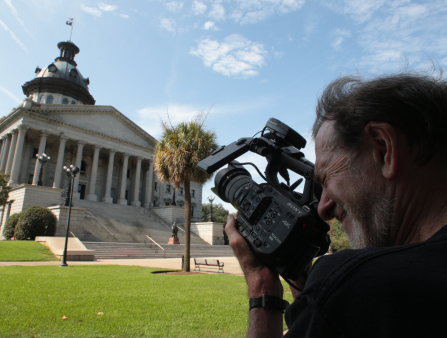
McElwee filming the SC state capitol building for Remake. Photo by Hyun kyung Kim
Remake is dedicated to both Adrian and Charleen, who passed in 2018, making it clear that McElwee’s visits with his aging friend in Remake, like his experiences with Adrian, will be remembered but cannot be continued. Furthermore, Remake cannot help but remake our sense of McElwee’s earlier films. For example, rewatching Bright Leaves after seeing Remake transmutes Ross’s subtle, loving attention to Adrian throughout the earlier film into a beautiful, if melancholy, memorial.
When I learned in 2025 that McElwee was on the verge of completing a new feature, I asked to see it, and he generously trusted me with a screener. I was astonished by Remake. Ahead of the film’s premiere in Venice, I reached out to McElwee to discuss his decision to return to filmmaking and the personal toll it took to finish a film so rooted in personal loss. This interview was expanded and edited during the following months.
DOCUMENTARY: I’ve always enjoyed how each new film you make builds on your earlier films, often by “quoting” moments from them—so that we resee the past in new contexts. The Venice premiere of Remake seems particularly appropriate since you premiered both In Paraguay and Photographic Memory there.
ROSS McELWEE: “Bittersweet” definitely describes my Venice Film Festival experience this time around. I’d been invited to the Venice premiere of In Paraguay in 2008, then to the Venice premiere of Photographic Memory, and Adrian was a lively and essential presence in both instances. While wandering around the festival venue, I was remembering little moments we’d shared. As Christian Metz put it, “The absence becomes a presence.”
The day of the Remake premiere, I wore Adrian’s seersucker jacket, the one he’d worn for the press conference we did together for Photographic Memory [video clips from that event now comprise a scene in Remake]. I had to have the jacket taken up a bit to fit me. The tailor in Cambridge was puzzled: Why was I going through the expense of renovating a worn and out-of-date jacket? But I had my reasons, sentimental as they were.
The first screening in the massive Sala Grande was at times like being in a huge, dark haunted house, inhabited by a phantom that kept morphing back and forth between Adrian as a child and as a young adult. At the end, as the credits rolled and the applause began, and as the spotlight singled me out for the audience, I suddenly began crying—and could not stop. I cried as hard as I had the day my son died. Standing ovations seem the norm for films premiering at Venice (and Cannes, Berlin, and Sundance, for that matter), but something about the warmth of the applause of all those strangers—hundreds of them—provided some solace. It also deepened the degree to which I missed my son. Absurdly, I wished he’d been there with me.
D: Remake begins with you saying, “I used to call myself a filmmaker, a documentary filmmaker.” Your last finished film before Remake was Photographic Memory. That’s nearly 15 years ago. Did you, for a decade, consider yourself a retired filmmaker?
RM: When Adrian died, I couldn’t even begin to imagine making a film that dealt with his death. I was in shock. Weeks after his death, I remember walking down the street, encountering a mother pushing a baby in a stroller. The toddler was so bundled up I could only see his eyes. I smiled at the mother, and she smiled back. They passed. I began sobbing. I ducked into an ATM to recover. When was this going to end? Maybe never. Weeks and months rolled by.
The academic spring term began, and I went back to teaching my 16mm documentary filmmaking course. When I saw those 10 students sitting around the table waiting for me, I felt a strong sense that, at least for now, these would be my surrogate sons and daughters. And of course, I had my own wonderful daughter to console and be consoled by. And my wonderful wife, Hyun. There was a lot to be grateful for. Still, I could not imagine making a film that would try to come to terms with what had happened to my son.
After Adrian’s death, there were some scenes that had been scheduled to be shot for what was to be my documentary about the making of the Hollywood adaptation of Sherman’s March. And I did film those, along with a table read in L.A. of a draft of the script. But even as I was shooting, I kept thinking, “Why am I doing this?” My heart wasn’t into filmmaking anymore.
For a long time, I couldn’t imagine looking at the home movie footage of Adrian that I’d accumulated over the years. As Joan Didion wrote in Blue Nights, about the death of her daughter, “Memories are what you no longer want to remember.” But finally, about six months after Adrian died, I thought that maybe I should try to write something about my filmmaking and my son. I hired a former assistant to look at each of the finished films Adrian had appeared in and choose three frame-grabs that featured him. I would then try to write to those images. I wrote the first chapter using a frame grab from Time Indefinite, in which we see Adrian as an infant. Then a second chapter dealing with Six O’Clock News, where he’s a toddler. This took months, and, so far, has not resulted in a book. But it did help me come to terms with my emotions about filming my son, which in turn enabled me to begin looking at the footage of him.
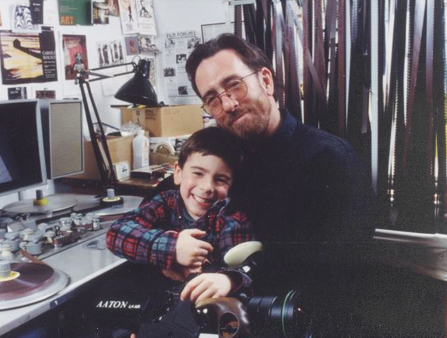
Ross and son Adrian in Photographic Memory. Photo by Jeffrey Dunn for Boston magazine
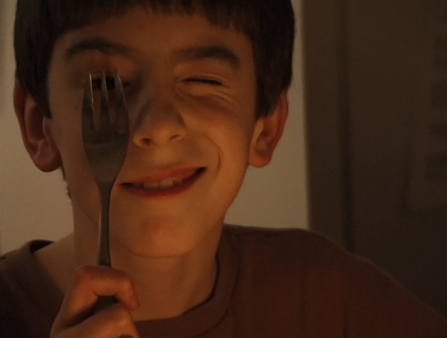
Adrian McElwee in Remake. Photo by Jeffrey Dunn for Boston magazine
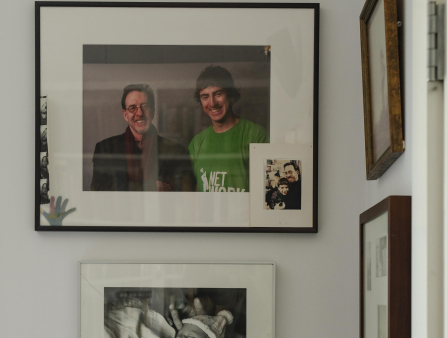
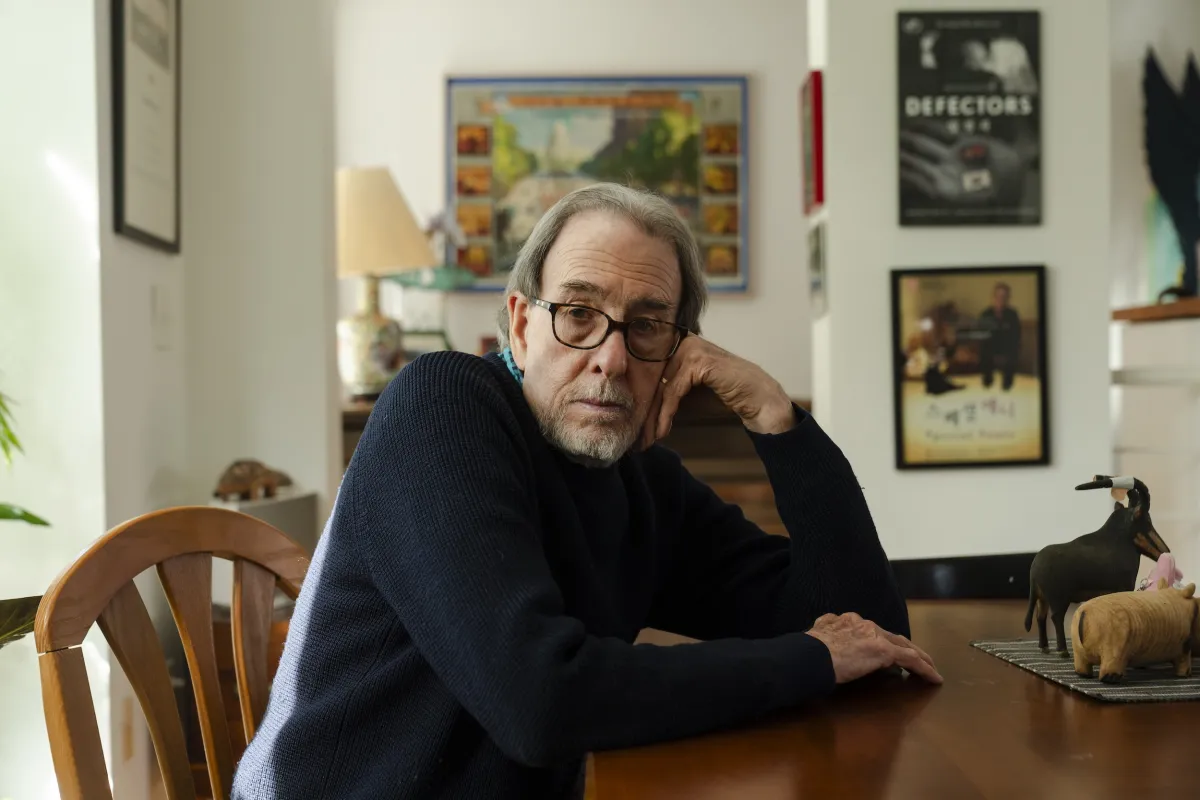
Family photos at Ross McElwee’s home in Cambridge, Massachusetts. Photo by Sophie Park
D: Were you afraid that if you made a film, it would be seen as exploitative? In bad taste?
RM: I did worry that people, especially members of my extended family in North Carolina, would think it bad taste if I included footage that Adrian had filmed of himself injecting heroin. But I could scarcely bring myself to watch that footage, much less to think about working with it.
I imagine there will be people who might argue that from an ethical point of view, I had no right to use any of the footage Adrian shot, since technically I did not have his permission. This, of course, is true, but pretty specious under the circumstances. I felt it was important for Adrian’s view of the life he was living in Colorado, as filmed by himself, to have a place in Remake.
D: Although Adrian is the primary focus of Remake, it is also a film about aging, about growing old. Indeed, two of the most fascinating films I’ve seen in recent months—Remake and your colleague Robb Moss’s The Bend in the River (2025)—are, in very different ways, complex explorations of the aging process, something relatively rare in cinema.
RM: Agreed. Robb and I joked about taking so long to get around to completing our “grandpa films,” since it was becoming more and more likely that, due to our deaths, the task of finishing the damned things would have to fall to someone else. But we are both, perhaps by default, exploring, in very different ways, the process of aging. Also, our colleague and friend Alfred Guzzetti, in his sublime The Gifts of Time (2018), deals thoughtfully and profoundly with his own aging as well as that of several close friends, some of whom he’s known since childhood. I guess you could say that the three of us comprise a kind of Bermuda triangle of filmmakers intent on staring into the abyss.
D: Though focused on Adrian, Remake also documents the changes Charleen Swansea went through during her last years. And the credits include an “In Memoriam” for both Adrian and Charleen. Had you planned to make a film specifically about Charleen before beginning to work toward Remake?
RM: Not exactly. But since Charleen plays such an important role in Sherman’s March, it seemed inevitable that she’d get significant screen time once the Hollywood adaptation got underway. I was also assuming she would introduce a badly needed strand of humor into Remake, a film about a tragic loss. I’ve always tried to instill at least some humor in my films as a counterbalance to some of the sadder strands and themes.
D: There’s a complex irony in seeing Charleen losing her memory, even her memory of being in your films. On the other hand, Remake is a defiance of memory loss—defiance because you refuse, in both Adrian’s and Charleen’s cases, to “forget” memories that are now painful, sad, embarrassing… I see Remake as a defiance of the urge to suppress what is generally considered unpleasant, something many families do.
RM: Avoiding unpleasant topics is something many Southerners are guilty of. Hence the use of “the late, great unpleasantness” as a euphemism for the Civil War. To some degree, my films do tend to challenge that tradition, but I try to be sensitive about how I go about this. For instance, when I was filming Charleen saying she has no recollection of being in Sherman’s March, I was surprised. I knew from having filmed her the year before that she was having minor memory issues, but it was startling to learn that she now had no memory of being in my films. Of course, had Charleen said that she felt uncomfortable discussing this, or was embarrassed about it, I’d have stopped filming immediately. I like to think that in that moment, the two of us were gently trying to piece together how her loss of memory of our shared experiences could possibly be true.
Remake is meant to be a meditation on movies and memory. Also on how, over time and with the many viewings that take place when editing, a person filmed for a documentary can eventually seem like a fictional character.
Avoiding unpleasant topics is something many Southerners are guilty of. Hence the use of ‘the late, great unpleasantness’ as a euphemism for the Civil War. To some degree, my films do tend to challenge that tradition, but I try to be sensitive about how I go about this.
—Ross McElwee
D: In Six O’Clock News and Bright Leaves, it seems implicit (at least for someone who has followed your career) that your choices of subject had something to do with the fact that filming at home had become a serious problem in your marriage. In Remake, the situation feels more explicit: you refuse to allow us not to know that Marilyn divorced herself from your filmmaking, though you also don’t seem to blame her for this.
RM: Who could blame her? In Time Indefinite, I filmed her up to the very last minute before our wedding ceremony. I filmed her during a gynecologist exam. At that time in our lives, she was amused by the attention of the camera. When we went to Paraguay to adopt our daughter, she was in favor of my filming and appeared in many of the scenes of In Paraguay.
But as the years went by, she decided she no longer wanted to be filmed. She scarcely appears in Bright Leaves—only one shot lasting a few seconds. So yes, we learn in Remake that my filming around the house was one of the reasons Marilyn decided she wanted a divorce. There were certainly other, more important reasons why our marriage fell apart, but I wasn’t interested in making a tell-all tale of scenes from a marriage.
D: Neither of my parents lived past 60 years, and I’ve been surprised to have lived into my 80s—but even more surprised by my experience of aging itself. Though I’ve not lost a child, I’ve experienced the loss of all my genetic relatives and many dear friends. But I’ve also found that getting old offers remarkable experiences, some that are not available to the young. When I rewatched Six O’Clock News recently, it struck me that the folks in that film who survive horrific experiences seem to find new, successful, committed lives. You have a new partner who seems to offer new perspectives—even about being visible in your film. And the operatic theatrical version of Sherman’s March that we see a bit of near the end of Remake offers a new perspective on the earlier film. With Remake, you’ve created a cinema experience that moves beyond aging as simply sadness and loss, into aging as a challenge, and possibly a breakthrough. Are you able to feel this way?
RM: To some degree, I can feel that way about what Remake represents. But despite the satisfaction of having finished the film, for me it does not represent reward or breakthrough. The death of Adrian will always be a black hole that I am in danger of falling into. The writer Yi Yunli describes how after the loss of her son, “every time one looks up from a book or turns around in the kitchen or fills a vase with water, one bumps into a monumental silence.” Futile as it may be, making Remake was for me an attempt to break that silence. I do hope it will be seen by other people who perhaps have suffered similar losses. Perhaps it can bring them a little solace.
D: What led you to call the film Remake?
RM: It’s a whimsical play on the notion of Hollywood’s desire to “remake” an old documentary of mine, but also a not-so-whimsical description of my attempt to “remake” my own life—my life as a father who has lost his son, and my life as a filmmaker who needs to create a film about that loss.
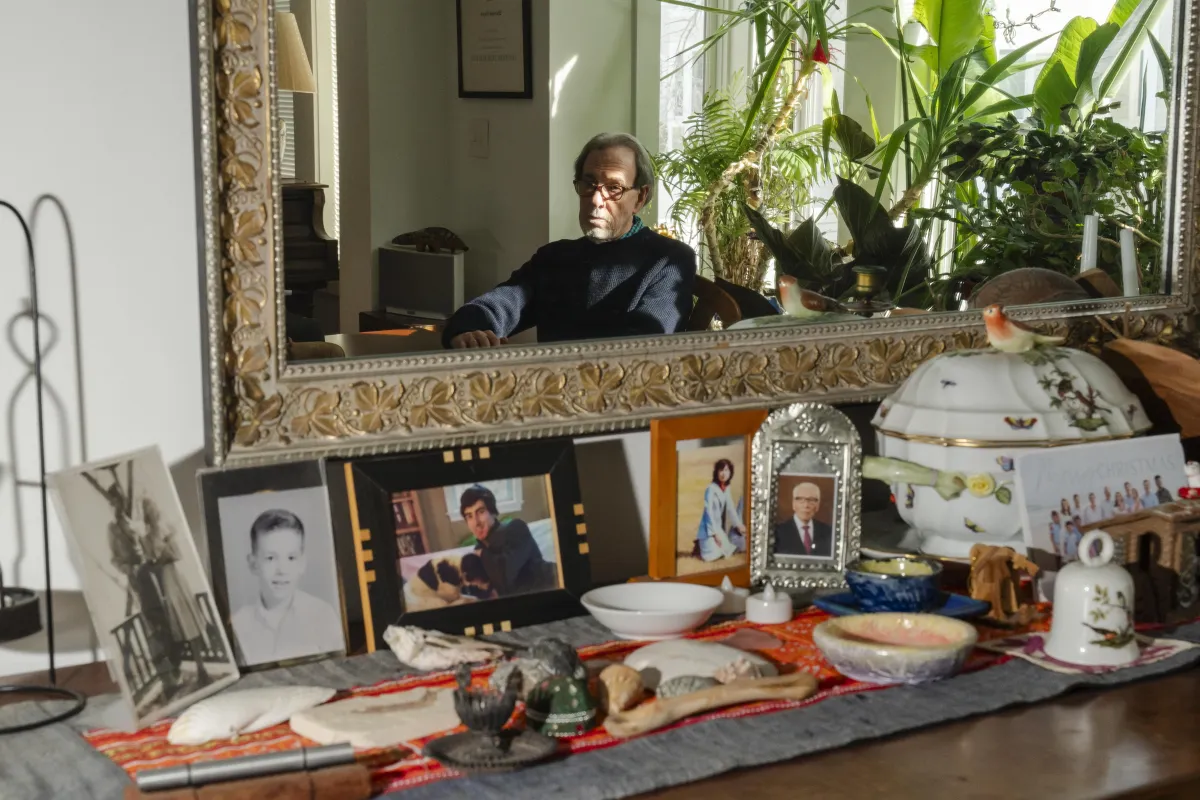
Photo by Sophie Park
This piece was first published in Documentary’s Spring 2026 issue.