
Essential Doc Reads is our curated selection of recent features and important news items about the documentary form and its processes, from around the internet, as well as from the Documentary magazine archive. We hope you enjoy! On July 29 2021, one of the warehouses of the Brazilian Cinematheque in São Paulo caught fire. The Cinemateca Brasileira has dealt with a fire in 2015 that destroyed 500 prints, and a flood caused by heavy rains in 2020 that damaged many additional materials in the collection. In solidarity with the workers of the Cinematheque, we urge you to read their statement. The
Latest Posts

On a very hot day earlier in June, I made my way to New York City’s Hudson River Park, one of the many new homes for this year’s Tribeca Festival. The festival, in its 20th year, presented a hybrid edition, with the in-person screenings taking place in venues in each of the five boroughs of the city. There was also an online portal, called “Tribeca At Home,” which audiences could use to bring the festival lineup home. In March 2020, the Tribeca Film Festival was one of the first festivals to shut down because of the coronavirus pandemic, and in 2021, it re-emerged in its hybrid avatar with a
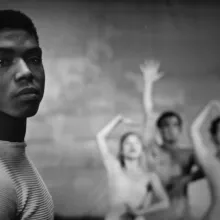
The Alvin Ailey American Dance Theater is celebrated not only as America's “cultural ambassador to the world” but for its wide array of jaw-dropping feats of resplendent athleticism, steeped in deep spirituality. But, despite the group’s many triumphs in bringing “Blackness” to the stage, the story of its founder, Alvin Ailey, remains shrouded in mystery. Part of that is because he died 32 years ago, at the age of 58 from an AIDS-related illness. Though even before his death, the mercurial choreographic genius was a notoriously elusive man, even to those who knew him best. That much becomes

Screen Time is your curated weekly guide to excellent documentaries and nonfiction programs that you can watch at home. We start off with a slightly different entry this week. In the light of the rising anti-Asian assaults, The Action Project has launched a PSA, directed by Freida Lee Mock. Watch it, share it, Be A Good Neighbor #StopAsianAssaults. July 29 is Chris Marker’s 100th birthday! Over at OVID.tv, they are hosting a fantastic retrospective of Marker’s works, including documentaries like Remembrance of Things to Come, Le Joli Mai, and The Case of the Grinning Cat. Episodes of Marker’s

Valerie Taylor has lived a life rife with unintended consequences, contradictions and double-edged swords. A pioneer in both shark research and underwater filmmaking, the champion spearfisher-turned-apex-predator-protector often made headlines as much for her bikinis and “Bond girl” looks as she did for her fearless talent. Which allowed the intrepid Australian to bring more attention to her emergence as a sort of Jane Goodall of the seas. Taylor likewise became a media sensation—along with her husband and lifelong collaborator, Ron—for having created the work that inspired both the book Jaws

Essential Doc Reads is our curated selection of recent features and important news items about the documentary form and its processes, from around the internet, as well as from the Documentary magazine archive. We hope you enjoy! The New York Review’s Caroline Fraser writes an essay on the genre of true crime and people’s love for it. Fraser refers to several podcasts and documentaries in this engrossing read. Theories have attempted to explain the appeal. There’s the desire to see justice done, the satisfaction of solving mysteries, the need to allay fear by studying crimes, lest they happen

IDA is proud to officially announce an open call for In-kind IDA Documentary Screening Series Grants. During the 20-21 events season, we hosted screenings and provided advertising support to five independent BIPOC filmmakers. This year, we are expanding our support to historically excluded communities. Our goal is to minimize the financial burdens associated with pursuing a film awards campaign. Learn more about how we are changing our Screening Series to better reflect our mission of building a more equitable documentary culture. Grant Amount IDA will provide ten filmmakers with an in-kind

On September 13, 2013, the Constitutional Court of the Dominican Republic ruled that children born to non-citizens in the country since 1929 are not, and have never been, citizens of the Dominican Republic. Imagine waking up one morning in your birthplace, and your citizenship and connection to the only country you know as yours is revoked. You’d have no access to your passport, birth certificate or any other form of identification. In the moment, this decision caused significant regional and international uproar. Human-rights defenders exposed the ruling as state-sanctioned racist apartheid
Screen Time is your curated weekly guide to excellent documentaries and nonfiction programs that you can watch at home. Chris Smith’s cult-favorite documentary American Movie is now streaming on the Criterion Channel. Described as "bizarre, comical, and quintessentially American," this film is a tale of "ambition, obsession, excess, and one man’s pursuit of the American dream." James Blagden and Roni Moore’s Midnight in Paris is now available on Youtube after screening at MoMA, Metrograph, True/False and more. The documentary follows a few teenagers in Flint, Michigan, during the lead-up to

By ANSELM BEACH and Patricia Aufderheide AFI Docs, held in Washington, DC, but organized out of AFI’s Los Angeles office, strives to create a menu that would appeal to politically obsessed Washingtonians and area filmmakers. Largely unconcerned with premieres, AFI Docs leans toward handsomely produced work, big issues, and synergies with its partners. This year, public TV was back as usual, and so were a wide collection of media companies (Apple+, as lead sponsor, plus HBO, Netflix, NatGeo, as well as journalistic outlets). The Audience Award went to the captivating Storm Lake, by Jerry Risius